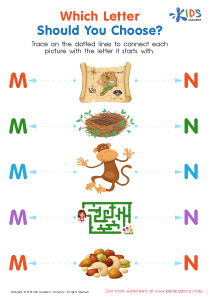
Letter recognition Normal Kindergarten Phonics Worksheets
6 filtered results
Difficulty Level
Grade
Age
-
From - To
Subject
Activity
Standards
Discover our engaging Letter Recognition Kindergarten Phonics Worksheets designed specifically to develop essential early literacy skills. These activity sheets feature captivating exercises to help young learners identify and distinguish letters, fostering a solid foundation in reading. Perfect for classroom or home use, these worksheets include a variety of tasks such as matching letters to pictures, tracing, and coloring. Aligned with educational standards, they ensure a fun, interactive learning experience that promotes confidence in letter recognition. Boost your child's phonics journey with these expertly crafted resources, available for hassle-free downloading and printing. Embrace a vibrant path to phonetic success!
Favorites
With answer key
Interactive
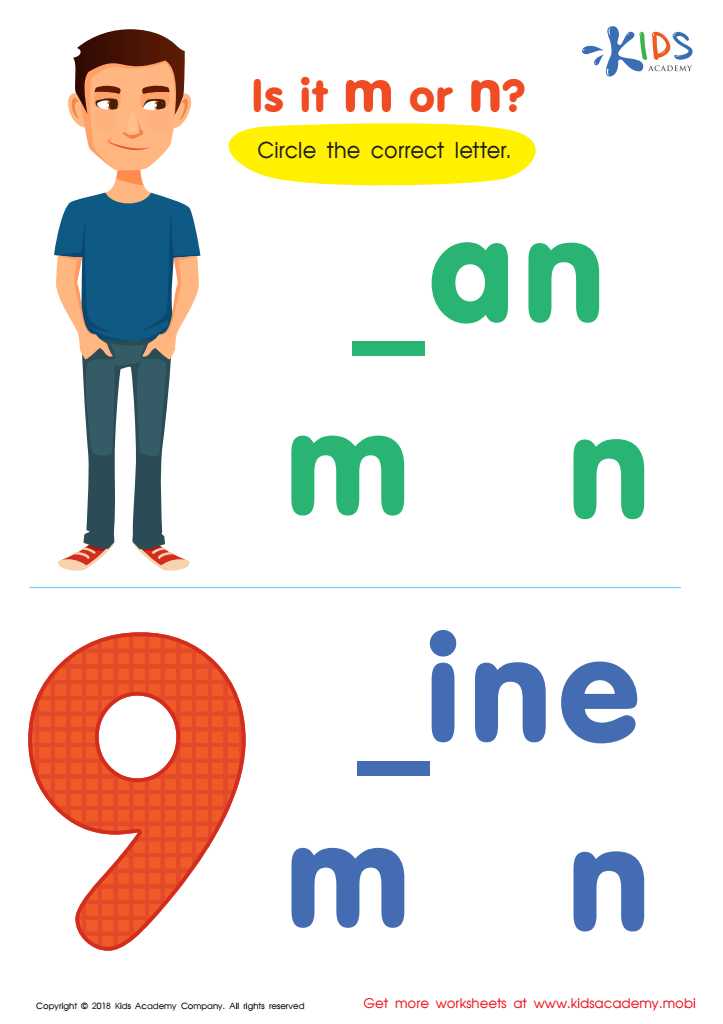
Is It m or n? Worksheet
Help your child circle the letter that begins the words "man" and "nine" in the picture. This is a great way for them to learn the alphabet.
Is It m or n? Worksheet
Worksheet
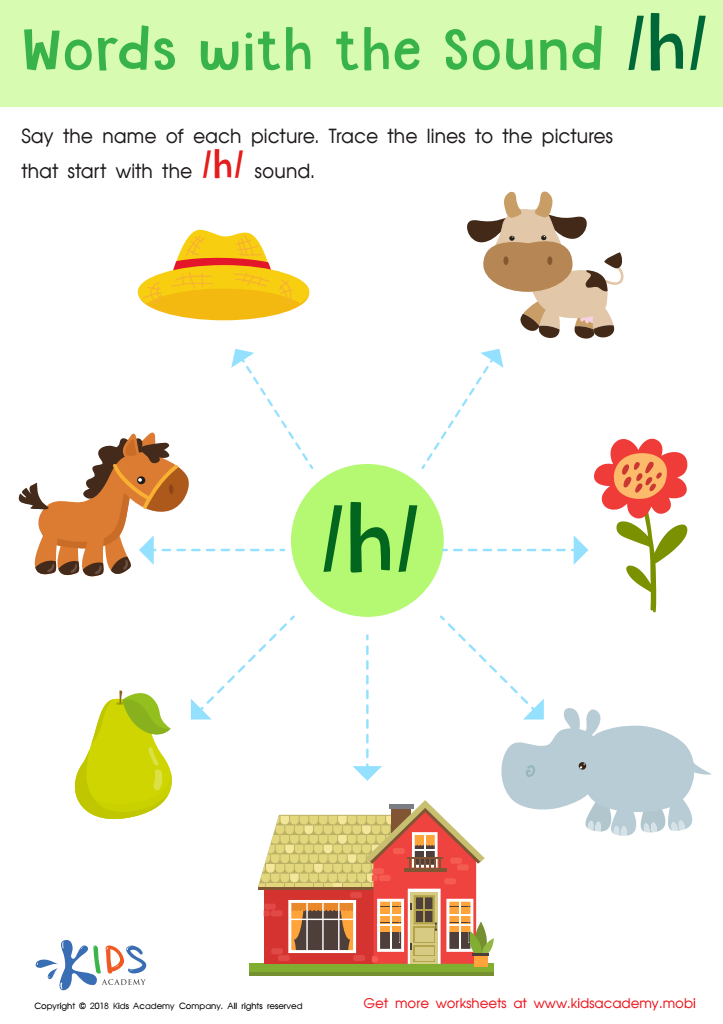
Words with sound h Reading Worksheet
The letter H can often be heard in words! Check your child's knowledge with an engaging worksheet from Kids Academy. Ask them to go around a circle and name each image aloud. Listen for the starting sound and trace the line from the middle letter to the images with the sound. This is a great way to practice phonics!
Words with sound h Reading Worksheet
Worksheet
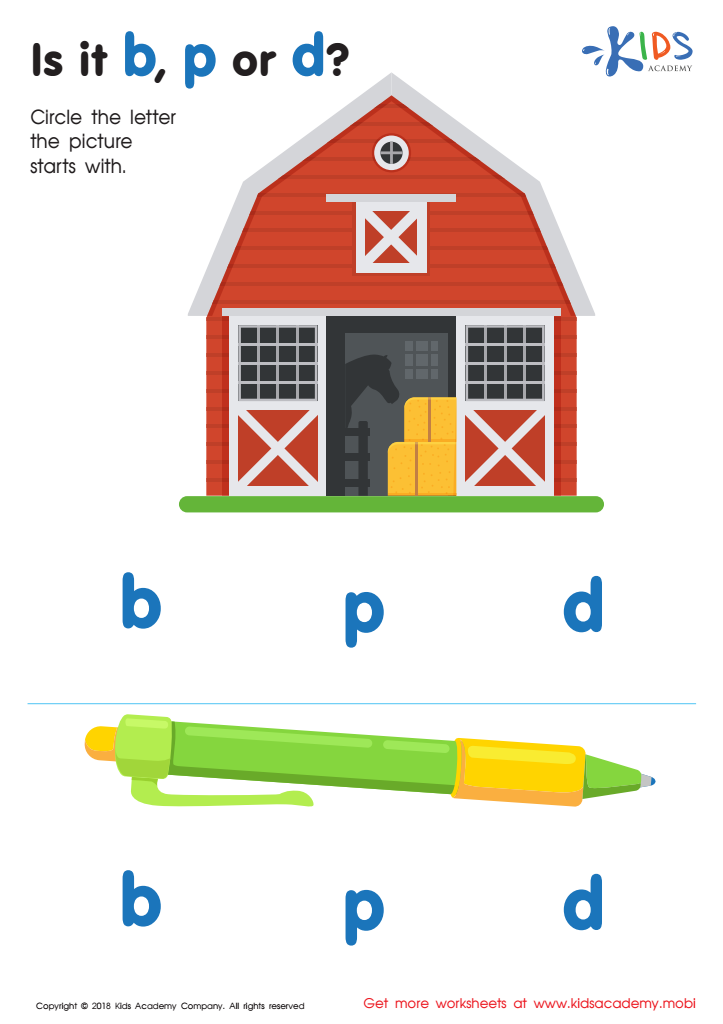
Is it b, p or d? Worksheet
Test your child's identification skills with this worksheet. They must identify the image and then circle the letter it begins with: 'b', 'p', or 'd' (e.g. an image of the sun would mean they circle 's').
Is it b, p or d? Worksheet
Worksheet
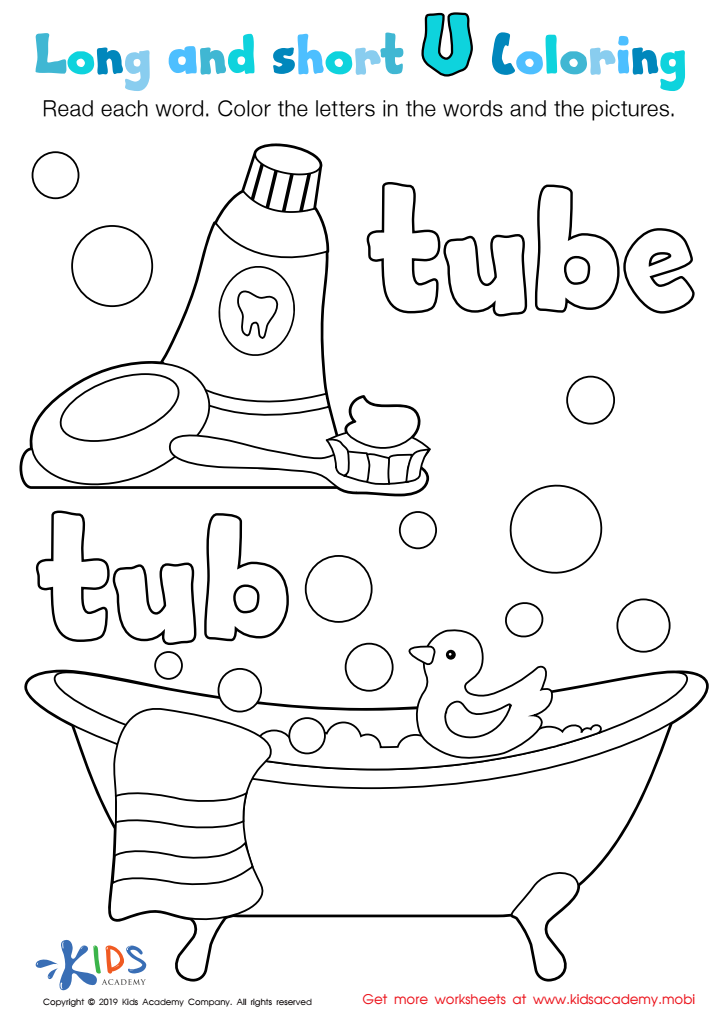
Long and Short U Worksheet
Revised: Spice up your lesson on long and short vowels with this fun printout! Kids read the words "tube" and "tub," then reinforce the sound by coloring in the words and pictures. It's a great way to make phonics class enjoyable!
Download (PDF)
 Assign to My Students
Assign to My Students
Long and Short U Worksheet
Worksheet
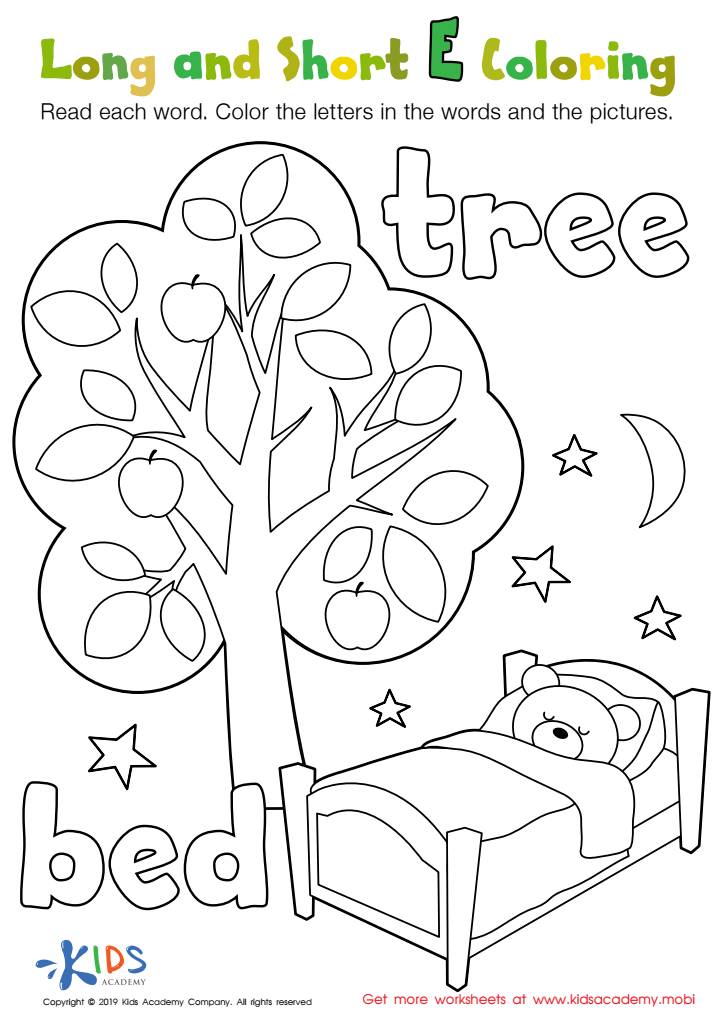
Long and Short E Worksheet
This fun printout makes learning phonics enjoyable for Grade 3 students. Get them to read the words “tree” and “bed” to recognize the different sounds of the letter “E”. After hearing the words they can color the words and the pictures to understand differences between long and short vowels.
Download (PDF)
Assign to My Students
Assign to My Students
Long and Short E Worksheet
Worksheet
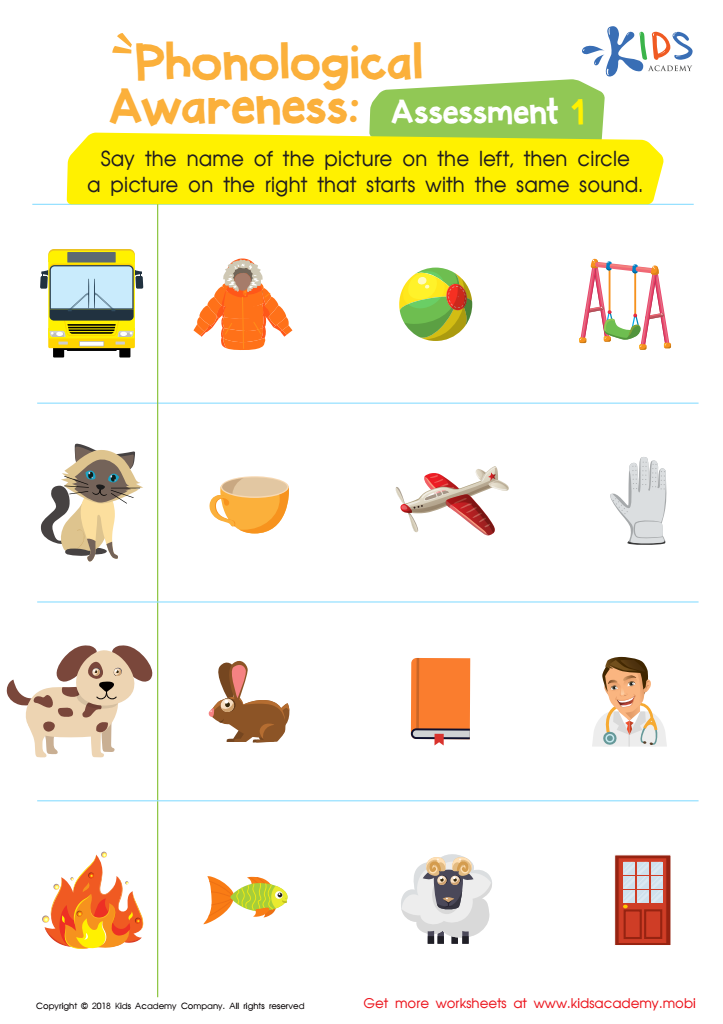
Phonological Awareness: Assessment 1 Worksheet
This worksheet helps kids build key phonics skills for pre-reading. They say each picture name aloud, focusing on the starting sound. Then, they match the sound with an image in the same row. Use as a checkpoint for kindergarten or grade 1 phonics readiness.
Phonological Awareness: Assessment 1 Worksheet
Worksheet
Join Kids Academy for Free
Who is primarily going to use this learning content?






Letter recognition and phonics are foundational components of early literacy that significantly impact a child's reading and writing development. Both parents and teachers should prioritize these areas in kindergarten because they serve as building blocks for all future learning.
Letter recognition involves the ability to name and identify both uppercase and lowercase letters and is an essential step towards reading proficiency. Children who can recognize letters easily are better equipped to understand the alphabetical principle—the notion that letters and letter patterns represent sounds in spoken language. This understanding is critical for decoding words while reading and spelling them correctly in writing.
Phonics, on the other hand, focuses on the relationship between letters and their corresponding sounds. It's a method that teaches children how sounds are represented by letters, enabling them to decode new words, comprehend text, and become independent readers. Phonics instruction helps children understand spelling rules and improves their reading fluency, which is vital for reading comprehension.
Investing in these skills early sets a strong academic foundation, creating motivated and confident learners. For parents and teachers, supporting letter recognition and phonics reduces future learning difficulties and educational intervention needs. Essentially, these fundamental skills are gateways to most academic and no-academic learning, emphasizing their invaluable role in a child's educational journey.
By prioritizing these areas, parents and teachers can ensure children are well-prepared for the complex literacy tasks they will encounter in later grades.