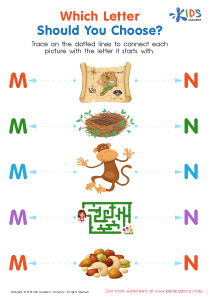
Vocabulary development Normal Kindergarten Phonics Worksheets
6 filtered results
-
From - To
Our Vocabulary Development Normal Kindergarten Phonics Worksheets are expertly designed to facilitate foundational language skills in young learners. These engaging worksheets help children master the sounds and patterns that form the basis of reading and writing. With vibrant illustrations and interactive activities, kids quickly grasp new words and their meanings. Featured exercises focus on phonics, alphabetical order, and word recognition, promoting both confidence and enjoyment in early literacy. Perfect for classroom use or at-home practice, our resources ensure that any child can progress at their own pace while building a strong vocabulary essential for future academic success.
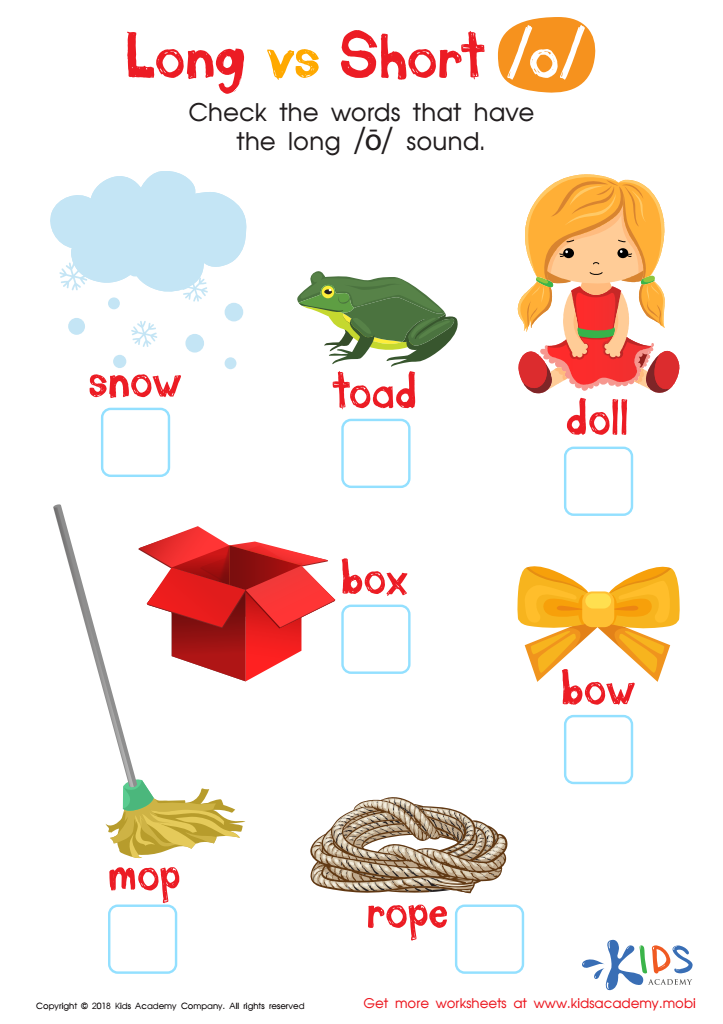
Long vs Short O Reading Worksheet
 Assign to My Students
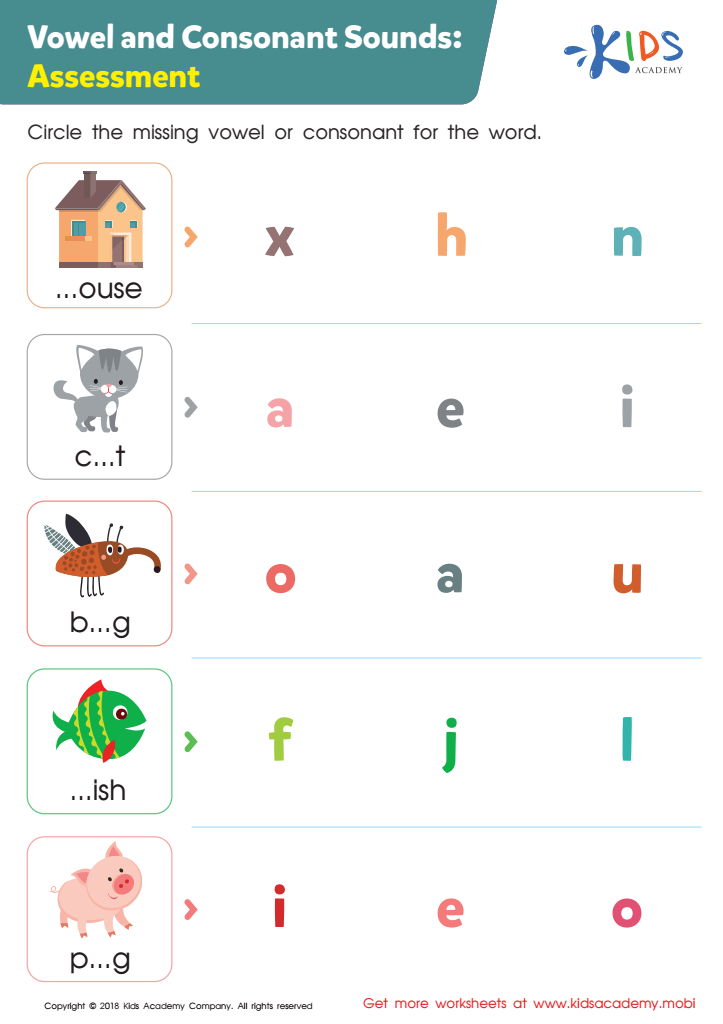
Vowel and Consonant Sounds: Assessment Worksheet
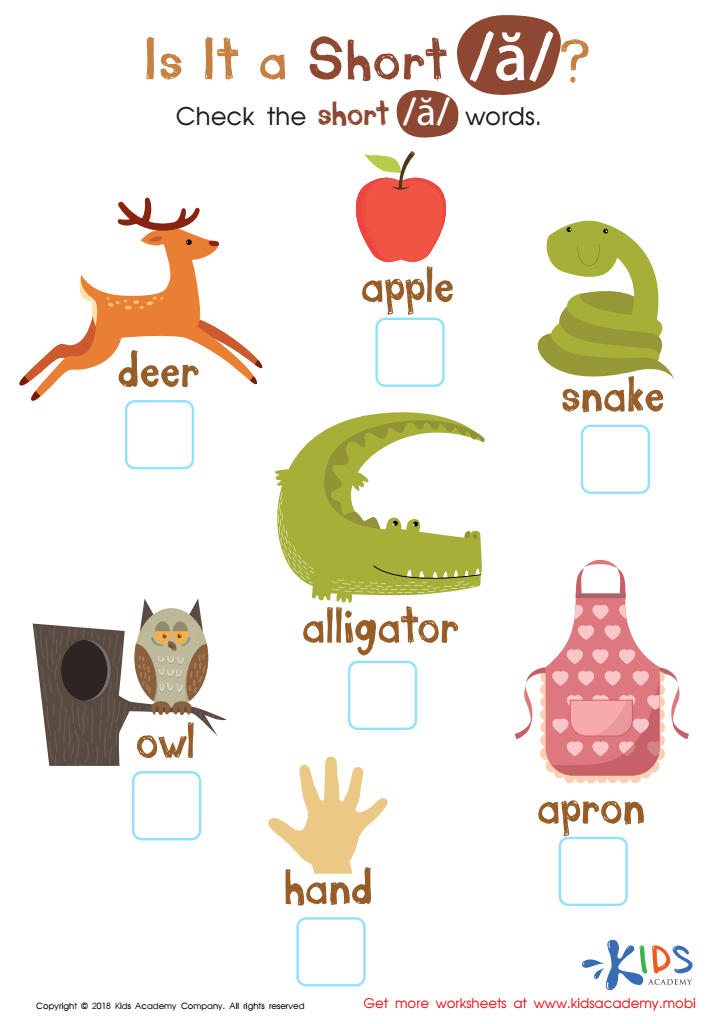
Is It Short A? Reading Worksheet
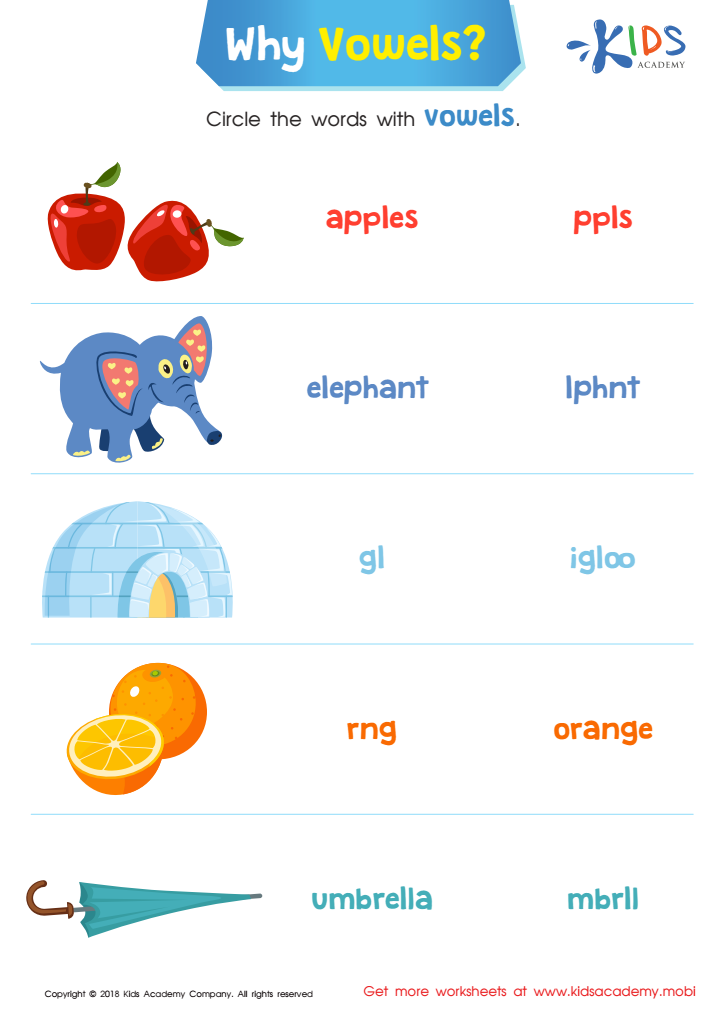
Why Vowels? Reading Worksheet
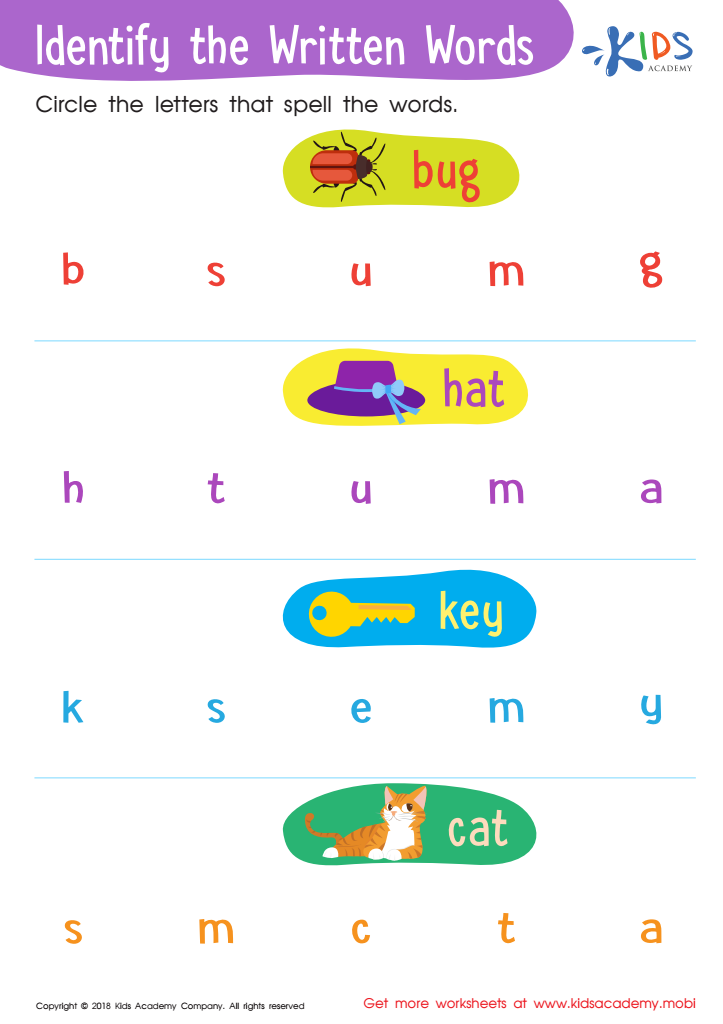
Identify the Written Words Worksheet
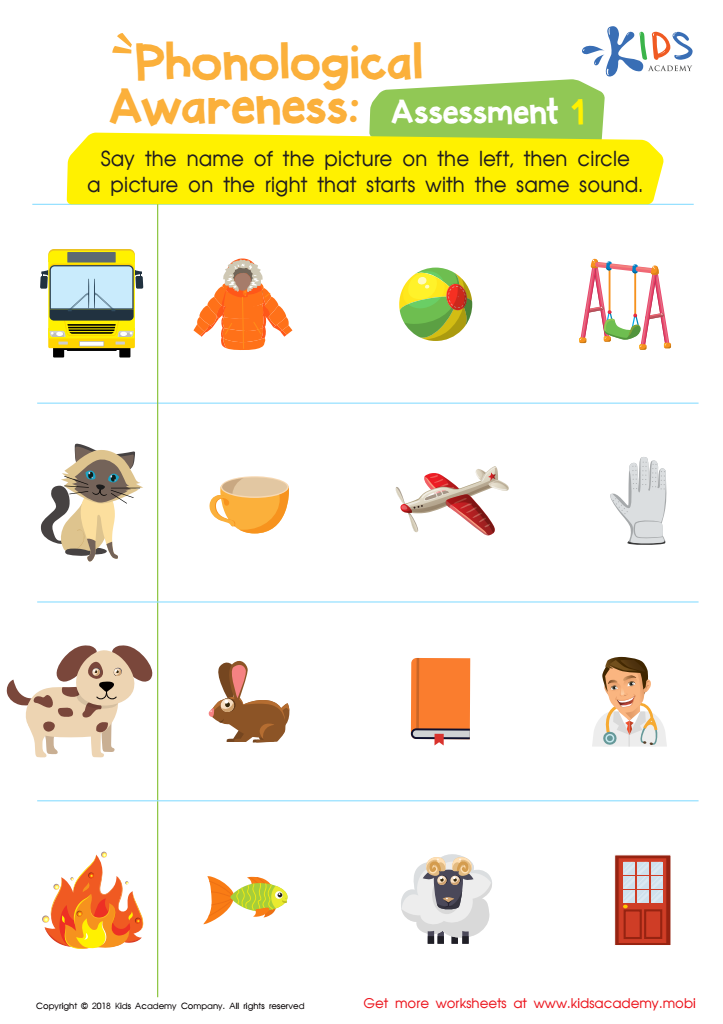
Phonological Awareness: Assessment 1 Worksheet






Vocabulary development and phonics in kindergarten are foundational elements for a child's literacy and academic success. They are the building blocks upon which reading and writing skills are formed. First, a robust vocabulary allows children to understand what they read and express their own thoughts effectively. When children have a wide range of words at their disposal, they can comprehend stories, follow classroom instructions, and participate in discussions more fully.
Phonics, the relationship between letters and their sounds, is crucial for decoding words. In kindergarten, learning phonics helps children recognize and apply patterns in language, contributing to their ability to read independently. Early phonics instruction makes it easier for children to sound out unfamiliar words, fostering fluency and boosting confidence in reading.
Both vocabulary and phonics impact more than just reading skills. They contribute to overall cognitive development, supporting better problem-solving and critical thinking abilities. They also lay the groundwork for future academic and career success since reading proficiency is linked to higher academic achievement.
For parents and teachers, focusing on these areas means giving children tools they will use their entire lives. Engaging in activities like reading aloud, playing word games, and encouraging curiosity around words can make vocabulary and phonics learning a natural and enjoyable part of a child's daily routine, setting the stage for lifelong learning and success.