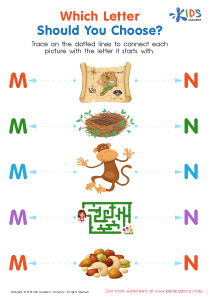
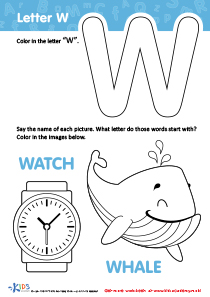
Lowercase identification Normal Kindergarten Upper & Lowercase Letters Worksheets
4 filtered results
-
From - To
Discover our "Lowercase Identification Normal Kindergarten Upper & Lowercase Letters Worksheets" at Kids Academy! Designed specifically for kindergarten learners, these engaging worksheets help kids distinguish and identify lowercase letters. By matching, tracing, and writing activities, children will build a solid foundation in letter recognition while having fun. Perfect for both classroom and home use, our worksheets support early literacy skills, ensuring a smooth transition from recognizing uppercase letters to mastering lowercase ones. Boost your child's reading and writing confidence with our comprehensive and educational resources today! Visit Kids Academy for more details and download your free worksheets.
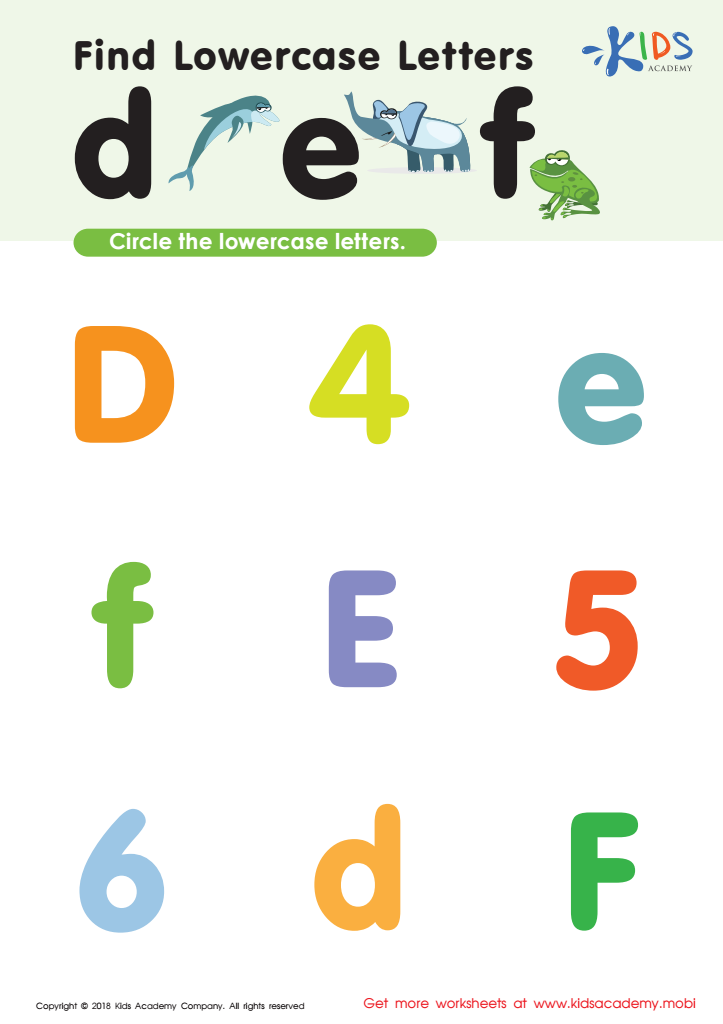
Find Lowercase Letters d e f Worksheet
 Assign to My Students
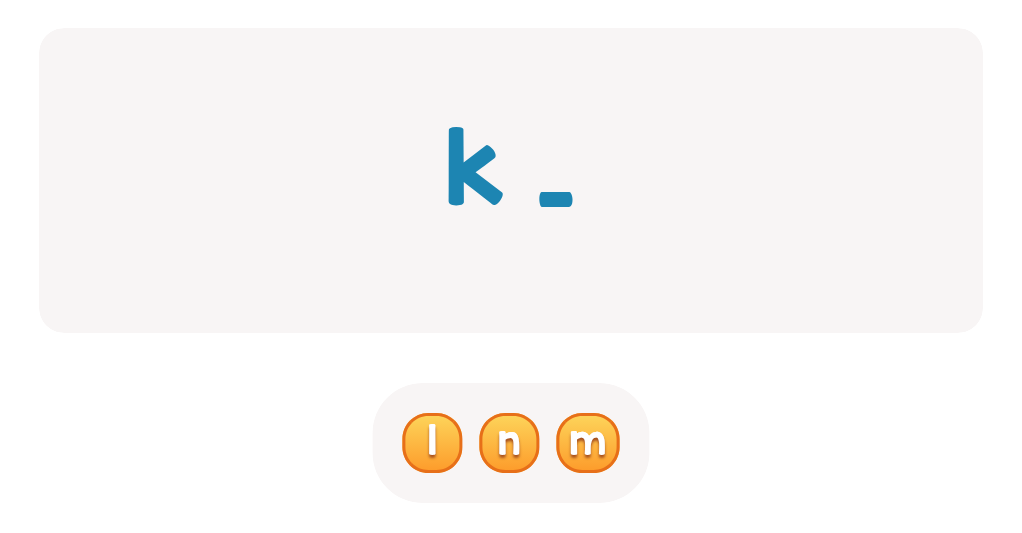


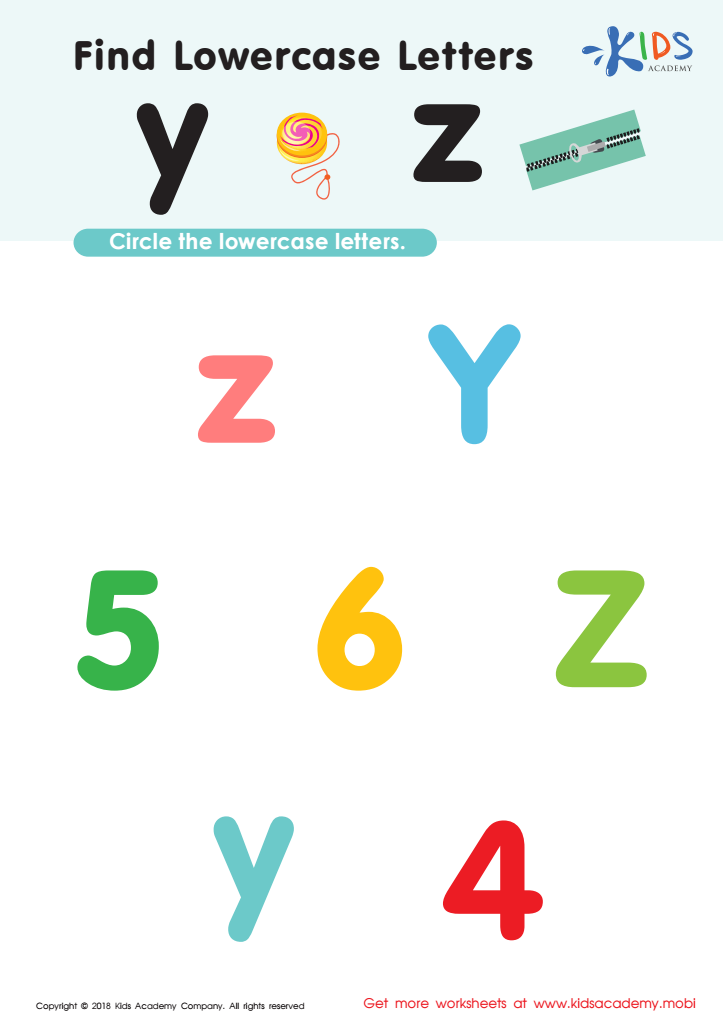
Find Lowercase Letters y z Worksheet
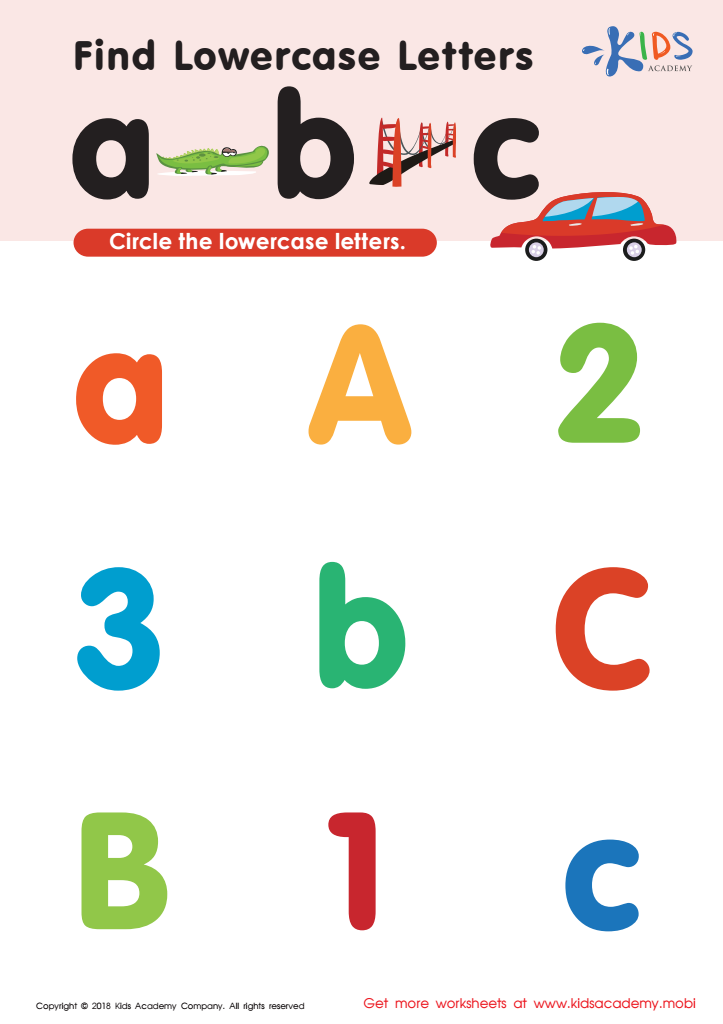
Find lowercase letters a b c Worksheet
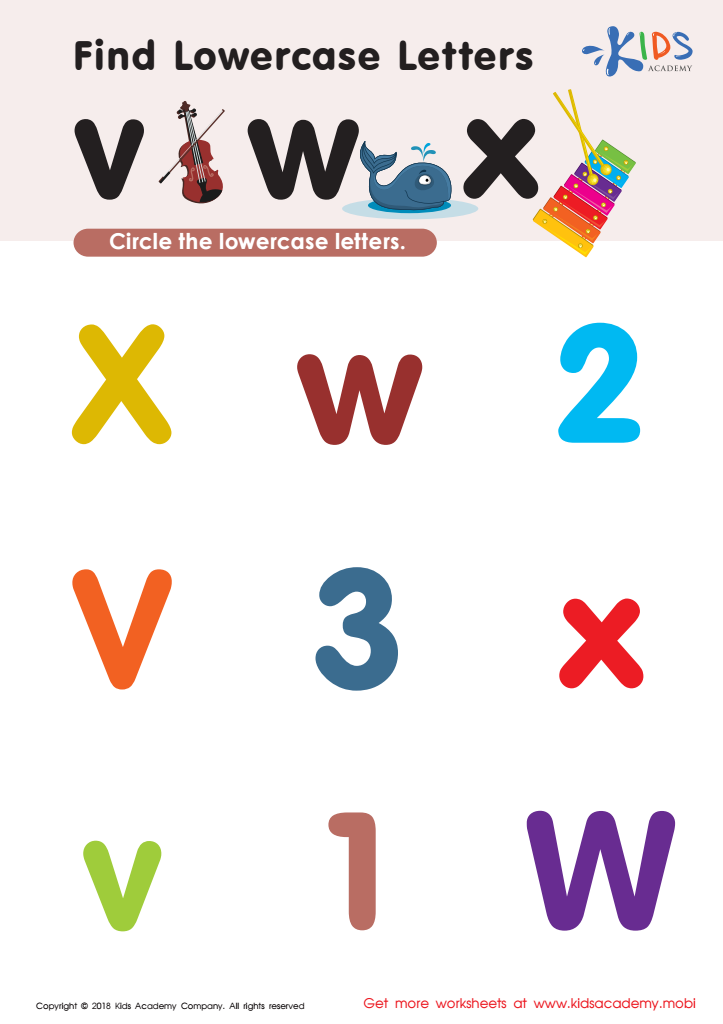
Find Lowercase Letters v w x Worksheet





Lowercase identification in kindergarten is crucial because it forms the backbone of early literacy development. Many texts and books are written predominantly in lowercase letters, making their recognition essential for reading fluency. When parents and teachers emphasize lowercase identification, they help children build a solid foundation for reading.
First, recognizing and distinguishing between uppercase and lowercase letters ensures that kids understand that 'A' and 'a' are the same letter serving different purposes, essential for writing and typing skills. It supports alphabetic principle understanding—the recognition that letters and letter patterns represent the sounds of spoken language.
Teachers focusing equally on both identifies help mitigate the common struggle kids face in identifying lowercase letters, which often occur more frequently in print. Additionally, the practice can help reduce confusion between similar-looking letters, such as "b" and "d," fostering confidence and competence in reading.
Parents can extend this learning at home, enriching the child's environment with mixed-case writing examples to reinforce school lessons. Together, teachers and parents can make this a fun and integrated learning process, paving the pathway for academic success and a lifelong love for reading. Ultimately, early mastery in letter recognition influences overall language development: their listening, speaking, and later formal writing capabilities.