Vocabulary expansion Normal Kindergarten Vowels Worksheets
5 filtered results
-
From - To
Enhance your child's vocabulary with our engaging Normal Kindergarten Vowels Worksheets! Designed for early learners, these printable resources focus on essential vowel sounds and their usage in everyday words. By working through a variety of fun and interactive activities, kindergarteners will develop their understanding of vowels, while expanding their vocabulary in an enjoyable way. Worksheets include colorful visuals and easy-to-understand exercises that promote language development and phonics skills. Perfect for home or classroom use, these materials make learning a fun experience for both children and educators. Equip your little ones with the foundational skills they need for academic success!
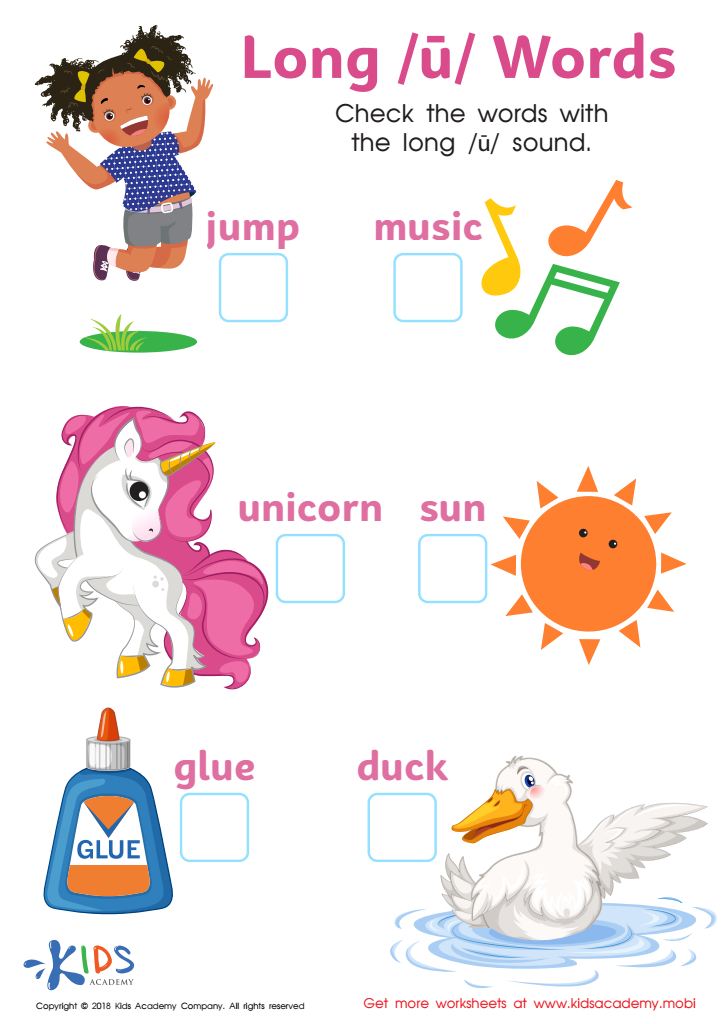
Long U Words Reading Worksheet
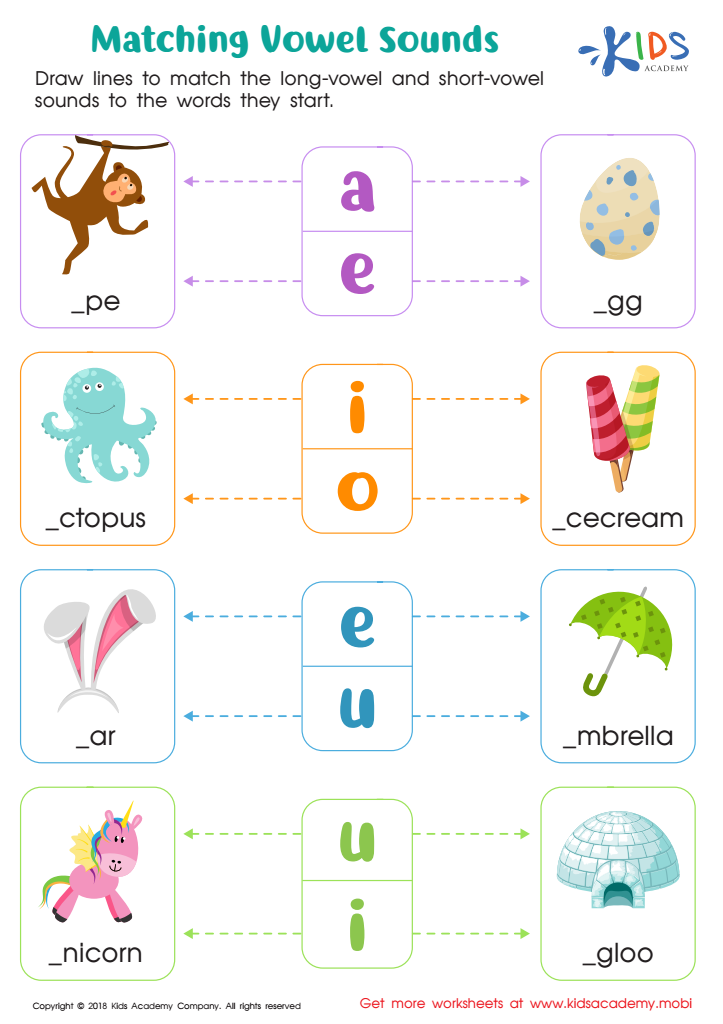
Matching Vowel Sounds Worksheet
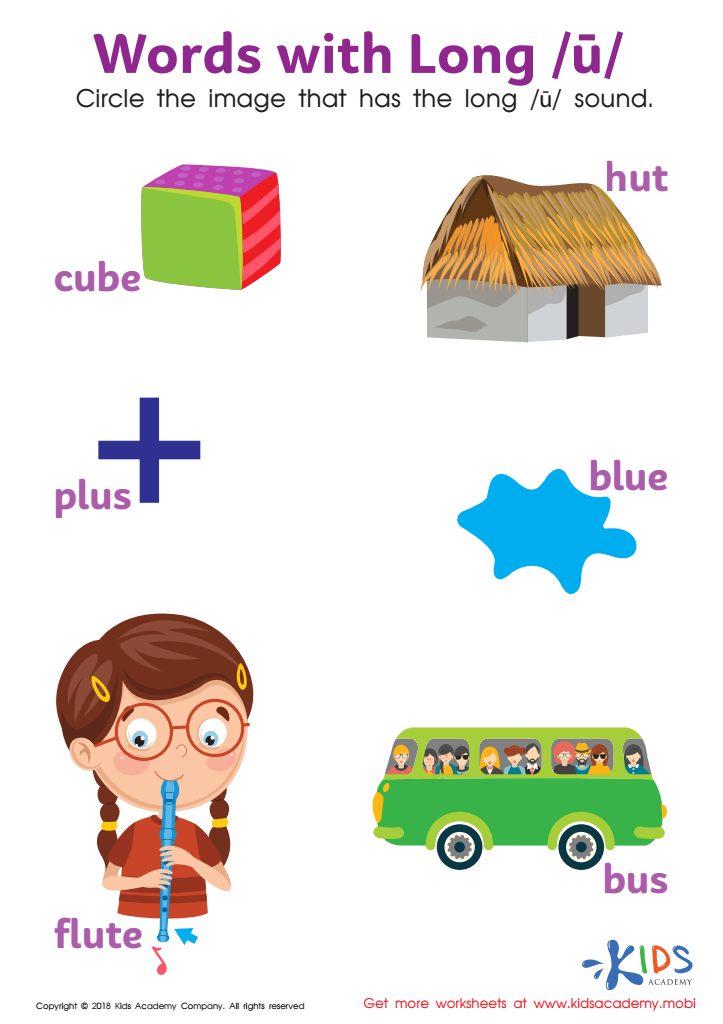
Words with Long U Reading Worksheet

Long and Short U Worksheet
 Assign to My Students
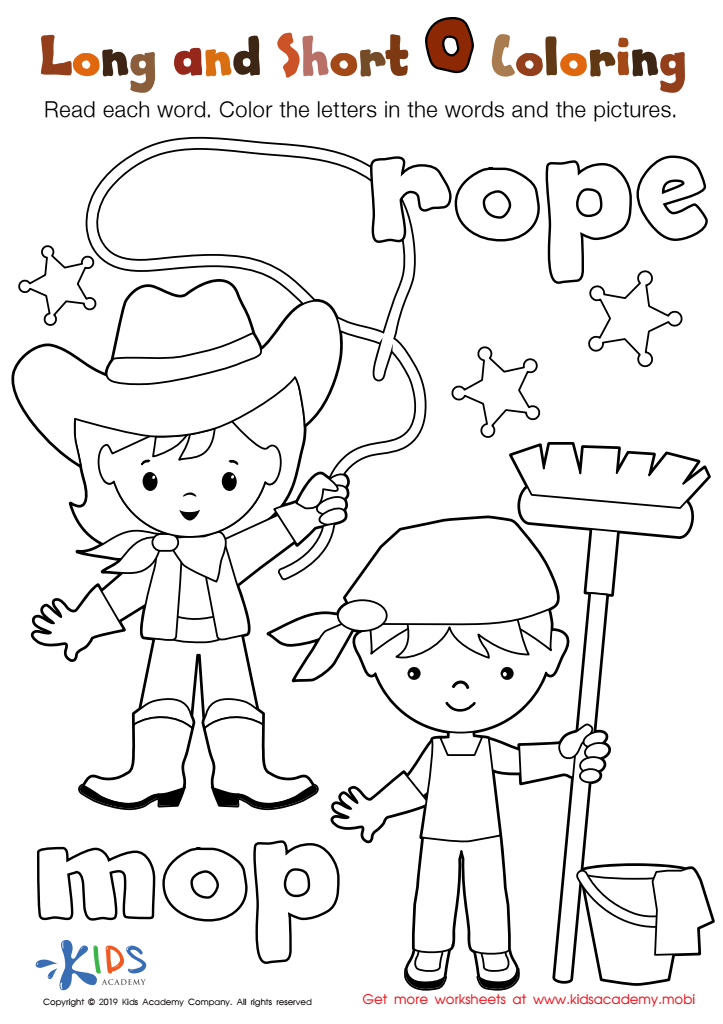
Long and Short O Worksheet
Assign to My Students



Vocabulary expansion is crucial for kindergarteners as it lays the foundation for literacy and communication skills. At this early stage, children are particularly receptive to language influences, making it an ideal time for vocabulary enrichment. Parents and teachers can significantly impact a child's vocabulary by introducing diverse words, especially those that focus on normal kindergarten vowels (A, E, I, O, U), which are fundamental to word formation.
By enhancing vocabulary through engaging activities, such as storytelling, songs, and interactive games, educators can foster a love for language. A robust vocabulary not only improves reading and writing skills but also enhances a child's ability to express thoughts and emotions clearly. Furthermore, children with a strong vocabulary are better equipped to comprehend instructions, collaborate with peers, and succeed academically.
Early exposure to rich language experiences also influences cognitive development. Understanding new words helps children make connections, enhancing critical thinking and problem-solving abilities. Thus, intentional vocabulary expansion surrounding kindergarten vowels is essential—it's not just about alerting kids to sounds, but enriching their overall linguistic experience. Ultimately, a rich vocabulary leads to academic success, confidence, and personal growth, making it vital for parents and teachers to prioritize vocabulary development in young learners.