Alphabet understanding Normal Kindergarten Worksheets
6 filtered results
-
From - To
Our "Alphabet Understanding Normal Kindergarten Worksheets" provide a strong foundation for early literacy skills. These engaging, expertly-designed worksheets help young learners recognize and write both uppercase and lowercase letters, fostering essential language development. Featuring fun activities and colorful illustrations, kids will enjoy connecting letters to sounds, matching images with corresponding words, and completing alphabet-based puzzles. Perfect for classroom use or additional at-home practice, our collection ensures children gain confidence and mastery in letter recognition and phonetics. Set the stage for a lifelong love of reading and writing with our comprehensive, pedagogically sound resources.
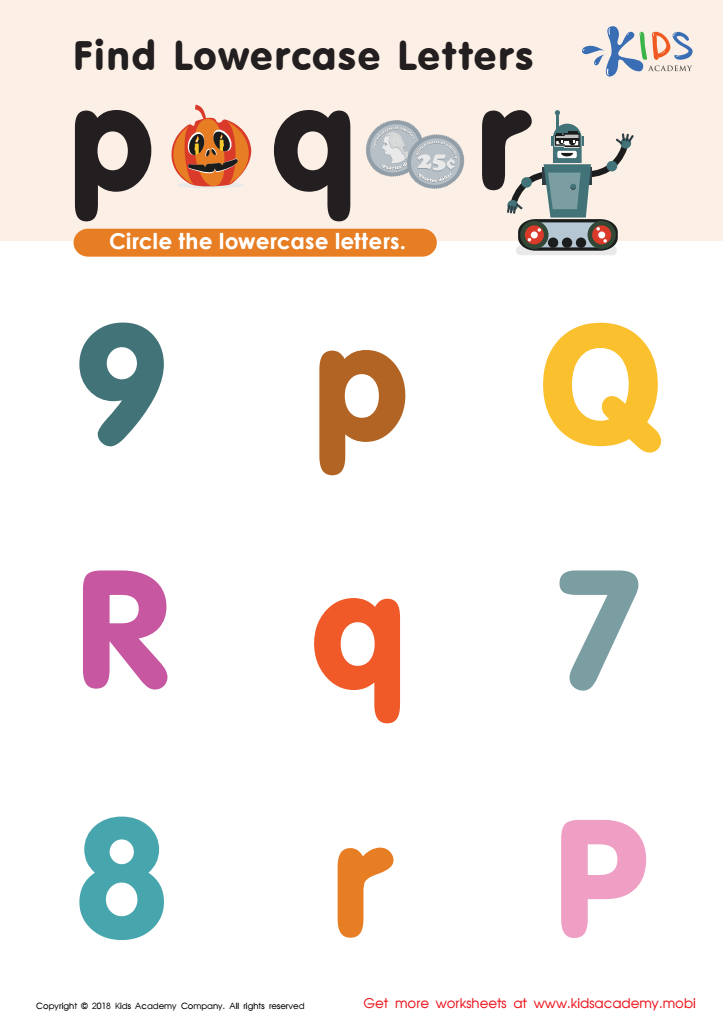
Find lowercase Letters p q r Worksheet
 Assign to My Students
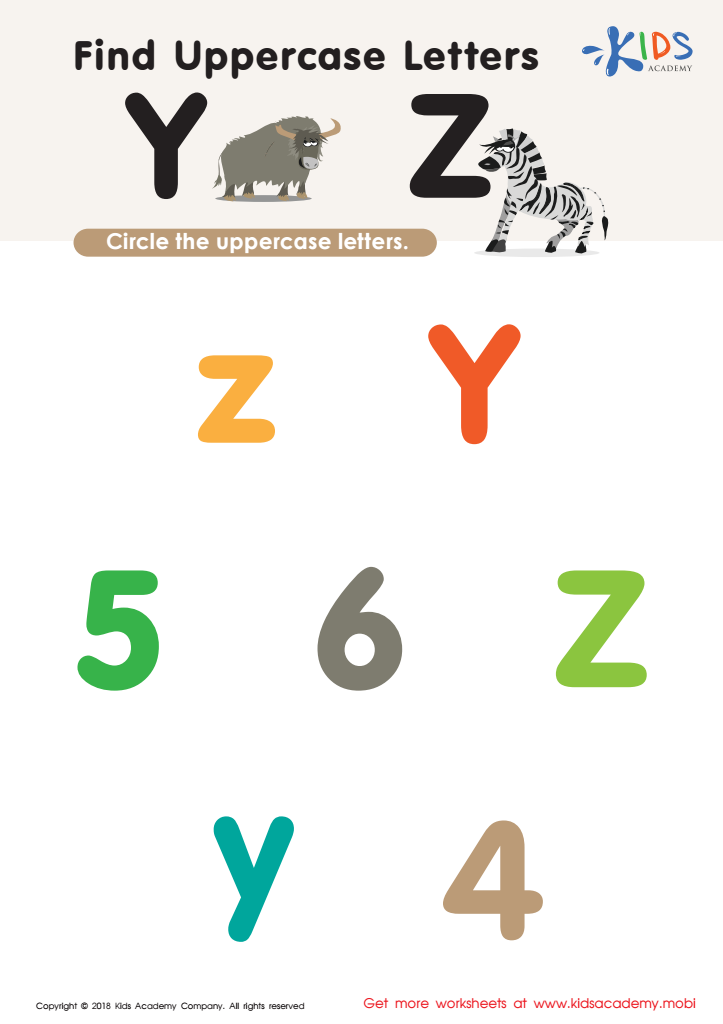
Find Uppercase Letters Y Z Worksheet
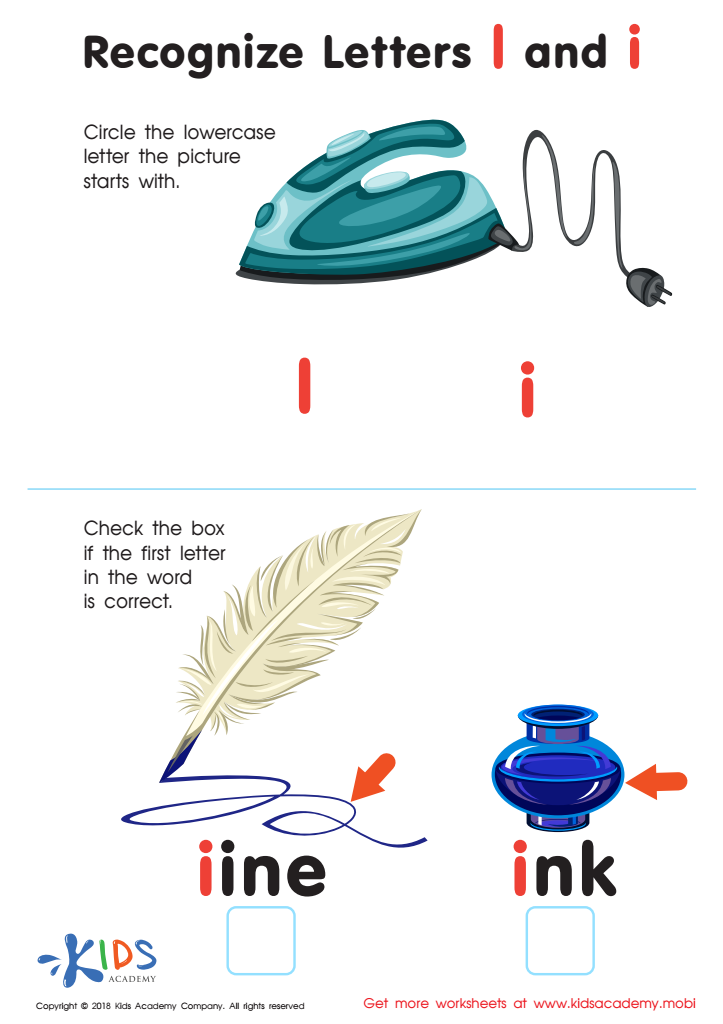
Recognize Letters l and i Worksheet
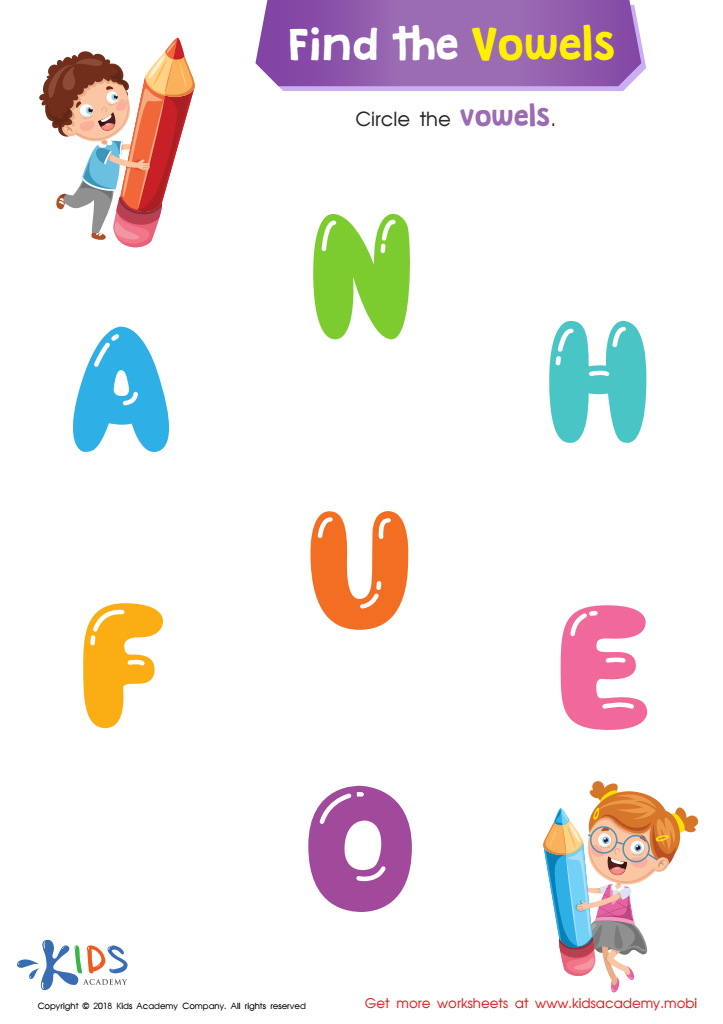
Find the Vowels Reading Worksheet

Find lowercase letters a b c Worksheet
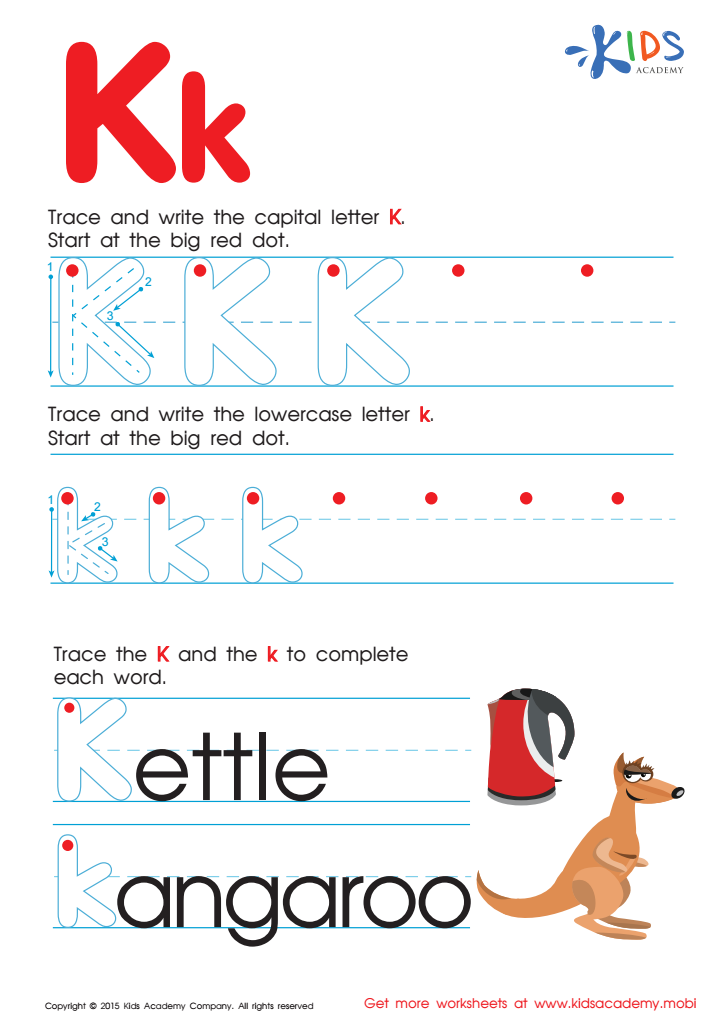
Letter K Tracing Page


.jpg)





Understanding the alphabet is a fundamental milestone in early childhood education, making it crucial for both parents and teachers to emphasize its mastery in kindergarten. First and foremost, the alphabet is the building block of literacy. It is the key to reading and writing; recognizing and understanding letters enables children to decipher words, fostering their ability to communicate effectively. This foundational skill sets the stage for future academic success, as reading proficiency is closely linked to performance in virtually all educational areas.
Moreover, early alphabet knowledge can boost children's confidence and enthusiasm for learning. When children can identify and use letters, they are more likely to engage in classroom activities, participate in storytime, and experiment with writing. This engagement promotes a positive attitude towards school, laying the groundwork for a lifelong love of learning.
Parents and teachers who focus on alphabet understanding also contribute to closing the literacy gap. Early intervention can prevent future reading difficulties, which are often harder and more costly to address at later stages. By providing children with the tools they need to understand the alphabet, adults are setting them on a path to excel not just academically, but socially and emotionally as well. Thus, alphabet understanding is a cornerstone of a well-rounded early education.