Differentiating shapes Normal Kindergarten Worksheets
3 filtered results
-
From - To
Discover the joy of learning with our "Differentiating Shapes" Normal Kindergarten Worksheets from Kids Academy. Specifically designed for young minds, these engaging worksheets help kindergarten students identify, differentiate, and understand various shapes. Through fun, interactive exercises, children will enhance their shape recognition skills, laying a solid foundation for future geometry learning. Perfect for classroom or at-home practice, these worksheets promote critical thinking, fine motor skills, and cognitive development. Join us in making learning shapes an exciting adventure for your kindergartener with our expertly crafted resources. Download now and watch your child's confidence and knowledge grow!
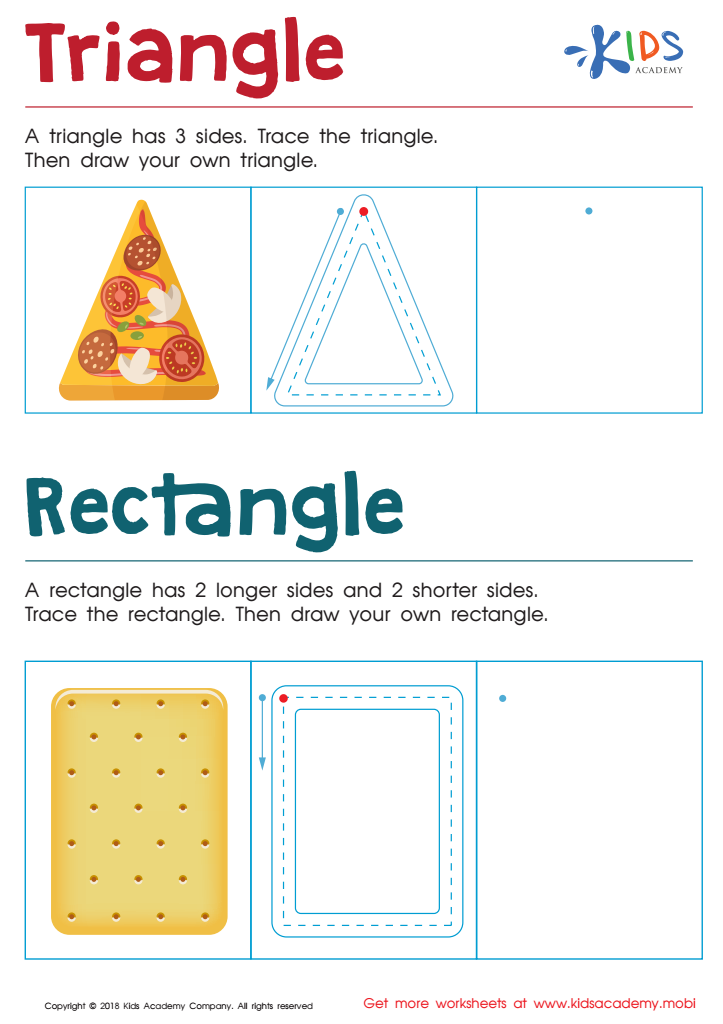
Triangle Rectangle Worksheet
 Assign to My Students
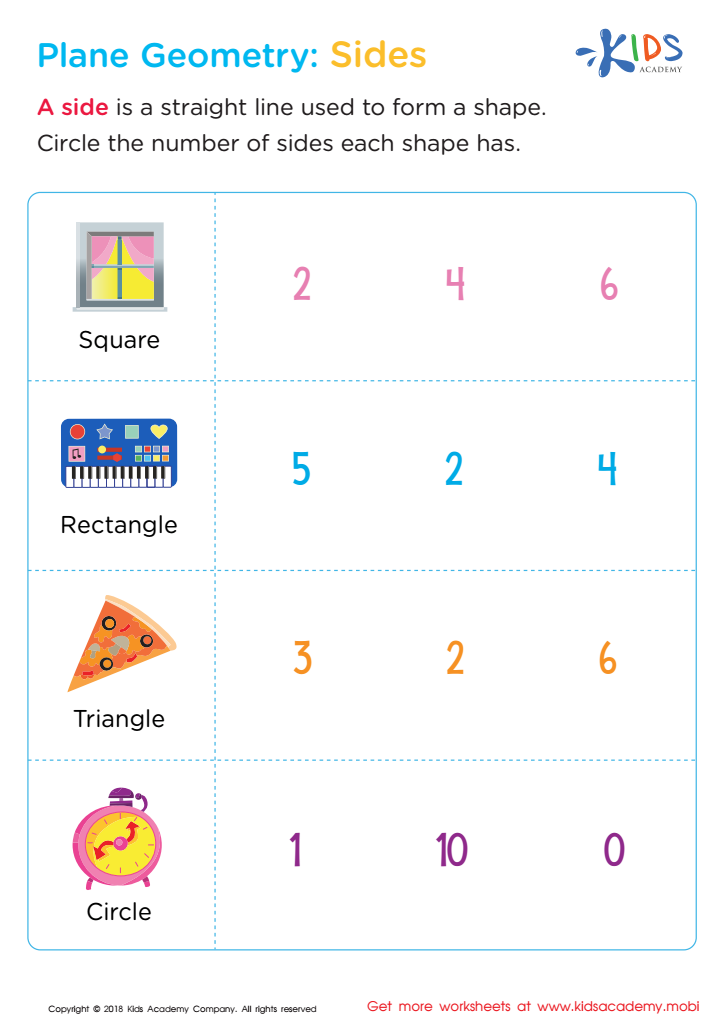
Plane Geometry: Sides Worksheet
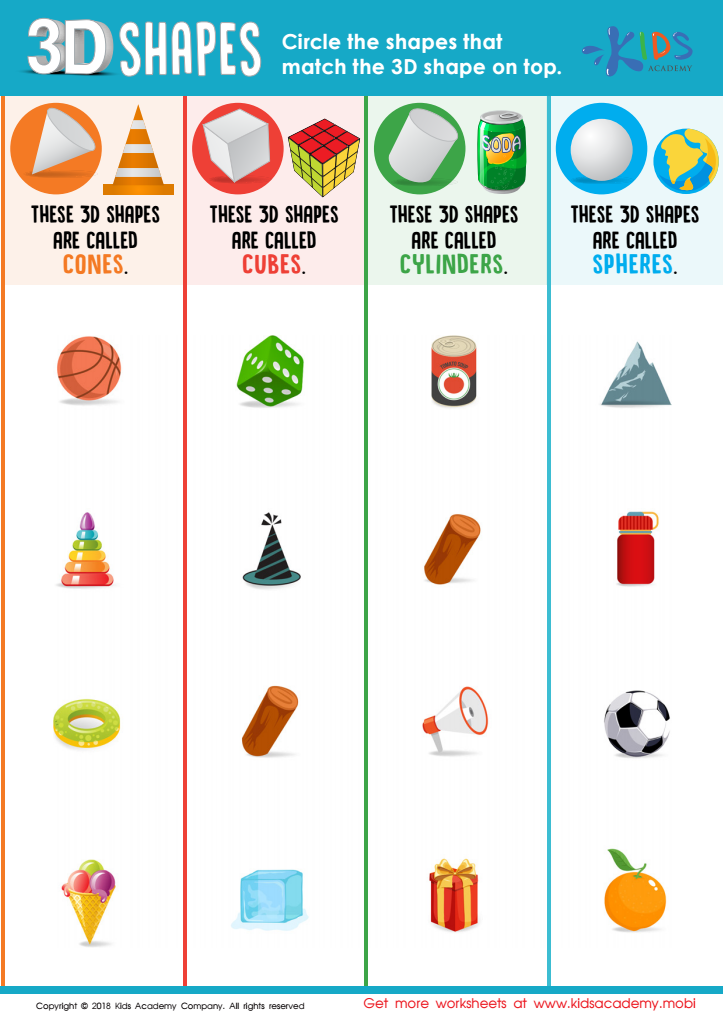
3D Shapes Worksheet






.jpg)

Differentiating shapes in Kindergarten holds significant value for young learners, impacting both their cognitive development and foundational skills in later math learning. At this age, children are building visual and spatial awareness, an essential part of their intellectual growth. Recognizing and sorting shapes nurtures critical thinking and problem-solving abilities, helping kids learn how to visually interpret the world around them.
From an educational standpoint, understanding shapes lays the groundwork for more complex math concepts. As children become familiar with shapes such as circles, squares, triangles, and rectangles, they start to grasp fundamental geometry principles. This base knowledge is crucial as students progress and encounter more intricate math topics like area, perimeter, and volume.
Additionally, differentiating shapes in a fun, engaging manner can enhance fine motor skills through activities such as drawing or building with blocks. It also aids in developing language skills; children learn to describe shapes and their properties, expanding their vocabulary and ability to communicate effectively.
For parents and teachers, integrating shape differentiation into early learning ensures that children develop a solid foundation. It can be seamlessly incorporated into playful activities, making learning enjoyable while setting the stage for academic success in future grades. This approach promotes well-rounded, empowered learners ready to tackle new challenges.