Rhyming skills development Normal Kindergarten Worksheets
3 filtered results
-
From - To
Enhance your child's language skills with our engaging Rhyming Skills Development worksheets for Kindergarten! Designed for young learners, these printable activities foster phonemic awareness and encourage fun learning experiences. Through interactive exercises, children will identify, match, and create rhymes, boosting their vocabulary and listening skills. Our colorful and age-appropriate worksheets will captivate their attention, making learning exciting and effective. Perfect for home or classroom use, these resources support early literacy development and lay the foundation for reading success. Explore our comprehensive collection today and watch your child’s confidence and creativity flourish through the magic of rhyming!
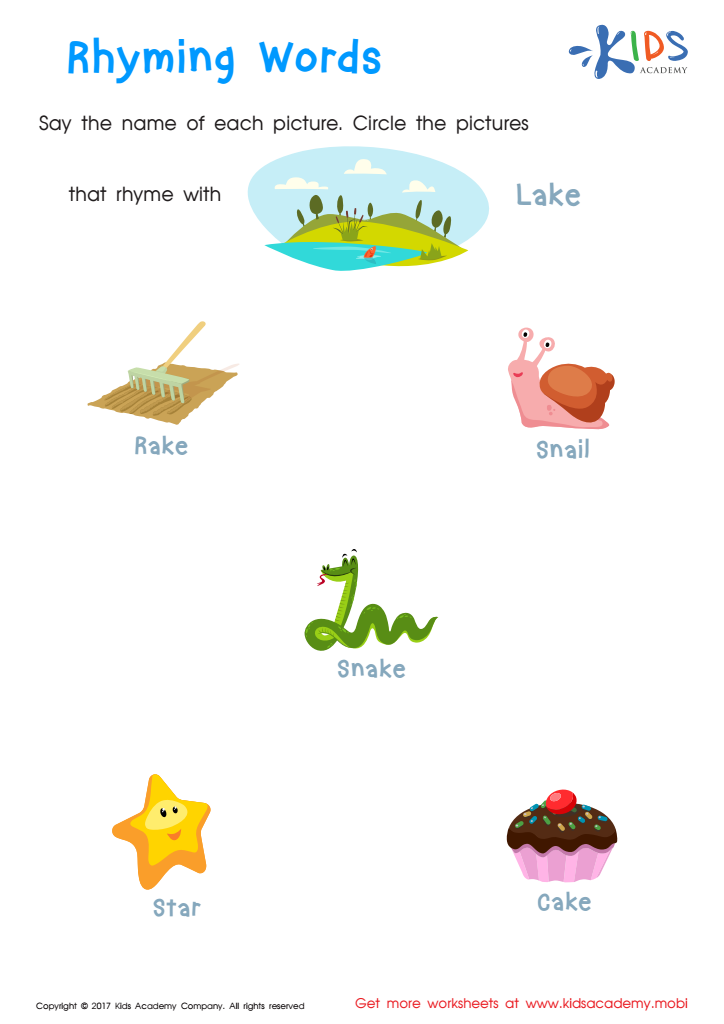
Rhyming Words Rhyming Worksheet
 Assign to My Students
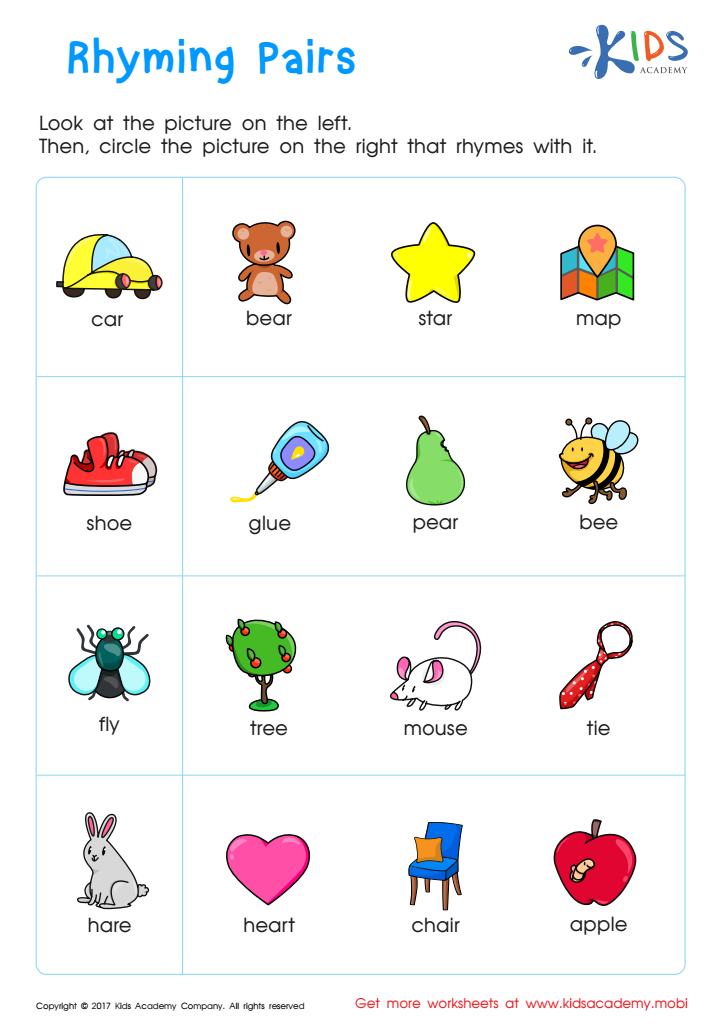

First Words: Picture Rhymes Worksheet







Rhyming skills development in kindergarten is essential for several reasons, and it should matter deeply to both parents and teachers. First, rhyming is a foundational element of phonemic awareness, which is crucial for reading readiness. When children recognize and produce rhyming words, they enhance their ability to hear and manipulate sounds in spoken language, paving the way for successful reading and writing skills in the future.
Moreover, rhyming helps promote vocabulary growth. Engaging with rhyming games and activities introduces children to new words and concepts, enriching their language development. This playful interaction with language not only builds their confidence but also nurtures a love for literature.
Additionally, rhyming can enhance cognitive skills, as it encourages pattern recognition and memory retention. Activities like singing nursery rhymes or reading rhyming books foster creativity and imagination, making learning enjoyable.
Lastly, strong rhyming skills foster social interaction. Participating in rhyming games and songs provides opportunities for collaboration and communication among peers. Overall, prioritizing rhyming skills in kindergarten ensures that children are equipped with vital tools for literacy and lifelong learning, making it a critical focus for parents and educators alike.