Sound Association Normal Kindergarten Worksheets
7 filtered results
Difficulty Level
Grade
Age
-
From - To
Subject
Activity
Standards
Looking for engaging and effective activities to improve early phonetic skills? Our Sound Association Normal Kindergarten Worksheets are perfect for young learners! These worksheets are designed to help kindergarteners recognize and connect sounds with corresponding letters and words. Through fun, interactive exercises, children can develop vital reading and pronunciation skills. Each worksheet aims to boost listening abilities, enhance vocabulary, and encourage a lifelong love of learning. Our expertly crafted, kid-friendly printables ensure that learning phonetics is both enjoyable and educational. Equip your little ones with the foundation they need for reading success with our top-quality sound association worksheets!
Favorites
With answer key
Interactive
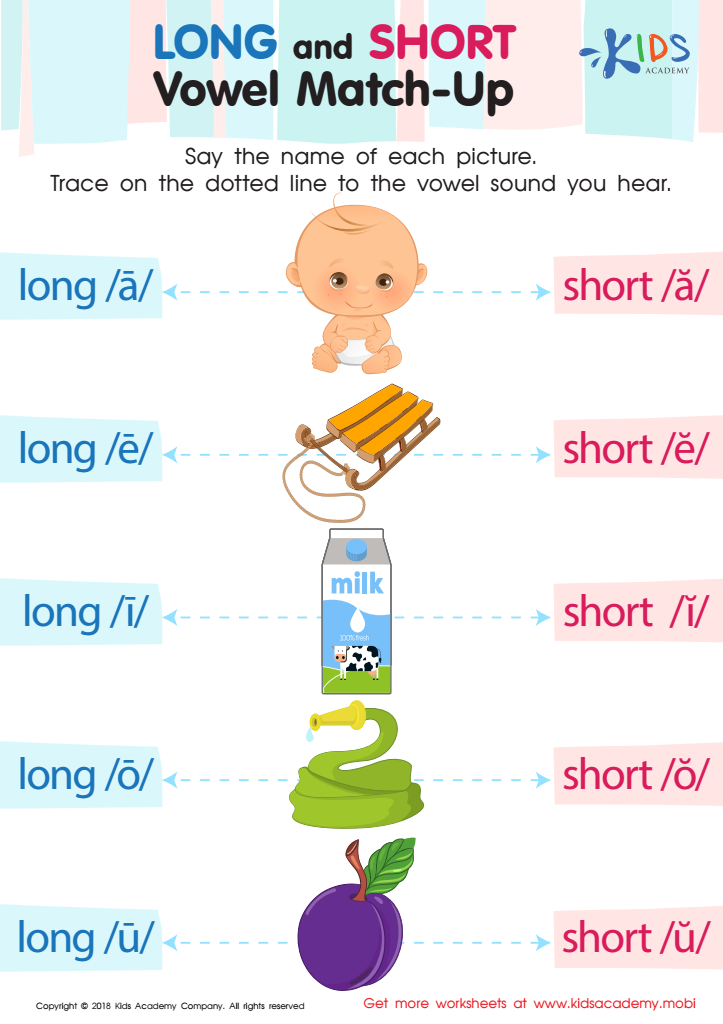
Long and Short Vowel Match up Reading Worksheet
Help your reader build confidence and refine their decoding skills! This worksheet combines long and short vowel recognition with a traceable component to improve fine motor skills. Your learner will name each picture and trace the dotted lines to get to the correct vowel sounds.
Long and Short Vowel Match up Reading Worksheet
Worksheet
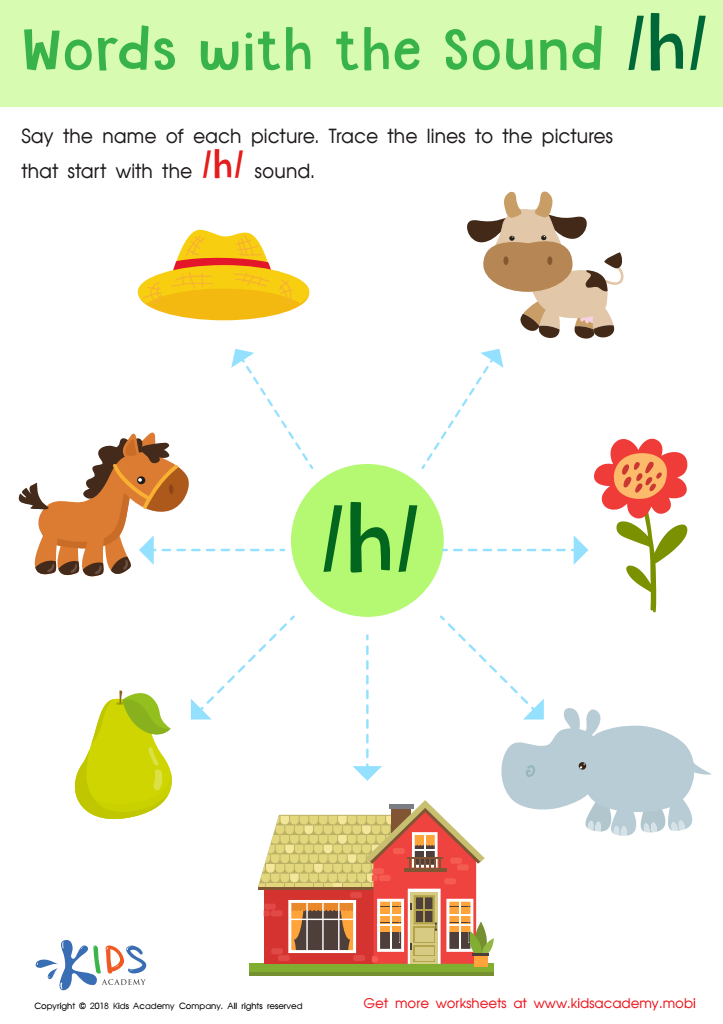
Words with sound h Reading Worksheet
The letter H can often be heard in words! Check your child's knowledge with an engaging worksheet from Kids Academy. Ask them to go around a circle and name each image aloud. Listen for the starting sound and trace the line from the middle letter to the images with the sound. This is a great way to practice phonics!
Words with sound h Reading Worksheet
Worksheet
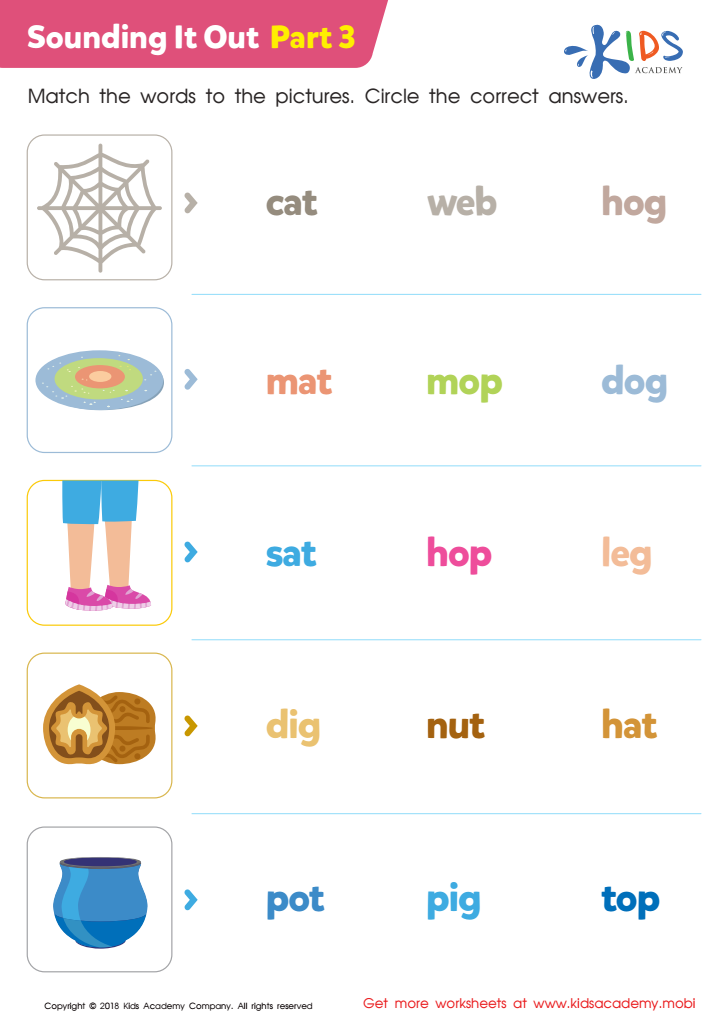
Sounding it Out: Part 3 Worksheet
Once Parts 1 and 2 are complete, this printable phonics worksheet will help kids take their reading skills to the next level! As they gain confidence, give them hints less often and direct their attention to three words in a row. Ask them to read and circle the correct word to complete!
Sounding it Out: Part 3 Worksheet
Worksheet
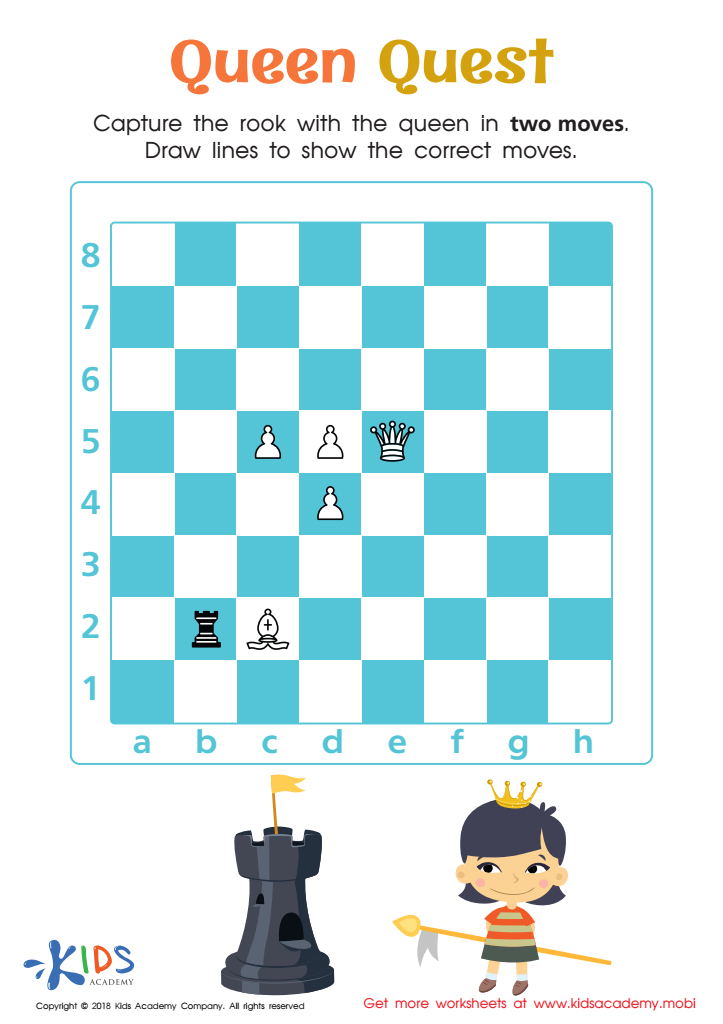
Queen Quest Worksheet
Want to test your child's chess skills? See if they know how the queen, king, knights, rooks, and pawns move. This worksheet challenges your young one to capture a rook with the queen in two moves. Draw lines to show the queen's moves to complete the task.
Queen Quest Worksheet
Worksheet
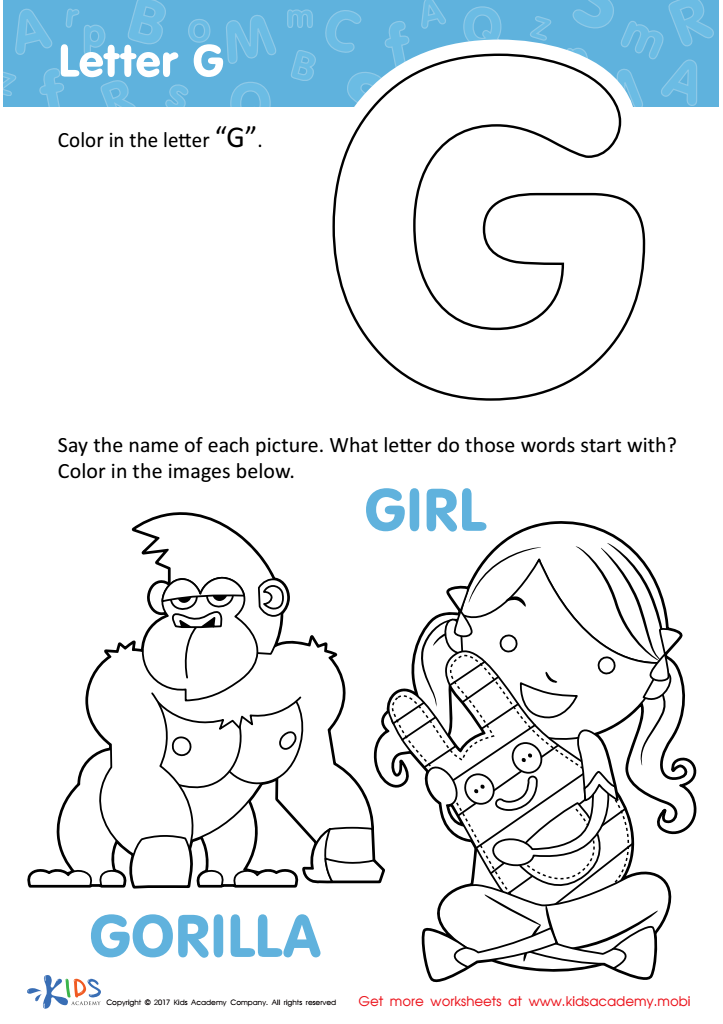
Letter G Coloring Sheet
This "G" coloring page encourages creativity and teaches kids the letter "G" sound. With its fun visuals and familiar words, it's sure to excite your child. Plus, you can talk about the letter’s sound with the pictures given.
Download (PDF)
 Assign to My Students
Assign to My Students
Letter G Coloring Sheet
Worksheet
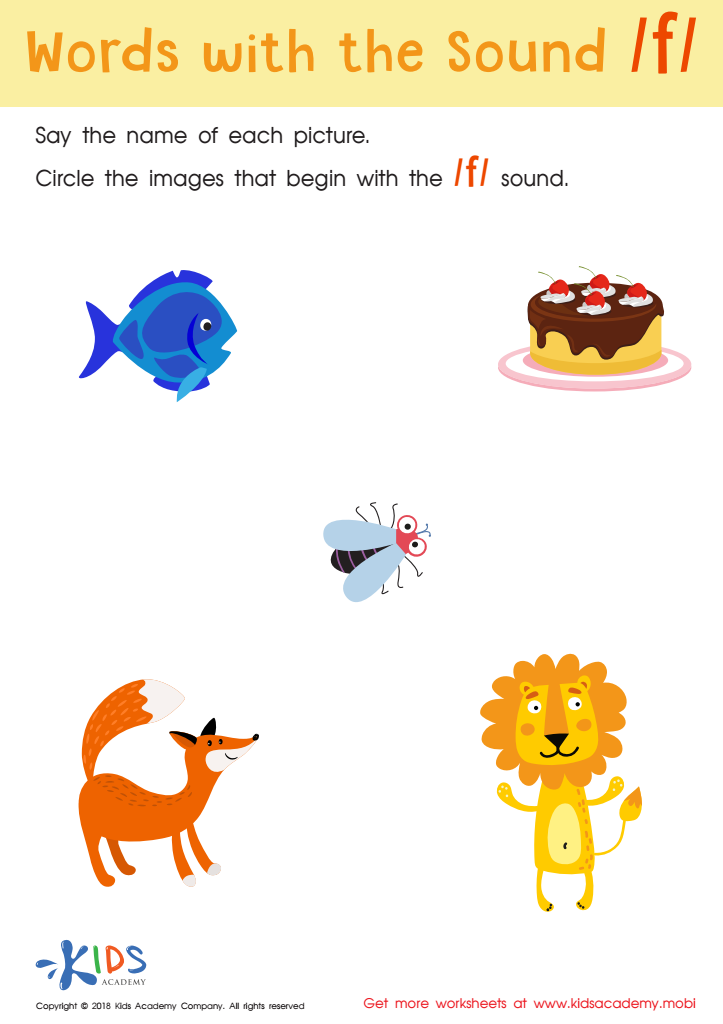
Words with sound f Reading Worksheet
This illustrated phonics worksheet is ideal for preschool or kindergarten. It helps boost learners' literacy skills with a focus on the letter "f". Ask your child to name all the pictures, listening for that sound. Examples are fish, fox, lion, bug. When they can identify which words start with "f", have them circle the images. Congratulate them on a job well done!
Words with sound f Reading Worksheet
Worksheet
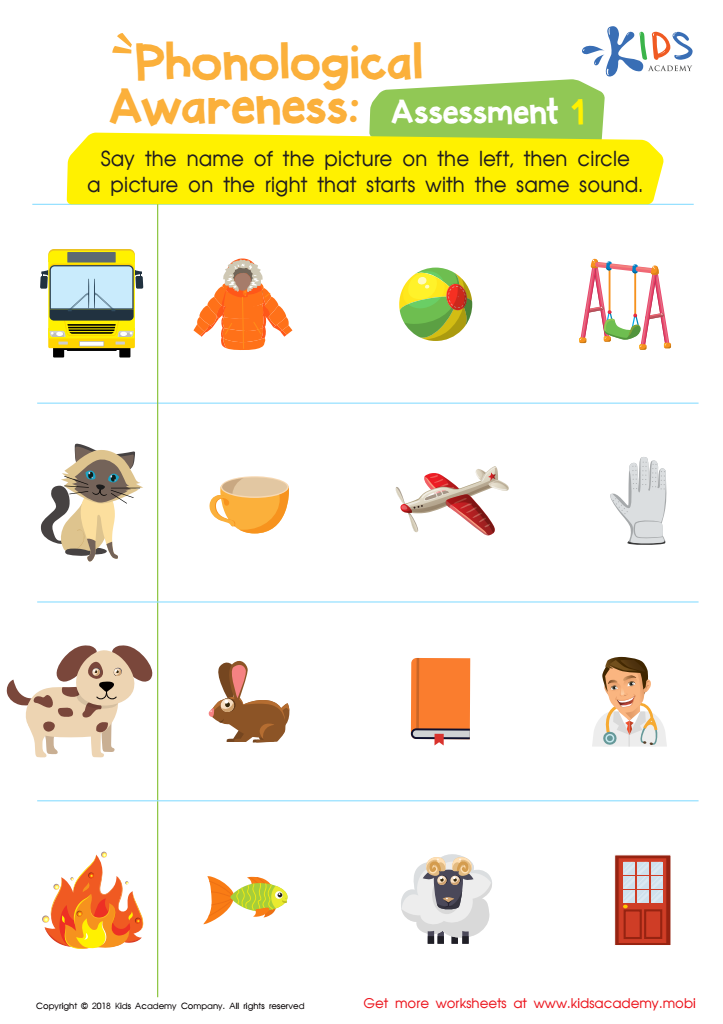
Phonological Awareness: Assessment 1 Worksheet
This worksheet helps kids build key phonics skills for pre-reading. They say each picture name aloud, focusing on the starting sound. Then, they match the sound with an image in the same row. Use as a checkpoint for kindergarten or grade 1 phonics readiness.
Phonological Awareness: Assessment 1 Worksheet
Worksheet
Join Kids Academy for Free
Who is primarily going to use this learning content?







Sound association is foundational to early childhood education and should be a priority in any curriculum, including a kindergarten setting. For parents and teachers, understanding its significance directly impacts a child's literacy development. Sound association refers to the ability to connect phonemes (the smallest units of sound) with their corresponding letters and combinations in the language. This critical skill underpins phonics, which is essential for reading and spelling proficiency.
When children effectively grasp sound association, they form the link between spoken and written language. This helps them decode new words while reading and enables them to spell and write effectively, thereby fostering language acquisition. Early proficiency in these areas establishes a critical groundwork for future academic achievements across disciplines, not just literacy.
Moreover, strong skills in sound association can boost a child’s confidence and enthusiasm towards learning. Positive reinforcement from parents and teachers in mastering these basic phonics principles can cultivate a lifelong love for reading and learning.
In a normal kindergarten environment, emphasis on sound association should include fun, engaging, and interactive activities, like rhyming games, sound matching exercises, and read-aloud sessions. These activities can make learning enjoyable and memorable, supporting long-term educational gains. Thus, by valuing sound association, we enrich early education to create competent, confident learners.