Sound recognition Normal Kindergarten Worksheets
5 filtered results
-
From - To
Enhance your child's auditory skills with our Sound Recognition Normal Kindergarten Worksheets from Kids Academy. Designed specifically for young learners, these interactive worksheets help children identify and differentiate various sounds, aiding in early reading and language development. From animal noises to everyday sounds, our comprehensive exercises provide a fun and engaging way to improve listening skills. Each worksheet encourages active participation through colorful visuals and stimulating activities. Perfect for both home and classroom settings, these worksheets are an essential resource for building foundational auditory recognition and setting the stage for future academic success. Explore our collection today!

Rhyming Words Rhyming Worksheet
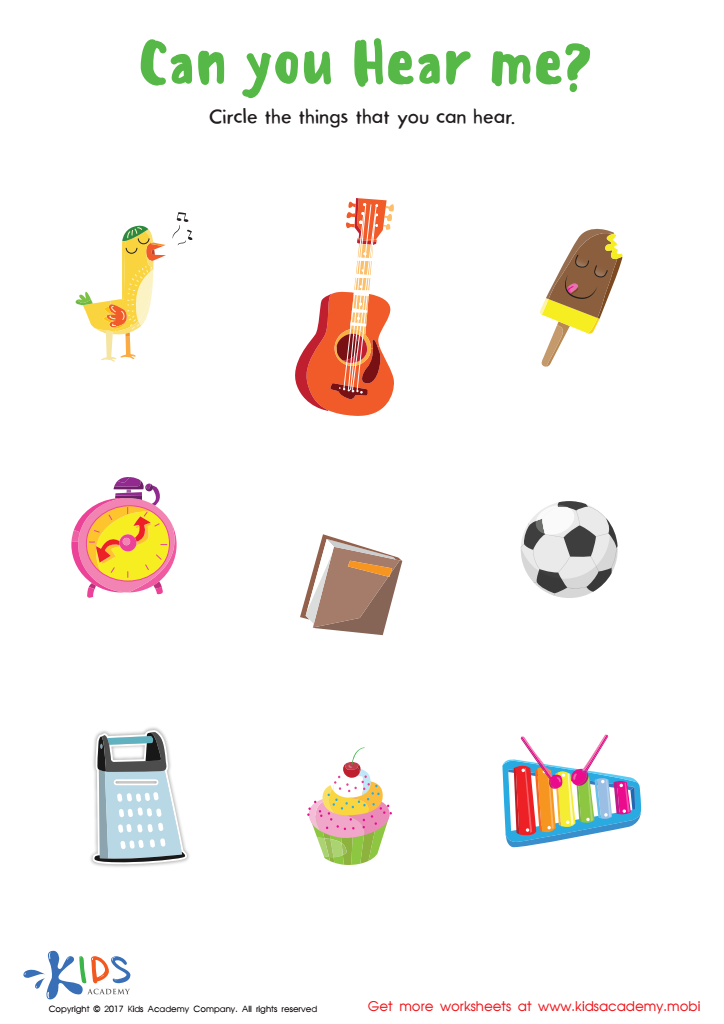
Can You Hear Me Worksheet
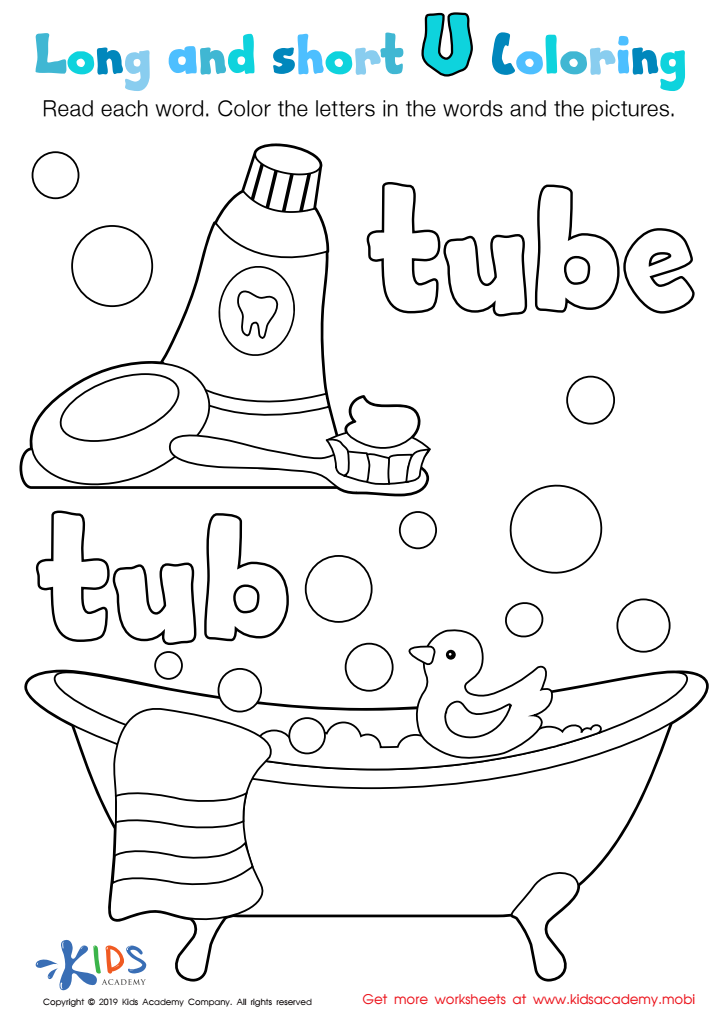
Long and Short U Worksheet
 Assign to My Students

First Words: Picture Rhymes Worksheet
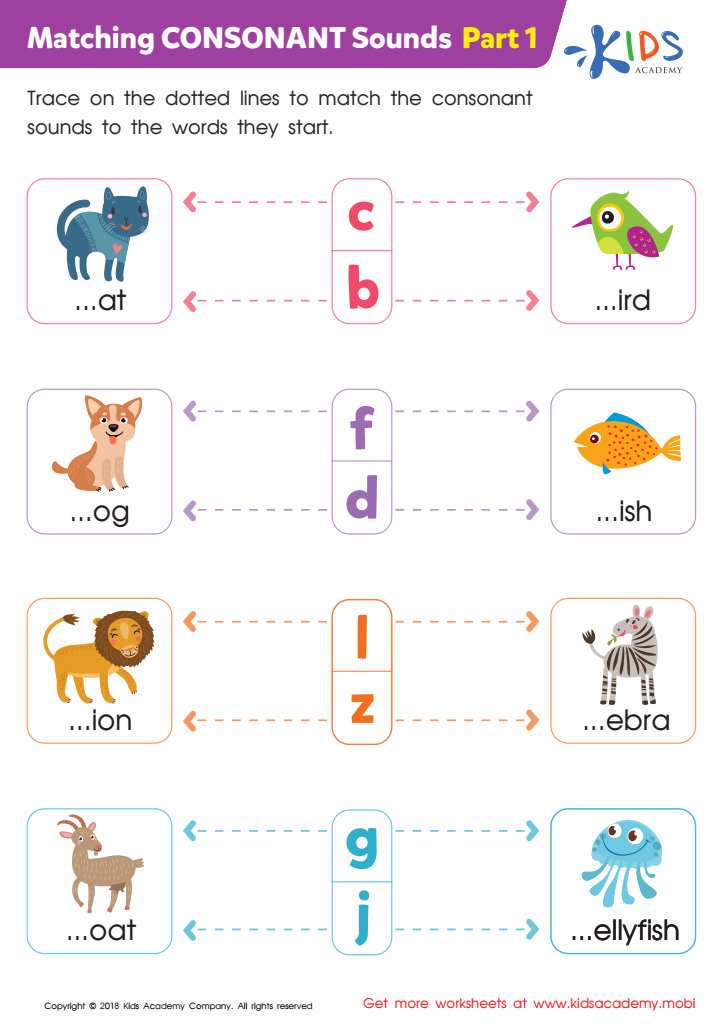
Matching Consonant Sounds: Part 1 Worksheet



.jpg)



Sound recognition is a foundational skill in early childhood education, particularly for kindergarten-aged children. Parents and teachers should prioritize it because it is a crucial part of language development and literacy. When children can identify and distinguish between different sounds, they're better prepared to decode words, leading to more effective learning of reading and writing skills.
Sound recognition also helps in developing phonemic awareness, which is the ability to hear, identify, and manipulate individual sounds (phonemes) in spoken words. This skill is directly linked to reading success, as children learn to connect sounds with their corresponding letters or groups of letters.
Furthermore, sound recognition supports cognitive development. It enhances listening skills, attention to detail, and auditory memory. These skills are essential not just for language arts, but for overall cognitive functions that influence learning across all subjects.
Socially, children with strong sound recognition skills can communicate more effectively. They can discern the differences in verbal cues, tone of voice, and other auditory inputs, which aids in responding appropriately in social situations.
In essence, sound recognition skills lay the groundwork for a child's future academic success and social interactions, underscoring their importance in kindergarten and early childhood education. By focusing on sound recognition, parents and teachers can provide children with the tools they need to thrive both academically and socially.