Visual recognition Normal Kindergarten Worksheets
3 filtered results
Difficulty Level
Grade
Age
-
From - To
Subject
Activity
Standards
Discover our engaging Visual Recognition Normal Kindergarten Worksheets designed to enhance early learning skills among young children. These worksheets focus on helping kids identify and differentiate various shapes, colors, and patterns, which are essential for their cognitive development. Suitable for preschool and kindergarten classrooms, our resources are thoughtfully crafted to make learning fun and interactive. Each worksheet promotes visual discrimination, attention to detail, and critical thinking while integrating elements of play. With user-friendly designs, these worksheets are perfect for educators and parents looking to provide children with effective learning tools. Explore our collection to inspire, educate, and support your child’s growth!
Favorites
With answer key
Interactive
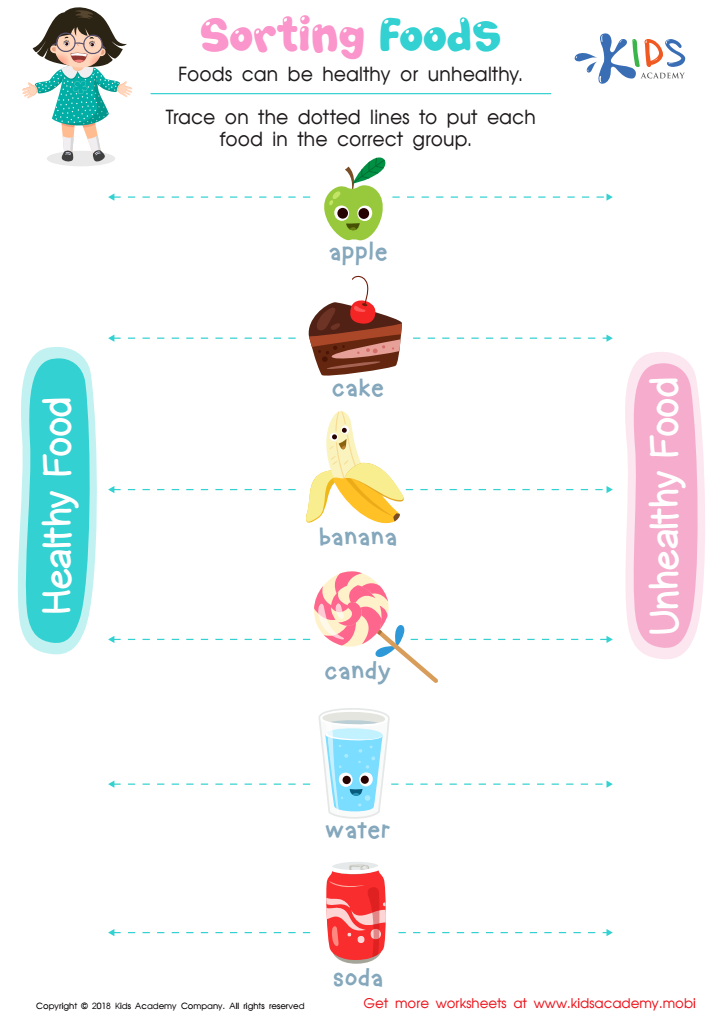
Sorting Food Worksheet
This delightful worksheet boosts critical thinking and fine motor skills. Kids use prior knowledge and pictures to sort foods into healthy and unhealthy groups. Tracing lines support accurate sorting and matching. Enjoy fun and free learning!
 Assign to My Students
Sorting Food Worksheet
Worksheet
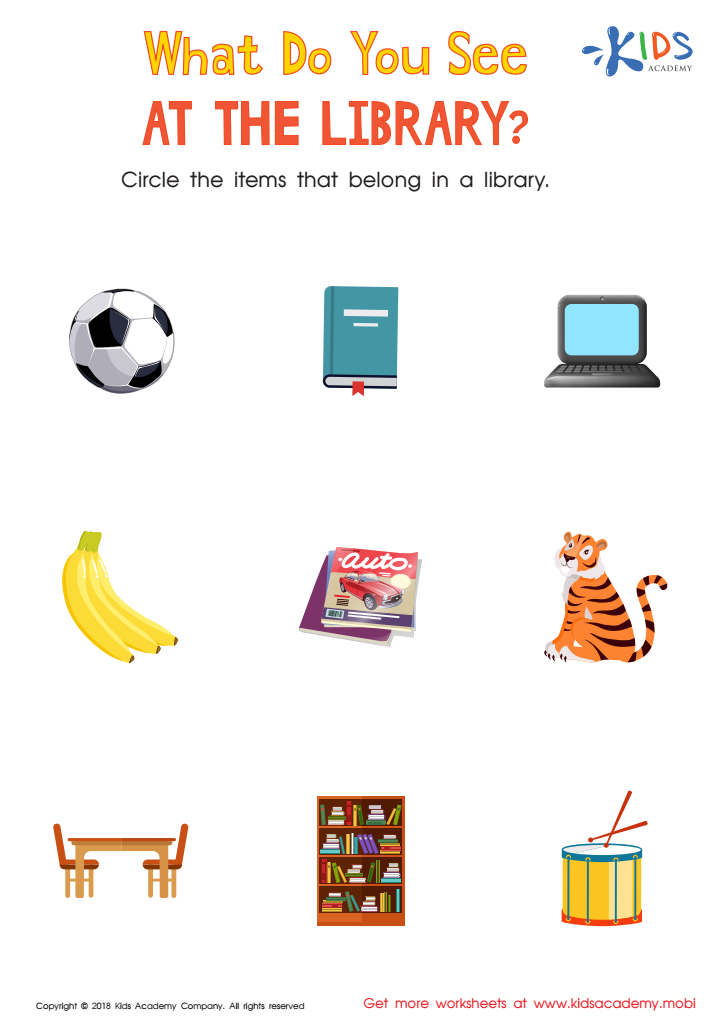
What Do you See at the Library? Worksheet
Let your kids look at the worksheet with pictures of objects found in libraries and those that don't. Ask them to list some, then circle the ones that belong in a library. Can they identify them? See if you can spot any they miss!
What Do you See at the Library? Worksheet
Worksheet
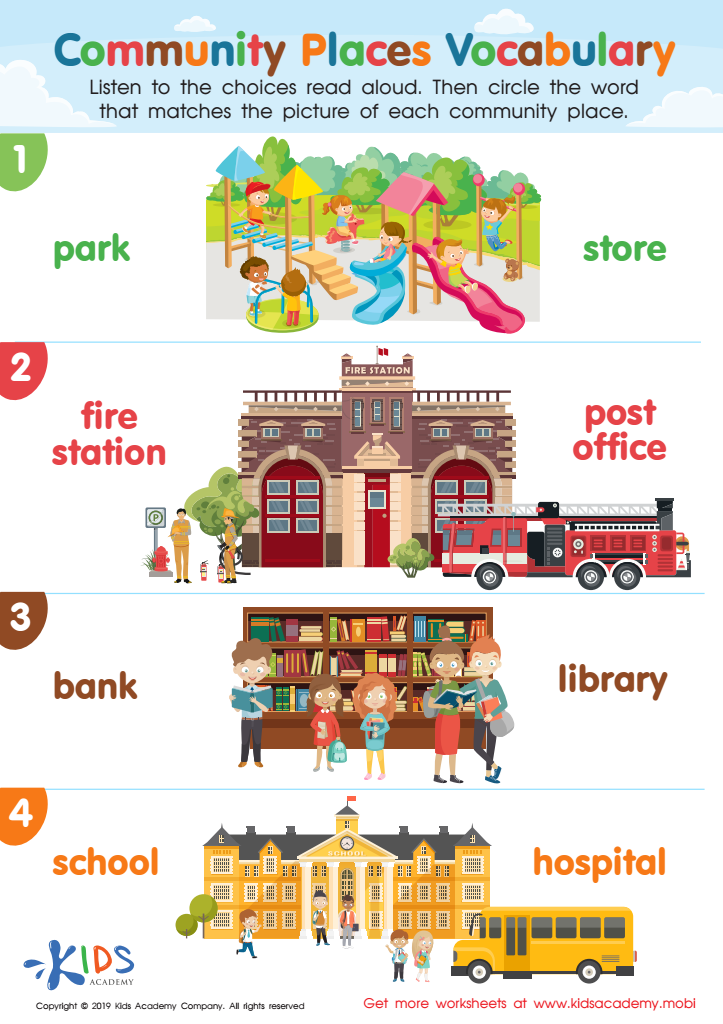
Community Places Vocabulary Worksheet
Help your kids identify community places with this fun worksheet. Ask them to listen to the choices read aloud and circle the word that matches the picture. This activity encourages dialogue about different people, places, and things in their community and the places they love to visit.
Community Places Vocabulary Worksheet
Worksheet
Join Kids Academy for Free
Who is primarily going to use this learning content?








Visual recognition is a crucial foundational skill in early childhood education that significantly impacts a child's overall development. Parents and teachers should prioritize this skill, especially in kindergarten, for several reasons. First, strong visual recognition abilities enhance a child's capacity to identify shapes, colors, letters, and numbers, which are essential for early literacy and numeracy. When children can quickly recognize these elements, they are better prepared for reading and math, setting the stage for future academic success.
Moreover, visual recognition is linked to cognitive development. It helps children organize and process information, leading to improved memory and problem-solving skills. Engaging in activities that promote visual recognition—such as puzzles, matching games, and interactive storybook reading—encourages critical thinking and creativity.
Furthermore, the social and emotional aspects of development are also intertwined with visual recognition. As children learn to recognize emotions and expressions on faces, they develop empathy and improve their communication skills, fostering better relationships with peers and adults.
In summary, emphasizing visual recognition in kindergarten not only supports academic readiness but also contributes to a child's social, emotional, and cognitive growth, underscoring its importance for parents and teachers alike.