Weather identification Normal Kindergarten Worksheets
3 filtered results
Difficulty Level
Grade
Age
-
From - To
Subject
Activity
Standards
Discover our engaging "Weather Identification Normal Kindergarten Worksheets"! Perfectly designed for little learners, these worksheets help children identify various weather conditions through fun, interactive activities. Our high-quality, printable resources support early childhood education by enhancing observational skills and weather-related vocabulary. Each worksheet features colorful illustrations and simple prompts, fostering an enjoyable learning experience. Ideal for both classroom and home use, these tools are crafted to make learning delightful and effective. Equip your kindergartener with essential weather knowledge and watch them build confidence in their observational abilities. Explore today and inspire a love for learning weather concepts!
Favorites
With answer key
Interactive
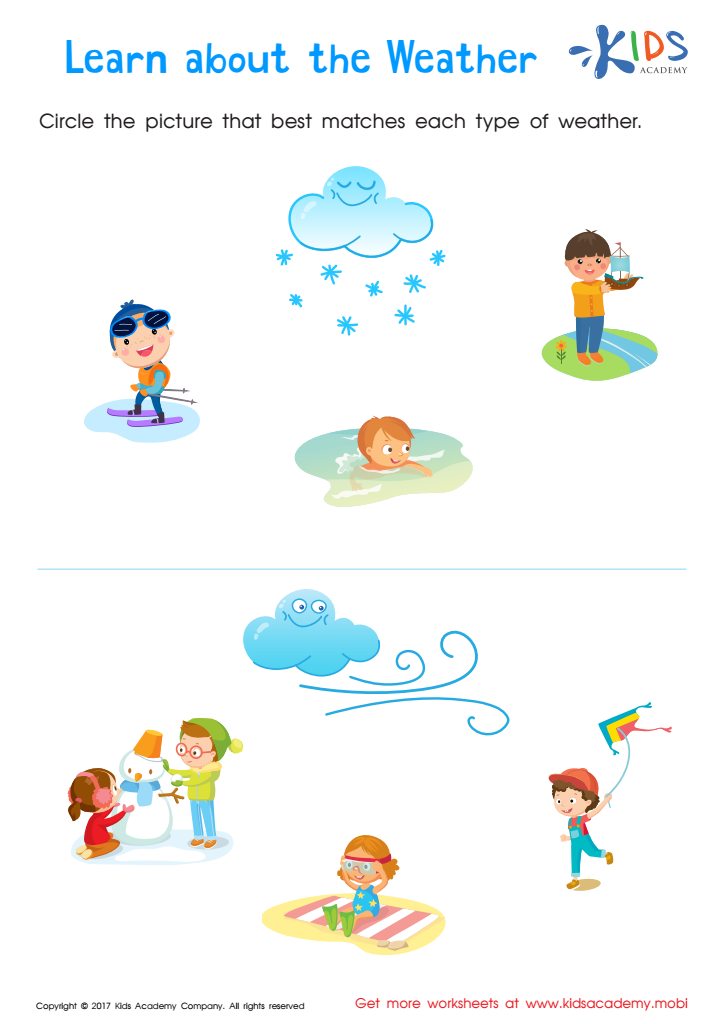
About the Weather Printable
This worksheet is perfect for reinforcing knowledge about changing weather and activities that suit each season. Help your child use their life experiences to observe the weather and complete the worksheet. Fun and colorful, it's a great way to learn about weather and seasons. Let's get started!
 Assign to My Students
About the Weather Printable
Worksheet
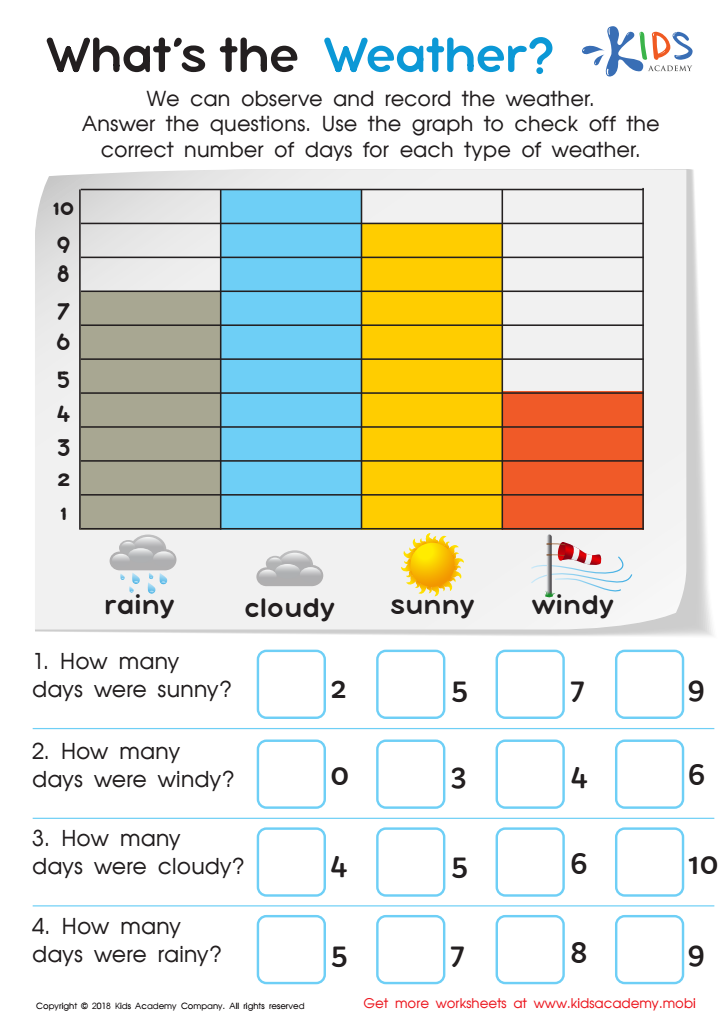
What's the Weather? Worksheet
Check the weather outside. Help kids learn and practice science and math by tracking different types of days using this printable worksheet. Have them count bars next to weather types like cloudy, sunny, windy, and rainy. Answer the questions and take the lesson further by creating a bar graph to show the monthly weather.
What's the Weather? Worksheet
Worksheet
Join Kids Academy for Free
Who is primarily going to use this learning content?








Weather identification is an essential skill for kindergarten students as it has a multitude of developmental benefits. Understanding weather patterns enables young learners to make sense of the world around them. It enriches their observations and enhances their curiosity about natural phenomena, laying the foundation for scientific thinking.
Parents and teachers should prioritize weather education because it cultivates awareness and safety. By knowing basic weather conditions, children learn to dress appropriately for various weather types. Recognizing changes in weather, such as dark clouds suggesting rain, allows them to anticipate and prepare for personal comfort and safety.
Moreover, discussing weather fosters language development as children learn new vocabulary, like "sunny," "windy," or "snowy." It offers opportunities for engaging conversations and thematic learning, reinforcing concepts in a meaningful context. Weather charts and daily discussions at school can also strengthen routine and stability, attributes crucial for kindergarten-aged children.
Additionally, early weather identification nurtures critical thinking and decision-making skills. By observing and predicting weather, youngsters are involved in simple scientific inquiry. They learn to ask questions, collect data, and draw conclusions—a basic introduction to the scientific method.
Investing in early weather identification translates to robust foundational skills, advancing a child's educational journey and enhancing their quality of life.