Critical Thinking Normal Kindergarten 2D Shapes Worksheets
3 filtered results
-
From - To
Discover our engaging "Critical Thinking Normal Kindergarten 2D Shapes Worksheets" designed to enhance young learners’ understanding of two-dimensional shapes while fostering critical thinking skills. These printable worksheets promote interactive learning through fun activities that challenge children to analyze, compare, and articulate their knowledge of shapes. With vibrant illustrations and diverse exercises, students strengthen their cognitive abilities while deepening their mathematical understanding. Perfect for classroom and home use, our carefully crafted resources cater to various learning styles, ensuring each child can explore and thrive. Get ready to make shape learning an enjoyable adventure and inspire a lifelong love of learning!
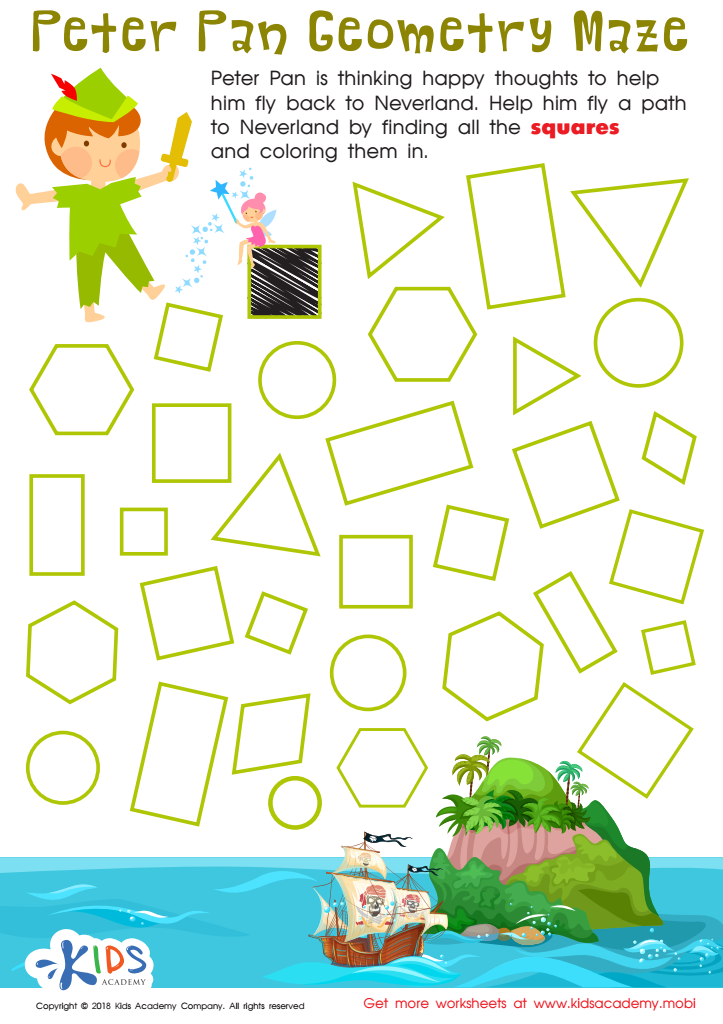
Peter Pan Worksheet
 Assign to My Students
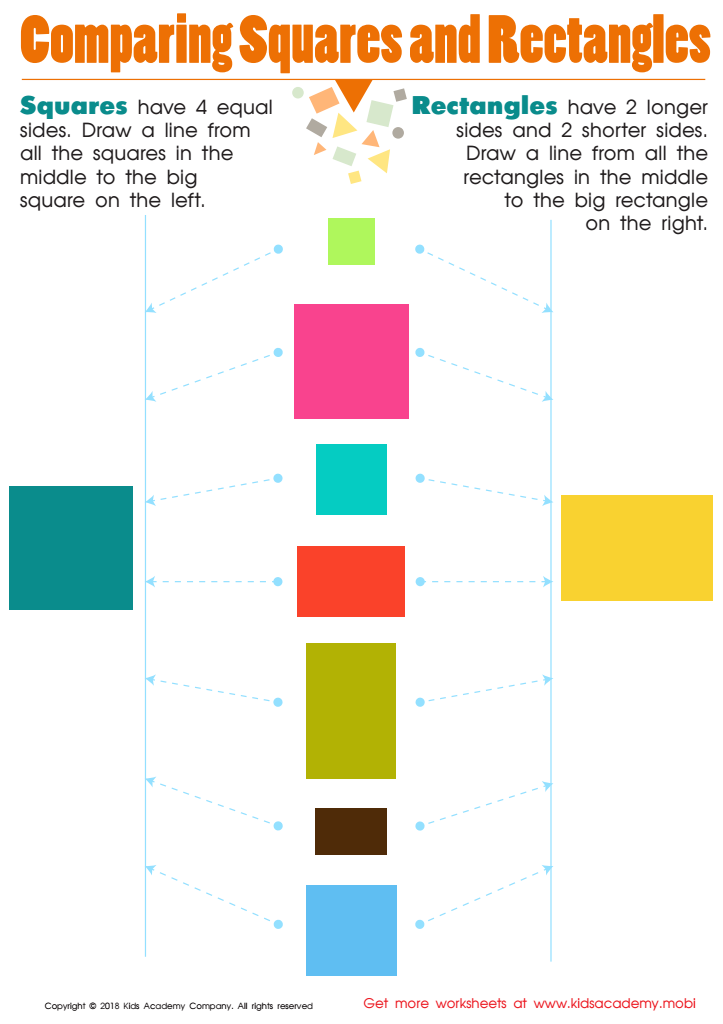
Comparing Squares Rectangles Worksheet
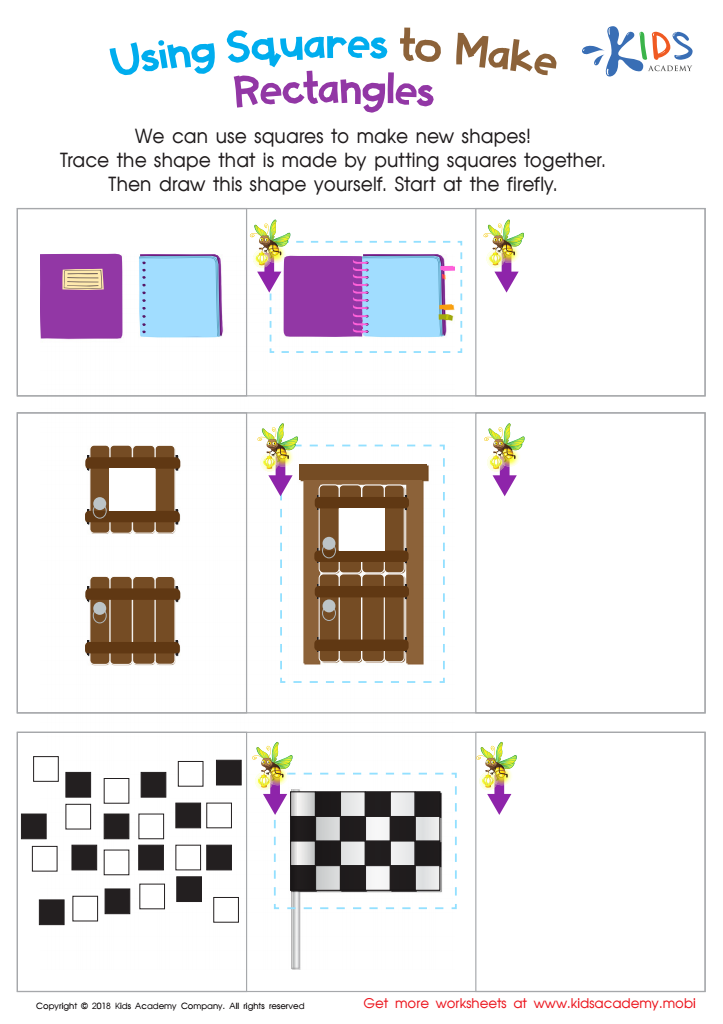
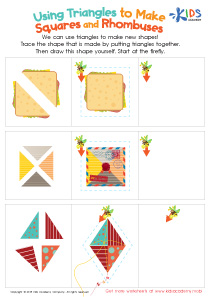
Using Squares to Make Rectangles Worksheet






Critical thinking is an essential skill that enables children to analyze, evaluate, and synthesize information effectively. When parents or teachers focus on critical thinking in the context of Kindergarten 2D shapes, they are fostering a foundation that will support children's mathematical understanding and problem-solving abilities.
Understanding 2D shapes at an early age encourages children to explore their environment and recognize shapes in real-life contexts, which enhances observational skills. As they categorize and compare shapes, children not only learn mathematical vocabulary but also develop the ability to communicate their ideas clearly. This practice makes them more adept at reasoning and justifying their thoughts, which are crucial components of critical thinking.
Moreover, integrating critical thinking into shape recognition promotes creativity. Children can engage in activities that require them to think outside the box, such as creating shapes with various materials or interacting with puzzles, which can significantly enhance their spatial awareness.
Finally, nurturing these skills early on prepares children for future academic and personal challenges. By investing time and resources into promoting critical thinking around 2D shapes, parents and teachers play a pivotal role in equipping children with essential skills that extend far beyond the classroom.