Problem-Solving Skills Normal Kindergarten 2D Shapes Worksheets
3 filtered results
-
From - To
Discover our engaging Problem-Solving Skills Normal Kindergarten 2D Shapes Worksheets, designed to enhance early math learning! These printable activities help children recognize, differentiate, and illustrate various 2D shapes like circles, squares, and triangles. Each worksheet incorporates fun problem-solving tasks that encourage critical thinking and reinforce shape concepts. Ideal for young learners, our resources not only develop mathematical understanding but also promote cognitive skills through interactive challenges. Perfect for classroom or at-home use, these worksheets foster a love for learning while building essential skills. Explore our collection today to enrich your child’s educational journey with hands-on shape exploration and problem-solving excitement!
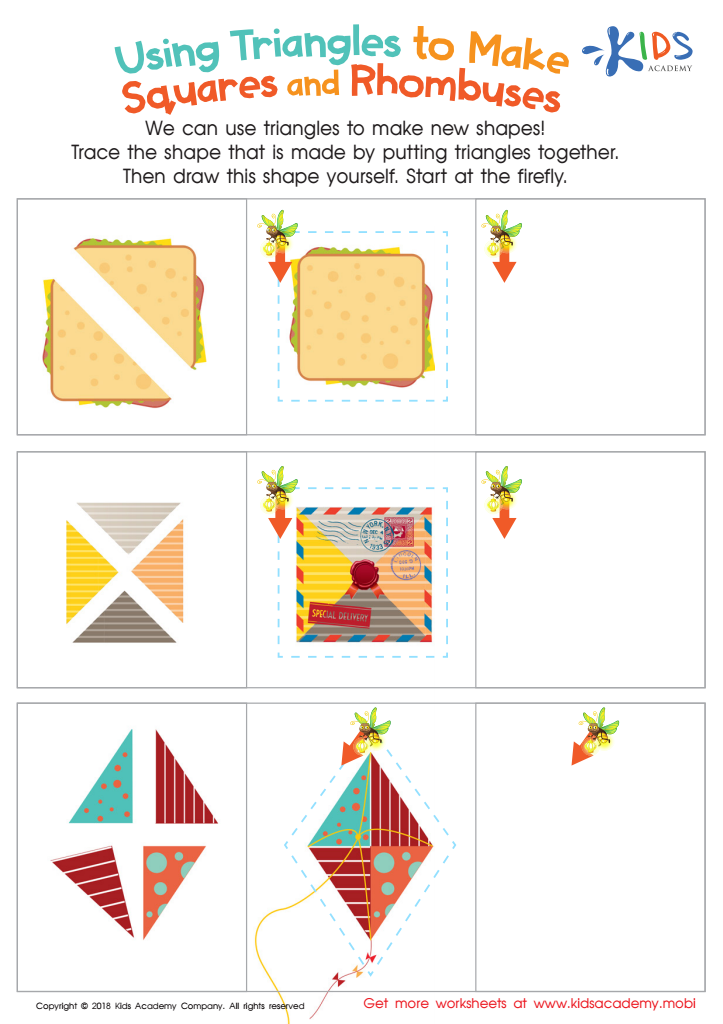
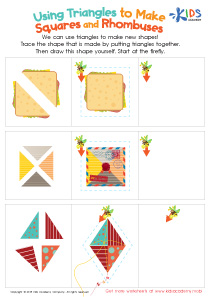
Using Triangles to Make Squares and Rhombuses Worksheet
 Assign to My Students
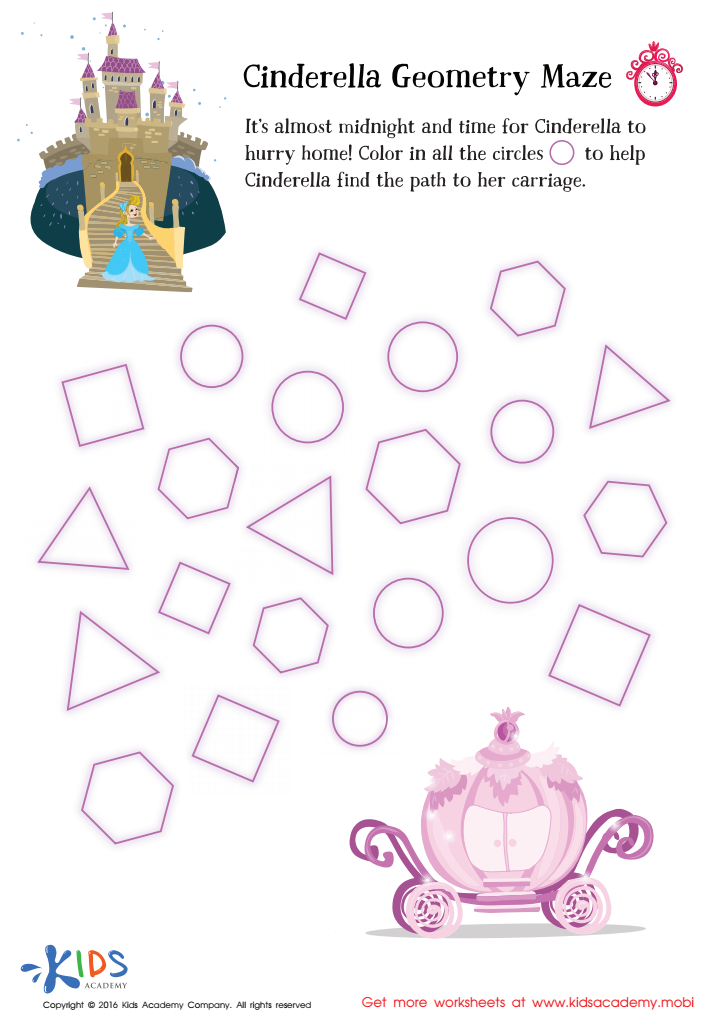
Cinderella Geometry Maze Worksheet
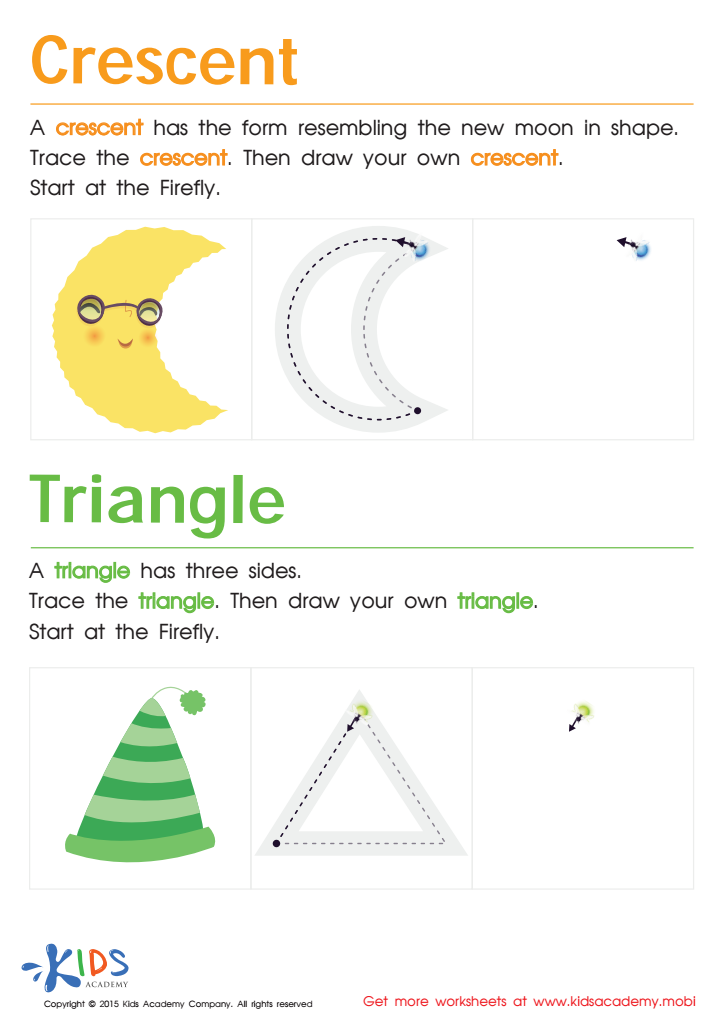
Learning to Draw Crescents And Triangles Worksheet






Problem-solving skills play a crucial role in a child's early development, particularly in understanding 2D shapes in kindergarten. Learning about shapes—such as circles, squares, triangles, and rectangles—not only aids in recognizing various objects in the real world but also enhances critical thinking abilities. When children solve problems related to shapes, they learn to analyze, reason, and create solutions, which lays the foundation for more complex mathematics and cognitive tasks in the future.
Parents and teachers should prioritize this skill as it fosters creativity and promotes spatial awareness, both essential for navigating daily life challenges. Incorporating 2D shapes in engaging, hands-on activities allows children to work collaboratively, enhancing their communication and teamwork skills. As they discuss and compare different shapes, they develop vocabulary and increase their verbal abilities.
In addition, strong problem-solving skills cultivate resilience, as children learn to persevere through difficult challenges. The process of trial and error is vital for growth, encouraging a mindset of exploration and curiosity. Consequently, investing time and resources in developing these competencies not only benefits children academically but also equips them with lifelong skills essential for personal and social success.