Number Recognition Normal Kindergarten Addition Facts Worksheets
3 filtered results
-
From - To
Enhance your kindergarten students’ math skills with our engaging Number Recognition Normal Kindergarten Addition Facts Worksheets! Designed to make learning fun, these printable worksheets help children master number recognition while building a solid foundation in addition. Each worksheet features colorful illustrations and interactive exercises that support early learners in identifying numbers, understanding their values, and confidently solving simple addition problems. With these resources, teachers can easily track student progress and customize lessons to meet individual needs. Perfect for classroom activities or home practice, these worksheets make mastering fundamental math concepts enjoyable and effective. Start your child's math journey today!
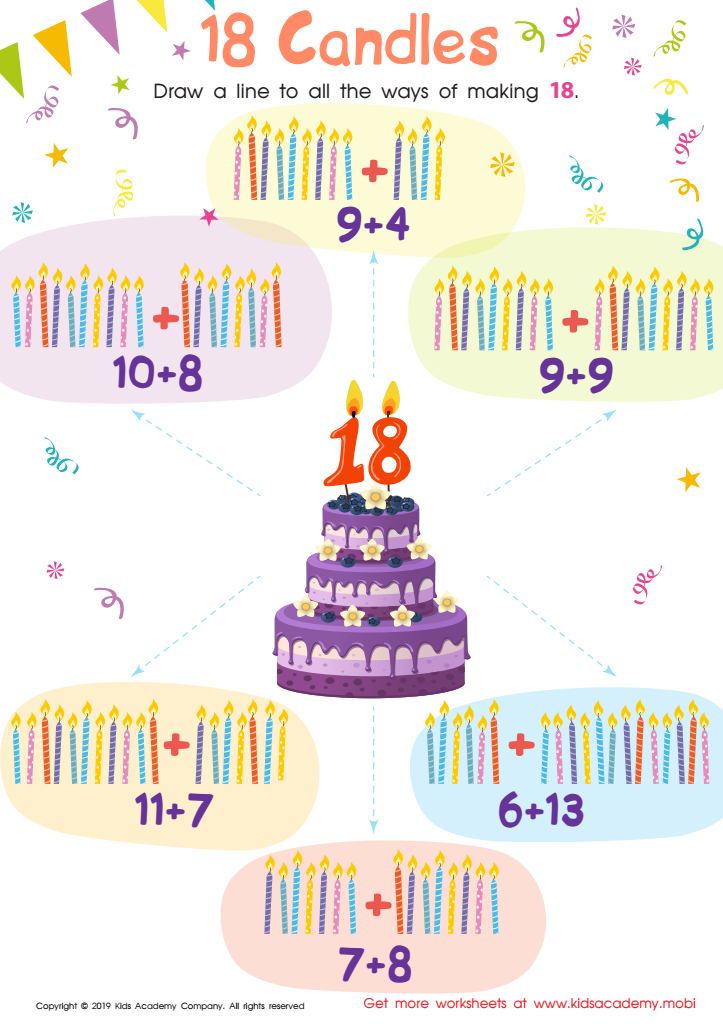
18 Candles Worksheet
 Assign to My Students
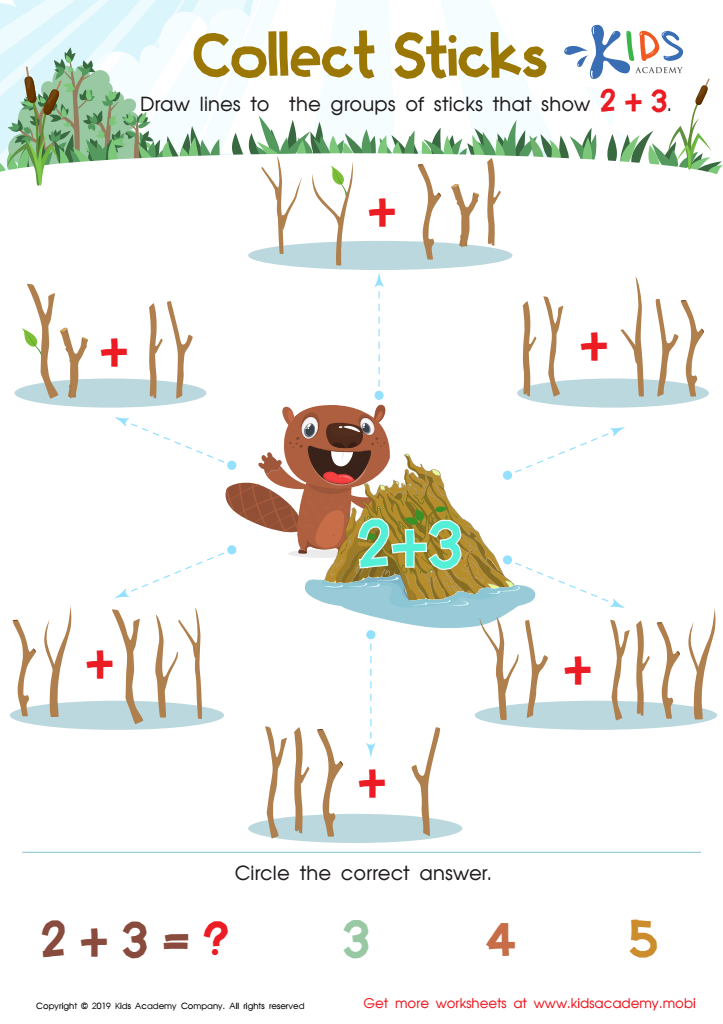
Collect Sticks Worksheet
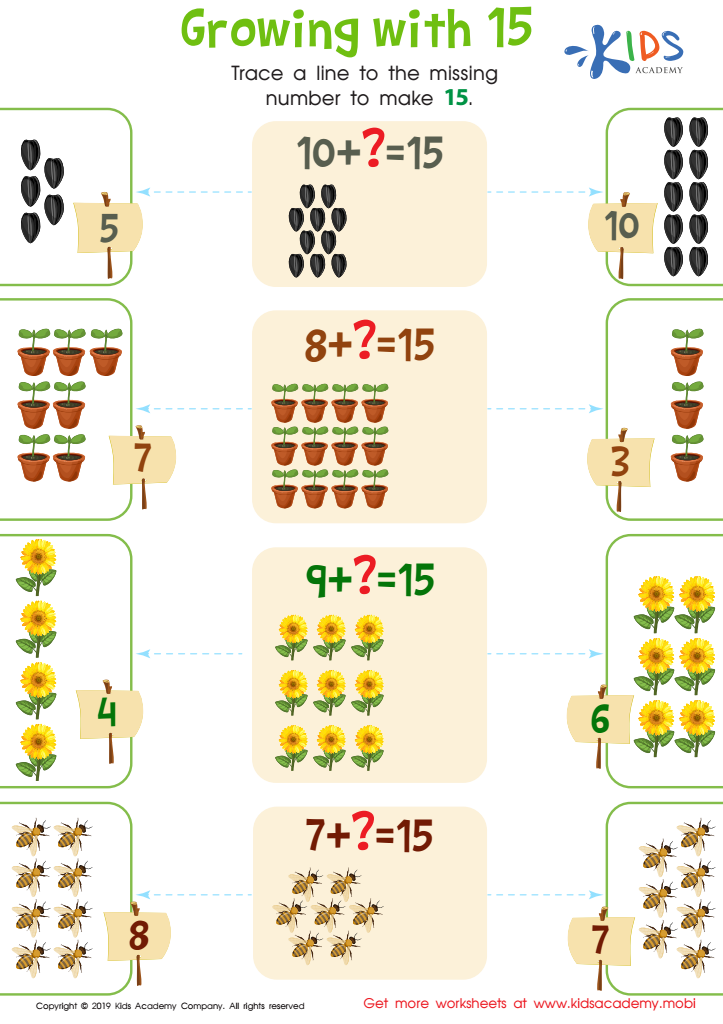
Growing with 15 Worksheet




.jpg)



Parents and teachers should prioritize number recognition and basic addition facts in kindergarten because they form the foundational skills necessary for all future math learning. Number recognition enables children to identify and understand the value of numbers, fostering confidence and competence in early math concepts. Without a solid grasp of numbers, students may struggle with more complex math topics as they progress through school.
Additionally, mastering basic addition facts is crucial for developing problem-solving skills and critical thinking. When children know their addition facts, they can solve math problems with greater ease, enabling them to tackle word problems and develop number sense. This cognitive confidence translates to a more positive attitude toward math, which is vital in a subject that often presents challenges for young learners.
Moreover, early exposure to these concepts sets the stage for later academic achievement. Children who struggle initially may fall behind their peers, leading to lasting effects on their overall educational journey. By emphasizing number recognition and addition facts, parents and teachers provide a nurturing environment that encourages persistence, resilience, and a love for learning. Early interventions in these areas yield significant benefits, equipping students for success in both math and other disciplines.