
Logical Reasoning Normal Kindergarten Addition & Subtraction Worksheets
4 filtered results
Difficulty Level
Grade
Age
-
From - To
Subject
Activity
Standards
Boost your child's math skills with our engaging Logical Reasoning Normal Kindergarten Addition & Subtraction Worksheets! Designed for young learners, these worksheets help children develop critical thinking and problem-solving abilities through fun and interactive math exercises. Kids will explore addition and subtraction concepts while enhancing their logical reasoning skills, ensuring a solid foundation in mathematics. Each worksheet is crafted to captivate young minds, making learning enjoyable and effective. Ideal for classroom settings or at-home practice, these resources encourage self-paced learning and promote confidence in math. Download your free worksheets today and watch your child thrive in their educational journey!
Favorites
With answer key
Interactive
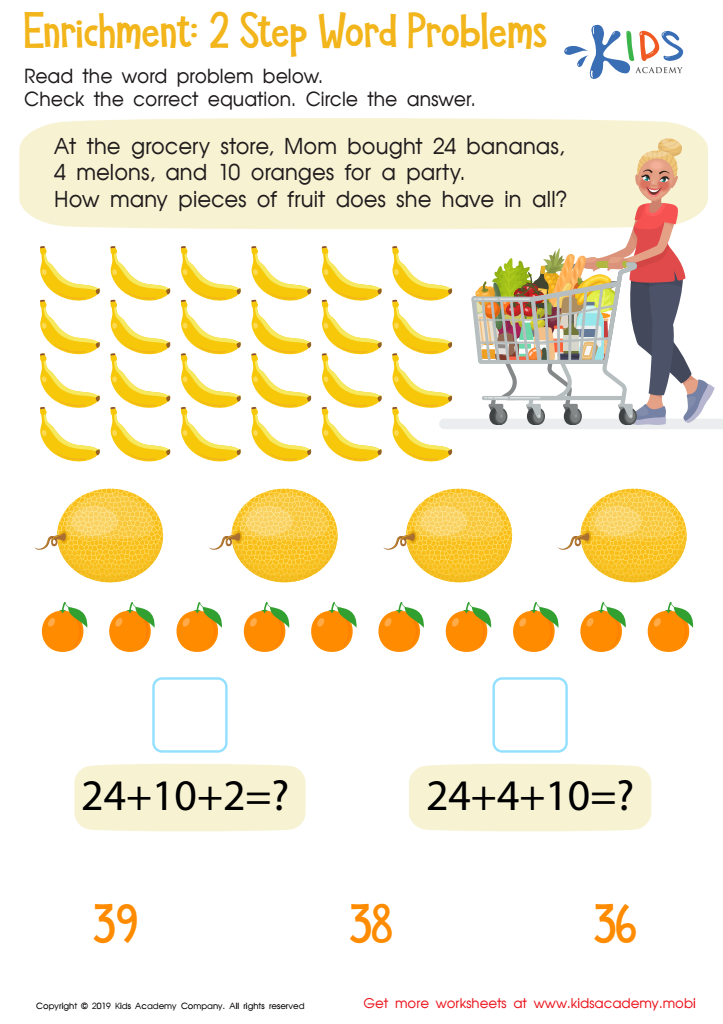
Enrichment -2 Step Word Problems Worksheet
Help your students learn math easier and faster with this colorful worksheet. Read the word problem and then guide them in checking the correct equation and finding the answer. Your students will benefit from the extra help, as they work through new concepts each day.
 Assign to My Students
Enrichment -2 Step Word Problems Worksheet
Worksheet
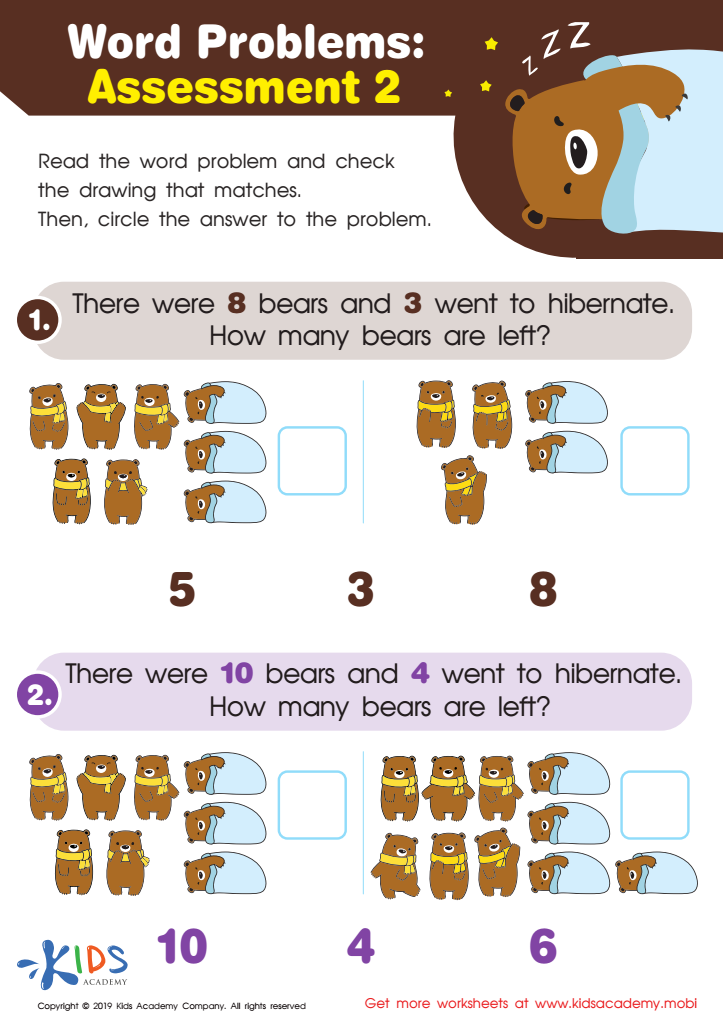
Word Problems: Assessment 2 Worksheet
This bear-themed worksheet is a great way to test subtraction skills. Have your child read the word problems and match the correct drawing with the answer. It's a fun way to quiz them without them even knowing. Enjoy counting cute snoozing bears! (80 words)
Word Problems: Assessment 2 Worksheet
Worksheet
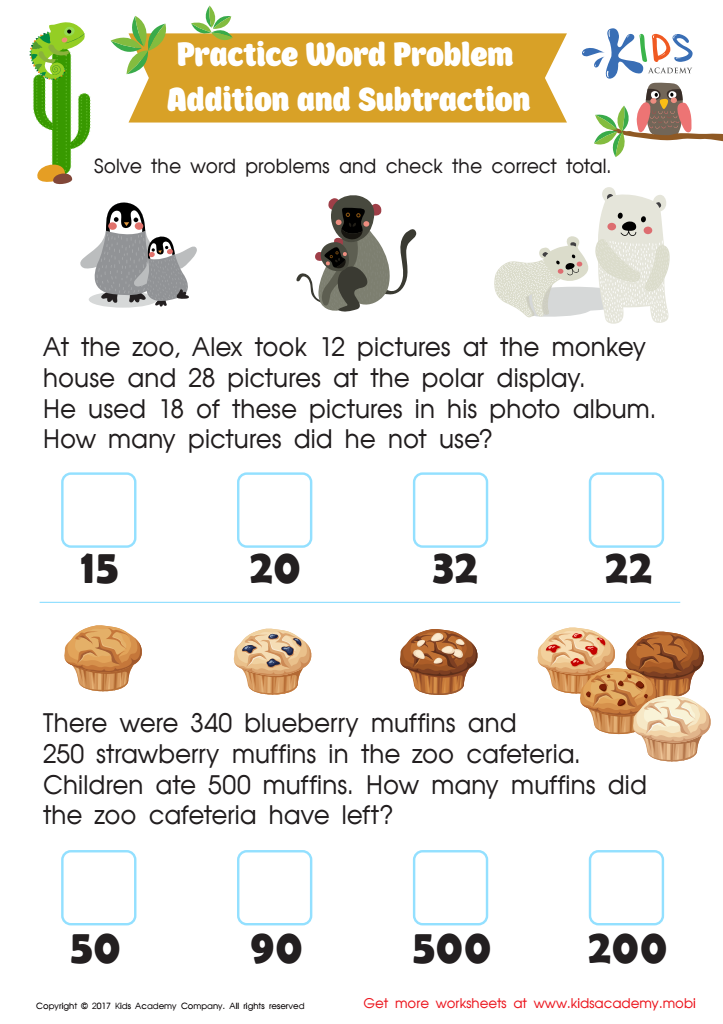
Addition and Subtraction: Word Problems Worksheet
Word problems can be difficult, but they offer another way to understand math. Our 3rd grade worksheet takes your child to the zoo; two intriguing word problems will test their thinking skills and help them find the total.
Addition and Subtraction: Word Problems Worksheet
Worksheet
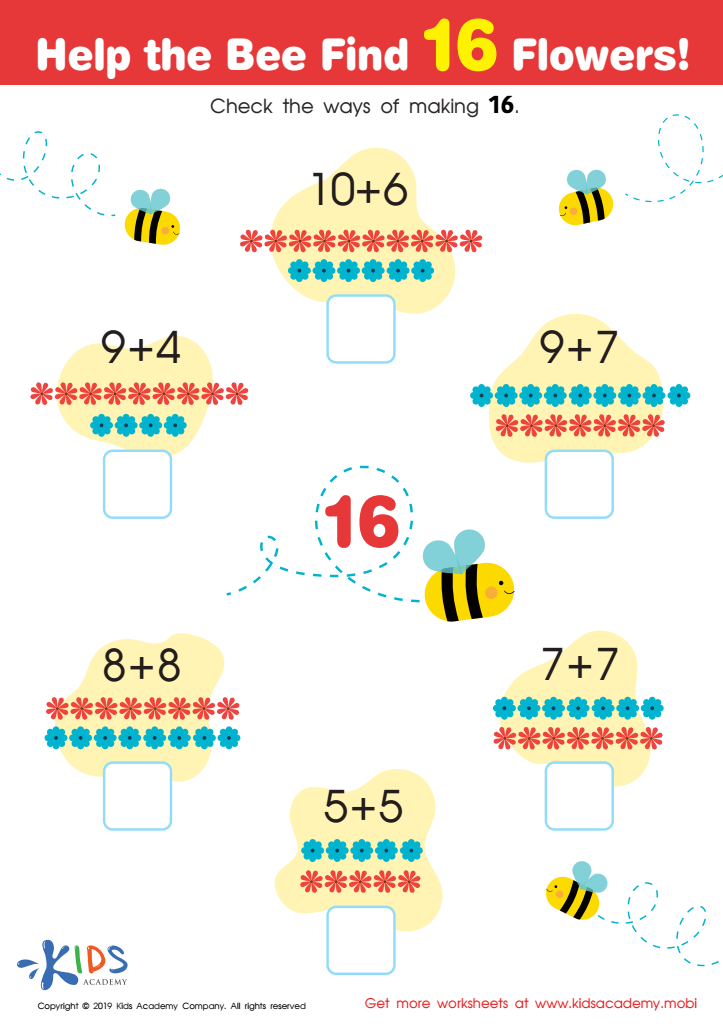
Help the Bee Find 16 Flowers Worksheet
Ask your students to count as high as they can. Show them that different numbers can equal the same figure with examples like 2+2=4 and 3+1=4. Ask for more examples, then help the bees find 16 flowers by checking the ways of making 16.
Help the Bee Find 16 Flowers Worksheet
Worksheet
Join Kids Academy for Free
Who is primarily going to use this learning content?








Logical reasoning in early childhood education, especially concerning addition and subtraction, is crucial for several reasons. First, these foundational math skills help children develop critical thinking abilities. When children engage in adding or subtracting objects or numbers, they learn to analyze situations, identify patterns, and draw conclusions. This not only helps with mathematics but also fosters a broader mindset of problem-solving that can be applied in everyday life.
Moreover, logical reasoning in math enhances cognitive development. When teachers or parents introduce concepts like grouping, sequencing, and using manipulatives, they engage young learners in exploration and discovery. This active participation promotes better retention of information and makes learning enjoyable.
Furthermore, mastering these concepts in kindergarten sets the stage for future academic success. Children who build a strong foundation in logical reasoning and basic arithmetic are more likely to excel in advanced math topics later on. Lastly, incorporating logical reasoning in addition and subtraction helps children with social skills, as they often work in groups, sharing strategies and techniques, thereby enhancing their collaboration and communication skills. Overall, focusing on these strategies can significantly impact a child's educational journey and overall development, making it essential for caregivers to prioritize this area.








