Basic measurement concepts Normal Kindergarten Math Worksheets
3 filtered results
-
From - To
Our "Basic Measurement Concepts Normal Kindergarten Math Worksheets" provide young learners with engaging and essential activities to grasp important early math skills. Designed to introduce foundational measurement concepts such as length, weight, and capacity, these worksheets use playful illustrations and child-friendly scenarios to make learning fun and effective. Kids will enjoy comparing objects, using units to measure, and understanding relative sizes. Perfect for in-class use or at-home practice, these worksheets are meticulously crafted to align with kindergarten standards and support both parents and educators in building a strong mathematical foundation for our little ones.
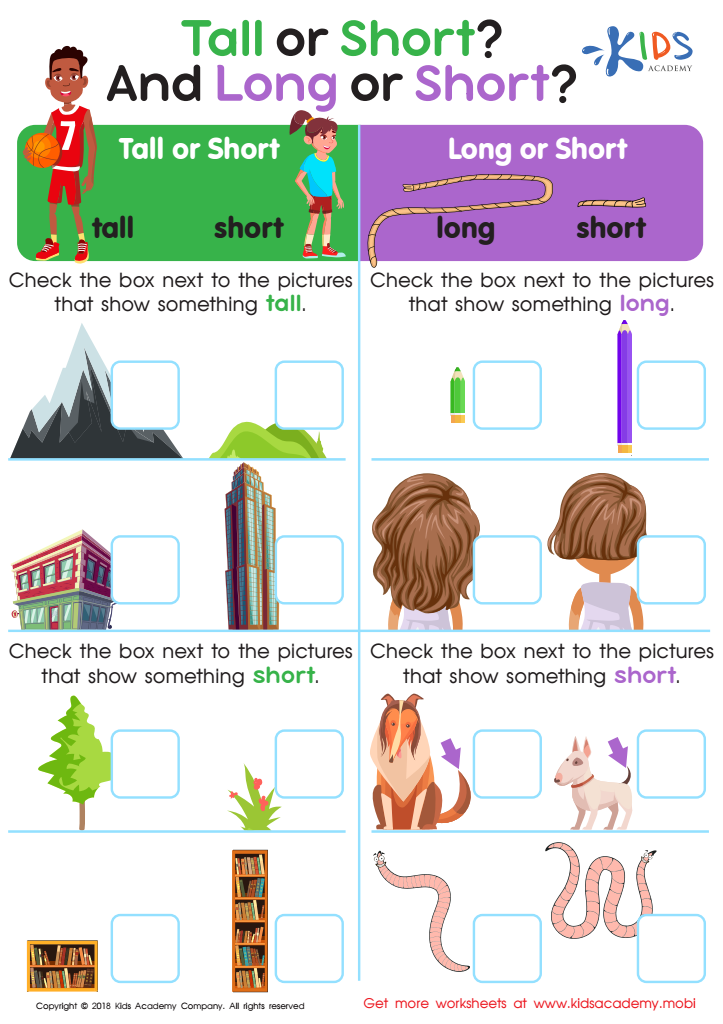
Tall or Short and Long or Short? Worksheet
 Assign to My Students
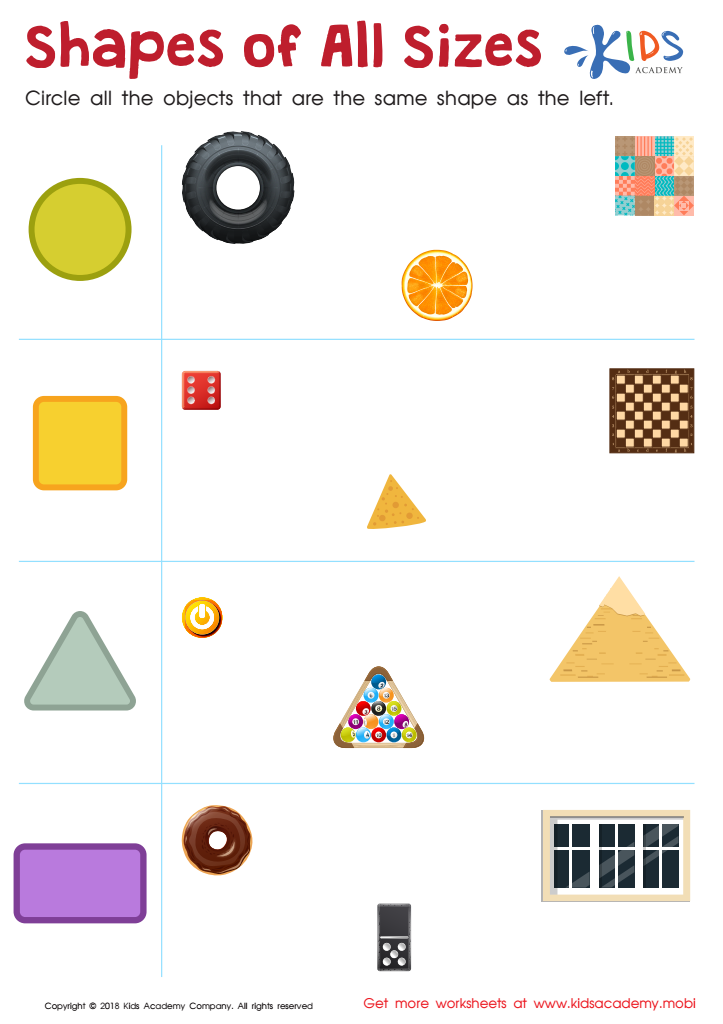
Shapes of All Sizes Worksheet
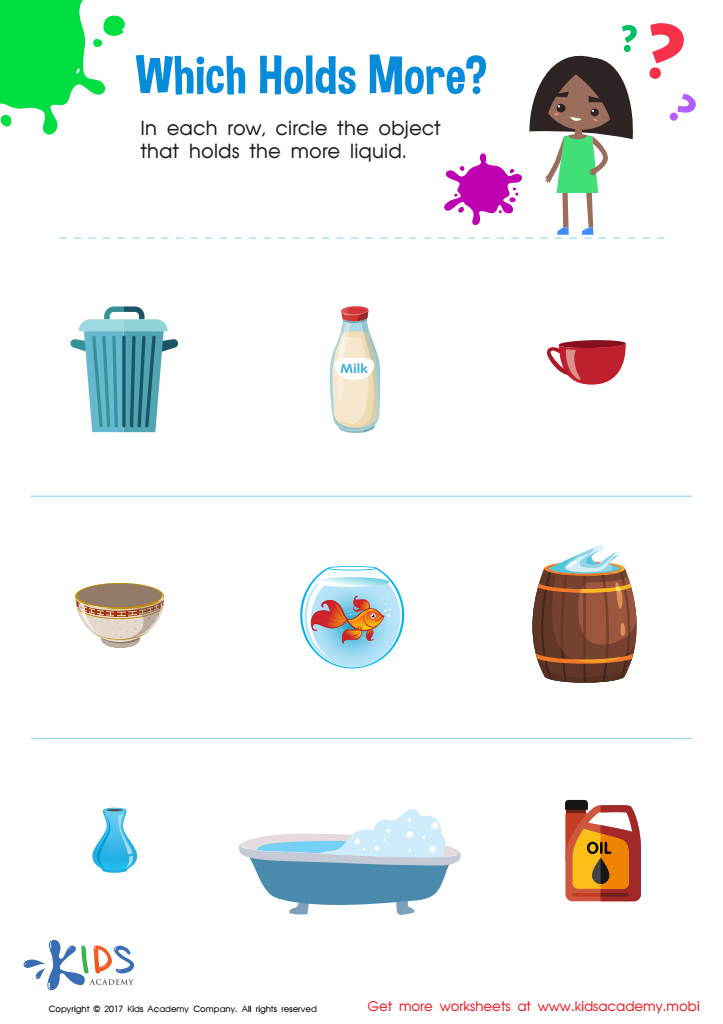
Which Holds More: Capacity Worksheet








Basic measurement concepts are fundamental building blocks in a child’s mathematical development, and it's crucial for parents and teachers to prioritize these early skills in kindergarten. Understanding measurements such as length, weight, and volume helps children make sense of the world around them, fostering their ability to describe and compare objects quantitatively.
Firstly, measurement concepts lay the groundwork for more advanced math topics. For instance, knowledge of length contributes to grasping number lines, while volume and weight measurements enhance spatial awareness and logical reasoning. These skills also have practical everyday applications, like determining how much space is needed for a toy or understanding quantities in cooking.
Additionally, early exposure to measurement activities helps develop critical thinking and problem-solving skills. When children measure objects, they often encounter challenges that require them to think critically and improve their numerical reasoning.
Moreover, learning measurement terms and tools (like rulers and scales) enriches vocabulary and language skills, providing a comprehensive learning experience that extends beyond math. This holistic development supports cognitive growth and boosts confidence in young learners.
By emphasizing basic measurement concepts in kindergarten mathematics, parents and teachers ensure children gain essential skills that serve as a foundation for future academic success and lifelong learning.








