Enhancing observation skills Normal Kindergarten Math Worksheets
3 filtered results
-
From - To
Discover the power of observation with our "Enhancing Observation Skills Normal Kindergarten Math Worksheets." Designed for young learners, these worksheets help children sharpen their observational abilities through fun and engaging math activities. Covering key concepts such as shapes, patterns, and comparisons, our worksheets encourage critical thinking and analytical skills. Each activity fosters curiosity and a deeper understanding of math by allowing children to explore their surroundings and recognize mathematical relationships in everyday life. Perfect for classroom use or at-home practice, these worksheets will captivate young minds while paving the way for a strong mathematical foundation. Start enhancing your child's observation skills today!
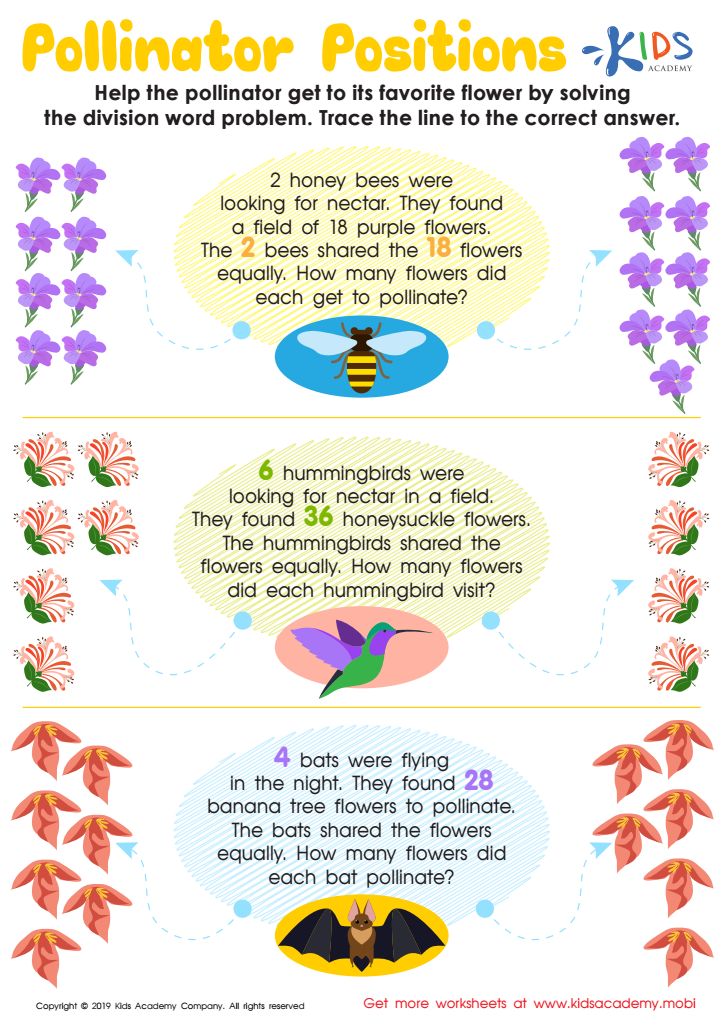
Pollinator Positions Worksheet
 Assign to My Students
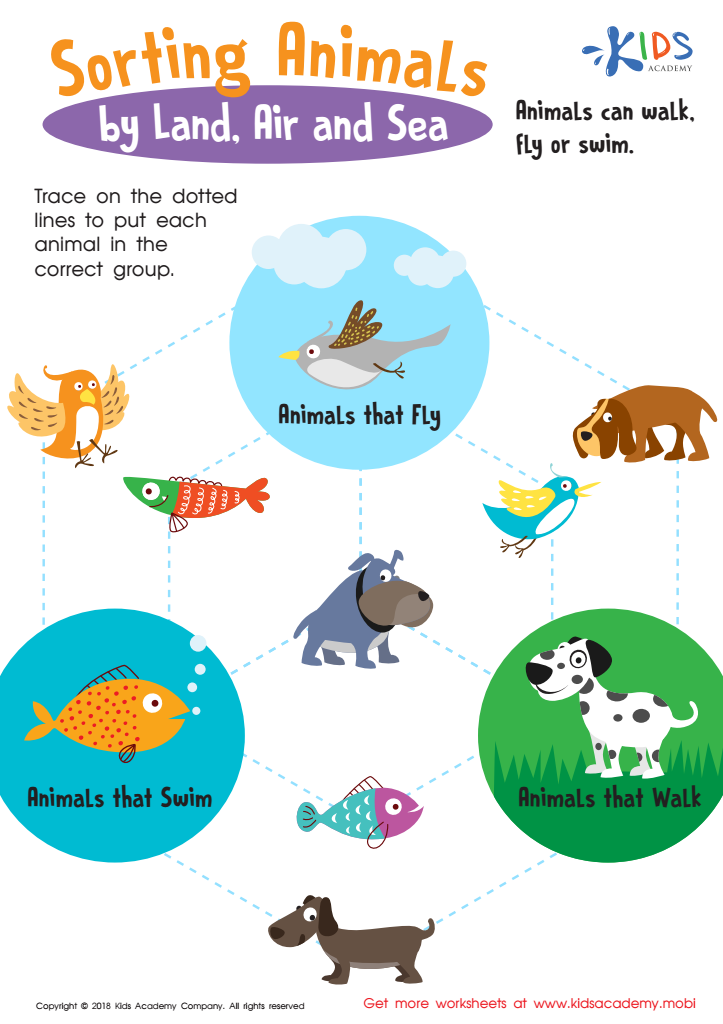
Sorting Animals by Land, Air and Sea Worksheet
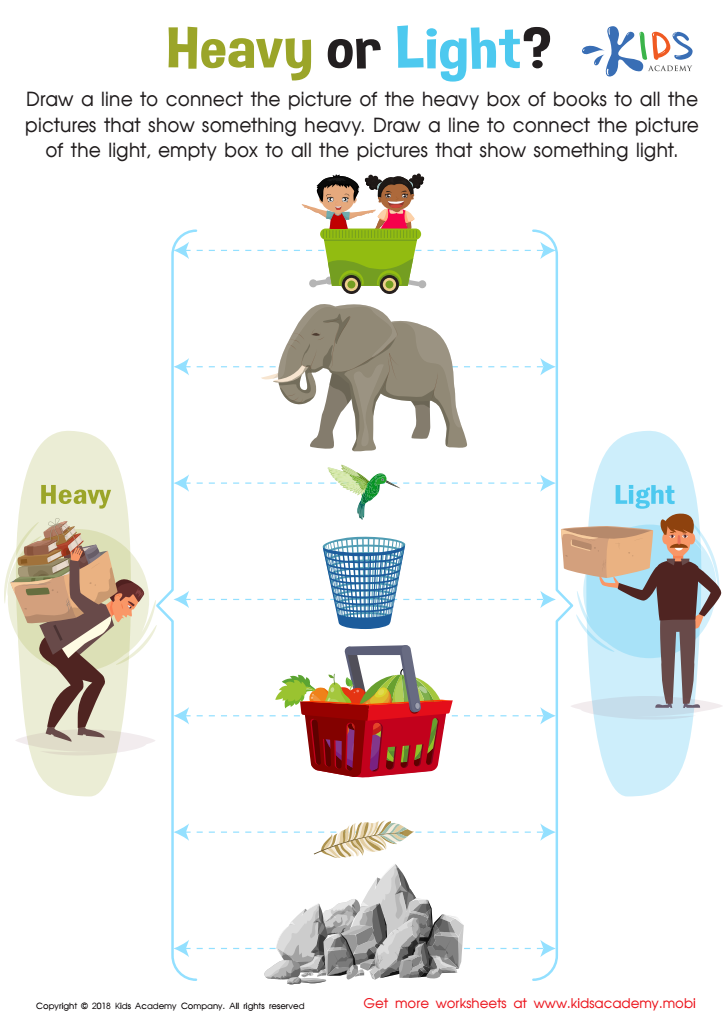
Heavy or Light? Worksheet




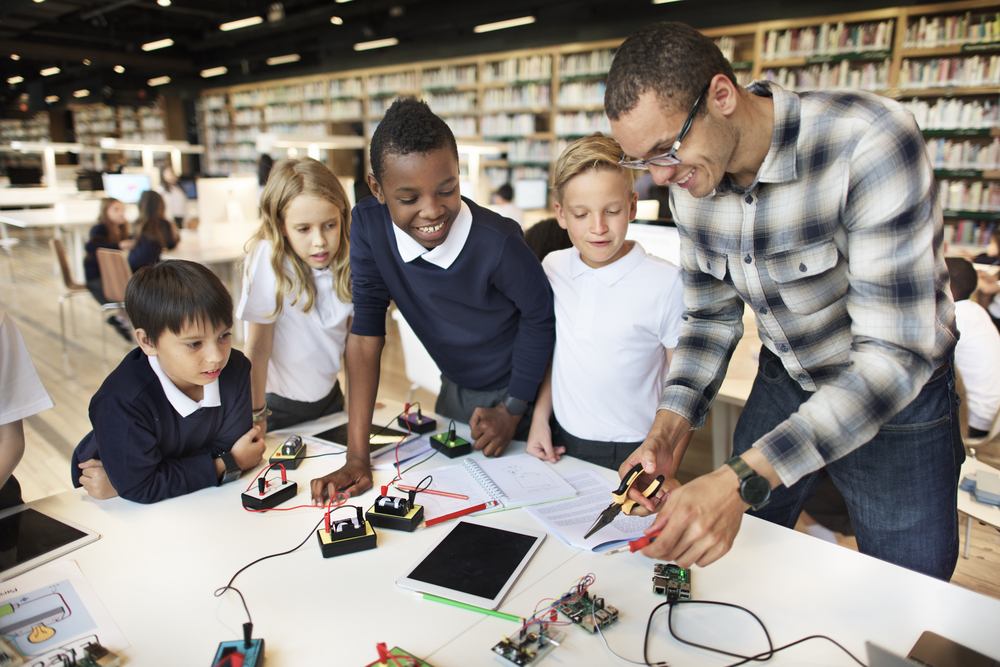


Enhancing observation skills in kindergarten math is crucial for both parents and teachers because it lays the foundation for effective learning and understanding of mathematical concepts. Young children are naturally curious and learn best by observing the world around them. By honing their observation skills, children become more adept at recognizing patterns, sorting objects, and making sense of quantities, which are essential components of early math education.
Observation also encourages critical thinking and cognitive development. When children verbalize their observations, they articulate their thought processes, engage in conversations about mathematical ideas, and develop a richer vocabulary related to math. This helps bridge the gap between concrete experiences and abstract concepts.
Moreover, cultivating observation skills allows parents and teachers to assess a child's understanding and provide personalized support. By noticing where a child excels or struggles, educators can tailor activities to meet individual needs, fostering a more inclusive and supportive learning environment.
Finally, observational skills can nurture a child's confidence and independence in learning. By encouraging children to explore, inquire, and draw conclusions from their observations, both parents and teachers help instill a lifelong love for learning and problem-solving, essential skills in mathematics and beyond.








