
Logical Reasoning Normal Kindergarten Word Problems Worksheets
4 filtered results
Difficulty Level
Grade
Age
-
From - To
Subject
Activity
Standards
Introduce your kindergartener to the exciting world of logical reasoning with our engaging "Logical Reasoning Normal Kindergarten Word Problems Worksheets." These specially designed worksheets enhance critical thinking and problem-solving skills, essential for young learners' math development. Each worksheet presents fun, age-appropriate puzzles and word problems that challenge children to use logic to find solutions. Our colorful, easy-to-follow worksheets not only maintain your child's interest but also build a strong foundation for future mathematical learning. Give your kindergartener the tools they need to excel with our expertly crafted resources, perfect for classroom or at-home practice.
Favorites
With answer key
Interactive
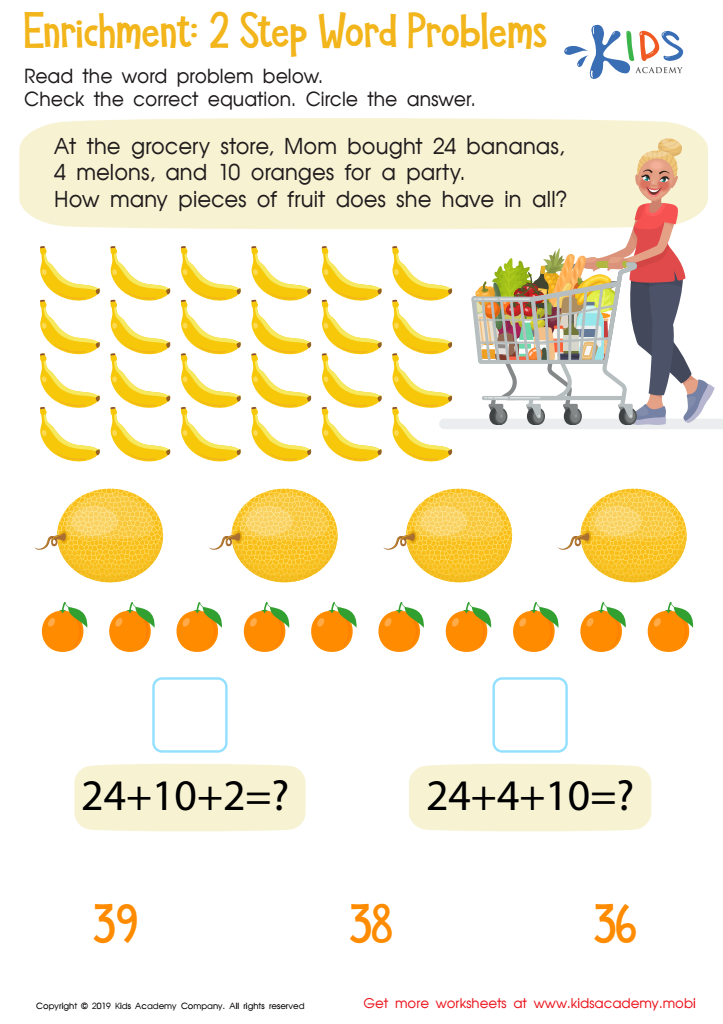
Enrichment -2 Step Word Problems Worksheet
Help your students learn math easier and faster with this colorful worksheet. Read the word problem and then guide them in checking the correct equation and finding the answer. Your students will benefit from the extra help, as they work through new concepts each day.
 Assign to My Students
Enrichment -2 Step Word Problems Worksheet
Worksheet
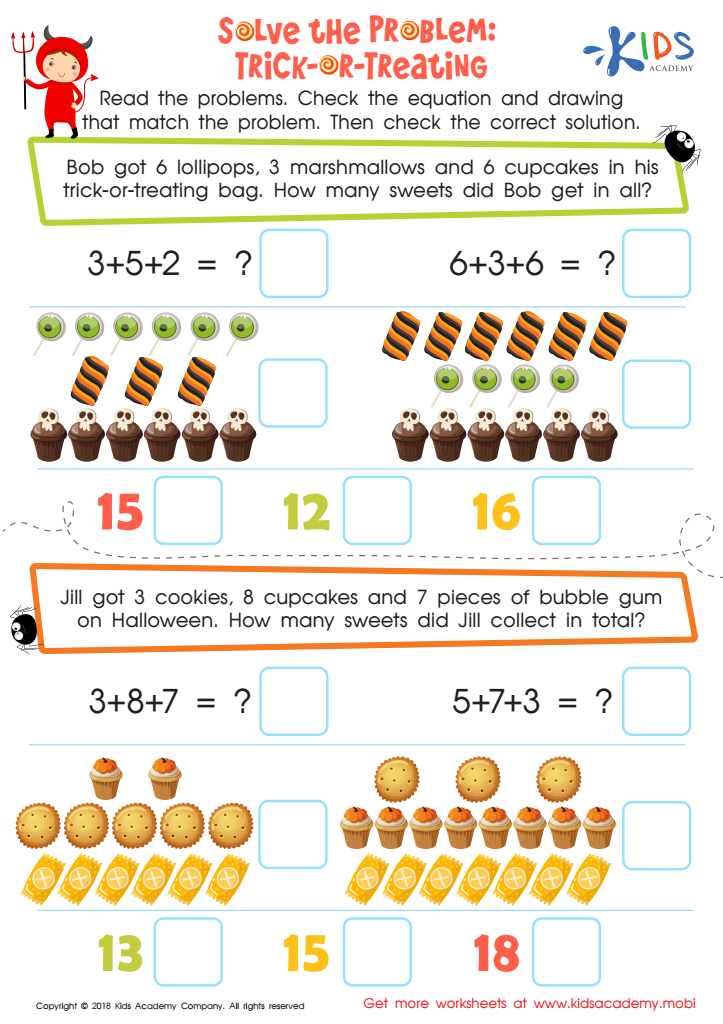
Solve the Problem: Trick–or–treating Worksheet
Kids will love this fun PDF worksheet for trick-or-treating! It's packed with yummy images and math practice. They can read the word problems, count and add numbers, check their answers, and match the addition equations with the pictures. Math made delicious!
Solve the Problem: Trick–or–treating Worksheet
Worksheet
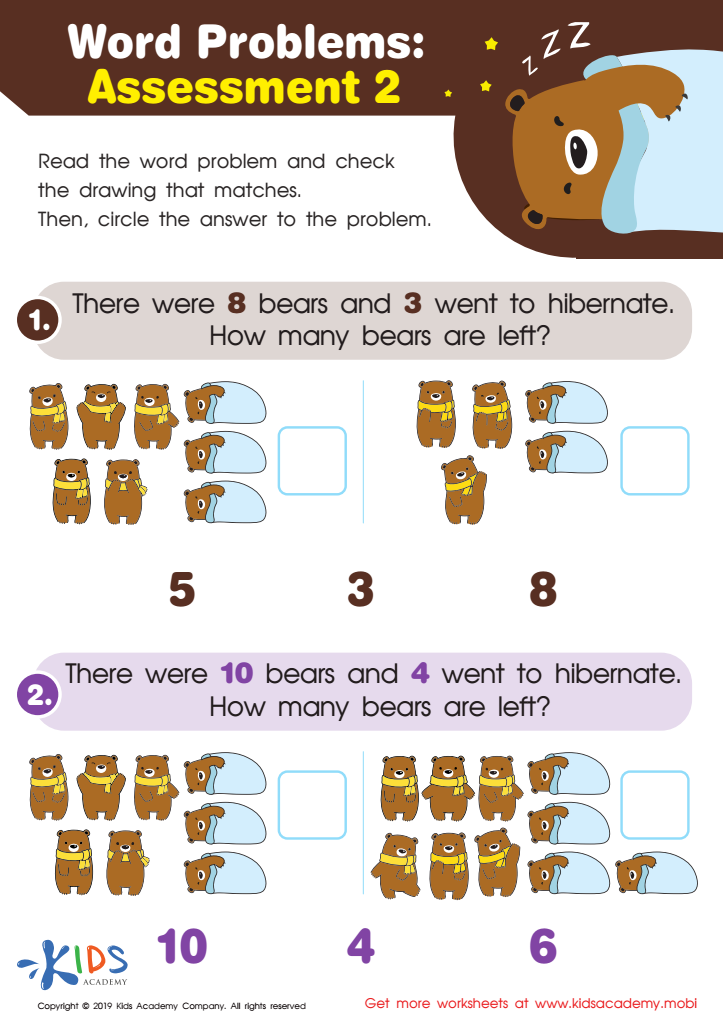
Word Problems: Assessment 2 Worksheet
This bear-themed worksheet is a great way to test subtraction skills. Have your child read the word problems and match the correct drawing with the answer. It's a fun way to quiz them without them even knowing. Enjoy counting cute snoozing bears! (80 words)
Word Problems: Assessment 2 Worksheet
Worksheet
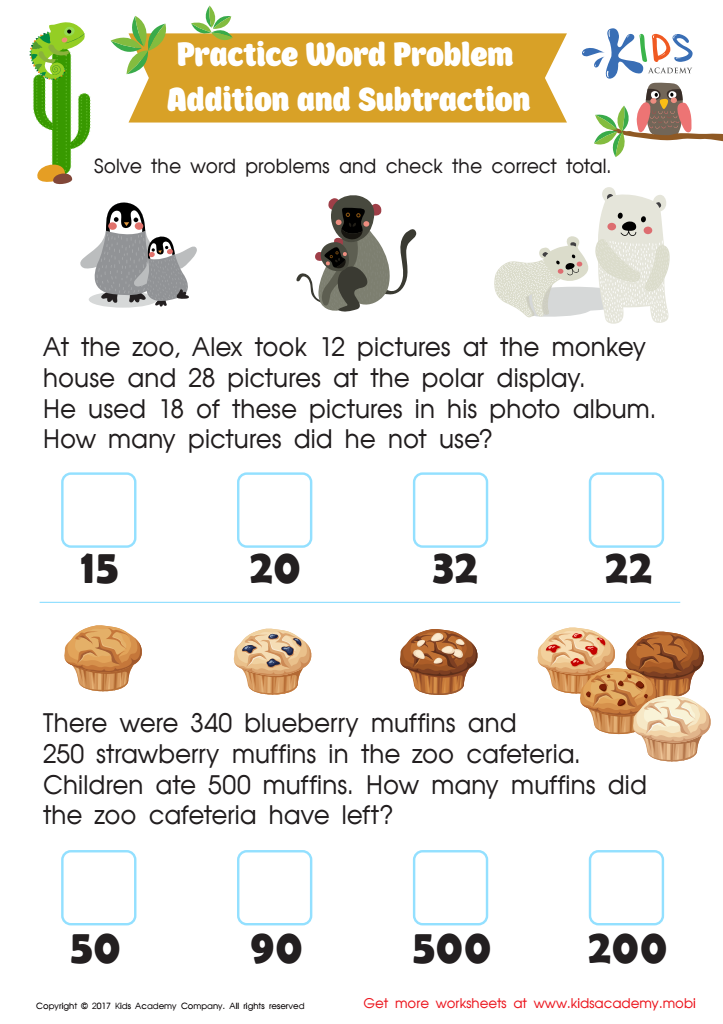
Addition and Subtraction: Word Problems Worksheet
Word problems can be difficult, but they offer another way to understand math. Our 3rd grade worksheet takes your child to the zoo; two intriguing word problems will test their thinking skills and help them find the total.
Addition and Subtraction: Word Problems Worksheet
Worksheet
Join Kids Academy for Free
Who is primarily going to use this learning content?








Logical reasoning through word problems is essential in early childhood education, especially in kindergarten, for several important reasons. First, developing these skills in young children enhances critical thinking and problem-solving abilities, which are foundational for all future learning. Word problems require kids to understand and process information, identify relationships between different elements, and apply logic to come up with solutions.
Second, word problems in kindergarten often relate to everyday scenarios, making learning relevant and helping children see the practicality of math concepts in their daily lives. This relevance enriches their learning experience and fosters a positive attitude toward mathematics.
Third, these word problems help cultivate language skills. Children must comprehend the problem, which boosts reading empathy and literacy, and they learn to articulate their reasoning and solutions clearly.
Finally, mastering logical reasoning in these formative years sets the stage for success in more complex subjects. As youngsters grow, logical reasoning becomes crucial across various disciplines, from the sciences to the humanities. Parents and teachers should thus recognize the value of incorporating logical reasoning word problems into early educational practices, viewing them not just as math exercises, but holistic tools for comprehensive intellectual development.








