
Subtraction practice Normal Kindergarten Word Problems Worksheets
3 filtered results
Difficulty Level
Grade
Age
-
From - To
Subject
Activity
Standards
Enhance your kindergarteners' math skills with our Subtraction Practice Normal Kindergarten Word Problems Worksheets! Designed specifically for young learners, these engaging worksheets feature simple, relatable scenarios that promote critical thinking and problem-solving abilities. Each worksheet presents fun subtraction problems, helping children grasp basic math concepts through storytelling elements. This resource encourages students to visualize and connect math to real-life situations while making learning enjoyable. Perfect for classroom use or at-home practice, our worksheets cater to different learning paces, ensuring every child has the opportunity to master subtraction. Download now and watch your little ones gain confidence in their math skills!
Favorites
With answer key
Interactive
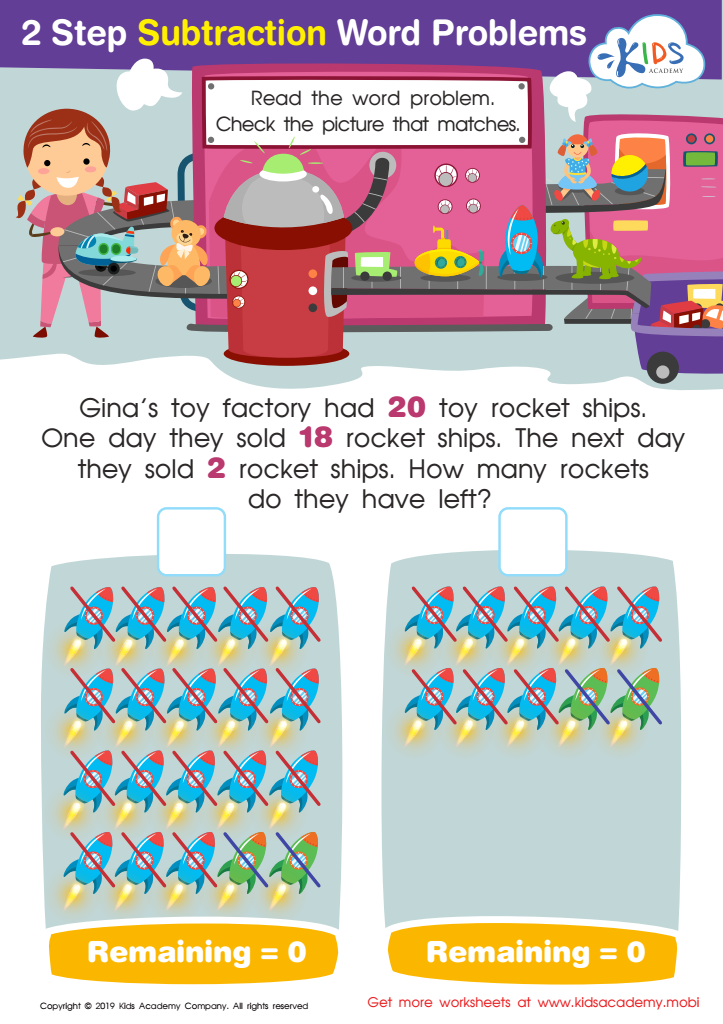
Step Subtraction Word Problems Worksheet
With this worksheet, kids can solve a multi-step subtraction problem with one-to-one number representation, helping Gina figure out her rocket count. Visualizing word problems is key, and this PDF will give your child a concrete image to work with. They'll be successful problem solvers in no time!
 Assign to My Students
Step Subtraction Word Problems Worksheet
Worksheet
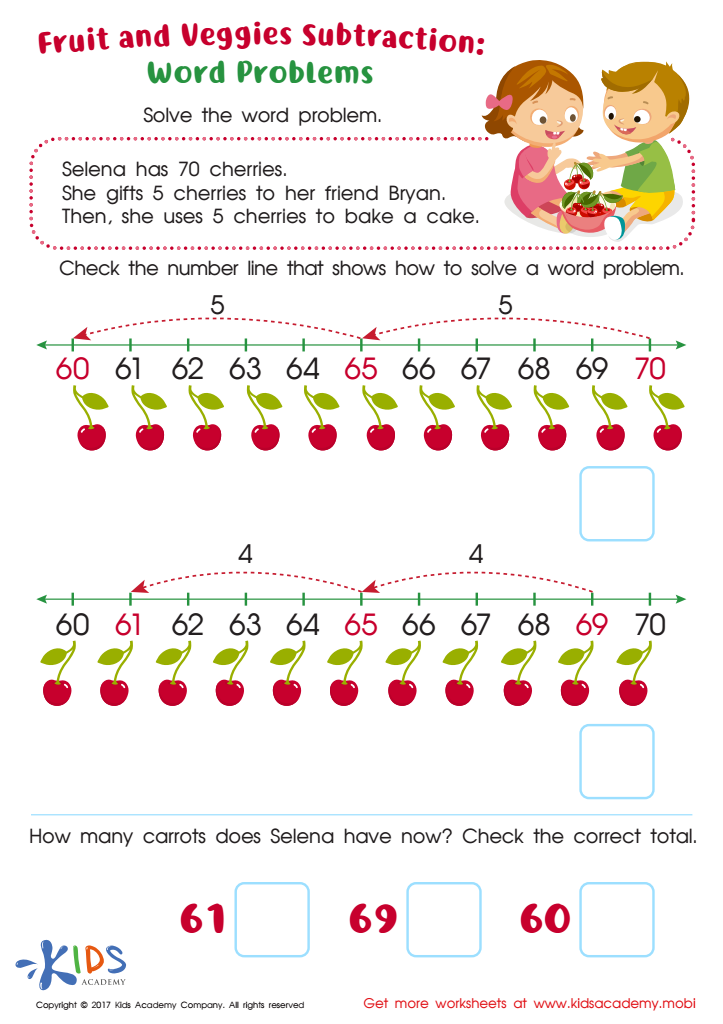
Subtraction Word Problems Free Printable
Try out this free printable subtraction worksheet! Your child can use number lines to solve challenging word problems – it's a great way to boost their problem-solving skills.
Subtraction Word Problems Free Printable
Worksheet
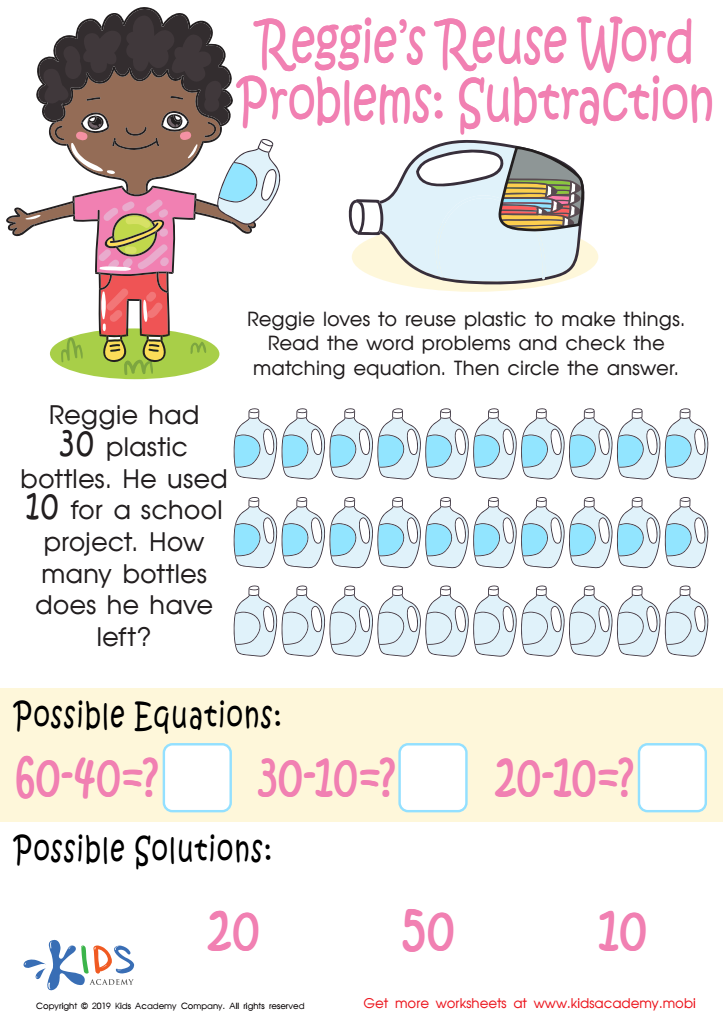
Reggie's Reuse Word Problems: Subtraction Worksheet
Kids can help pal Reggie become an eco-friendly friend! This PDF teaches kids subtraction and one-to-one number representation. They'll use pictures to solve word problems and find out how many plastic bottles Reggie can reuse. They'll also match number equations and solutions to get the right answer.
Reggie's Reuse Word Problems: Subtraction Worksheet
Worksheet
Join Kids Academy for Free
Who is primarily going to use this learning content?




.jpg)



Parents and teachers should prioritize subtraction practice using normal kindergarten word problems because this foundational skill is essential for a child's mathematical development. Engaging young learners in word problems helps them understand practical applications of subtraction in everyday life, fostering critical thinking and problem-solving abilities. When children encounter real-world scenarios, such as "If you have 5 apples and eat 2, how many are left?" they learn to manipulate numbers in context, making subtraction more meaningful.
Moreover, practicing subtraction through word problems enhances language skills, as children must comprehend the wording and structure of the questions. This practice encourages vocabulary expansion and improves reading comprehension, both of which are crucial for academic success. By framing math in relatable scenarios, teachers and parents can ignite curiosity and motivation in children, making learning enjoyable.
Additionally, early mastery of subtraction can build confidence in students, equipping them with essential skills as they progress to more complex mathematical concepts. When parents and teachers actively support subtraction practice, they lay a solid foundation for future learning and foster positive attitudes toward mathematics. Investing time in these activities can lead to long-lasting educational benefits and a love for learning in young children.








