Critical Thinking Normal Kindergarten Reading Comprehension Worksheets
7 filtered results
Difficulty Level
Grade
Age
-
From - To
Subject
Activity
Standards
Enhance your kindergarteners' reading skills with our Critical Thinking Normal Kindergarten Reading Comprehension Worksheets. Designed to foster young learners' analytical abilities, these worksheets blend engaging stories with interactive questions that promote deeper understanding and curiosity. As children read, they develop critical thinking by making inferences, evaluating content, and connecting ideas. Our easy-to-navigate resources support teachers and parents alike, creating a fun learning environment at home or in the classroom. Perfect for supplementing lessons, these worksheets nurture essential literacy skills while encouraging children to explore their thoughts and improve comprehension. Empower your students today with our thoughtfully crafted worksheets!
Favorites
With answer key
Interactive
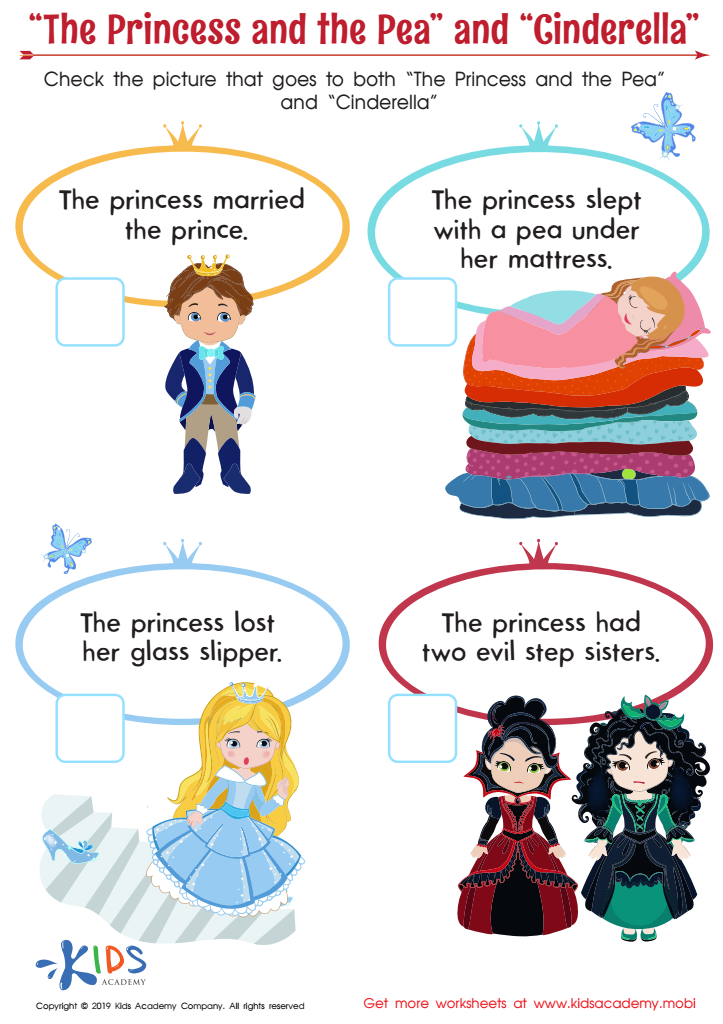
“The Princess and the Pea” and “Cinderella” Worksheet
Read "Cinderella" and "The Princess and the Pea" to your little ones. Ask them what their favorite parts were and what similarities they found in the princesses. This worksheet has four pictures of scenes from the stories. Ask your kids which picture goes with both tales.
 Assign to My Students
“The Princess and the Pea” and “Cinderella” Worksheet
Worksheet
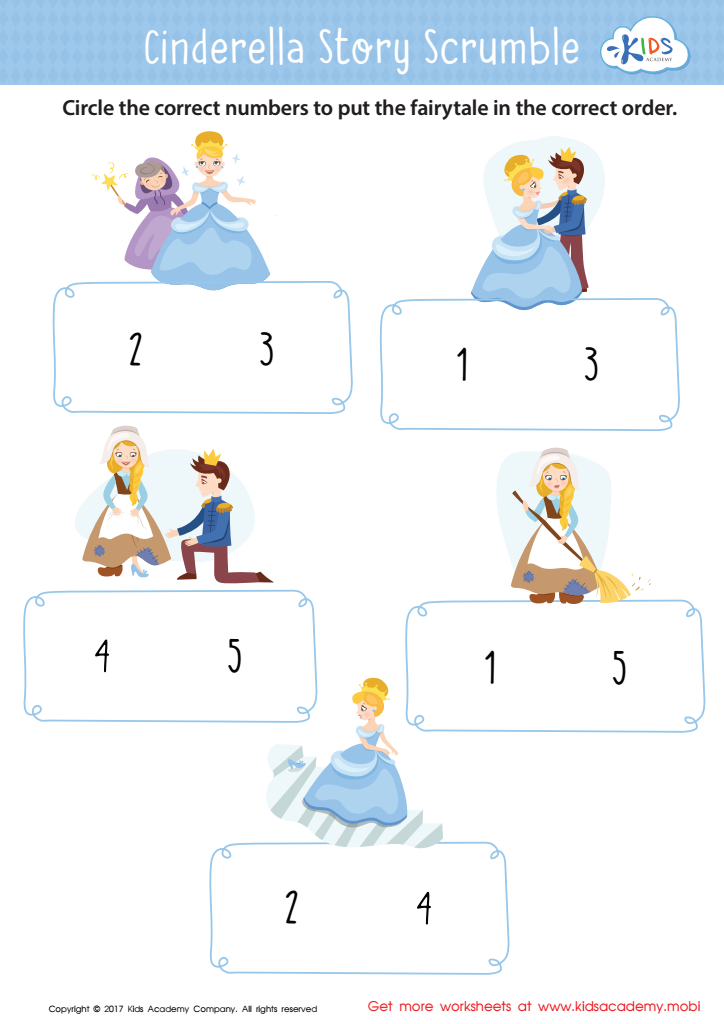
Cinderella Story Sequencing Worksheet
This worksheet helps strengthen reading comprehension skills by getting your child to remember key moments from the Cinderella story. They'll be asked to place pictures in the right order to tell the story.
Cinderella Story Sequencing Worksheet
Worksheet
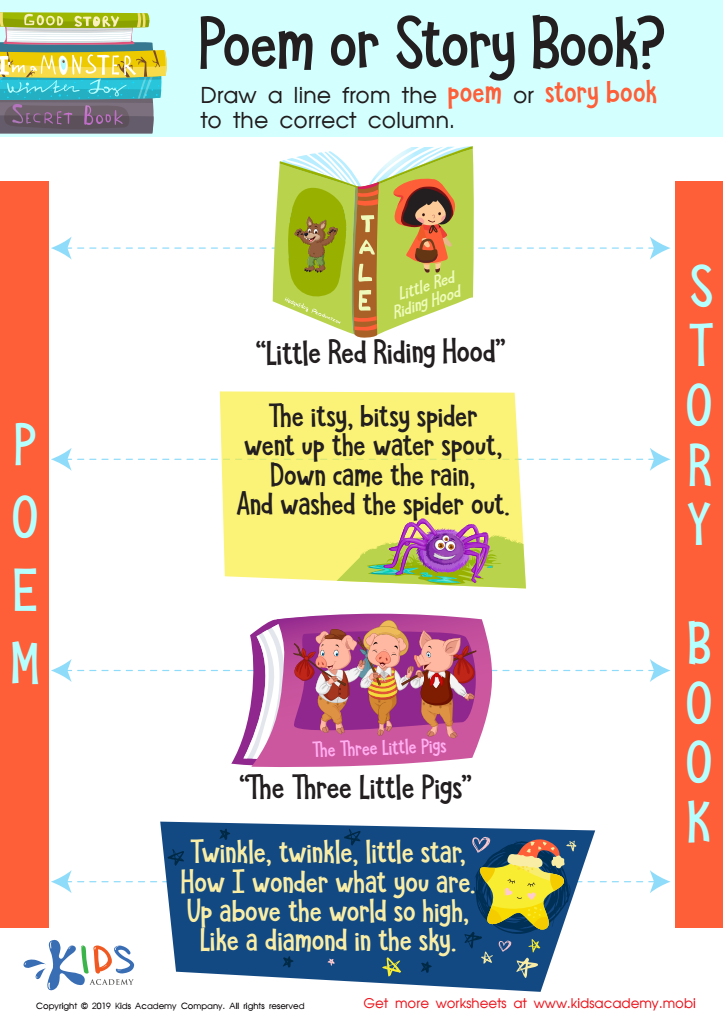
Poem or Story Book? Worksheet
Help your little readers comprehend different genres with this free worksheet! Colorful images and familiar themes help them distinguish between poems and story books. They'll identify which is which, then connect the picture to the right column with traceable lines. A fun way to expand their understanding!
Poem or Story Book? Worksheet
Worksheet
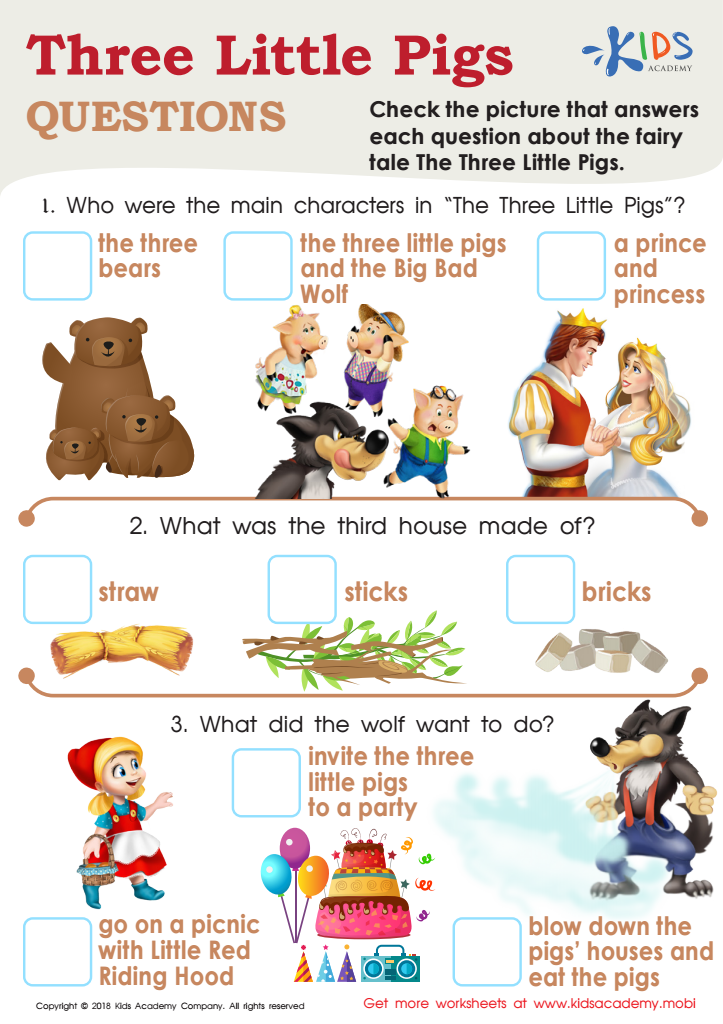
Three Little Pigs Questions Worksheet
Does your kid love bedtime stories? Test their classic fairytale knowledge with this worksheet! If they mention The Three Little Pigs, they're in luck - this pdf has them answering questions based off the classic fairytale. They'll check the picture that answers each question about the story. Is their fairytale knowledge up to scratch?
Three Little Pigs Questions Worksheet
Worksheet
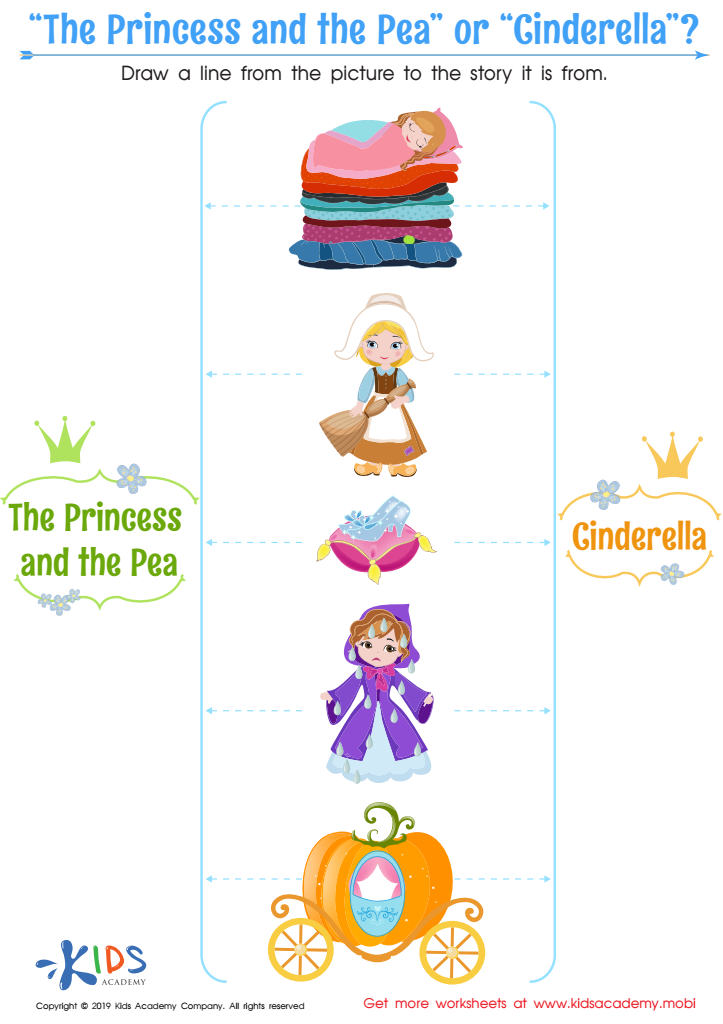
“The Princess and the Pea” or “Cinderella” Worksheet
Help your child identify the characters and objects from both the Princess and the Pea and Cinderella. Ask them to draw a line from the pictures to the story it's from on the tracing sheet. Encourage them to tell you the similarities between the two stories. Enjoy the tale with your daughter and watch her be fascinated by these two classic children's stories.
“The Princess and the Pea” or “Cinderella” Worksheet
Worksheet
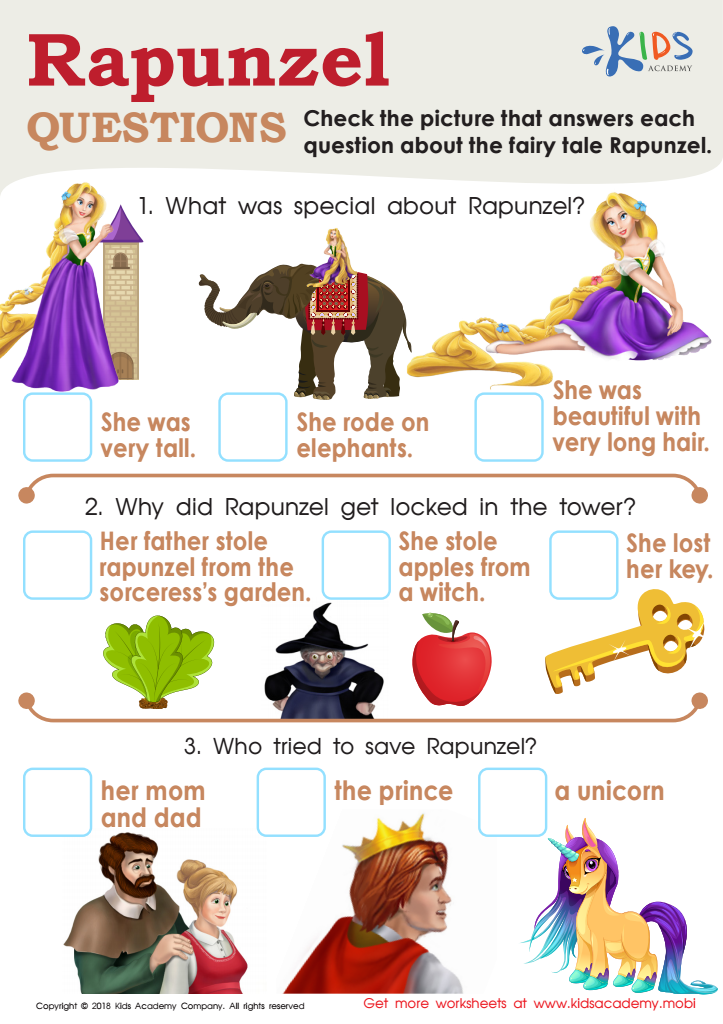
Rapunzel Questions Worksheet
Read the fairy tale 'Rapunzel' to your kids. For those who really enjoyed it, read it twice and ask questions to test their understanding. Then, get them to check the pictures related to the questions to test their comprehension of the story.
Rapunzel Questions Worksheet
Worksheet
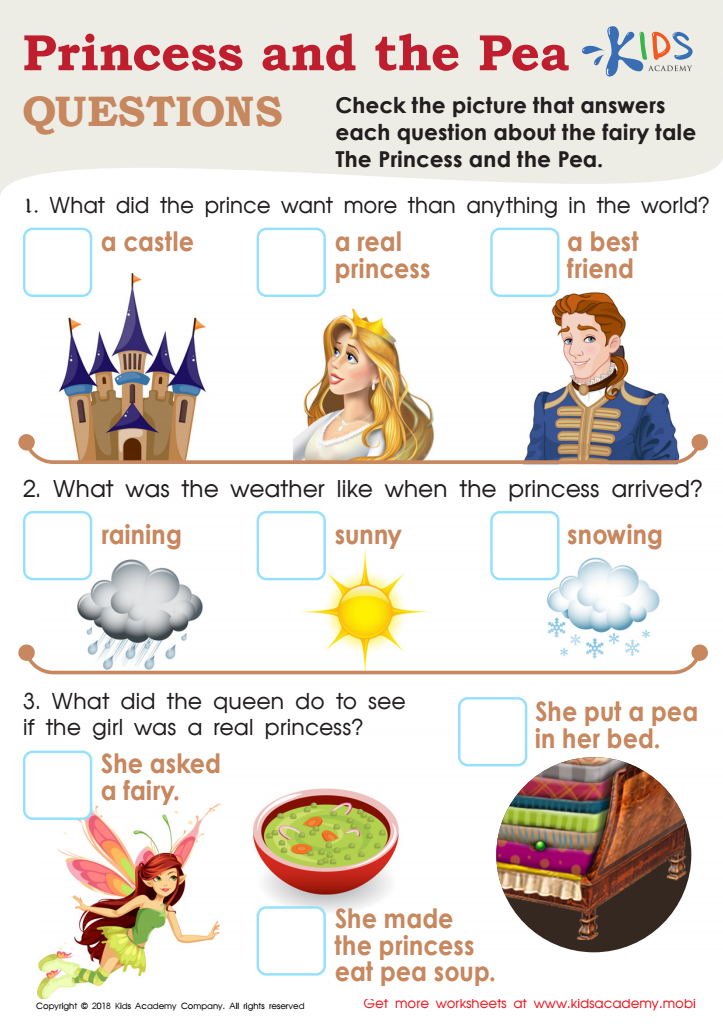
Princess and the Pea Questions Worksheet
Your kid knows The Princess and the Pea inside-out? Test their knowledge with this worksheet. Ask your little one to read the questions and match each one to the picture. It's a fun way to see just how much attention they've paid to their bedtime story.
Princess and the Pea Questions Worksheet
Worksheet
Join Kids Academy for Free
Who is primarily going to use this learning content?




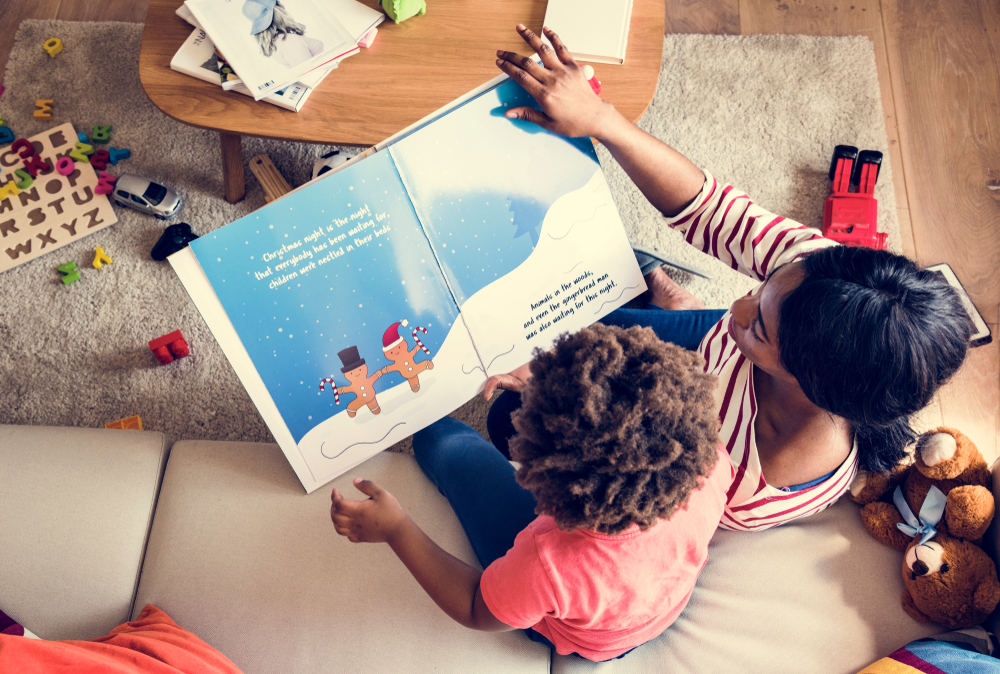



Parents and teachers should prioritize critical thinking skills in kindergarten reading comprehension for several key reasons. Firstly, critical thinking enhances children's ability to engage with texts more deeply. Rather than merely recalling facts or events in a story, children learn to analyze motives, compare characters, and predict outcomes, fostering a richer understanding of narratives. This analytical approach helps them become more active and thoughtful readers.
In addition, critical thinking lays the groundwork for overall cognitive development. It encourages curiosity, imagination, and problem-solving, essential skills that extend beyond reading. As children learn to ask questions and seek evidence while reading, they develop important decision-making abilities that will serve them in all academic subjects and everyday life.
Furthermore, strong reading comprehension skills correlate with future academic success. By fostering critical thinking at an early age, adults can help children become confident communicators and independent thinkers. This not only enhances their literacy skills but also prepares them for more complex concepts as they progress through their education.
Ultimately, investing in critical thinking in early literacy is an essential step in nurturing well-rounded, engaged, and thoughtful future learners. This emphasis can shape learners into proactive members of their communities.