Story sequencing Normal Kindergarten Reading Comprehension Worksheets
5 filtered results
Difficulty Level
Grade
Age
-
From - To
Subject
Activity
Standards
Enhance your kindergartener's reading skills with our Story Sequencing Normal Kindergarten Reading Comprehension Worksheets. Specifically designed for young learners, these worksheets help kids grasp the logical order of a story, improving their comprehension and cognitive abilities. Through engaging and interactive activities, children will practice arranging events and details, fostering their understanding of narrative sequence. Perfect for homeschooling or classroom use, our worksheets cater to developing foundational reading skills, ensuring a smoother transition to advanced literacy concepts. Make learning fun and effective with these educational tools tailored for budding readers.
Favorites
With answer key
Interactive
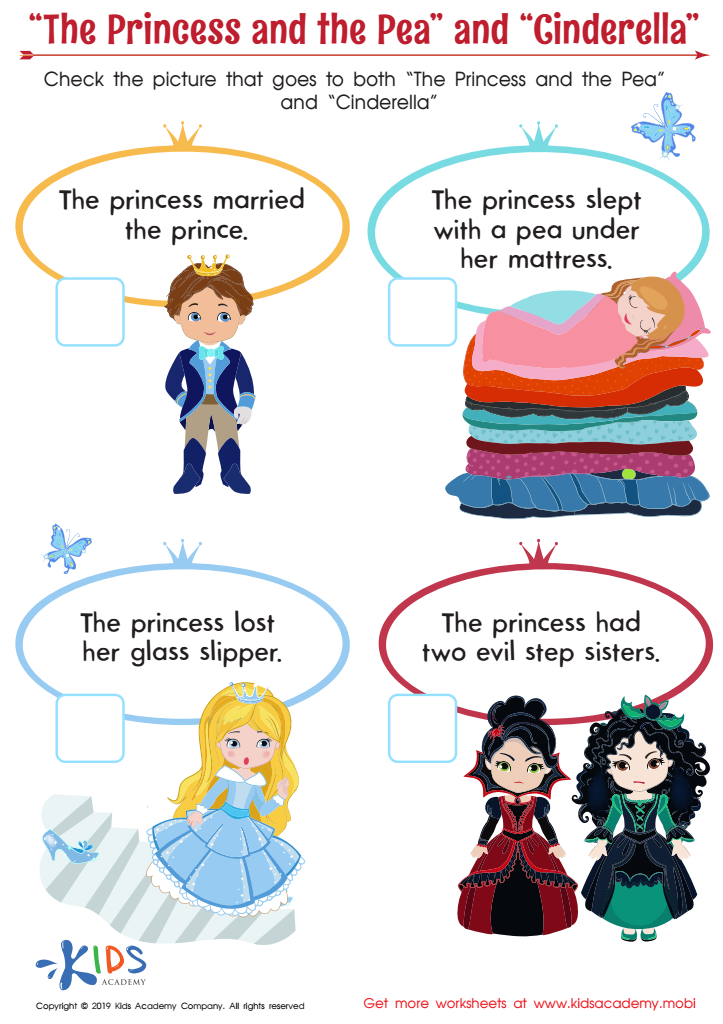
“The Princess and the Pea” and “Cinderella” Worksheet
Read "Cinderella" and "The Princess and the Pea" to your little ones. Ask them what their favorite parts were and what similarities they found in the princesses. This worksheet has four pictures of scenes from the stories. Ask your kids which picture goes with both tales.
 Assign to My Students
“The Princess and the Pea” and “Cinderella” Worksheet
Worksheet
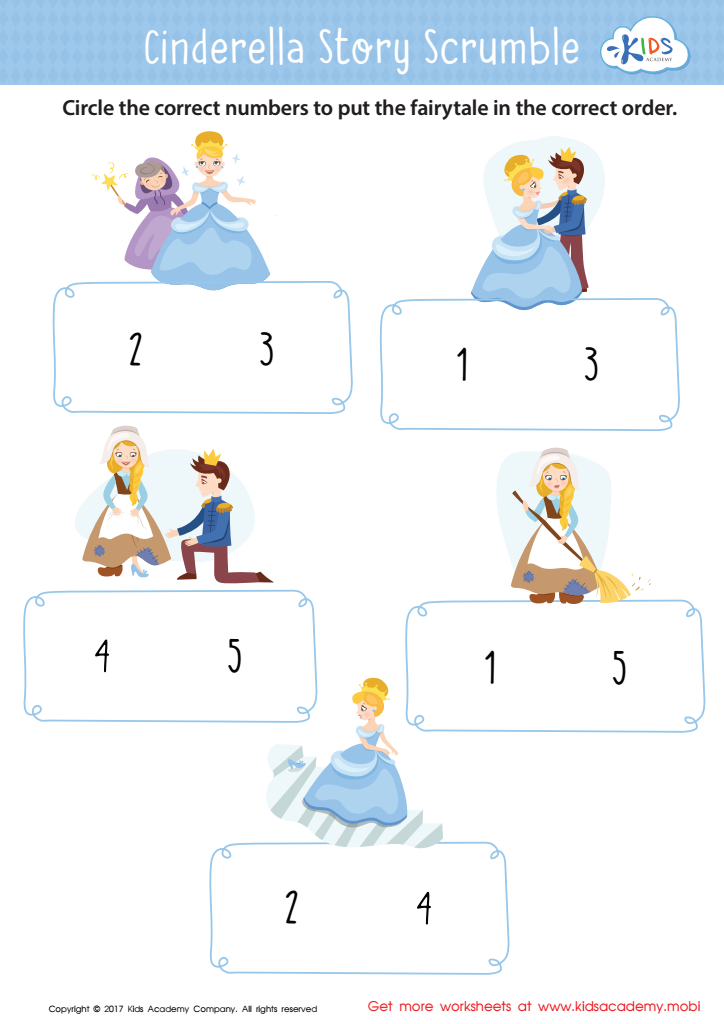
Cinderella Story Sequencing Worksheet
This worksheet helps strengthen reading comprehension skills by getting your child to remember key moments from the Cinderella story. They'll be asked to place pictures in the right order to tell the story.
Cinderella Story Sequencing Worksheet
Worksheet
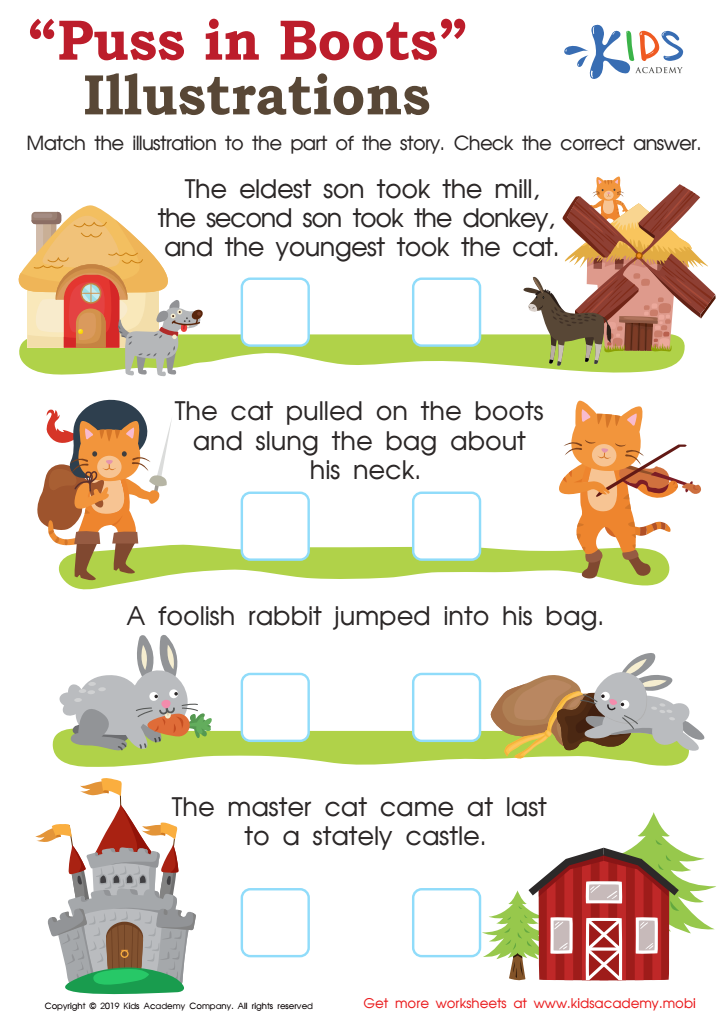
Puss in Boots Illustrations Worksheet
This Puss In Boots Illustrations worksheet is a great way to help kids learn about retelling stories. They'll match images to different parts of the story and check off the correct answer. As they recall events and put them in sequence they'll enjoy this fun and creative activity.
Puss in Boots Illustrations Worksheet
Worksheet
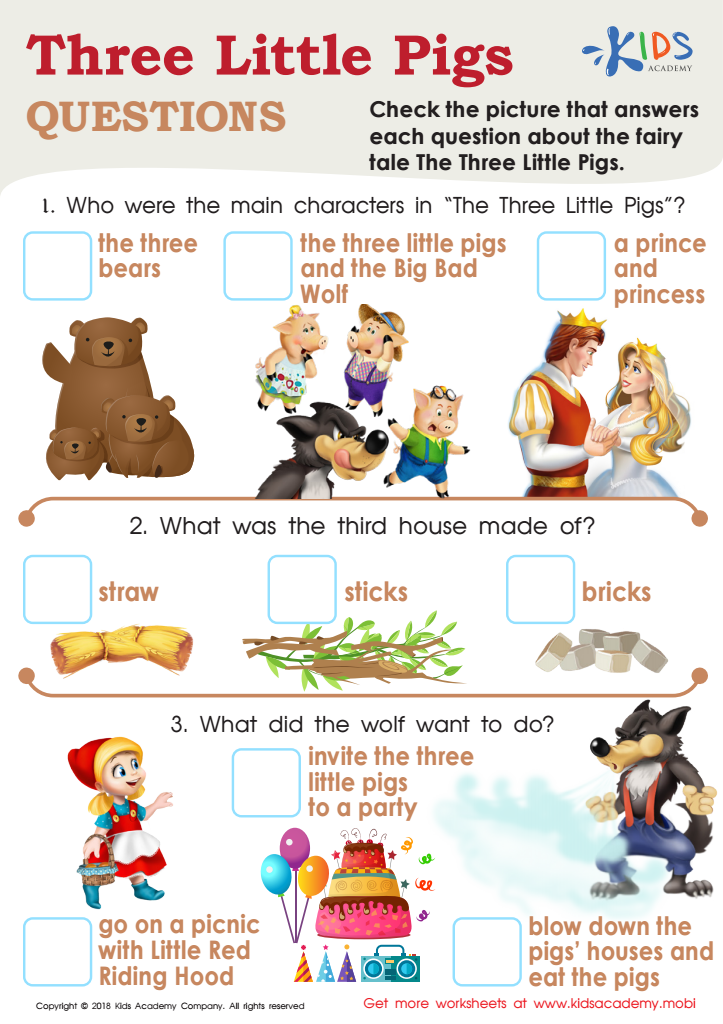
Three Little Pigs Questions Worksheet
Does your kid love bedtime stories? Test their classic fairytale knowledge with this worksheet! If they mention The Three Little Pigs, they're in luck - this pdf has them answering questions based off the classic fairytale. They'll check the picture that answers each question about the story. Is their fairytale knowledge up to scratch?
Three Little Pigs Questions Worksheet
Worksheet
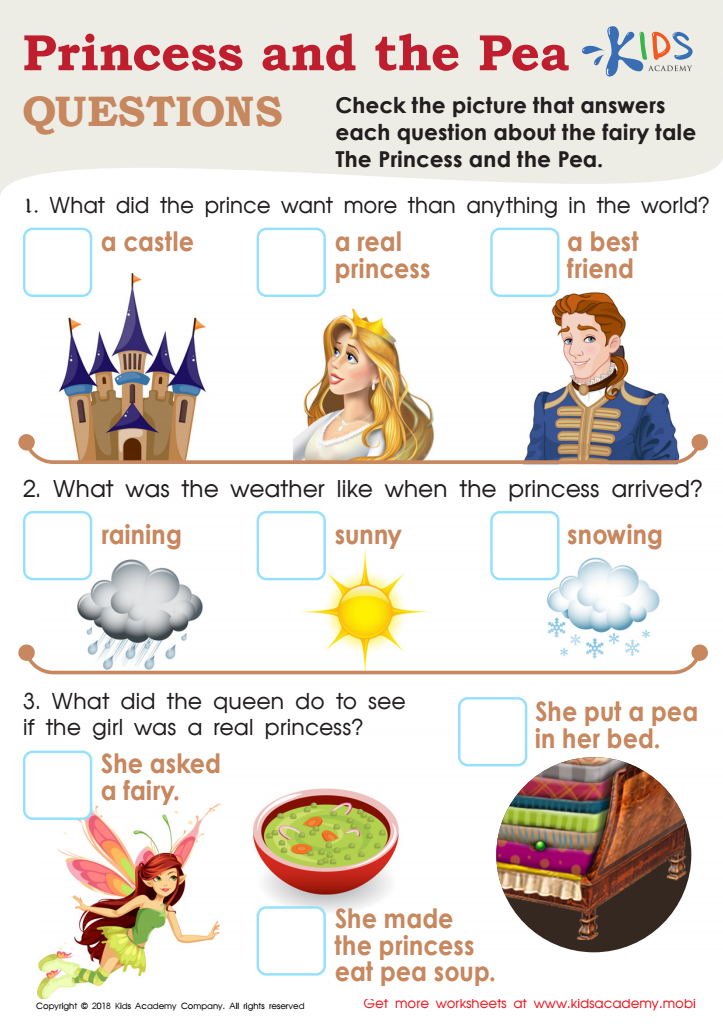
Princess and the Pea Questions Worksheet
Your kid knows The Princess and the Pea inside-out? Test their knowledge with this worksheet. Ask your little one to read the questions and match each one to the picture. It's a fun way to see just how much attention they've paid to their bedtime story.
Princess and the Pea Questions Worksheet
Worksheet
Join Kids Academy for Free
Who is primarily going to use this learning content?






Story sequencing is vital for early childhood development and teachers and parents must prioritize it to bolster kindergartners' reading comprehension. At this age, children are beginning to form the foundations of their literacy skills, and understanding the sequence of events in a story is integral to their overall comprehension and cognitive development.
Firstly, grasping story sequence helps children make sense of what they're reading. By identifying the beginning, middle, and end of a story, kindergartners learn to follow a narrative logically, bridging cause-and-effect relationships between events. This skill is essential for understanding and recalling key plot points, which in turn enhances their memory and critical thinking.
Secondly, knowledge of story sequencing paves the way for predicting future events, fostering active engagement and anticipation in reading. Predictive skills are a precursor to more advanced inferential thinking, promoting deeper interactions with the text.
Additionally, sequencing develops a child’s ability to structure their own thoughts and stories, vastly improving their writing and communication skills. By organizing their narratives, children also acquire the discipline of maintaining coherence and clarity, which are keys to effective storytelling.
Furthermore, the familiarity and joy found in following a sequence can foster a lifelong love of reading. Integrated into daily routines, sequencing activities make reading an enjoyable and rewarding experience.
In essence, prioritizing story sequencing in kindergarten builds the scaffolding for advanced literacy and cognitive skills, setting children on a path to academic and personal success.