Animal identification Normal Kindergarten Science Worksheets
3 filtered results
Difficulty Level
Grade
Age
-
From - To
Subject
Activity
Standards
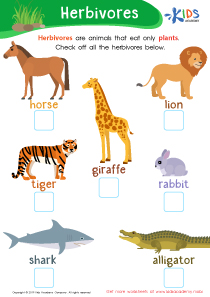
Discover the excitement of learning with our Animal Identification Normal Kindergarten Science Worksheets! Perfectly tailored for young minds, these interactive worksheets engage children in fun and educational activities that teach them to recognize and understand various animals. Our scientifically designed materials foster crucial learning skills, from observation and comparison to memory enhancement. Through colorful illustrations and simple exercises, kids can enjoy identifying animals while developing a solid foundation in science. Ideal for classroom or homeschool settings, these worksheets make science accessible and enjoyable, sparking curiosity and a love for learning in every child.
Favorites
With answer key
Interactive
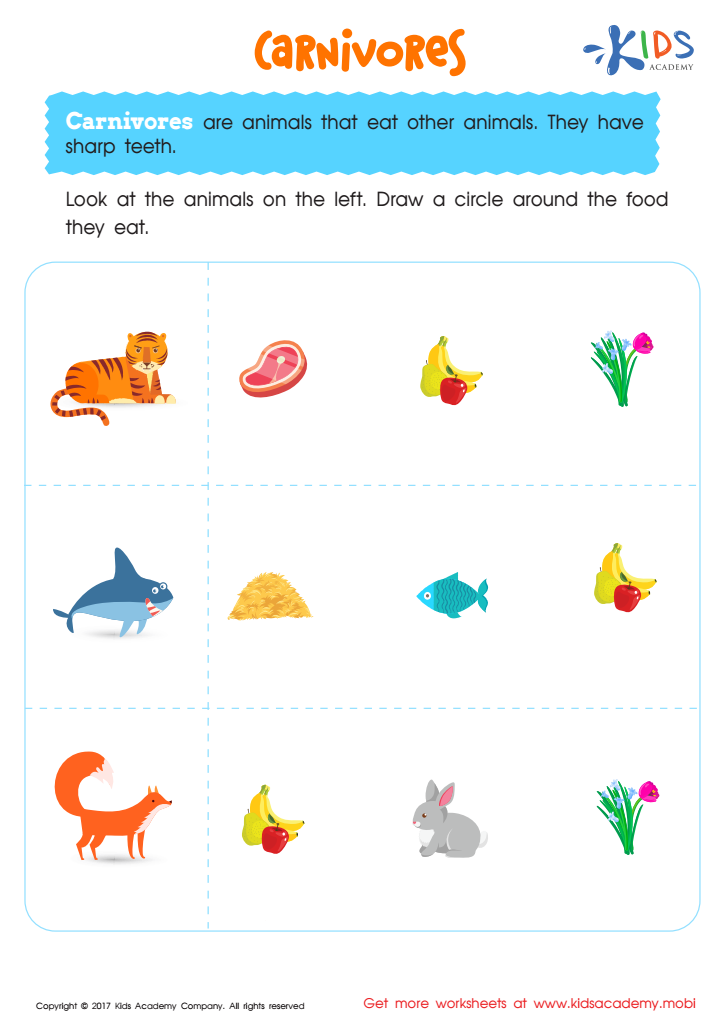
Carnivores Worksheet
Boost their vocabulary and help them explore the incredible world of carnivores.
 Assign to My Students
Carnivores Worksheet
Worksheet
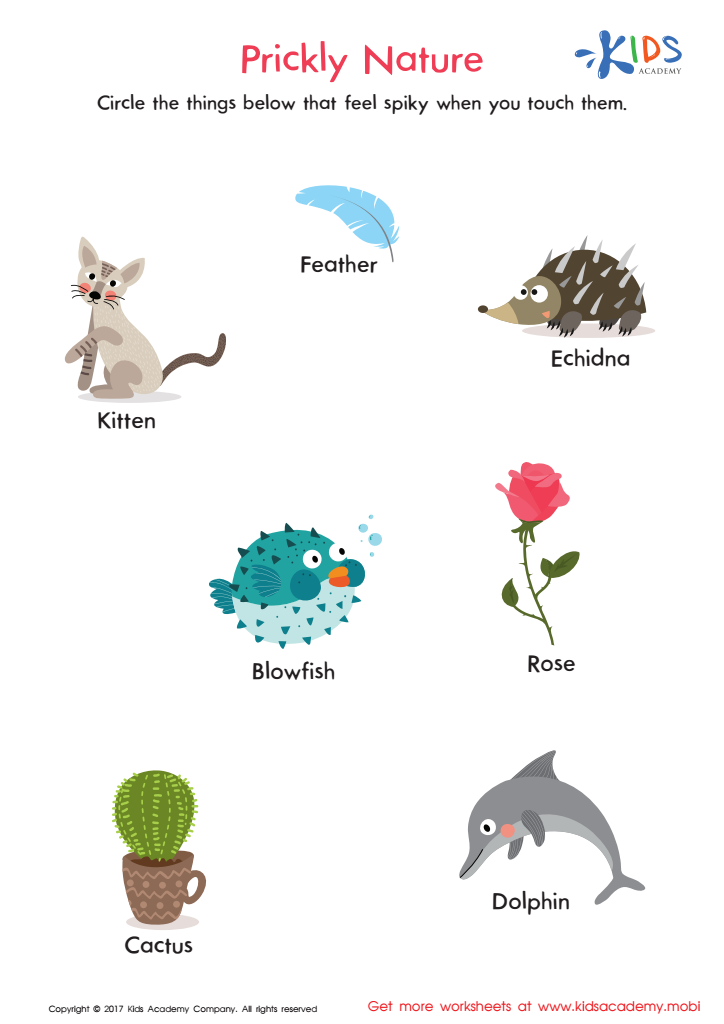
Prickly Nature Worksheet
Help your child stay safe and enhance critical thinking skills with this prickly nature worksheet. It can help them recognize spiky objects in their environment by teaching them to differentiate between prickly and soft textures. Plus, your kid will learn how to admire and avoid them. Get started today!
Prickly Nature Worksheet
Worksheet
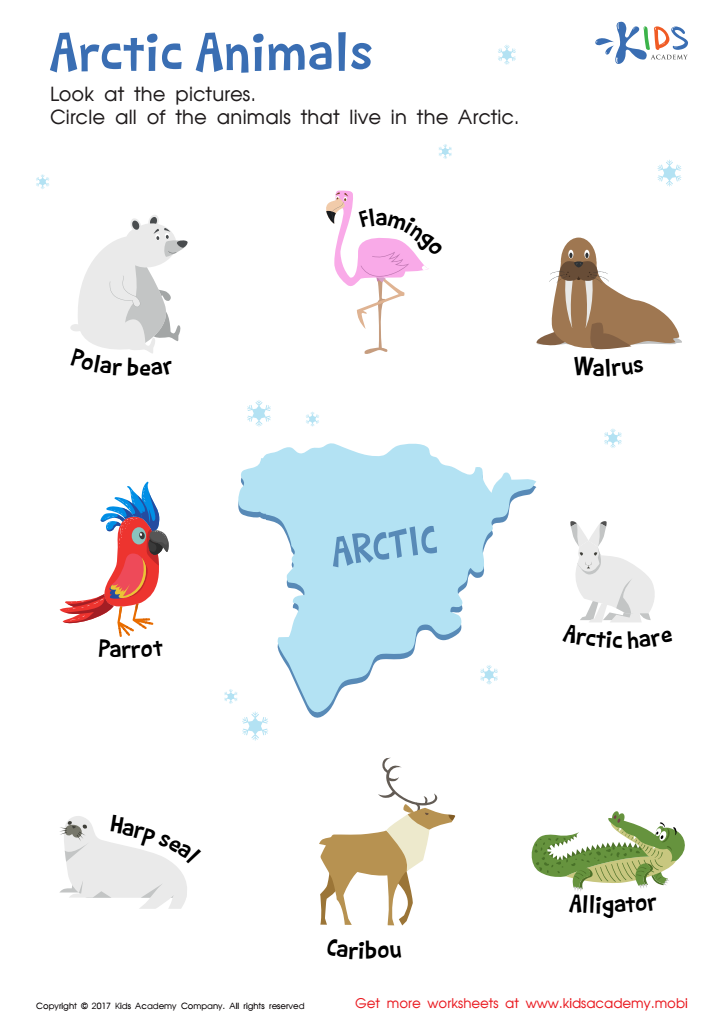
Arctic Animals Worksheet
Kids love animals and this worksheet is a great way to teach them where they live. It reinforces classification skills and introduces new animals, like the Arctic hare. Use it to discuss the Arctic climate and how these animals live, then ask your child where other animals live to keep the conversation going.
Arctic Animals Worksheet
Worksheet
Join Kids Academy for Free
Who is primarily going to use this learning content?







Parents and teachers play an essential role in fostering a child’s understanding and appreciation of the natural world through activities like animal identification. At the kindergarten level, learning to identify animals is not just about recognizing different species; it's about cultivating observational skills, enhancing vocabulary, and encouraging curiosity and a love for learning.
Firstly, recognizing and naming various animals helps children improve their memory and attention to detail. They learn to note distinct features like color, shape, sound, and habitat, which are critical early science skills. Such activities also contribute to language development, as children learn new names and terms and practice using them appropriately in conversation and storytelling.
Moreover, early exposure to nature and biological sciences can spark a lifelong interest in these areas, potentially guiding future educational and career choices. It promotes empathy and understanding towards animals and the environment, which is crucial for raising environmentally conscious individuals.
Participating in animal identification activities also provides hands-on, experiential learning, making abstract concepts tangible. It encourages interactive and social learning opportunities, where kids can work together, share discoveries, and develop collaborative skills.
In essence, focusing on animal identification in kindergarten enriches a child's educational journey, developing foundational skills encompassed within cognitive, linguistic, and social domains, while fostering an enduring connection with nature.