Recognizing number patterns Normal Worksheets
4 filtered results
-
From - To
Discover the joy of learning with our "Recognizing Number Patterns Normal Worksheets!" These worksheets are crafted to help young minds understand and identify number sequences, enhancing their critical thinking and problem-solving skills. Tailored specifically for early graders, they progress from simple to challenging patterns, ensuring a balanced mix of fun and learning. Through engaging visuals and systematic exercises, children can practice and master number patterns, building a strong mathematical foundation. Perfect for classroom use or at-home practice, these worksheets support the development of essential math skills in an enjoyable and educational manner. Unlock the power of patterns today!
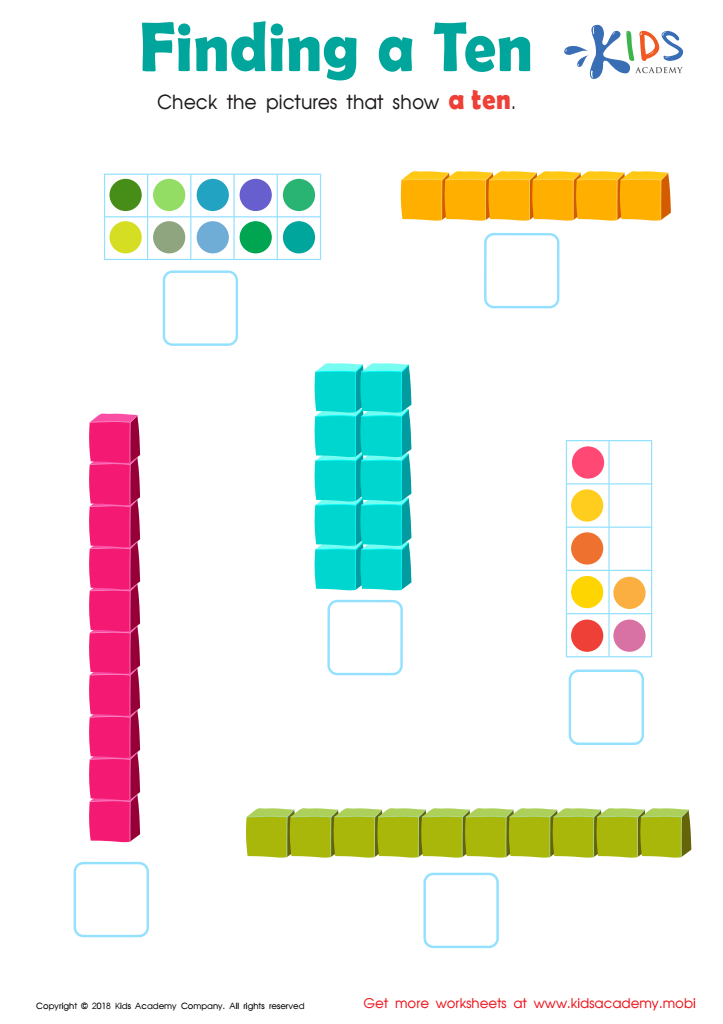
Finding a Ten Worksheet
 Assign to My Students
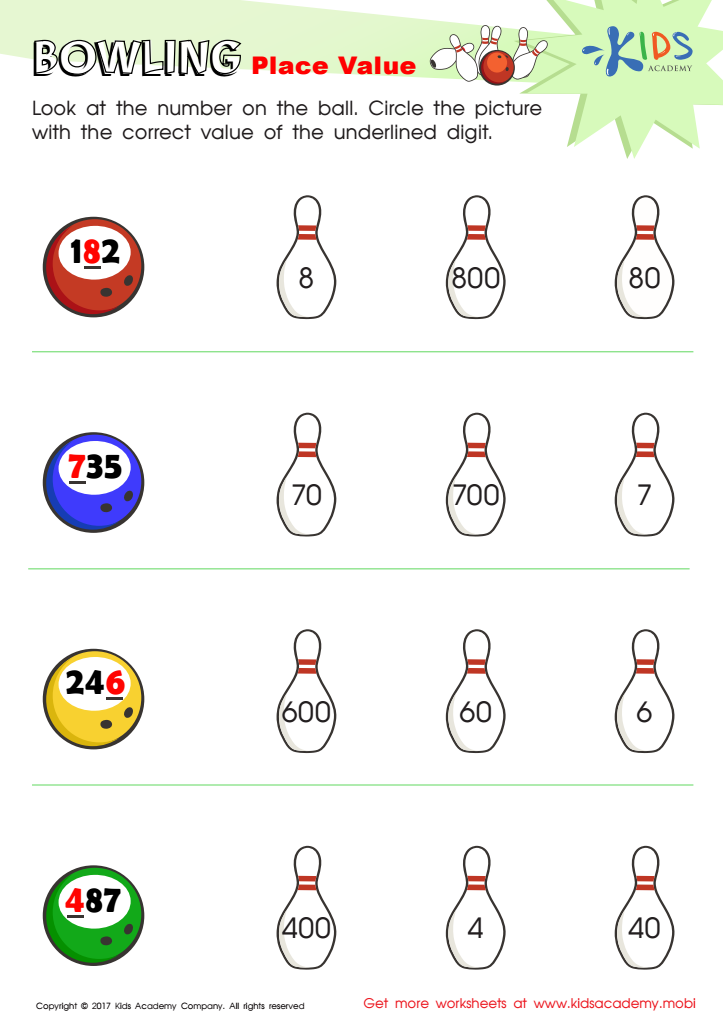
Place Value Worksheet
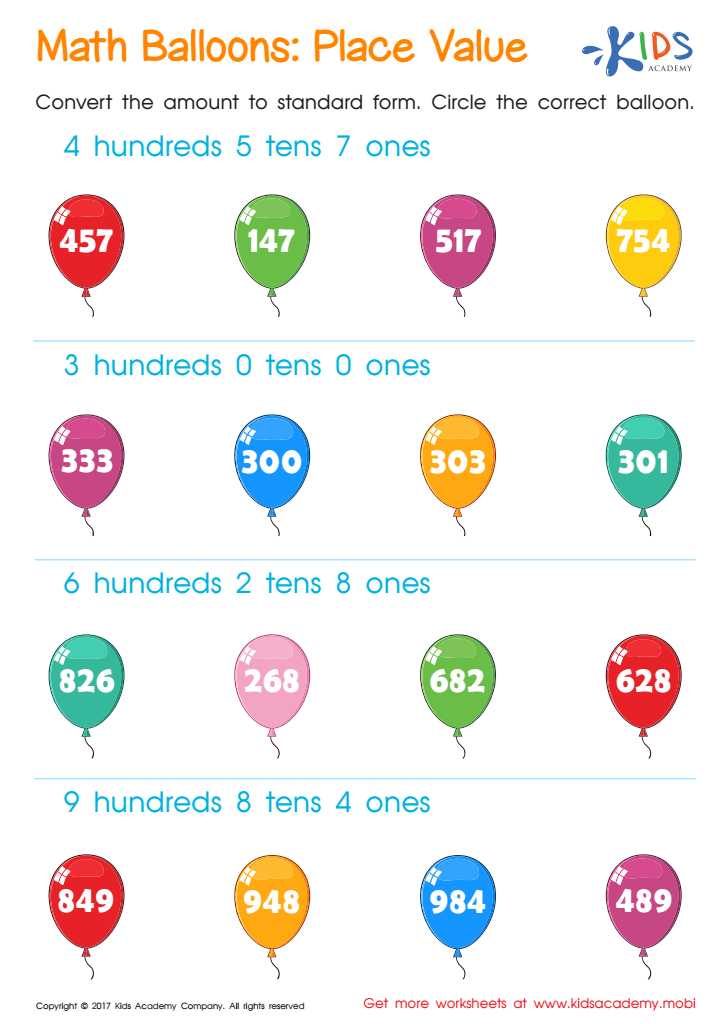
Place Value Printable Worksheet
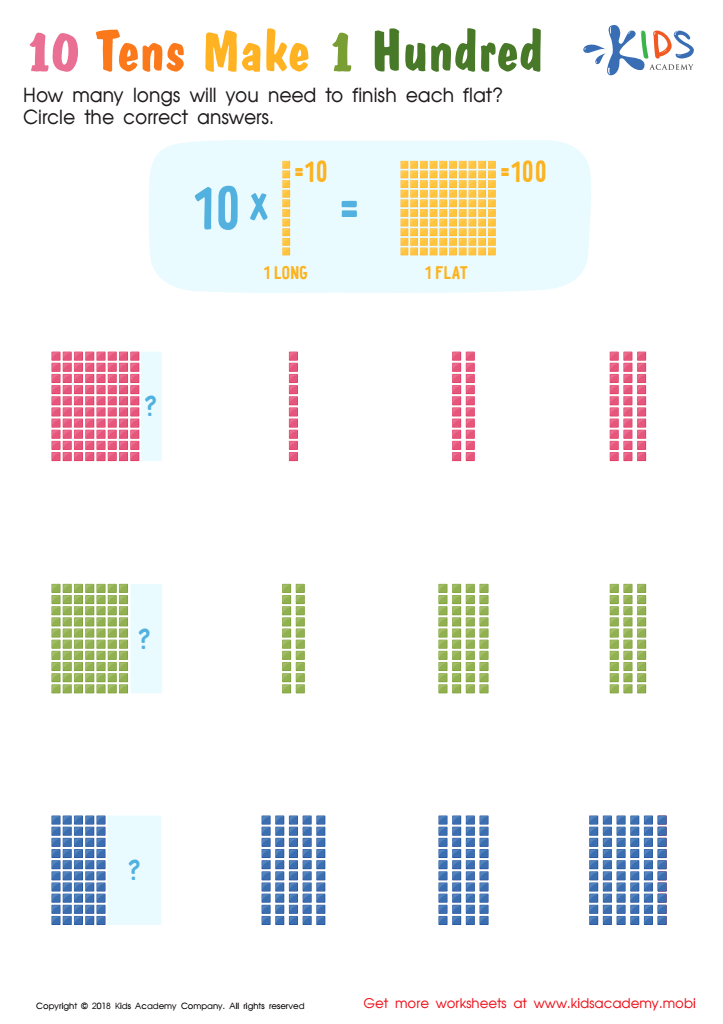
10 Tens Make 1 Hundred Worksheet






.jpg)

Recognizing number patterns is a foundational mathematical skill that prepares children for more complex mathematical concepts and problem-solving. For parents and teachers, fostering this ability in young learners is crucial for several reasons. Firstly, identifying patterns is a gateway to understanding and predicting events, enhancing logical thinking. When children notice regularities in numbers, such as skip counting or repeating sequences, they build a solid groundwork for arithmetic operations like addition, subtraction, multiplication, and division.
Furthermore, fluency in patterns promotes a positive attitude towards mathematics. It makes learning math feel like a puzzle or game, reducing anxiety and increasing enjoyment and motivation. It nurtures a child’s innate curiosity and encourages them to observe, hypothesize, and validate their ideas, all critical scientific methods.
Moreover, pattern recognition extends beyond mathematics. It is a crucial skill in everyday decision-making and problem-solving, influencing one's ability to notice trends in natural and social contexts. This cognitive skill positively impacts fields such as reading readiness, as it parallels recognizing patterns in letters and words.
Overall, prioritizing the recognition of number patterns lays down a versatile, robust intellectual infrastructure. It equips children with critical thinking abilities essential for academic success and real-world applications, making it an indispensable focus for parents and teachers alike.








