Understanding perspectives Normal Worksheets
3 filtered results
-
From - To
Explore "Understanding Perspectives Normal Worksheets" designed to enhance critical thinking and empathy in young learners. These engaging worksheets encourage children to analyze different viewpoints through vibrant activities and relatable scenarios. By assessing various perspectives, students develop essential social understanding and communication skills, fostering teamwork and collaboration. Perfect for classrooms or at-home learning, our worksheets make comprehension fun with colorful illustrations and interactive exercises. Tailored for early grade students, they promote cognitive development and lay the groundwork for effective interpersonal relationships. Ignite curiosity and inspire insightful discussions as children discover the importance of seeing the world through diverse lenses. Get started today!
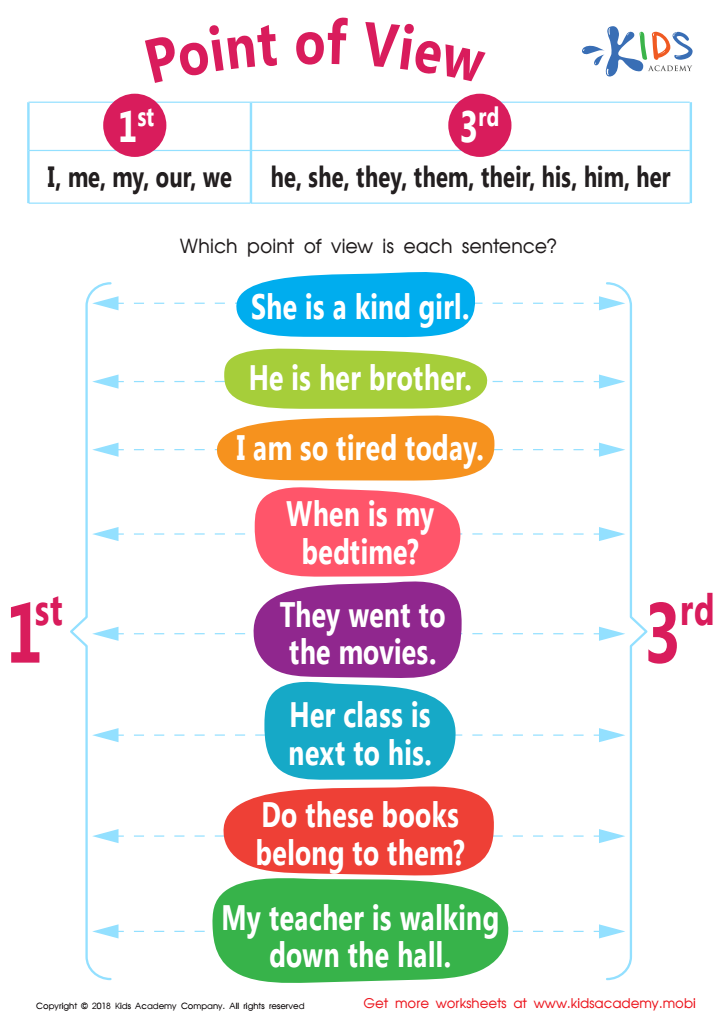
Point of View Worksheet
 Assign to My Students
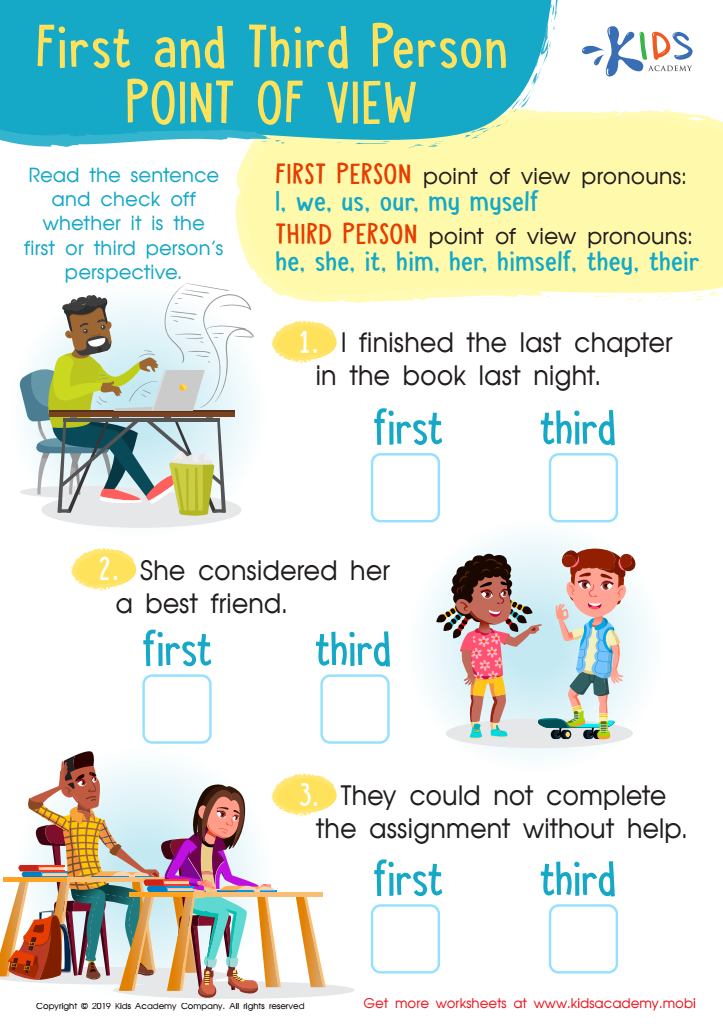
First and Third Person Point of View Worksheet
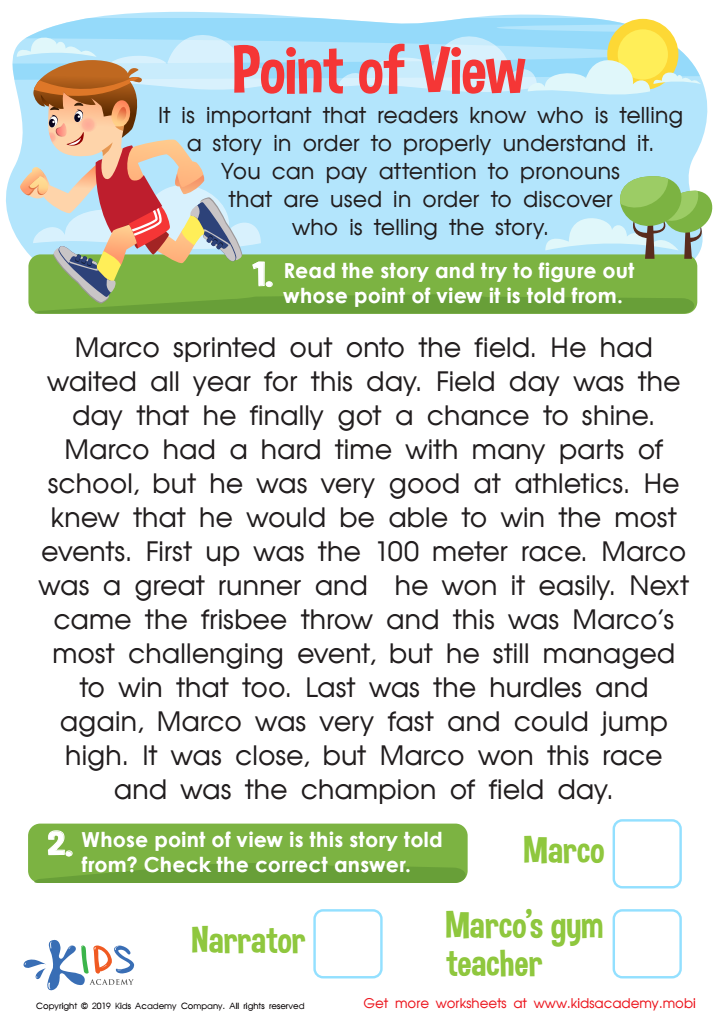
Point of View Worksheet








Understanding perspectives, often referred to as perspective-taking, is crucial for parents and teachers because it nurtures empathy, vital for social development. When students learn to recognize and appreciate others' viewpoints, they become more empathetic individuals. This skill not only enhances relationships with peers but also fosters a positive learning environment.
Moreover, in a diverse classroom, understanding different perspectives helps combat prejudice and promotes inclusivity. It prepares children for real-world interactions, enabling them to appreciate cultural differences and navigate various social situations confidently.
Parents and teachers play pivotal roles in modeling this behavior. By encouraging open discussions and actively listening to children, they instill the importance of considering others’ feelings and viewpoints. This not only aids academic success—where collaboration and communication are key—but also contributes to emotional intelligence, equipping students to manage conflicts and build healthy relationships throughout their lives.
Moreover, embracing diverse perspectives fosters creativity and critical thinking, skills increasingly vital in our complex, interconnected world. Therefore, prioritizing understanding perspectives is essential for holistic development, ensuring children not only thrive in school but also grow into compassionate, well-rounded individuals.








