Word Formation Normal Worksheets
3 filtered results
-
From - To
Enhance your child’s language skills with our Word Formation Normal Worksheets! These engaging resources are designed to help young learners understand the process of creating words through prefixes, suffixes, and roots. Our carefully crafted activities promote vocabulary development, spelling proficiency, and comprehension. Perfect for early grade students, these worksheets make learning fun and interactive. Encourage creativity and critical thinking as kids explore various word combinations. Each worksheet is tailored to optimize your child’s learning experience, boosting confidence in their writing and verbal skills. Visit us today to discover a world of educational resources perfect for your child's growth!
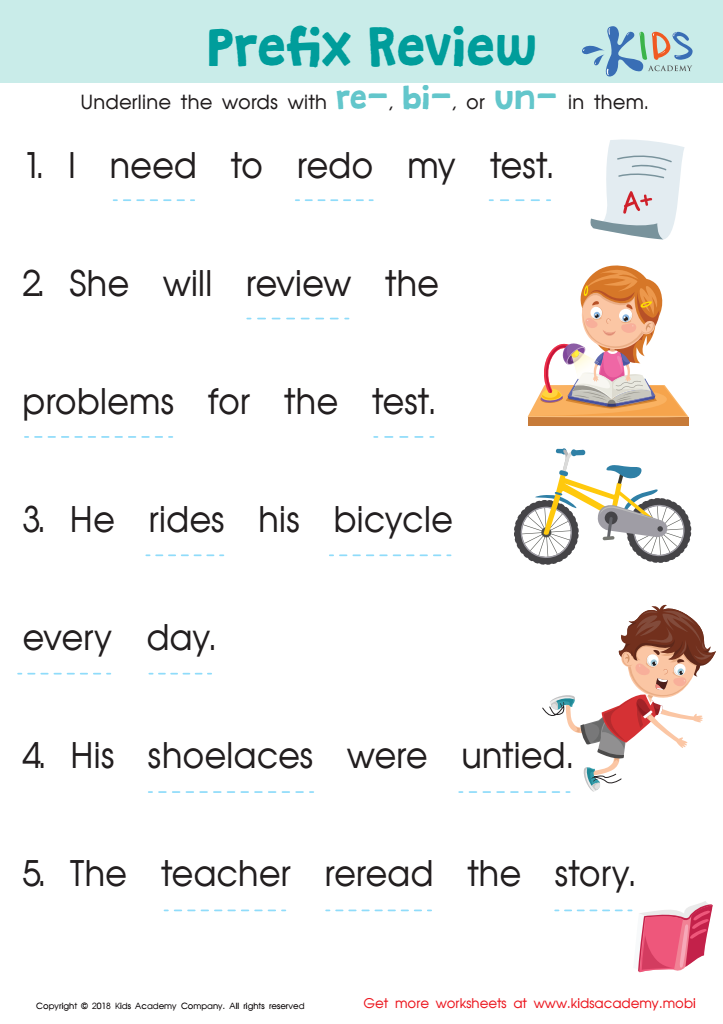
Prefix Review Worksheet
 Assign to My Students
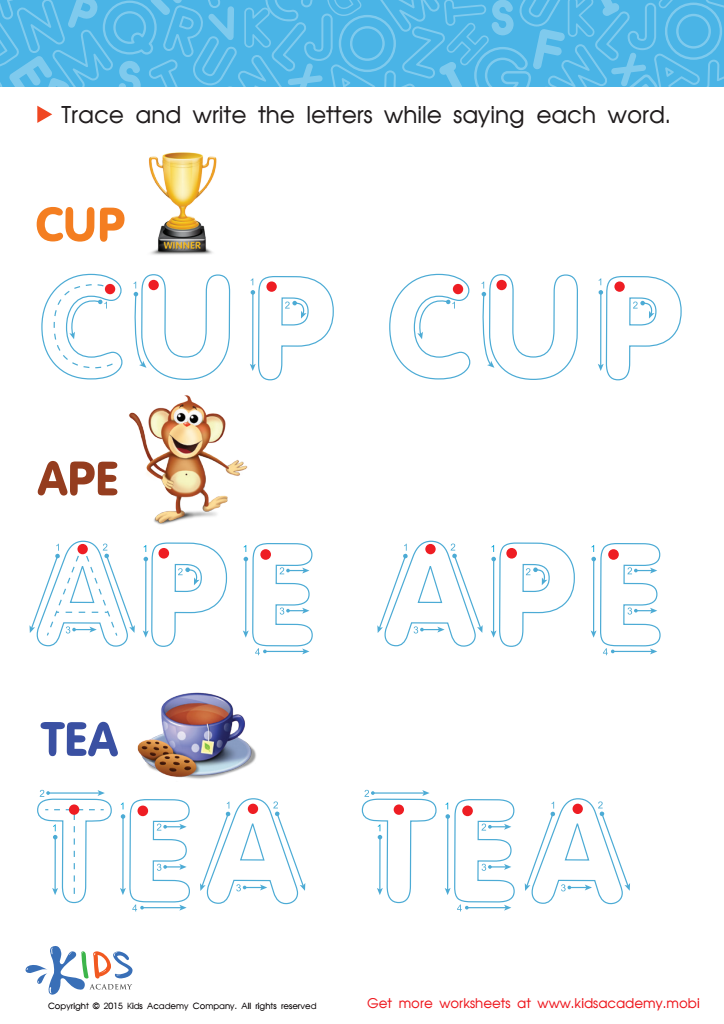
A Cup, an Ape and Tea Spelling Worksheet
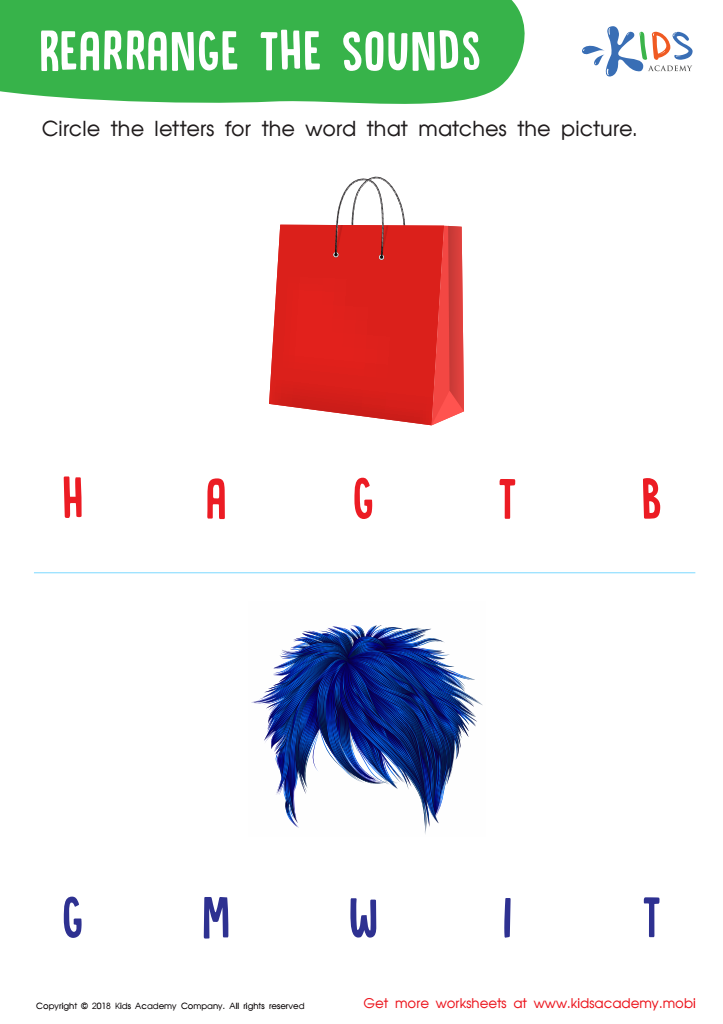
Rearrange the Sounds Worksheet







Word Formation Norm refers to the patterns and rules by which new words are created in a language. Understanding these patterns is crucial for both parents and teachers, especially in early grade education.
Firstly, knowledge of word formation enhances children's vocabulary development. By understanding how prefixes, suffixes, and root words work, children can deduce meanings of unfamiliar words, making reading comprehension more accessible. This skill enables them to become confident readers, enhancing their overall literacy skills.
Secondly, word formation directly impacts spelling skills. Familiarity with common morphemes helps children spell new words correctly, reducing frustration and boosting their self-esteem in writing tasks.
Furthermore, teaching word formation hones critical thinking skills. When children analyze how words are constructed, they learn to categorize information and make connections, fostering a deeper understanding of language.
Lastly, this knowledge positively influences children's communication skills, allowing them to express themselves more effectively.
In sum, parents and teachers should care about Word Formation Norm as it underpins literacy development, enhances cognitive skills, and builds confidence in language use—essential components for academic success and lifelong learning.








