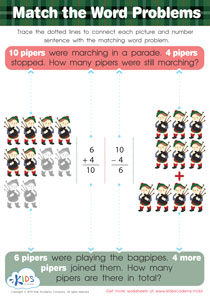
Fine Motor Skills Normal Addition Worksheets
3 filtered results
Difficulty Level
Grade
Age
-
From - To
Subject
Activity
Standards
Discover our engaging Fine Motor Skills Normal Addition Worksheets designed specifically for young learners! These worksheets combine essential math skills with fun, interactive activities to help children enhance their fine motor development. Our carefully crafted exercises focus on practicing addition through tracing, coloring, and other hands-on tasks that promote hand-eye coordination and dexterity. Perfect for preschool and early grade classrooms, these worksheets are a fantastic resource for strengthening math foundations while refining motor skills. Make learning enjoyable with creative designs and varied formats that captivate young minds. Explore our collection today to support your child's educational journey!
Favorites
With answer key
Interactive
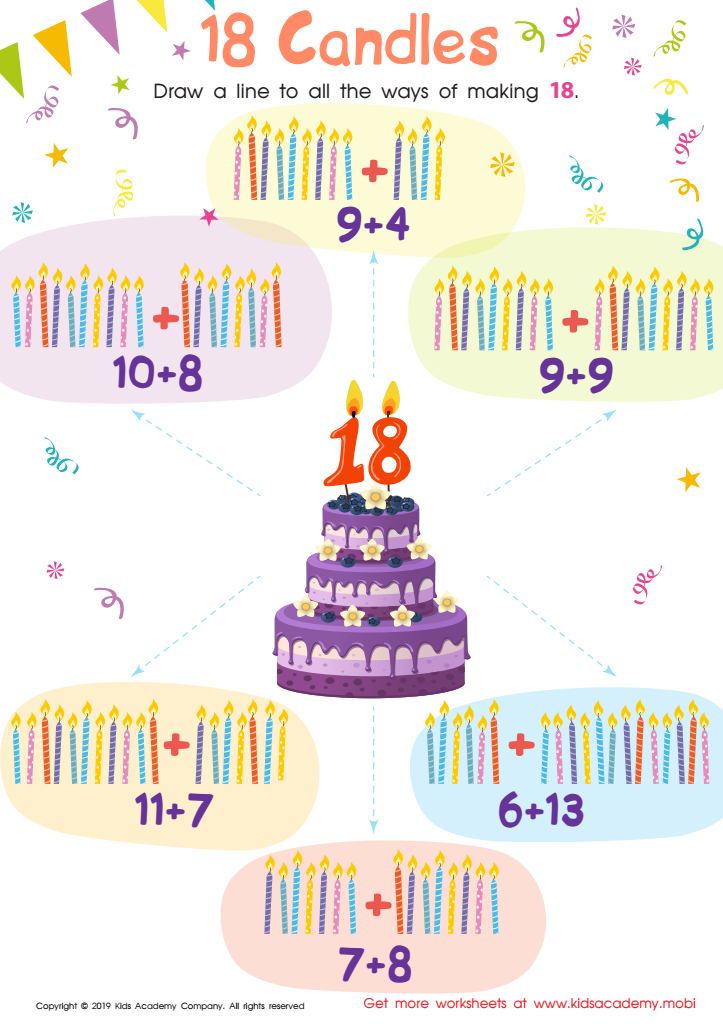
18 Candles Worksheet
This worksheet is great for introducing your students to addition and subtraction. Help your kids solve the simple equations on it and draw a line from the birthday cake with 18 on it to all the solutions. Practice like this will prepare them to tackle more complex math problems.
 Assign to My Students
18 Candles Worksheet
Worksheet
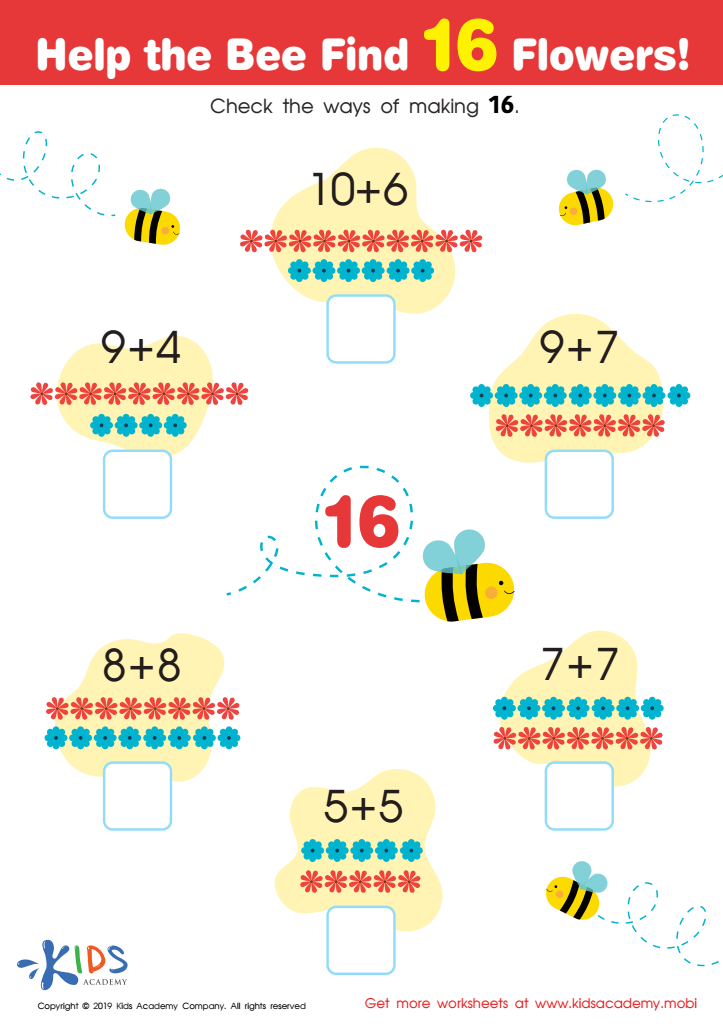
Help the Bee Find 16 Flowers Worksheet
Ask your students to count as high as they can. Show them that different numbers can equal the same figure with examples like 2+2=4 and 3+1=4. Ask for more examples, then help the bees find 16 flowers by checking the ways of making 16.
Help the Bee Find 16 Flowers Worksheet
Worksheet
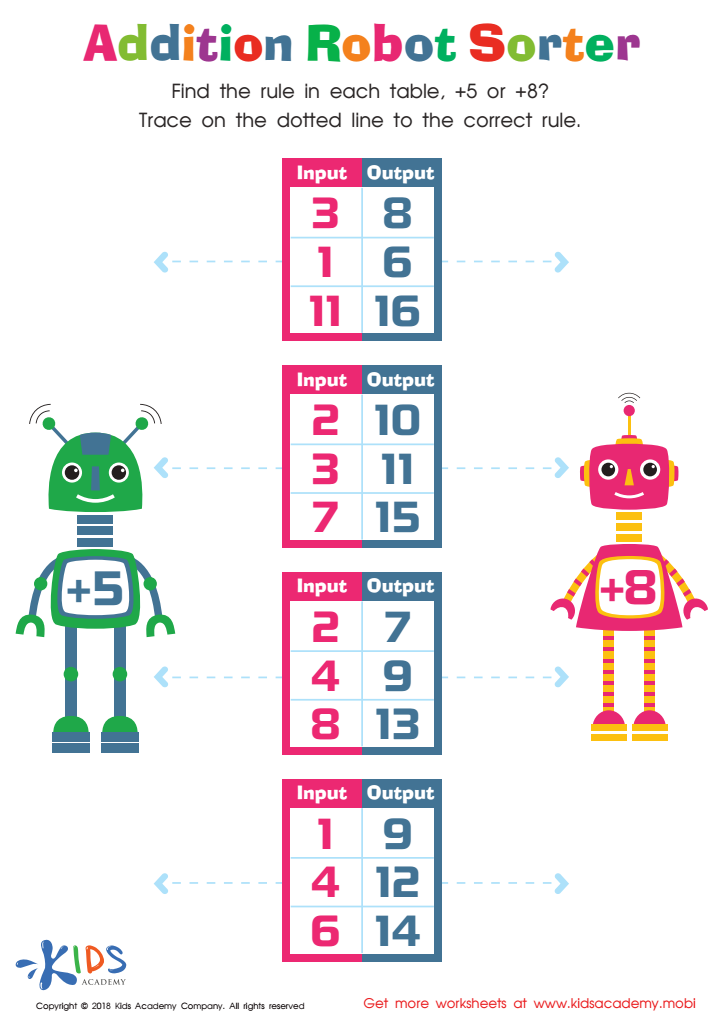
Addition Robot Sorter Worksheet
This worksheet helps your child understand addition. Have them trace the dotted lines to the correct equations: +8 and +5. It's a great way to aid their mathematical comprehension and get them comfortable with adding equations.
Addition Robot Sorter Worksheet
Worksheet
Join Kids Academy for Free
Who is primarily going to use this learning content?







.jpg)
Fine motor skills play a crucial role in a child’s overall development, particularly in early education. These skills involve the coordination of small muscles in the hands and fingers, enabling children to perform tasks that require precision, such as writing, drawing, cutting, and manipulating small objects. A solid foundation in fine motor skills is essential for normal addition and other mathematical functions as children progress in their learning.
When children can effectively use their fingers and hands, they often show more confidence in their academic abilities. For example, fine motor skills directly relate to a child's ability to hold a pencil correctly, which enhances their handwriting. Additionally, engaging in activities that develop these skills—like playing with clay, doing puzzles, or using scissors—can also improve their hand-eye coordination, critical thinking, and problem-solving abilities.
Teachers and parents should prioritize fine motor development through purposeful activities, as these skills contribute not only to academic success but also to a child's ability to participate in daily life. Encouraging practices that strengthen fine motor abilities not only prepares kids for complex mathematical tasks but also instills a sense of accomplishment and eagerness to learn, laying the groundwork for lifelong skills.