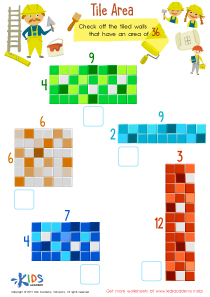
Learning addition Normal Numbers Worksheets
4 filtered results
-
From - To
Unlock the world of mathematics with our "Learning Addition Normal Numbers Worksheets"! Designed for early learners, these engaging worksheets help children develop essential addition skills through fun and interactive exercises. With various activities featuring normal numbers, students will enhance their number recognition and arithmetic abilities. Our worksheets promote critical thinking and problem-solving while making the learning process enjoyable. Perfect for classroom use or at-home practice, these resources cater to diverse learning styles and can be adapted to individual needs. Start your child’s journey to math mastery today and build a strong foundation for future success!
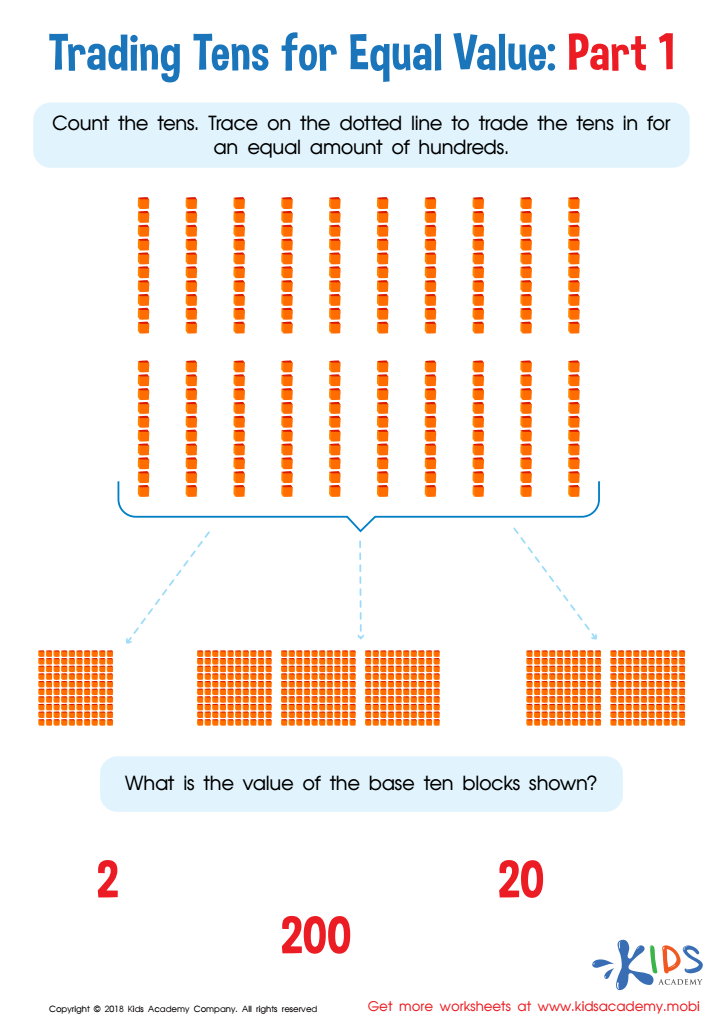
Trading Tens for Equal Value Worksheet: Part 1
 Assign to My Students
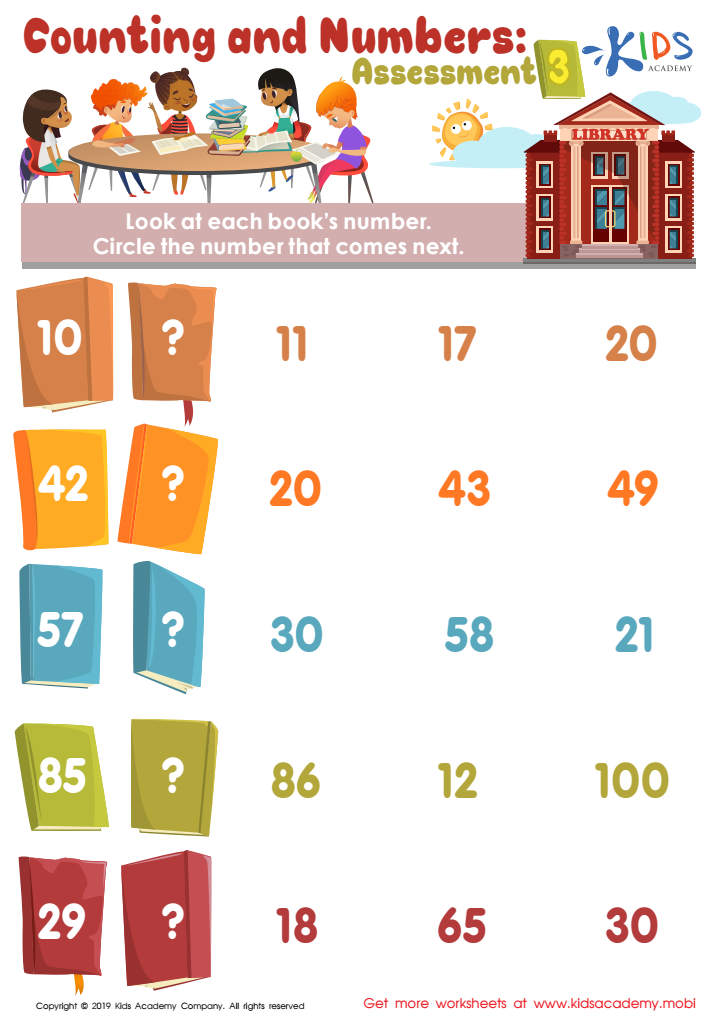
Counting and Numbers: Assessment Worksheet
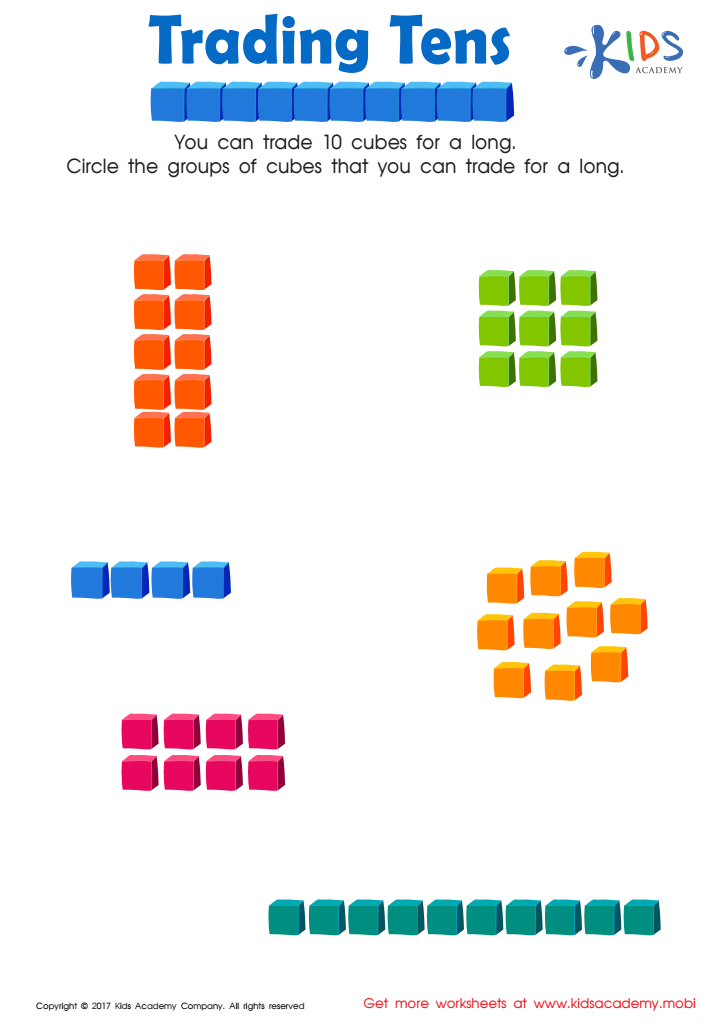
Trading Tens Worksheet
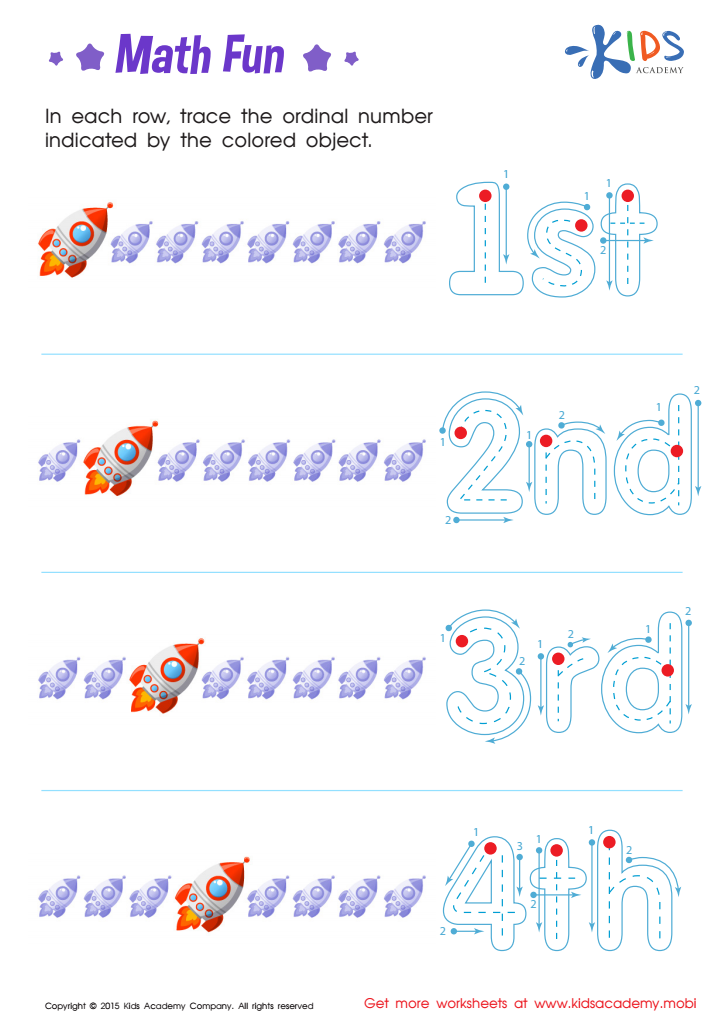
Ordinal Numbers: Math Fun Worksheet



.jpg)




Learning addition of normal numbers is crucial for young learners, as it lays the foundation for essential mathematical skills. Firstly, early mastery of addition fosters confidence in children. By understanding how to combine numbers, they gain a sense of achievement and are more encouraged to tackle other mathematical concepts. This confidence can translate to improved engagement in overall learning.
Additionally, addition skills are foundational for everyday life. Parents and teachers must recognize that understanding addition helps children make sense of their surroundings, whether it’s counting items, understanding money, or measuring time. These skills are integral in helping them navigate day-to-day tasks and make informed decisions.
Furthermore, addition serves as a gateway to more complex mathematical operations. Grasping basic addition paves the way for introducing subtraction, multiplication, and division, reinforcing overall cognitive development. For educators, teaching addition effectively means utilizing diverse strategies to reach all learners, ensuring that methods align with varying learning styles.
Overall, prioritizing learning addition normal numbers contributes not only to academic success but also to children’s mental agility and problem-solving capabilities, crucial skills that extend beyond the classroom. Therefore, it’s essential for parents and teachers to invest in this fundamental area of learning.