
Attention to Detail Normal Math Worksheets
3 filtered results
Difficulty Level
Grade
Age
-
From - To
Subject
Activity
Standards
Enhance your child's math skills with our Attention to Detail Normal Math Worksheets, meticulously designed to improve accuracy and carefulness in solving problems. These engaging materials target various levels, helping students sharpen their math abilities while fostering a keen eye for detail. Each worksheet offers exercises that challenge learners to focus on precision, essential for mastering math concepts. Ideal for classroom use or home practice, our resources support your child's educational journey in a fun and effective way. Download today to give your student the edge they need for academic success in math through detailed attention and practice.
Favorites
With answer key
Interactive
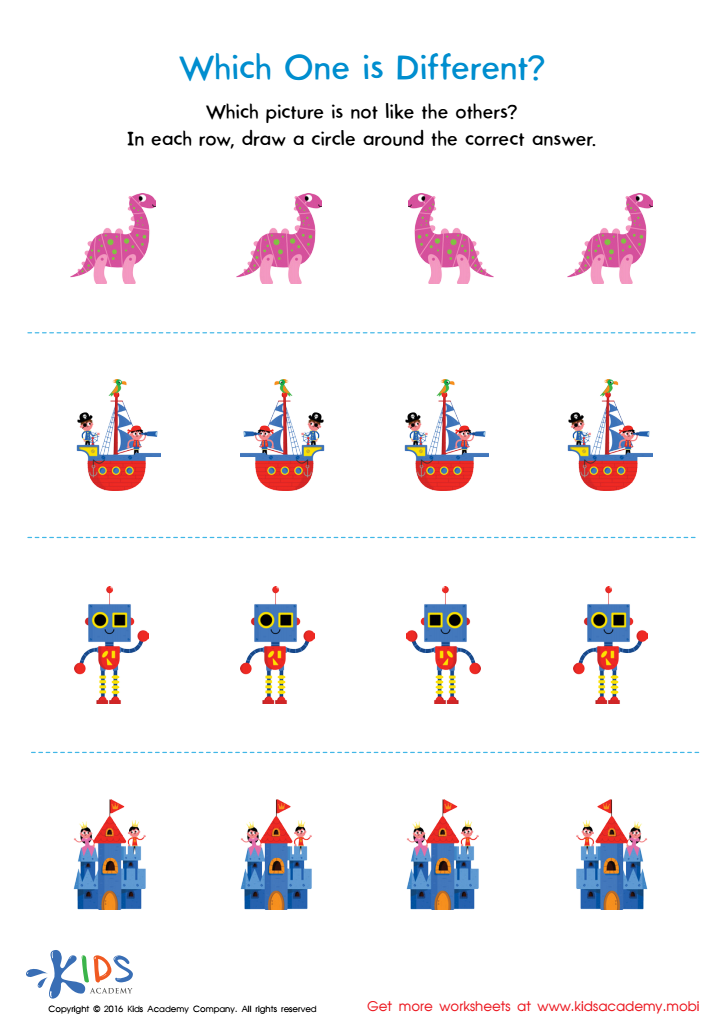
Which One Is Different Worksheet
Preschoolers can hone logical reasoning and critical analysis skills with this "Which one is Different?" worksheet. Kids must look closely and pick out unique attributes of objects and images. It's a skill that can serve them throughout their lifetime.
 Assign to My Students
Which One Is Different Worksheet
Worksheet
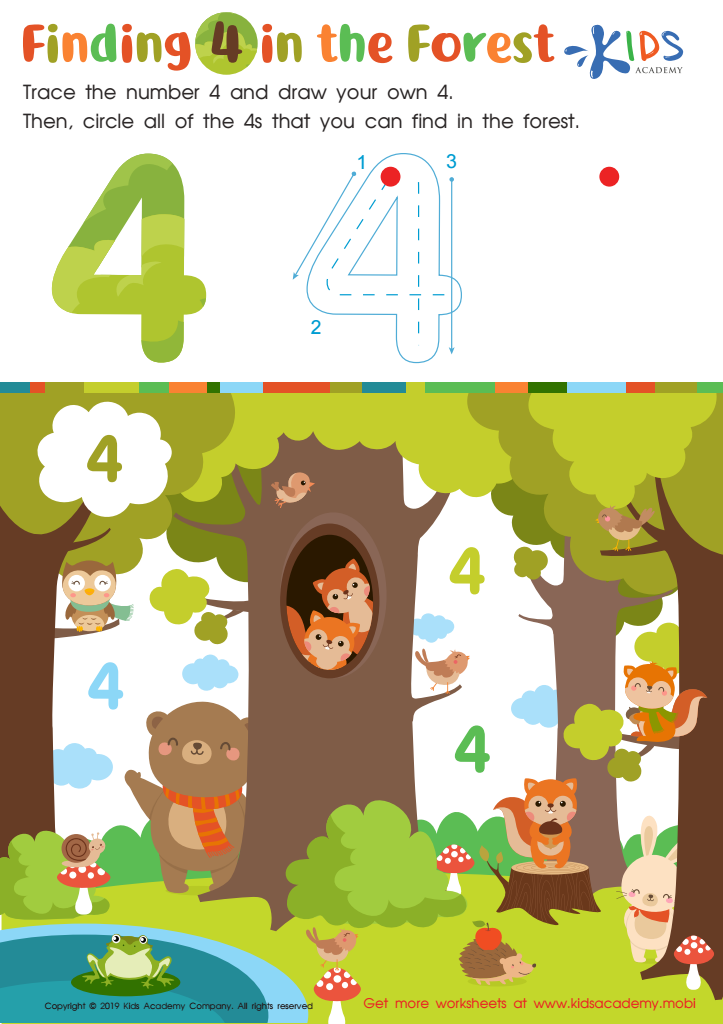
Finding 4 in the Forest Worksheet
Before starting, have your kids count as high as they can. Ask them to identify the setting and point out the 4s. Trace 4 and draw your own. Help your kids circle all the 4s they can find in the forest. How far can they count? How well did they find the hidden 4s?
Finding 4 in the Forest Worksheet
Worksheet
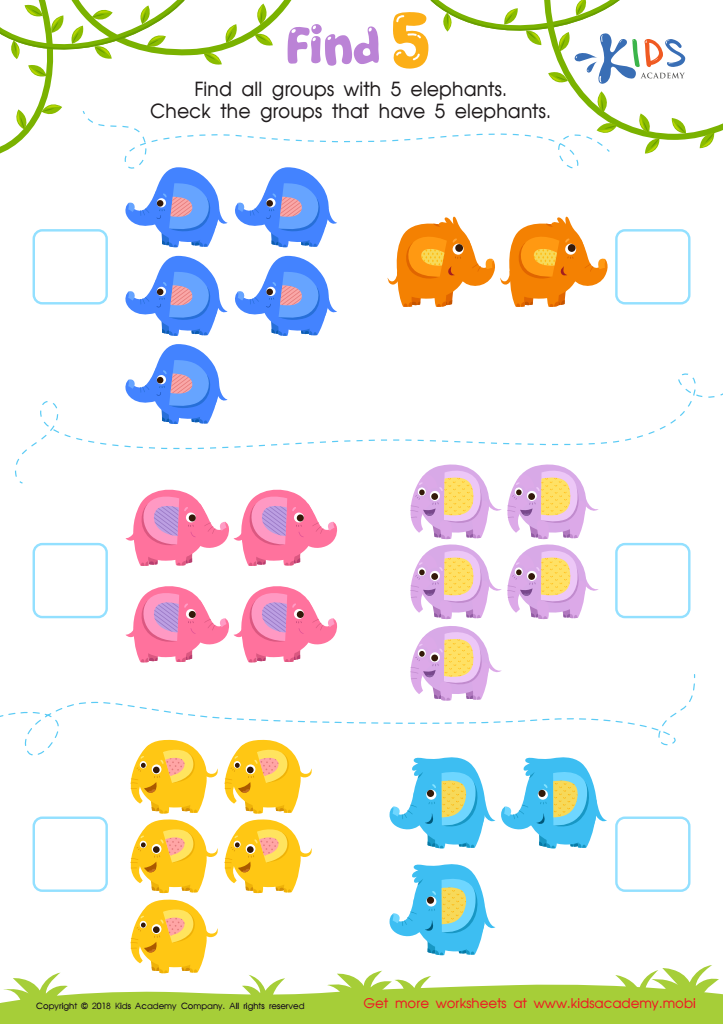
Find 5 Worksheet
Kids will love these cheery elephants that help them discover grouping and counting by fives. It's a great way to start learning addition and multiplication, while also developing fine motor skills. Download the free PDF and let the fun begin.
Find 5 Worksheet
Worksheet
Join Kids Academy for Free
Who is primarily going to use this learning content?








Attention to Detail in Normal Math is crucial for the development of essential cognitive and academic skills in young children. When parents and teachers emphasize precise and careful execution of math tasks, they help students cultivate a mindset that values accuracy and diligence. This skill extends beyond arithmetic and plays a significant role in problem-solving and logical reasoning across various disciplines.
For instance, a child who learns to double-check their math work will likely develop a habit of thoroughness in other areas, such as reading comprehension, writing, and scientific experimentation. Attention to detail in math often translates into increased self-discipline and better organizational skills, aiding in overall academic performance.
Furthermore, accuracy in mathematical calculations is foundational for more advanced concepts. Simple errors can often snowball into larger misunderstandings, creating knowledge gaps that can be challenging to bridge later. By establishing strong attention to detail early on, students build a robust base for future learning, making complex topics more approachable and less intimidating.
On the home front, parents who uphold the importance of detail in math signal its value to their children, reinforcing the lessons taught in the classroom. Together, teachers and parents can create a consistent message that not only fosters academic success but also prepares children for real-world tasks requiring precision and care.








