Differentiating shapes Normal Math Worksheets
3 filtered results
-
From - To
Discover our engaging "Differentiating Shapes" Normal Math Worksheets, designed specifically for early learners! These worksheets provide a fun and interactive way for kids to explore, identify, and categorize various shapes, enhancing their geometry skills. With vibrant illustrations and age-appropriate activities, children can easily recognize circles, squares, triangles, and more. Our worksheets help develop critical thinking as students learn to differentiate shapes through matching, coloring, and sorting tasks. Ideal for classroom use or home practice, these resources support differentiated learning and cater to various skill levels. Help your young learners build a strong foundation in geometry while enjoying the process!
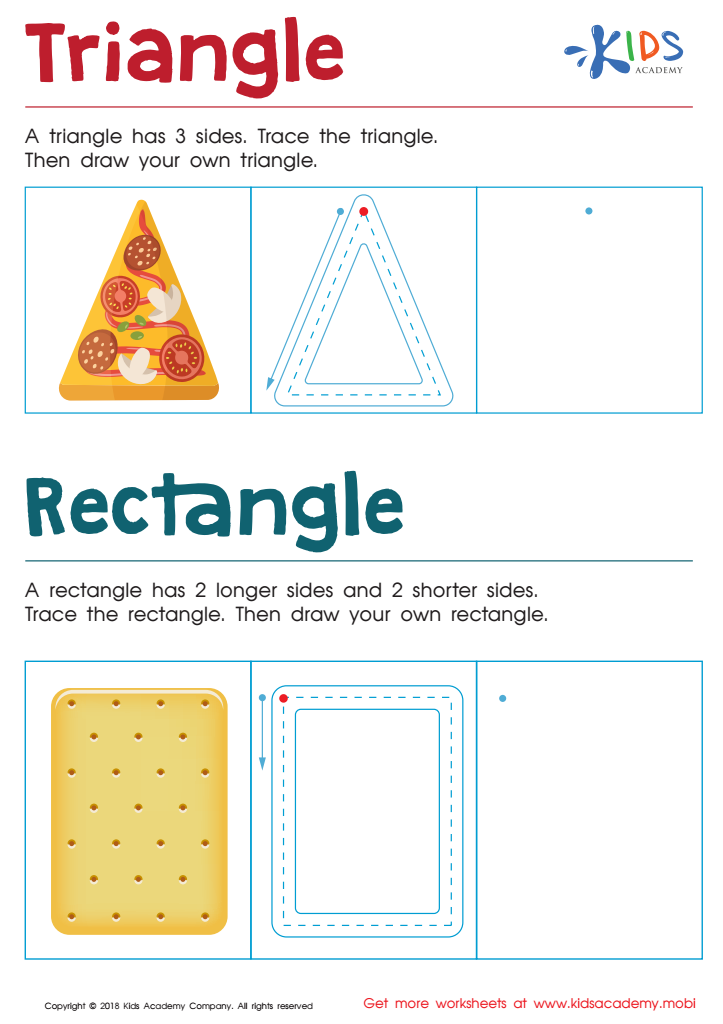
Triangle Rectangle Worksheet
 Assign to My Students
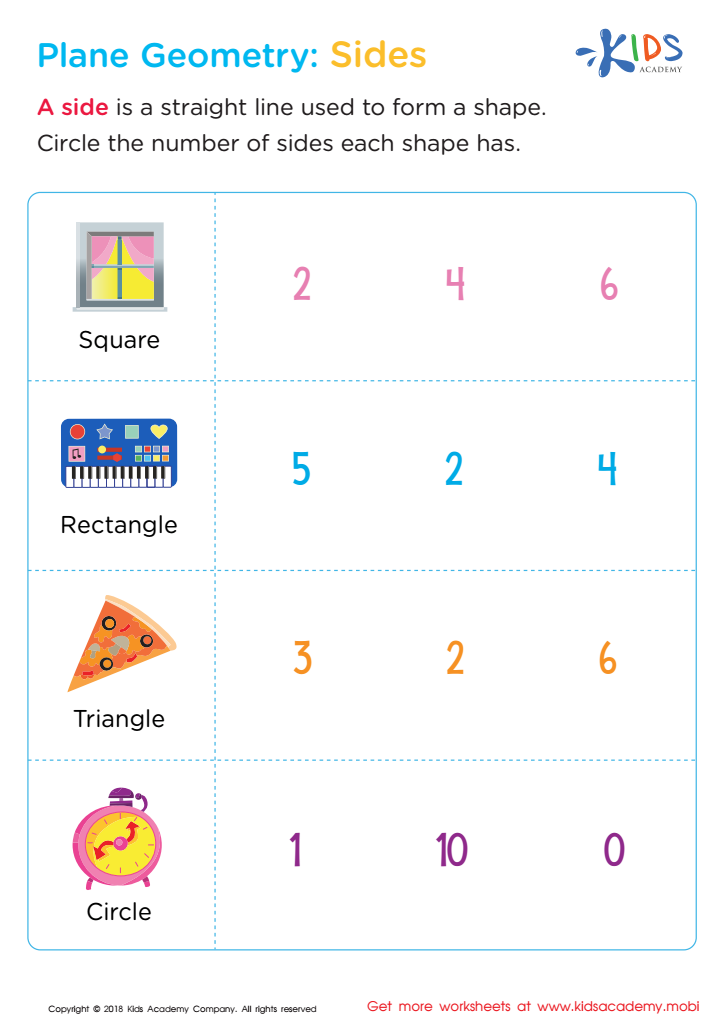
Plane Geometry: Sides Worksheet
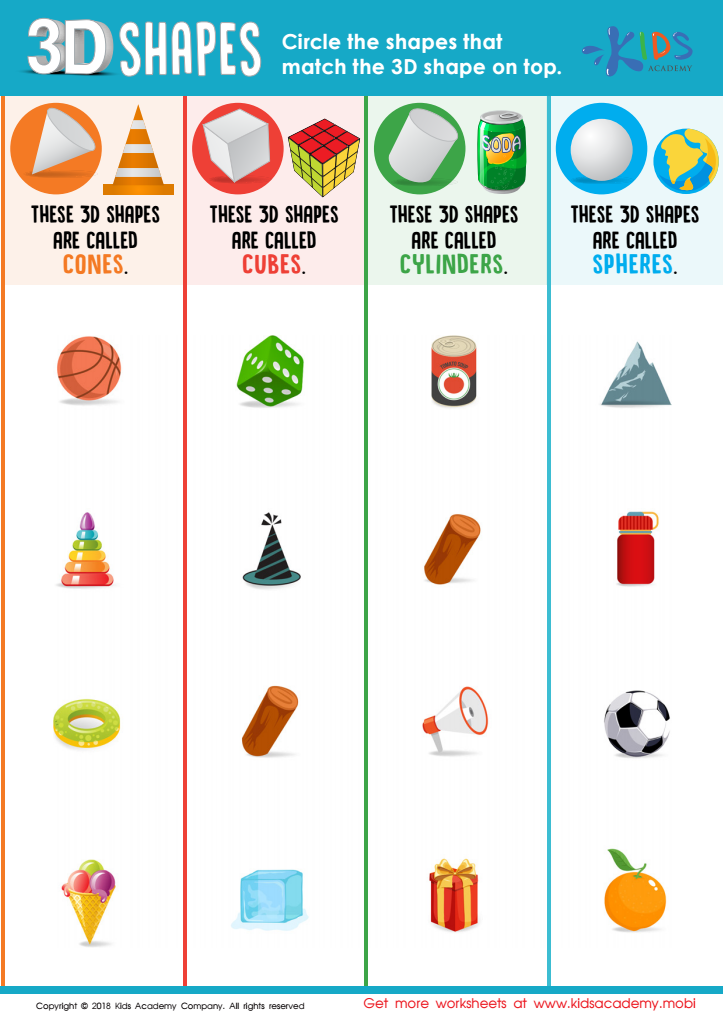
3D Shapes Worksheet








Differentiating shapes in Normal Math is essential for young learners as it fosters critical cognitive skills that lay the groundwork for future mathematical understanding. Recognizing and differentiating between shapes sharpens students' spatial awareness, an important skill not only in math but also in everyday life, helping them visually interpret and navigate their environments.
Moreover, by exploring different shapes, students practice critical thinking and problem-solving. They learn to classify, compare, and contrast various shapes, which enhances their analytical capabilities. Teachers and parents who emphasize shape differentiation provide children with various perspectives for approaching math, which cultivates flexibility in thinking.
This differentiation also caters to diverse learning styles within the classroom. Some children may grasp concepts better through visual recognition, while others may prefer tactile experiences. By varying activities—such as art projects, manipulatives, or interactive games—educators can engage children in ways that resonate with their individual learning preferences.
Ultimately, understanding shapes is foundational for future math skills like geometry, measurement, and data analysis. When parents and teachers prioritize shape differentiation, they are equipping children with vital skills not only for academic success but for lifelong learning and daily interactions with the world around them.








