Logical thinking development Normal Math Worksheets
5 filtered results
-
From - To
Enhance your child’s logical thinking skills with our engaging Normal Math Worksheets available at Kids Academy. Designed for early learners, these worksheets offer a variety of age-appropriate activities that challenge students’ reasoning and problem-solving abilities. With colorful visuals and interactive exercises, children will enjoy developing critical thinking while mastering math concepts. From pattern recognition to sorting, each worksheet encourages exploration and creativity. These printable resources make it easy for parents and educators to support children’s learning journeys. Foster a strong foundation in logical reasoning that will benefit your child over a lifetime. Visit us today and watch them grow!
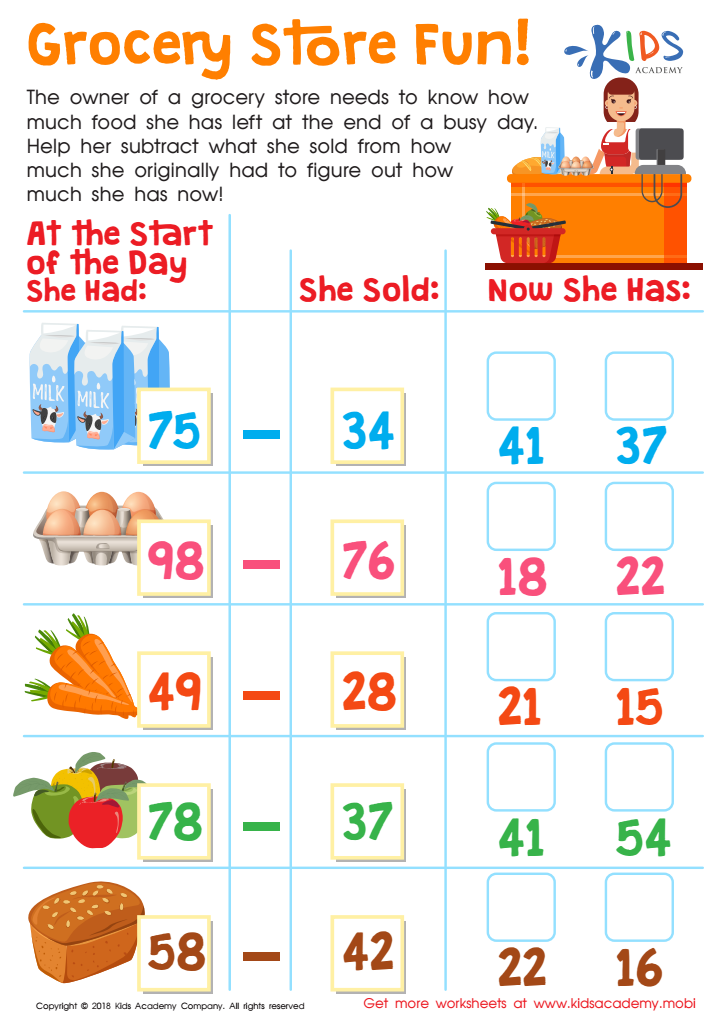
Grocery Store Fun! Worksheet
 Assign to My Students
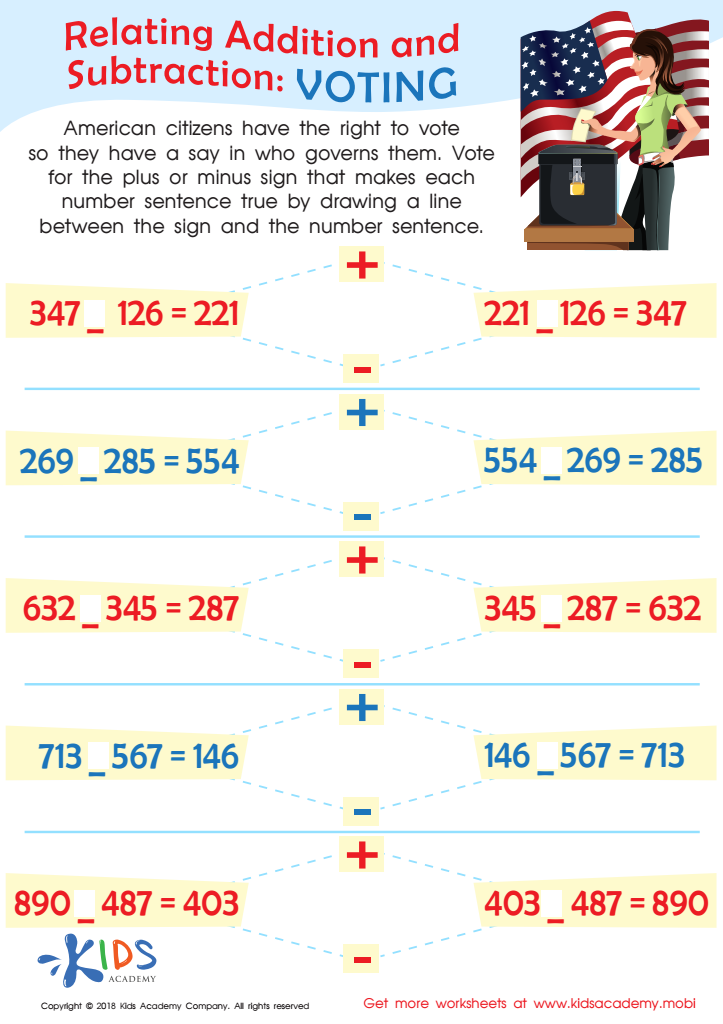
Voting Worksheet
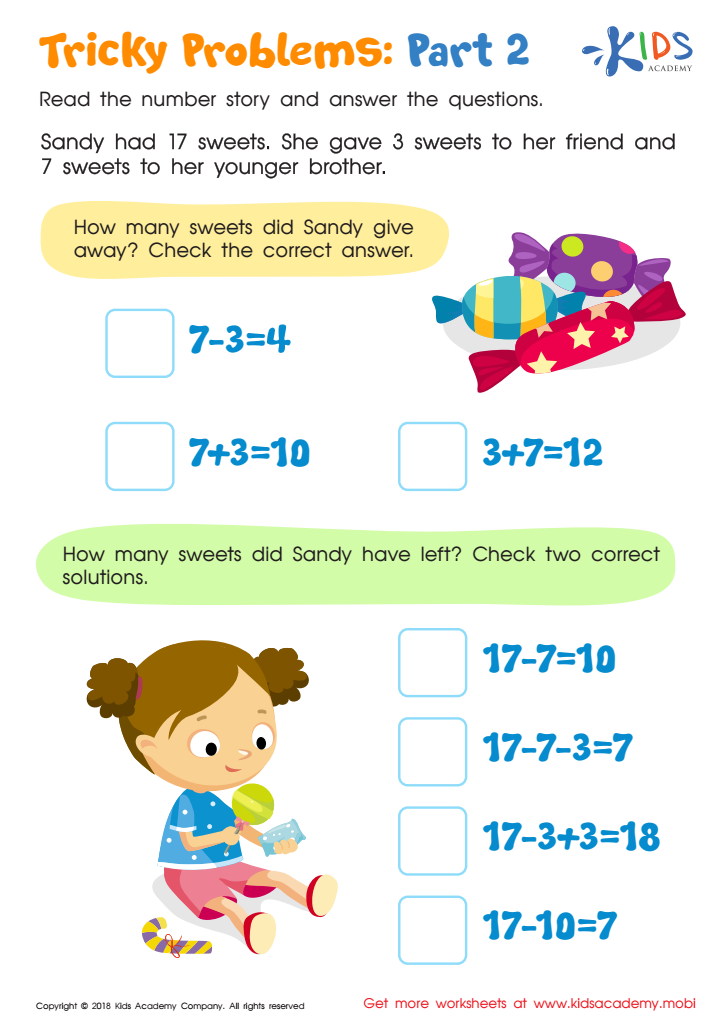
Tricky Problems Worksheet: Part 2
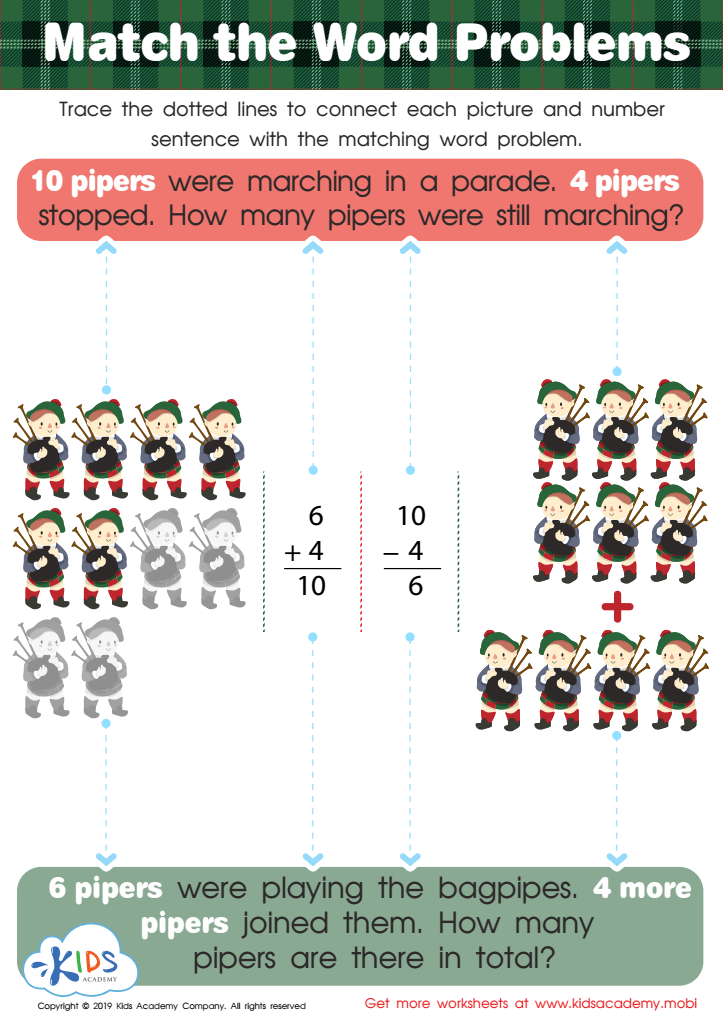
Match the Word Problems Worksheet
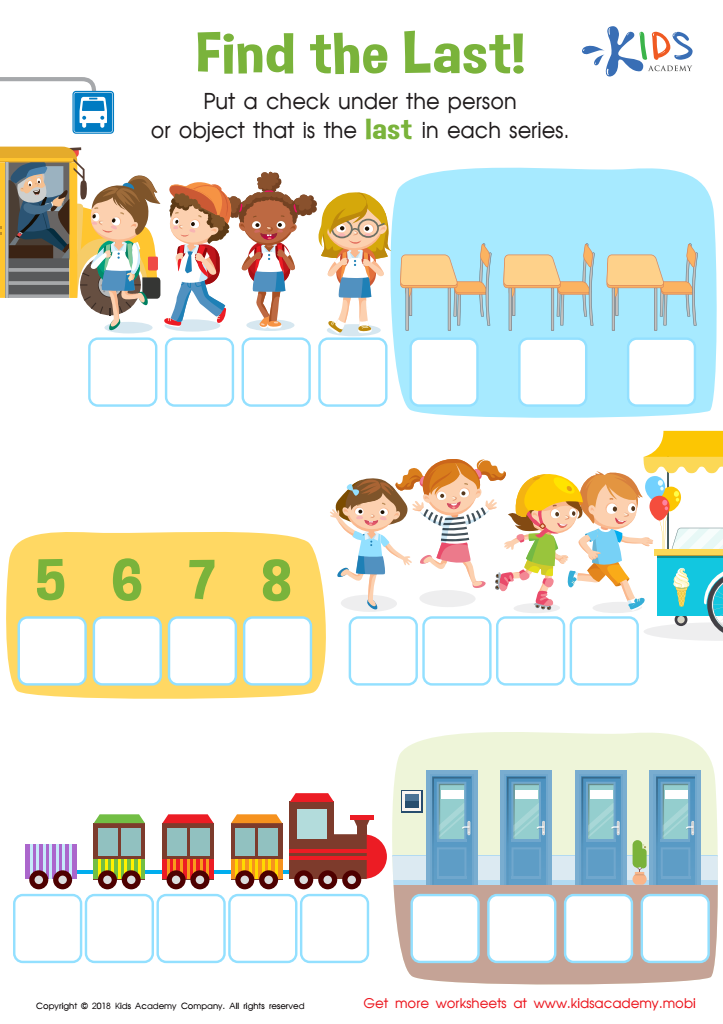
Find the Last! Worksheet








Logical thinking and mathematical skills are foundational for children's overall development and future success. These skills go beyond mere numbers; they foster problem-solving abilities, enhance reasoning, and nurture analytical skills. When parents or teachers emphasize logical thinking in mathematical contexts, they help children develop the capacity to approach challenges methodically.
At an early age, children learn patterns, relationships, and basic math operations. This understanding promotes critical thinking and encourages them to make connections between different concepts. Furthermore, strong math skills can enhance overall academic performance, as they are interlinked with subjects like science and technology.
Moreover, logical thinking promotes perseverance and resilience; when faced with complex problems, children learn the importance of trial and error. This cultivates a growth mindset, teaching them that mistakes are part of the learning process.
In today’s increasingly complex world, the ability to think logically and mathematically is essential not only for academic success but also in everyday decision-making. Thus, parents and teachers play a crucial role in providing a supportive environment that encourages the development of these valuable skills, ultimately preparing children for both academic challenges and real-life problem-solving.








