Mental math practice Normal Math Worksheets
5 filtered results
-
From - To
Enhance your child's math skills with our "Mental Math Practice Normal Math Worksheets"! These thoughtfully designed worksheets focus on boosting mental calculation abilities, equipping young learners with essential math strategies. Suitable for various grade levels, these activities make math fun and engaging, encouraging children to solve problems without relying on calculators or long paper calculations. As they tackle addition, subtraction, multiplication, and division challenges, students will build confidence and speed in their arithmetic skills. Ideal for classroom use or at-home practice, our worksheets foster a strong foundation in mathematics and prepare kids for advanced concepts with ease.
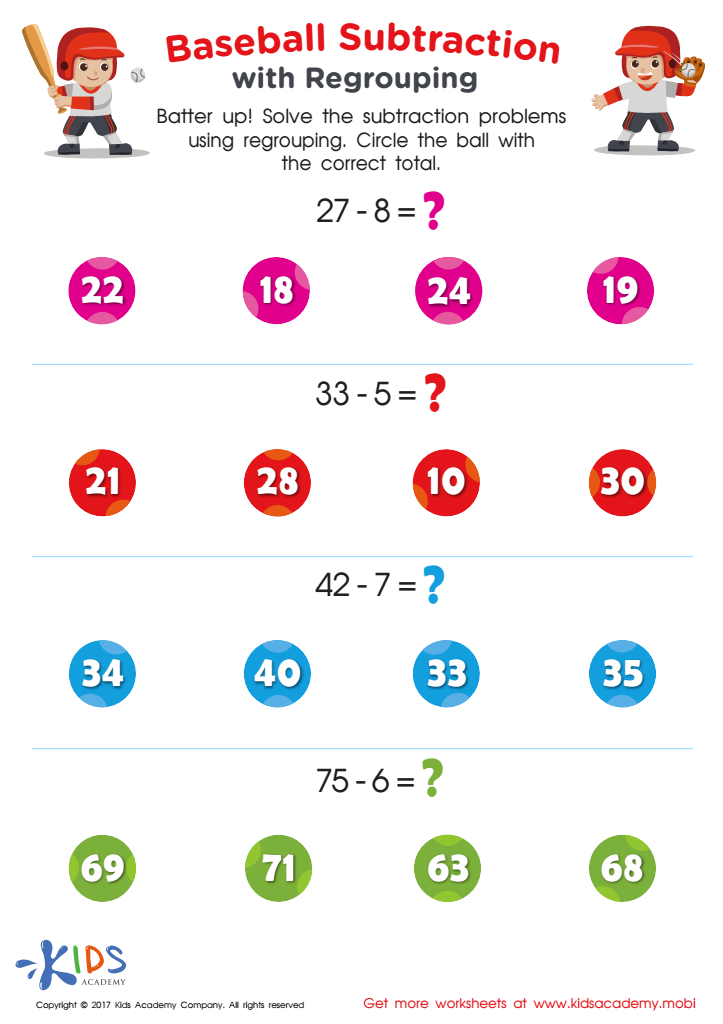
Subtraction With Regrouping for 2nd Grade Worksheet
 Assign to My Students
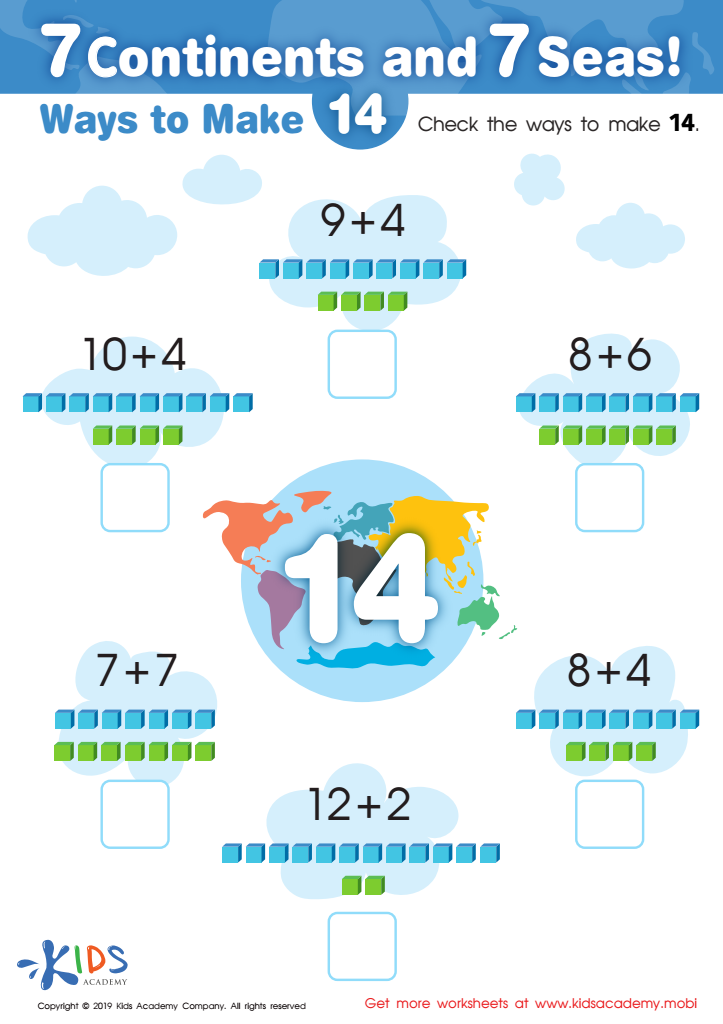
7 Continents and 7 Seas Worksheet

Adding at the Hospital Worksheet
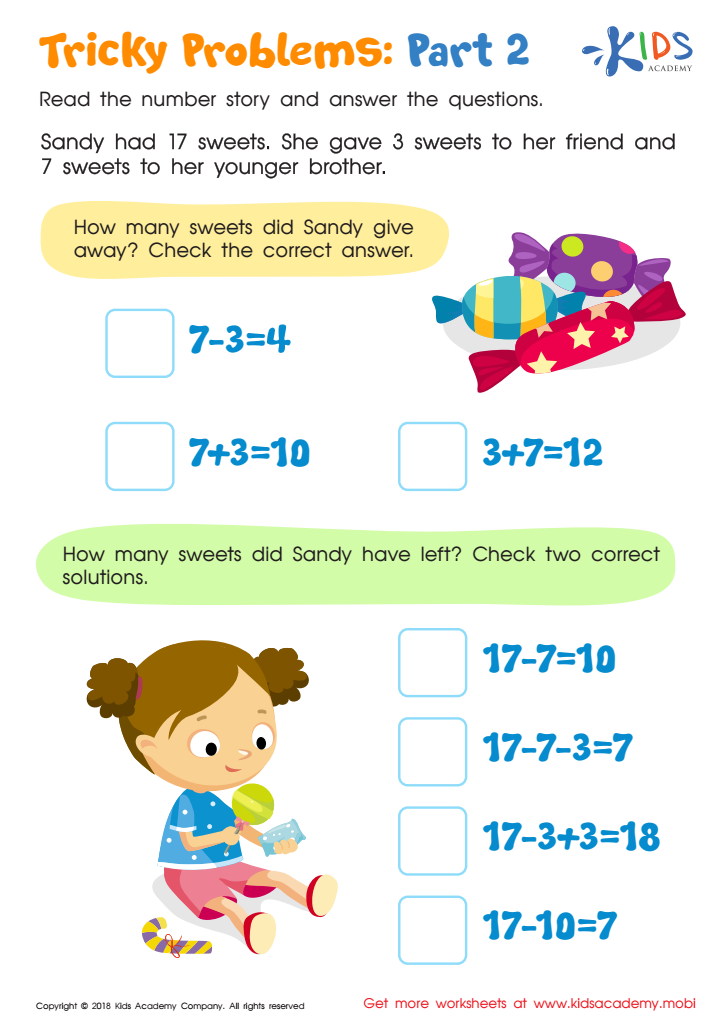
Tricky Problems Worksheet: Part 2
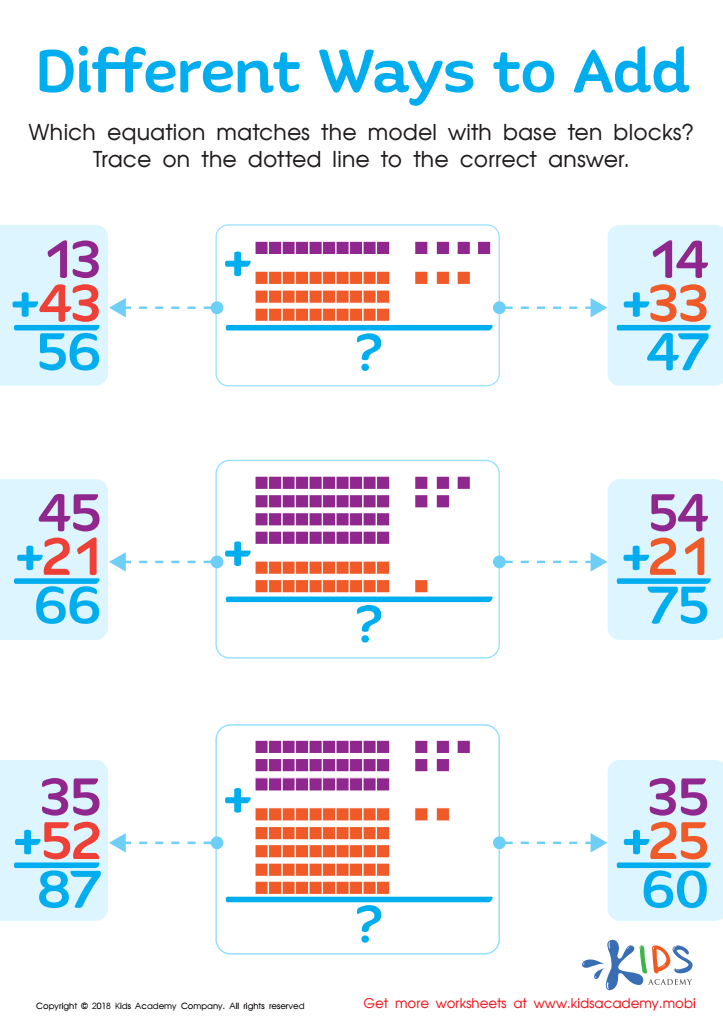
Different Ways to Add Worksheet





Parents and teachers should prioritize mental math practice due to its profound impact on a child's cognitive development and academic success. Engaging in mental math helps develop critical thinking and problem-solving skills by encouraging students to process numbers and calculations actively, rather than relying solely on written methods or calculators. This enhances their number sense—a fundamental understanding of mathematical concepts that fosters confidence in handling everyday situations involving math.
Additionally, mental math supports memory and computational fluency, enabling students to perform quicker calculations and sharpen their analytical skills. When children practice mental math, they learn to break down complex problems into simpler components, reinforcing their understanding of arithmetic operations.
Furthermore, mental math can increase engagement and motivation in learning math. Quick, fun exercises can transform what many view as tedious drill work into entertaining challenges. When children successfully complete mental math tasks, it builds their self-esteem and encourages a positive attitude toward mathematics.
Ultimately, fostering mental math practice is essential because it cultivates a lifelong appreciation and comprehension of mathematics, equipping children with tools to navigate an increasingly quantitative world with ease and competence. This foundational skill supports learners and champions their potential in various academic fields and real-world applications.








