Spatial reasoning Normal Math Worksheets
3 filtered results
-
From - To
Explore our Spatial Reasoning Normal Math Worksheets, designed to enhance your child’s logical thinking and problem-solving skills. These engaging worksheets encourage students to visualize and manipulate objects in space, fostering essential abilities for both mathematics and everyday scenarios. With a variety of interactive exercises, ranging from puzzles to spatial pattern recognition, learners can easily grasp complex concepts through hands-on practice. Perfect for kindergarten through early elementary grades, our worksheets are aligned with educational standards, ensuring a comprehensive learning experience. Download and inspire your child’s mathematical journey today, nurturing their spatial awareness and confidence for future academic success!
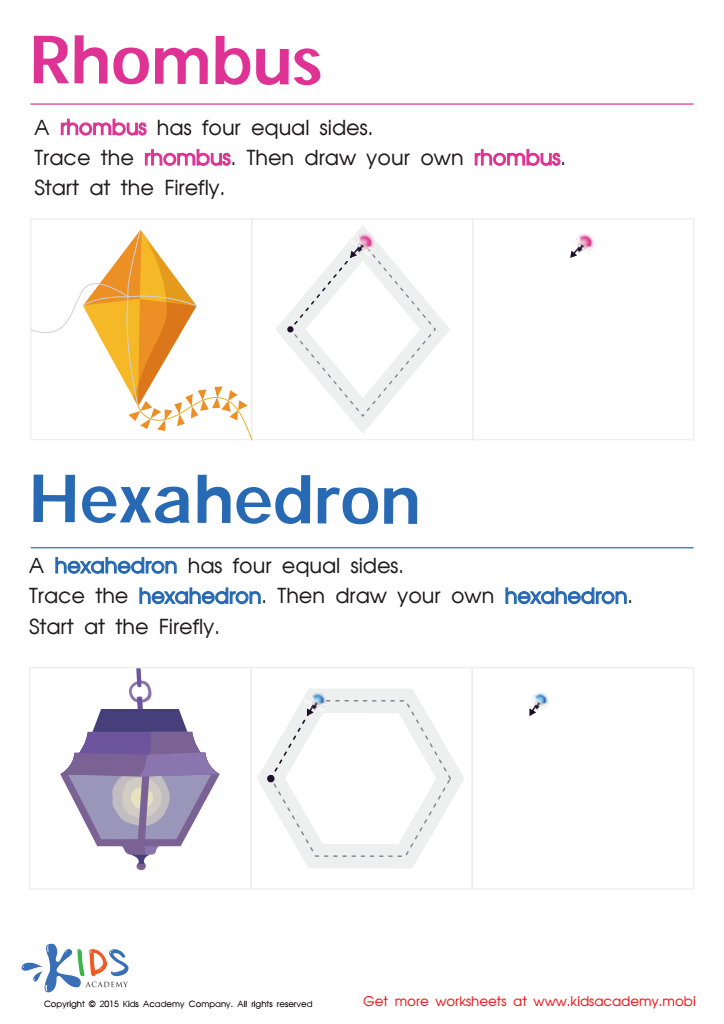
Draw a Rhombus And a Hexahedron Printable
 Assign to My Students
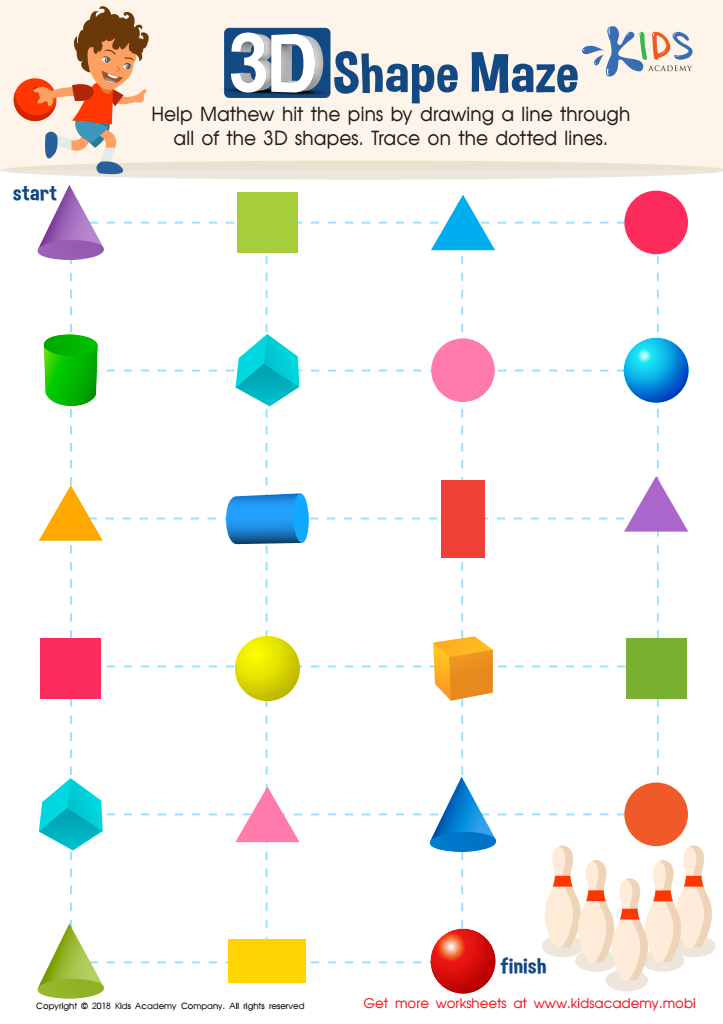
Shapes Maze Geometry Worksheet
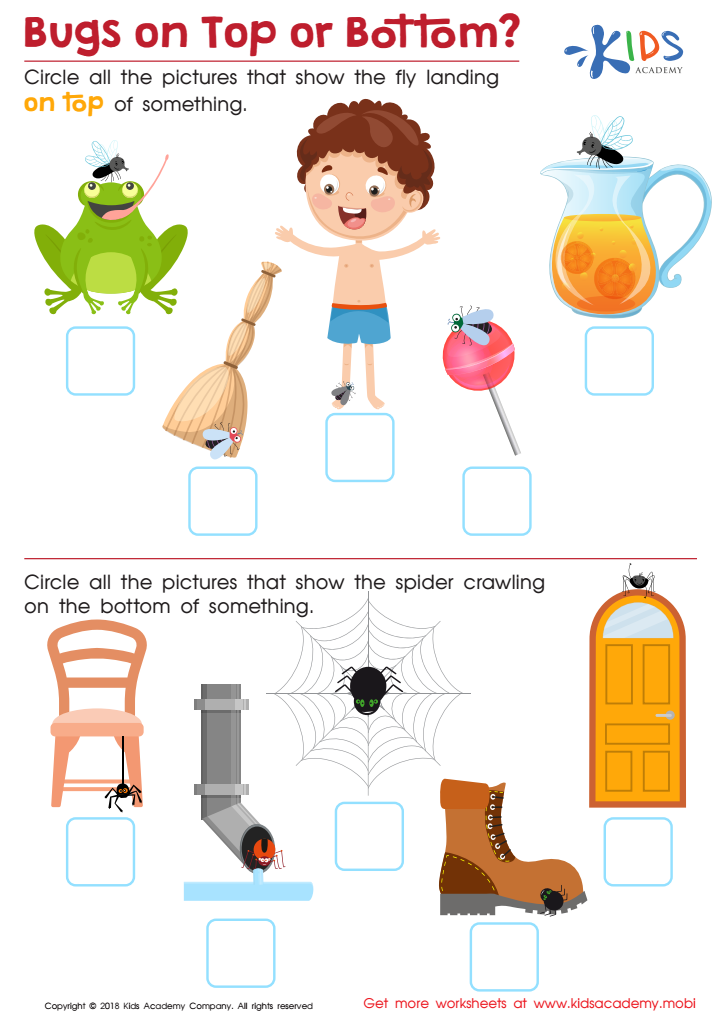
Bugs on Top or Bottom? Worksheet








Spatial reasoning is pivotal for children's cognitive development and academic success, particularly in subjects like math and science. It refers to the ability to visualize, manipulate, and understand spatial relationships and shapes. Both parents and teachers should prioritize fostering this skill alongside conventional math learning for several reasons.
Firstly, strong spatial reasoning correlates with proficiency in problem-solving and critical thinking, essential for success in STEM fields. When children can mentally rotate objects or imagine the outcome of physical interactions, they are better equipped to tackle complex mathematical concepts such as geometry and measurement.
Furthermore, spatial reasoning enhances creativity and innovation, allowing children to approach problems from multiple perspectives. This ability fosters a more profound understanding of relationships between different concepts, ultimately supporting higher-order thinking crucial in higher education and real-world applications.
Additionally, engaging children in activities that promote spatial reasoning—like puzzles, building blocks, or navigational tasks—makes learning enjoyable and interactive, improving overall motivation and enthusiasm for math.
In conclusion, by cultivating spatial reasoning skills, parents and teachers can significantly impact a child's academic journey, preparing them for future challenges and broadening their opportunities for success across various disciplines.








