Letter recognition Normal Preschool ABC Order Worksheets
8 filtered results
Difficulty Level
Grade
Age
-
From - To
Subject
Activity
Standards
Introduce your little learners to the world of letters with our "Letter Recognition Normal Preschool ABC Order Worksheets." Specially designed for preschoolers, these engaging worksheets help children recognize and order the alphabet through fun and interactive activities. Each worksheet promotes early literacy skills and reinforces the foundation of reading and writing. Kids will enjoy tracing, matching, and coloring as they develop their letter recognition and alphabetical order knowledge. Ideal for classroom or homeschooling environments, these worksheets ensure that learning the ABCs becomes an enjoyable experience for every child. Start building strong literacy skills today!
Favorites
With answer key
Interactive
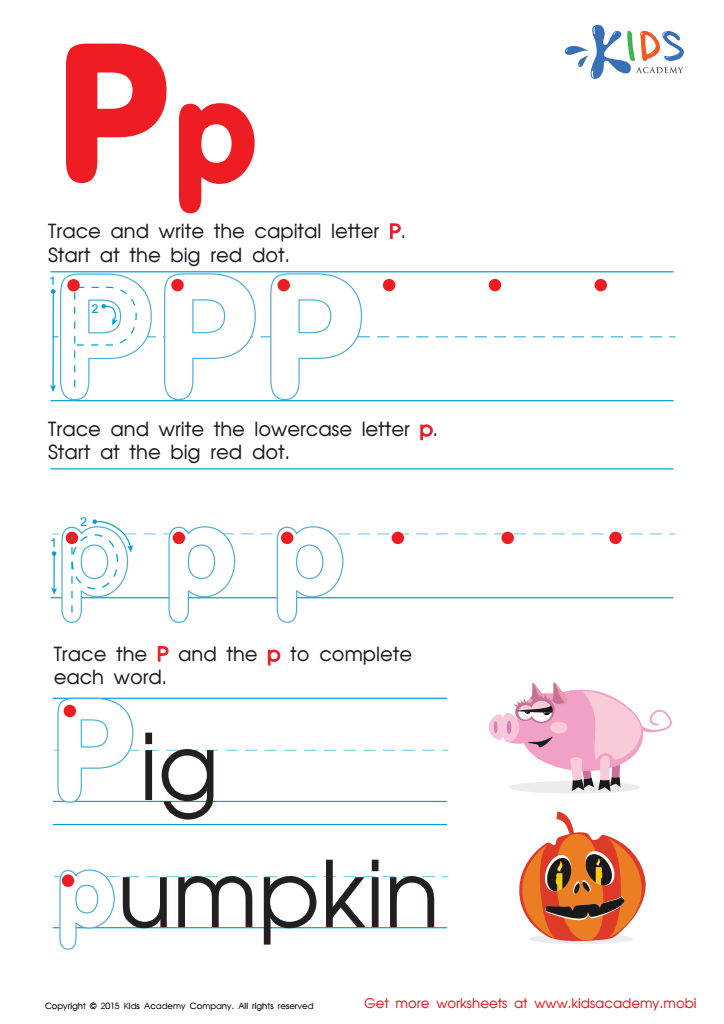
Letter P Tracing Page
Trace the lines from the red dot to learn to write "P"! Then practice this letter with the fun activities: complete the word "Pig" and "Pumpkin". Check out Kids Academy to get more free ABC worksheets.
 Assign to My Students
Letter P Tracing Page
Worksheet
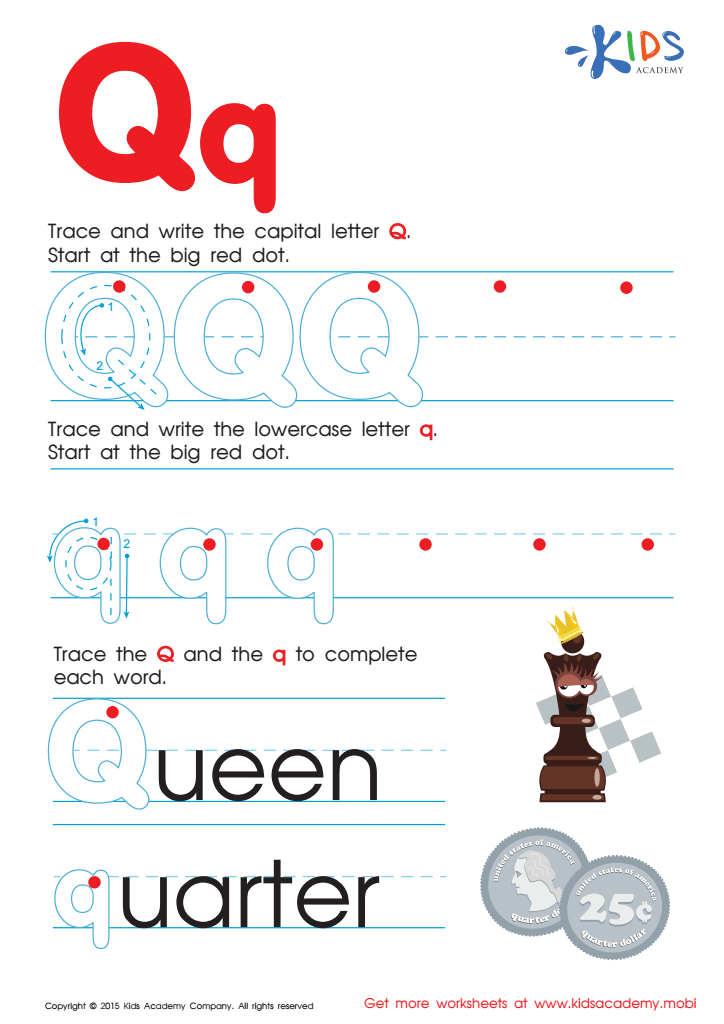
Letter Q Tracing Page
Learn the letter "Q"! Trace and write it a few times in upper and lowercase. Then help the Queen by writing her initial letter. Finally, write "quarters" and practice with more alphabet worksheets.
Letter Q Tracing Page
Worksheet
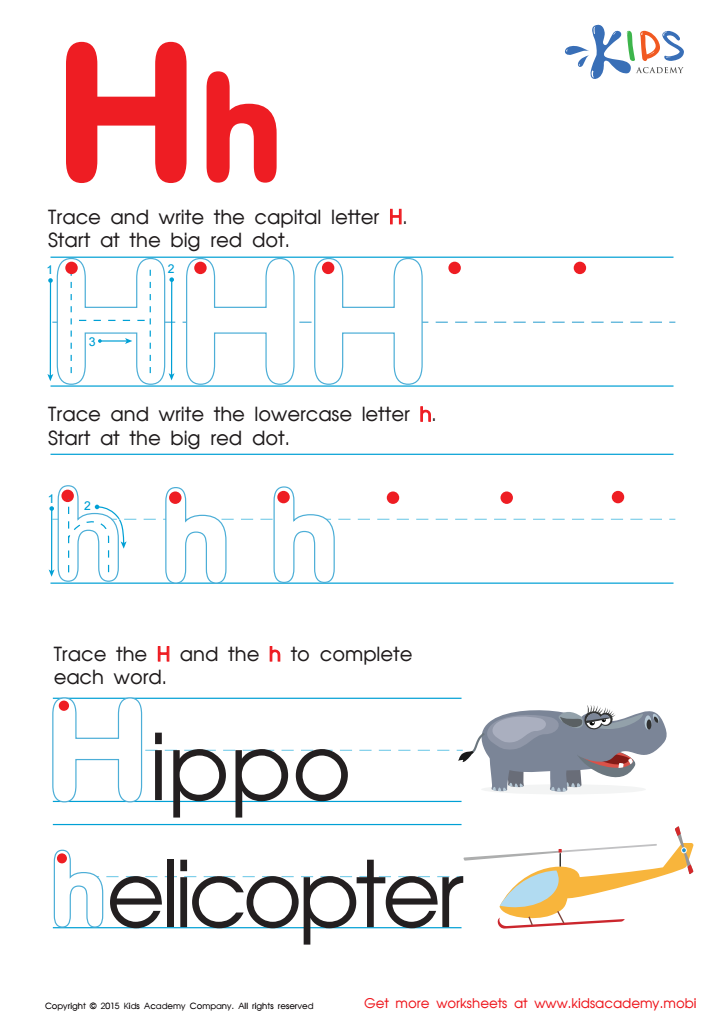
Letter H Tracing Page
Trace the letter "H", then practice writing its lowercase form. Finally, choose your favorite form of transport and ride away! Get our worksheets to make learning fun and easy.
Letter H Tracing Page
Worksheet
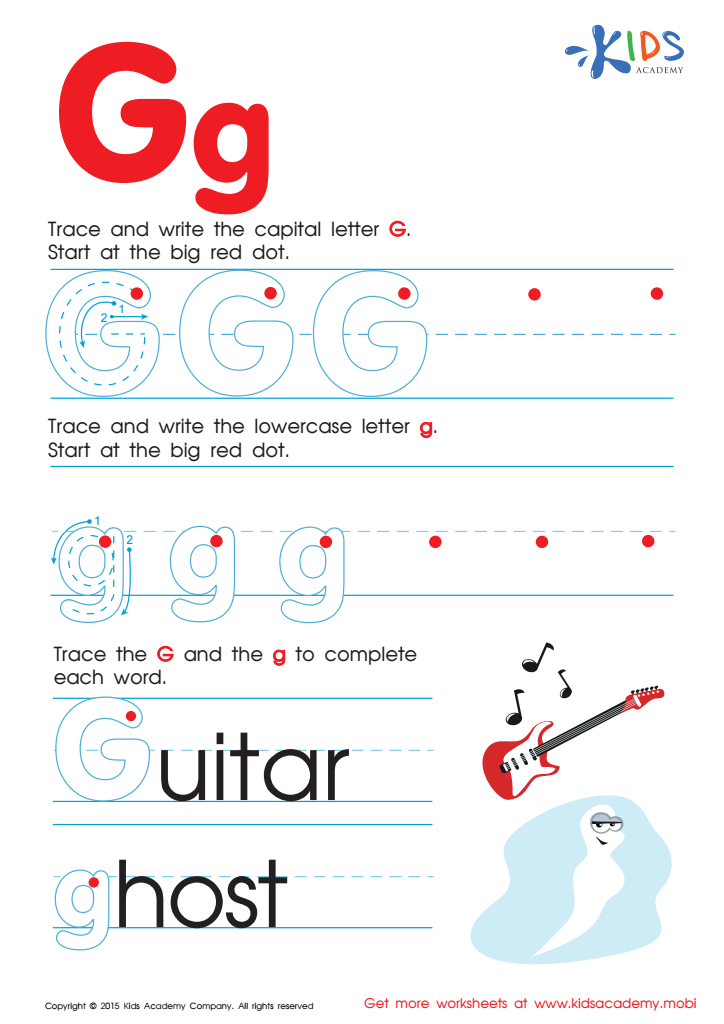
Letter G Tracing Page
Get ready to trace the letter "G" – with a big red spot as the starting point, trace the lines and watch the letter appear. Uppercase and lowercase letters are both easy and fun to write. Give it a go and finish the word "go". Play the guitar and say "hello" to a funny ghost!
Letter G Tracing Page
Worksheet
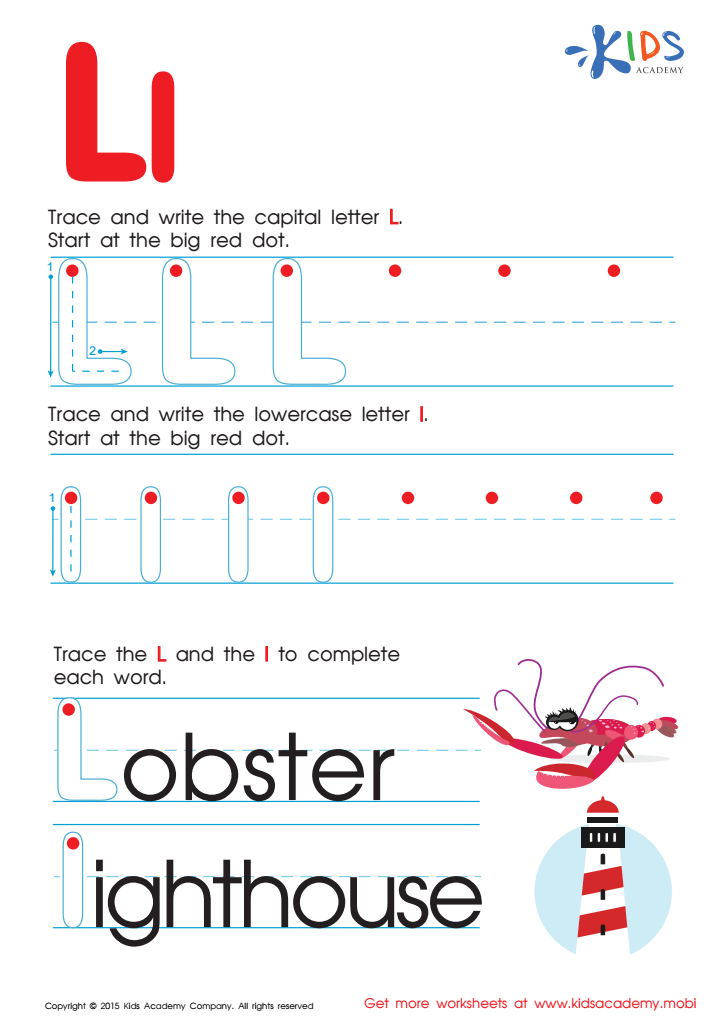
Letter L Tracing Page
Trace uppercase and lowercase letters to practice writing. Pay attention to the lowercase letters, like the "L", that are not as tall as an uppercase "I" or as short as a lowercase "i". Words like "lobster" and "lighthouse" are waiting to be completed. Enjoy!
Letter L Tracing Page
Worksheet
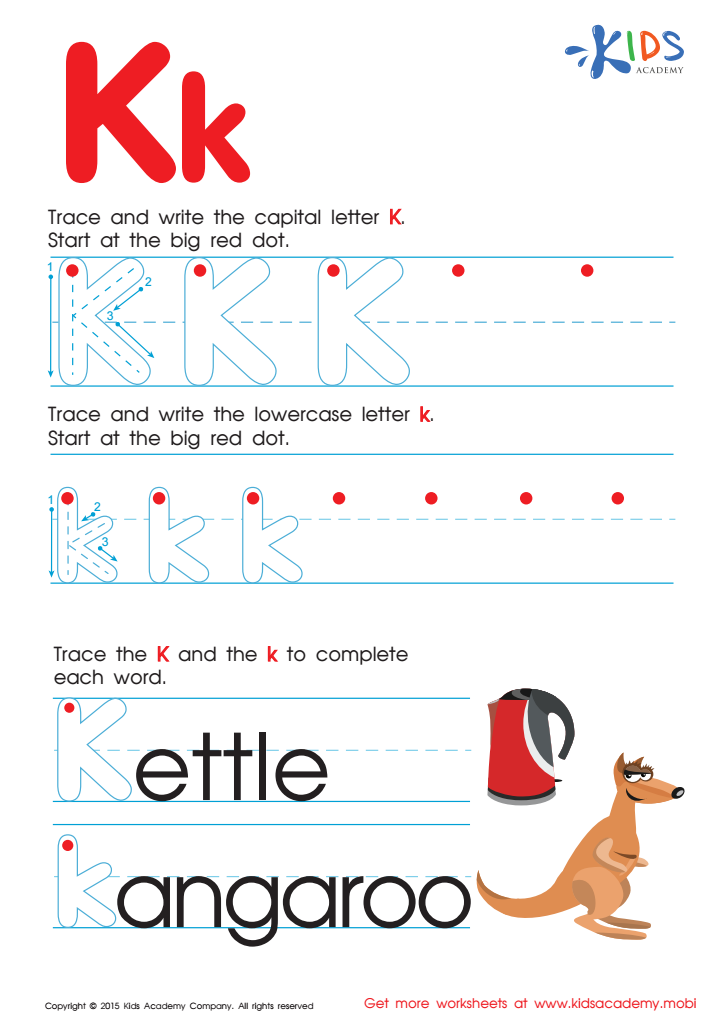
Letter K Tracing Page
Trace and write the letter K; start at the big red dot. Use it to complete words like "Kettle" and "Kangaroo". Visit Kids Academy for more free alphabet worksheets for kindergarten.
Letter K Tracing Page
Worksheet

Letter F Tracing Page
Trace "F" with your pencil! Start at the red dot and draw lines — it's fun! Check it out — it looks great! Keep practicing to make it even better. Then, try completing words. Help out the broken fan and funny frog! Get free alphabet worksheets and activities for your kids. Come see our new tracing pages!
Letter F Tracing Page
Worksheet

Letter D Tracing Page
Trace and write capital and lowercase letter "D" with our free printable alphabet worksheet! Be careful not to mix up "b" and "d" - just look at the ducks and write their first letter. The dolphin wants to join the fun too - do you like dolphins? Get more fun worksheets and activities at Kids Academy!
Letter D Tracing Page
Worksheet
Join Kids Academy for Free
Who is primarily going to use this learning content?






Letter recognition and understanding the ABC order in preschool are foundational skills that significantly impact reading and writing development. Understanding these skills in an early age helps children in multiple ways.
First, letter recognition is the ability to identify letters and associate them with their corresponding sounds. It's a critical step toward phonemic awareness, which later develops into the skills needed for reading and spelling. Children who can recognize letters early often learn to read more quickly and with less struggle compared to those who do not.
Secondly, knowing the ABC order builds organizational skills and strengthens memory. It aids in sequencing abilities and facilitates the understanding of alphabetical order, which is used frequently in daily life within activities such as using dictionaries, navigating directories, and understanding other organized information systems.
Lastly, letter recognition fosters cognitive development by encouraging attention to detail and boosting visual discrimination skills, helping children discern differences in shapes and patterns.
Therefore, parents and teachers should prioritize and nurture these skills because they serve as building blocks for more complex literacy skills that are essential throughout schooling. Early engagement in alphabet activities, games, and reading to children can provide a significant head start in their academic journey.