Rhyming skills development Normal Preschool Alphabet Worksheets
3 filtered results
Difficulty Level
Grade
Age
-
From - To
Subject
Activity
Standards
Enhance your preschooler’s literacy journey with our Rhyming Skills Development Normal Preschool Alphabet Worksheets! Designed to foster a love for language, these engaging worksheets provide fun activities that help young learners recognize and create rhymes. Rhyming is a crucial building block for reading readiness, aiding in phonemic awareness and vocabulary development. Our carefully crafted exercises promote critical thinking, creativity, and listening skills, making learning enjoyable and effective. Ideal for home or classroom use, these worksheets ensure that children not only learn the alphabet but also develop essential rhyming skills. Download our worksheets today and watch your child's confidence soar!
Favorites
With answer key
Interactive
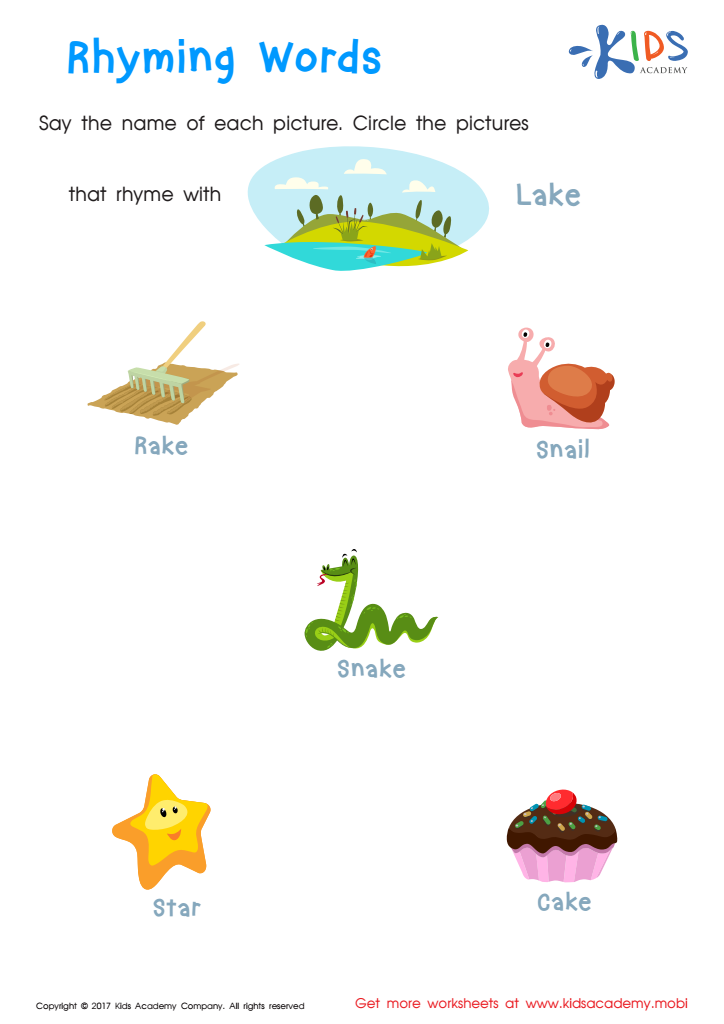
Rhyming Words Rhyming Worksheet
This worksheet is great for honing pre-reading skills. It helps kids make connections between pictures and written words, use problem-solving, and recognize sounds and words that rhyme. Have fun exploring rhyming words with your child, and they'll be rhyming in no time!
 Assign to My Students
Rhyming Words Rhyming Worksheet
Worksheet
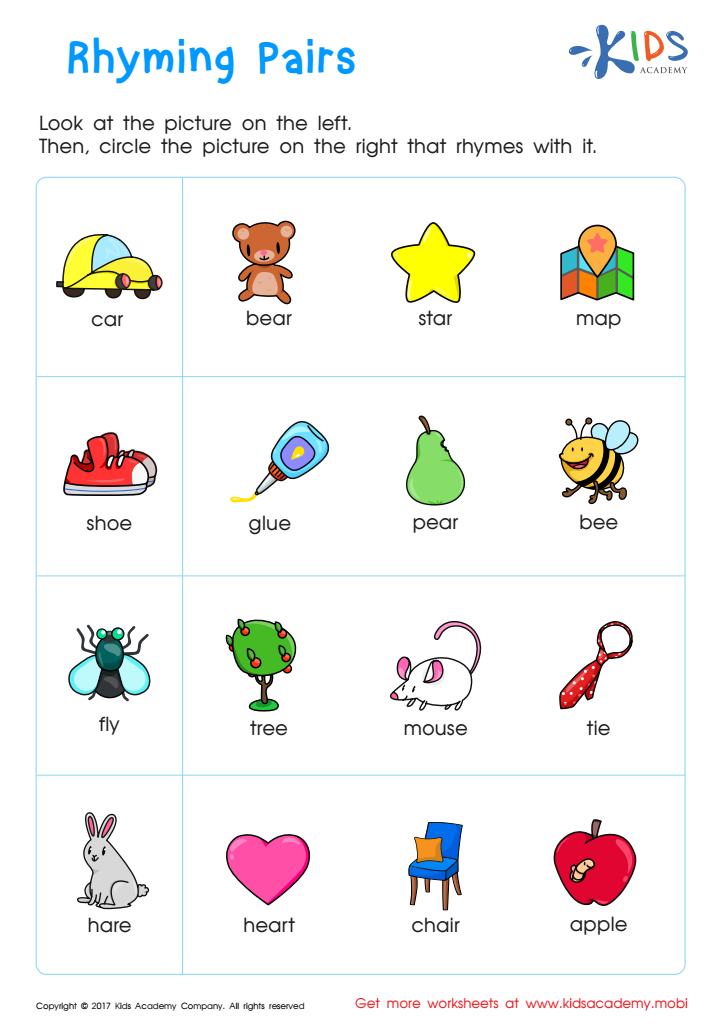
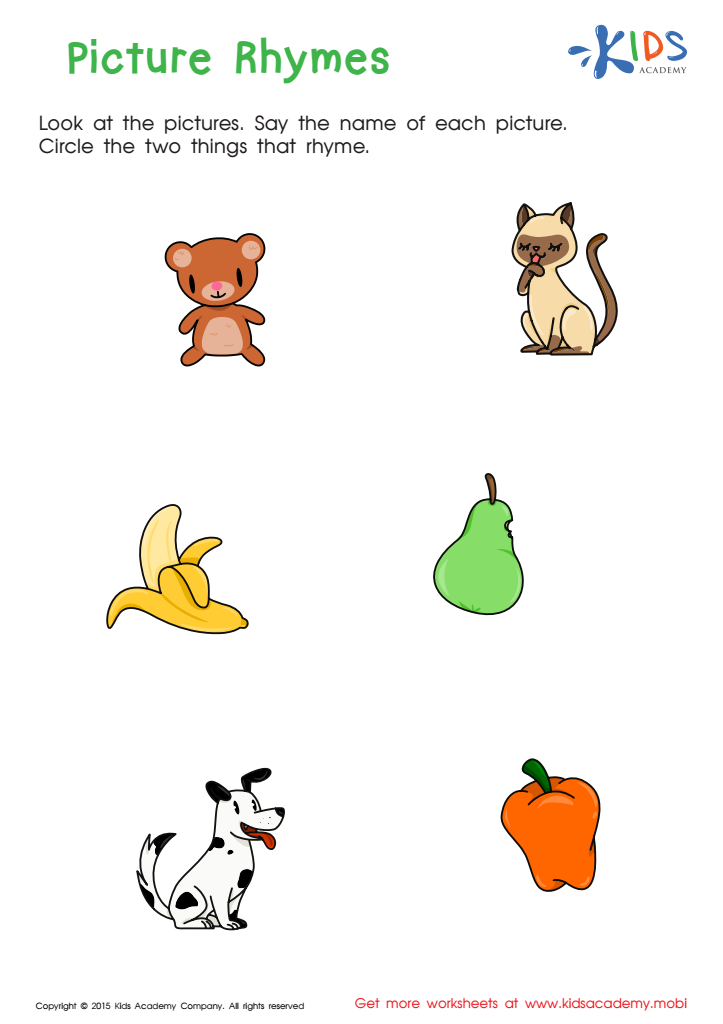
First Words: Picture Rhymes Worksheet
Rhyming helps kids understand language, read and write better. This printable worksheet boosts problem-solving and cognitive skills with vibrant pictures. It teaches kids to identify words, recognize rhymes, complete mental tasks and write words. An extra activity: show them how rhyming words share some of the same letters.
First Words: Picture Rhymes Worksheet
Worksheet
Join Kids Academy for Free
Who is primarily going to use this learning content?








Rhyming skills development in preschoolers is crucial for various reasons, and both parents and teachers should prioritize this aspect of early literacy. Firstly, rhyming enhances phonemic awareness, which is the ability to recognize and manipulate the sounds in spoken language. This foundational skill is vital for developing reading proficiency, as it helps children decode words and understand their structure.
Moreover, engaging in rhyming activities can make learning letters and the alphabet more enjoyable and memorable. Rhymes often incorporate repetitive, catchy patterns that capture children's attention, promoting engagement and reinforcing memory retention. This playful approach fosters a positive attitude toward learning.
Additionally, rhyming supports vocabulary acquisition. When children hear and create rhymes, they are exposed to a variety of words and phrases, enriching their language skills. Socially, participating in rhyming games encourages collaboration and communication among peers, bolstering social development.
Finally, rhyming activities can bridge language development for English language learners, providing them with context and rhythm to grasp new words. By investing time and resources into developing rhyming skills, parents and teachers can empower children with essential tools to become confident readers, communicators, and learners in the future.