Rhyming skills development Normal Preschool Phonics Worksheets
3 filtered results
Difficulty Level
Grade
Age
-
From - To
Subject
Activity
Standards
Enhance your child's early literacy with our Rhyming Skills Development Normal Preschool Phonics Worksheets! Designed for young learners, these engaging pages introduce the concept of rhyming—essential for phonemic awareness and reading proficiency. Each worksheet uses vibrant illustrations and fun activities to teach children how to recognize and produce rhyming words. Perfect for preschool classrooms and at-home practice, our worksheets build a strong foundation in reading, improve vocabulary, and boost confidence. Crafted by educational experts, they align with curriculum standards to ensure the best learning experience. Discover the joy of rhyming and set the stage for future reading success today!
Favorites
With answer key
Interactive
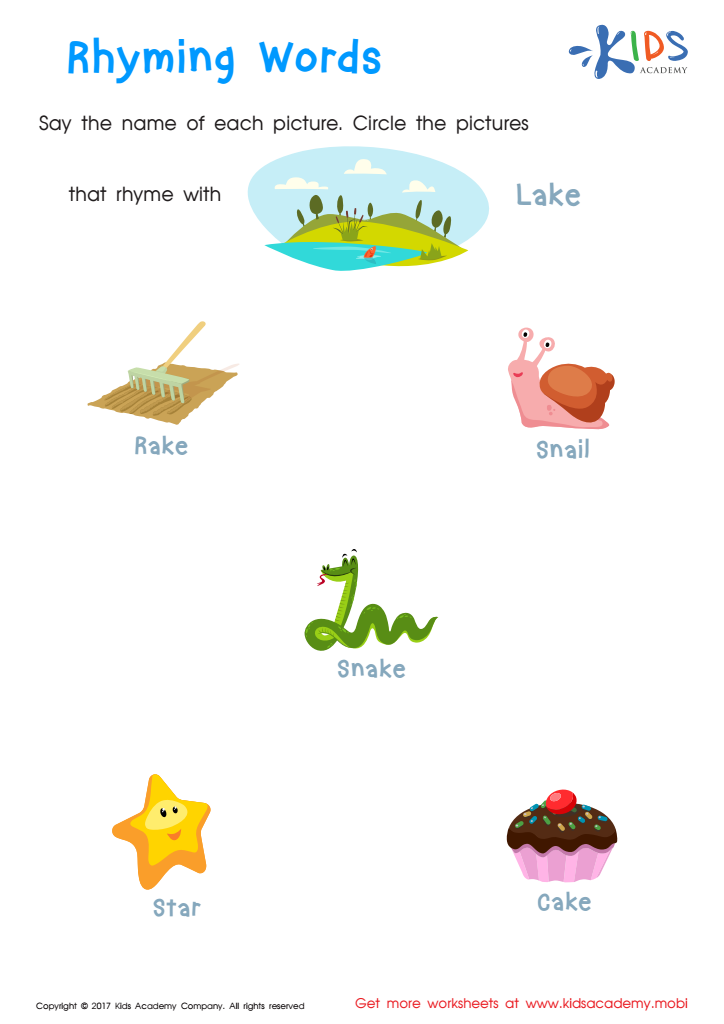
Rhyming Words Rhyming Worksheet
This worksheet is great for honing pre-reading skills. It helps kids make connections between pictures and written words, use problem-solving, and recognize sounds and words that rhyme. Have fun exploring rhyming words with your child, and they'll be rhyming in no time!
 Assign to My Students
Rhyming Words Rhyming Worksheet
Worksheet
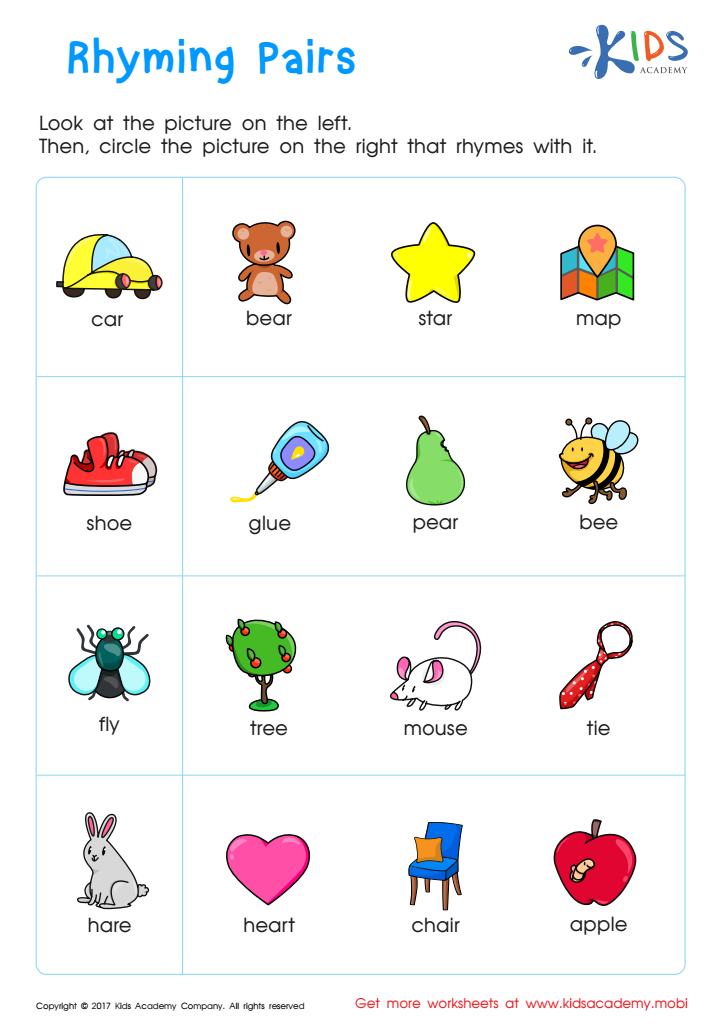
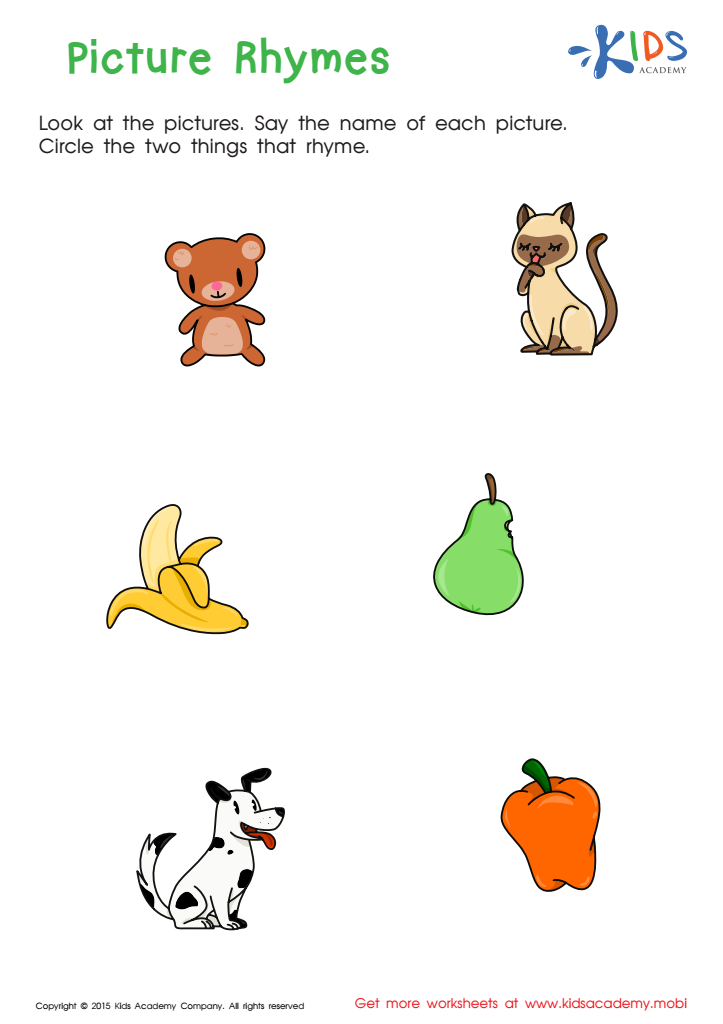
First Words: Picture Rhymes Worksheet
Rhyming helps kids understand language, read and write better. This printable worksheet boosts problem-solving and cognitive skills with vibrant pictures. It teaches kids to identify words, recognize rhymes, complete mental tasks and write words. An extra activity: show them how rhyming words share some of the same letters.
First Words: Picture Rhymes Worksheet
Worksheet
Join Kids Academy for Free
Who is primarily going to use this learning content?





Rhyming skills are foundational to the development of early literacy in preschool children. Rhymes play a crucial role in phonemic awareness, which is the ability to recognize and manipulate individual sounds (phonemes) in spoken words. This skill is a strong predictor of future reading success. Engaging with rhymes helps children to perceive patterns in the language, enabling them to detect similarities in word endings, which is essential for decoding words during reading.
Furthermore, rhyming activities enhance children's listening skills and auditory discrimination, making them more adept at distinguishing between different sounds. This skill translates to better spelling abilities as they can more easily discern sound structures and relationships between letters and sounds.
Rhymes are also a fun and engaging way to expand vocabulary. As children recite or listen to rhymes, they encounter new words and meanings in context, broadening their linguistic repertoire. The repetitive and rhythmic nature of rhymes aids memory retention, making learning both effective and enjoyable.
Additionally, engaging in rhyming games or songs fosters social bonding and improves group participation skills among preschoolers. Parents and teachers thus play a pivotal role in incorporating rhyming activities into daily routines, recognizing that this charming aspect of early childhood education significantly supports and accelerates language development.