Matching skills Normal Preschool Worksheets
6 filtered results
-
From - To
Discover engaging and educational matching skills worksheets for preschoolers with Kids Academy. Our carefully designed printables are perfect for young learners to enhance their cognitive development, attention to detail, and problem-solving abilities. Through fun and interactive exercises, children can match colors, shapes, animals, numbers, and more, fostering essential skills such as critical thinking and pattern recognition. These worksheets are ideal for both classroom activities and home learning, ensuring your child gains confidence and a solid foundation in their early learning journey. Explore our extensive collection and watch your preschooler grow and succeed!
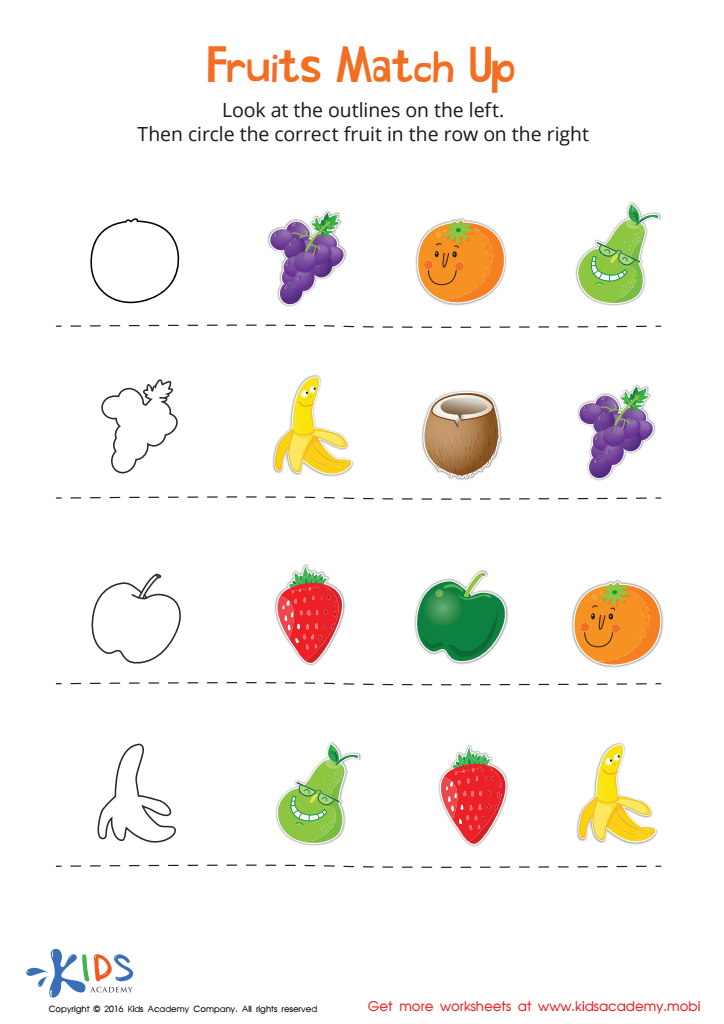
Fruits Match Up Worksheet
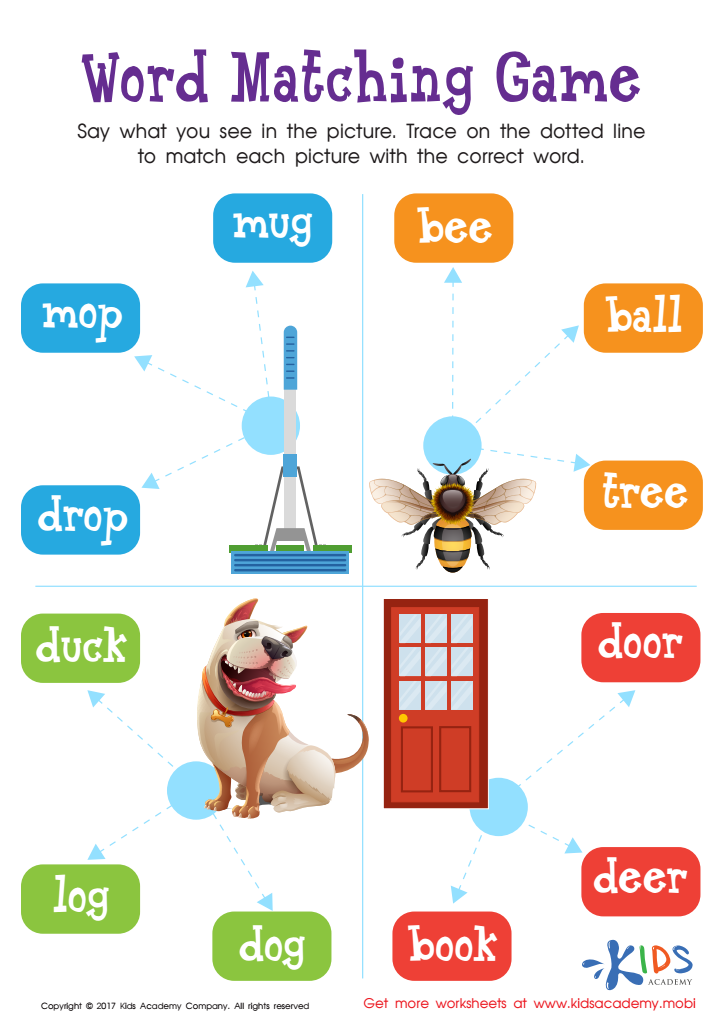
Word Matching Game Worksheet
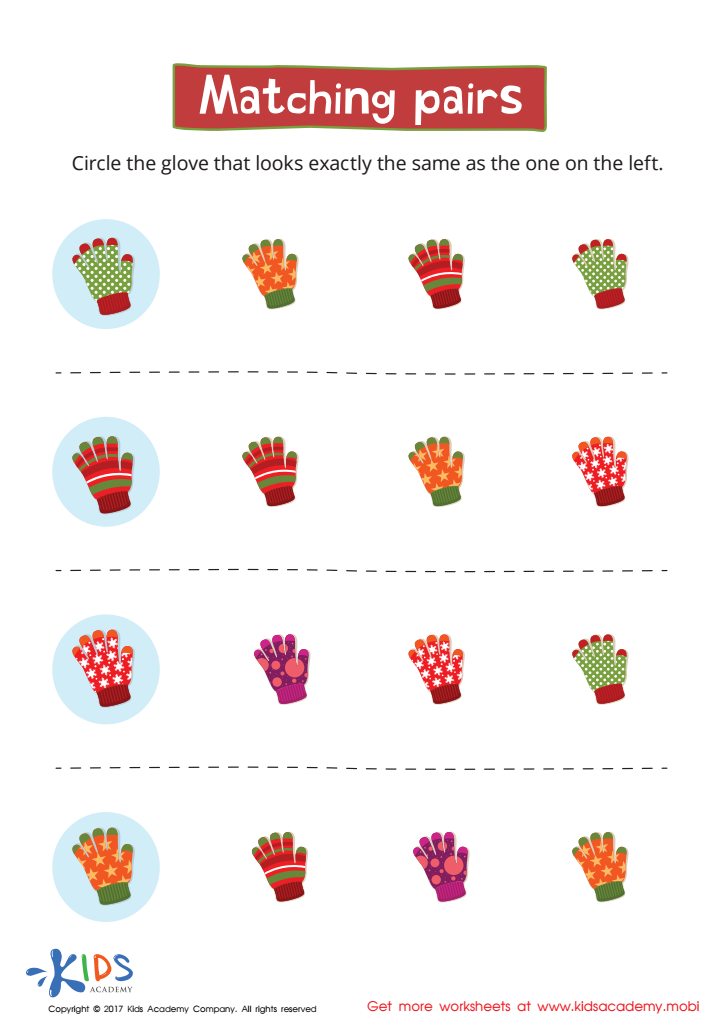
Matching: Matching Pairs Worksheet
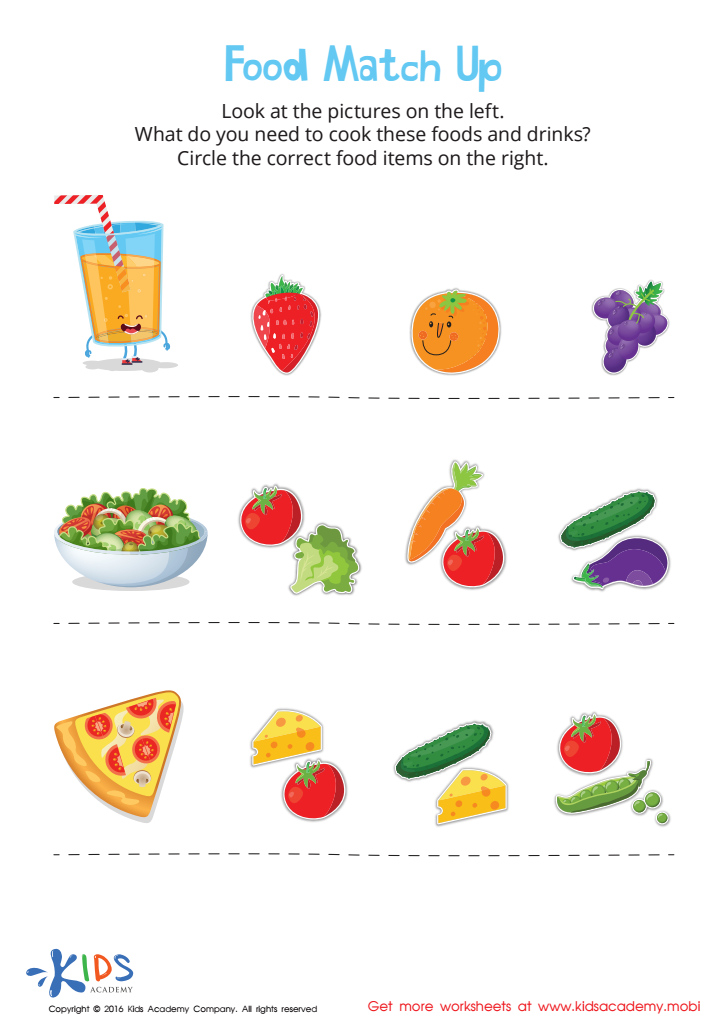
Food Match Up Worksheet
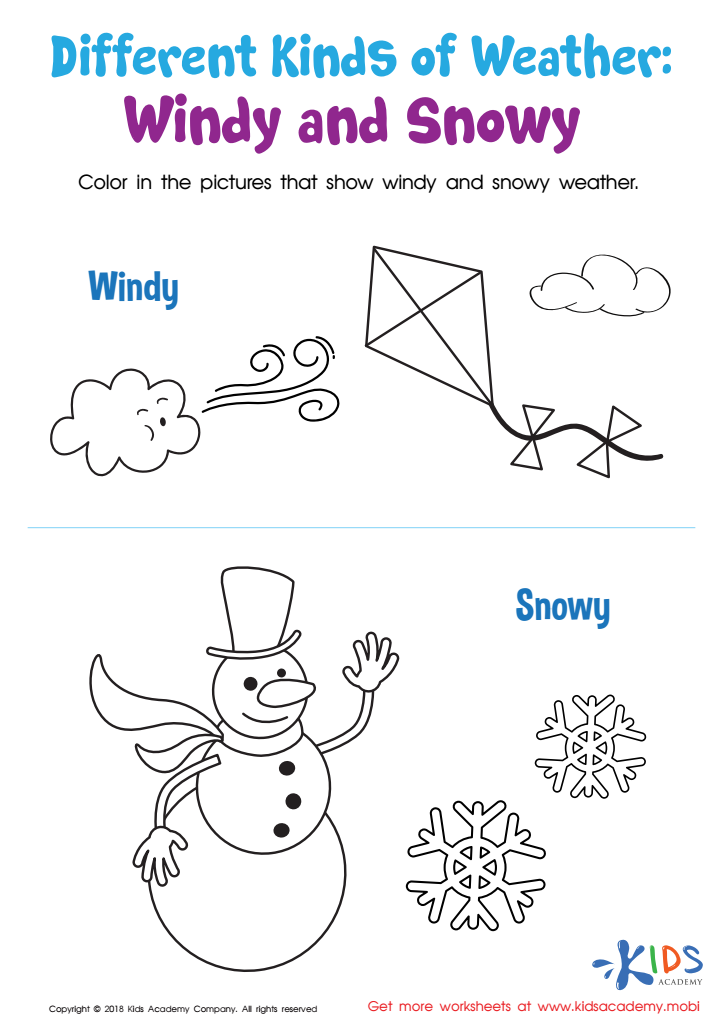
Different Kinds of Weather: Windy and Snowy Worksheet
 Assign to My Students
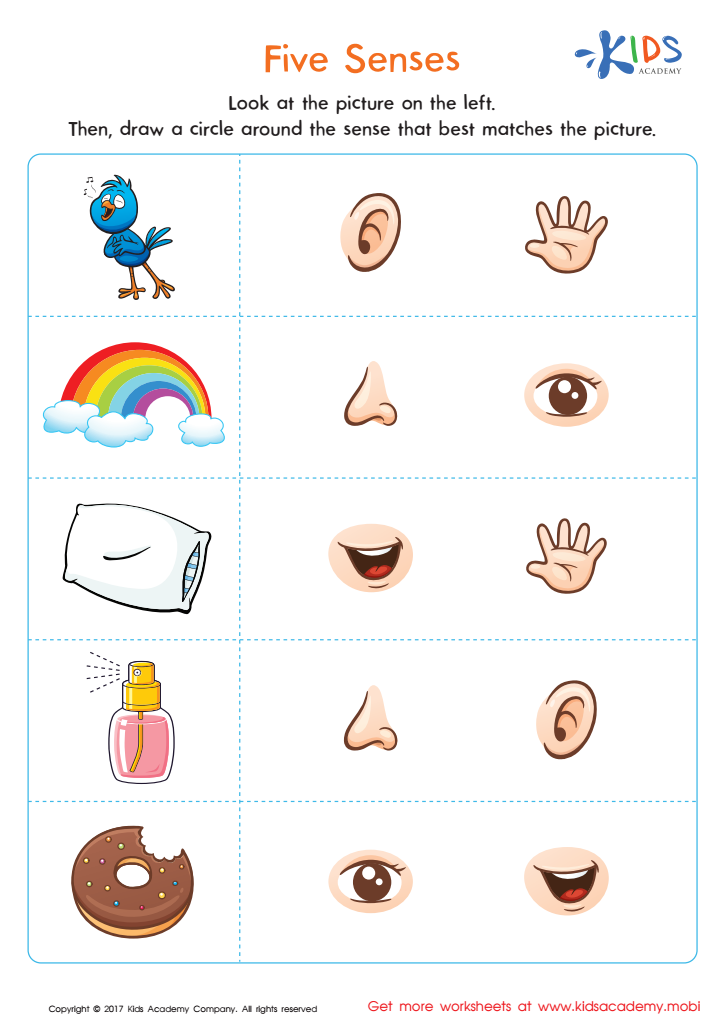
Five Senses Printable







Parents and teachers should care about matching skills in a normal preschool setting because these foundational abilities play a crucial role in a child's cognitive development and readiness for more complex learning later on. Matching skills involve the ability to recognize similarities and differences, which is a fundamental cognitive process. For instance, when children match shapes, colors, or objects, they enhance their visual discrimination skills and attention to detail.
These activities also support memory development as children recall and identify characteristics of objects they need to match. Moreover, matching activities encourage critical thinking and problem-solving skills, as children must often make decisions about which items belong together based on specific attributes.
Socially, group matching activities foster cooperation and communication among peers. They learn to articulate their thoughts and ideas, listen to others, and work together toward a common goal.
In the long term, mastering matching skills sets the groundwork for later academic tasks such as reading, where children must match letters and sounds, and mathematics, where pattern recognition is key. By ensuring that these skills are adequately developed in preschool, parents and teachers are providing children with the tools they need for a smooth and successful transition into more structured education stages.