Weather identification Normal Preschool Worksheets
3 filtered results
Difficulty Level
Grade
Age
-
From - To
Subject
Activity
Standards
Welcome to our "Weather Identification Normal Preschool Worksheets" page! These engaging and educational worksheets are designed to help preschoolers understand different weather types. Through fun activities, children will identify sunny, rainy, snowy, and windy weather while enhancing their observation and descriptive skills. Our resources promote early literacy, vocabulary building, and cognitive development in a playful manner. Perfect for home or classroom use, these worksheets provide a hands-on learning experience that captivates young learners. Let your preschoolers explore the fascinating world of weather and boost their knowledge with our thoughtfully crafted materials. Download now and watch their curiosity soar!
Favorites
With answer key
Interactive
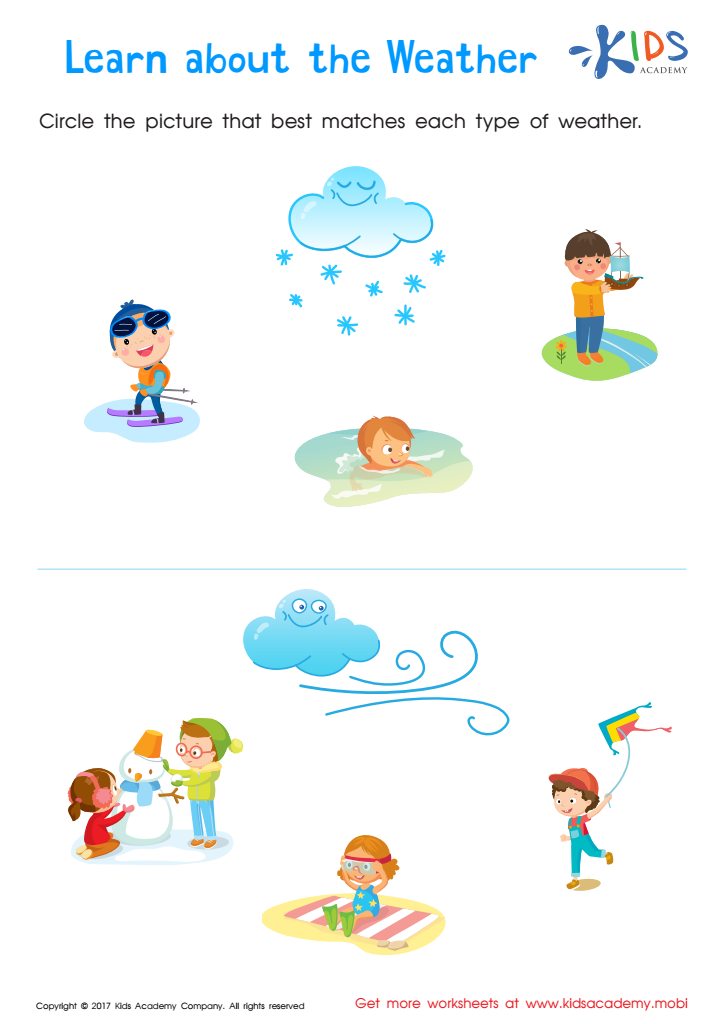
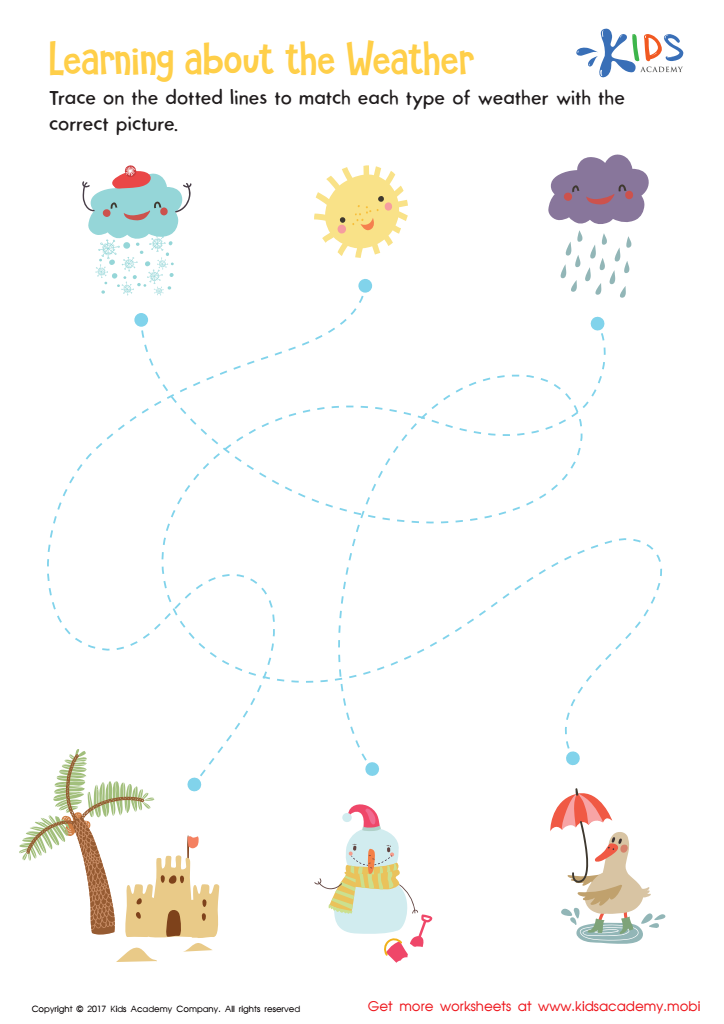
About the Weather Printable
This worksheet is perfect for reinforcing knowledge about changing weather and activities that suit each season. Help your child use their life experiences to observe the weather and complete the worksheet. Fun and colorful, it's a great way to learn about weather and seasons. Let's get started!
 Assign to My Students
About the Weather Printable
Worksheet
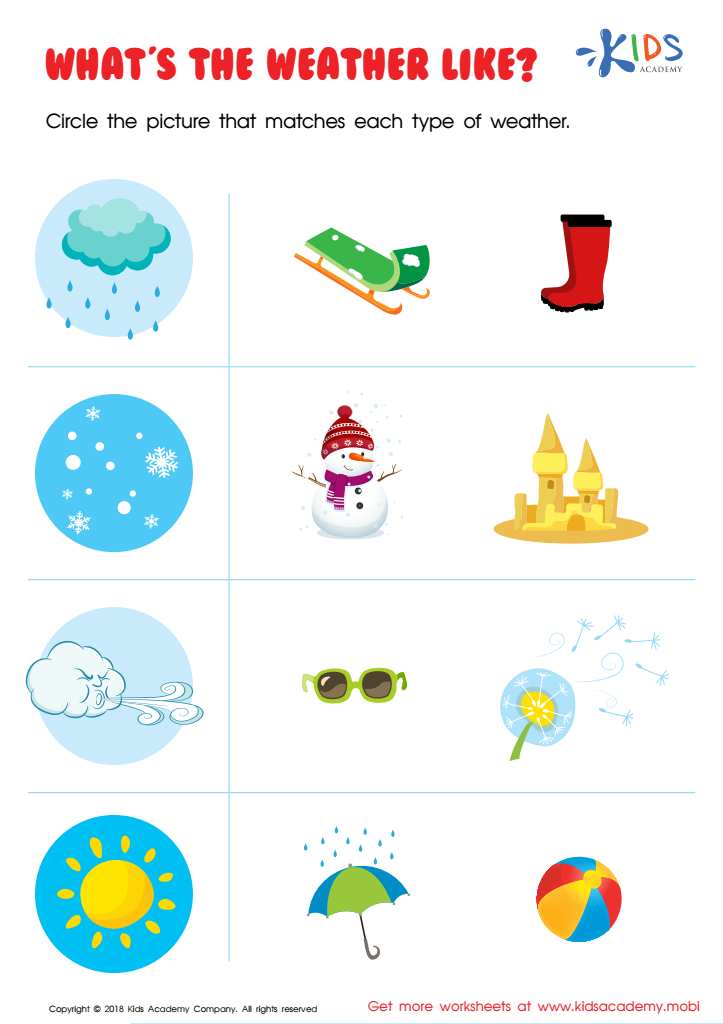
What's the Weather Like? Worksheet
Help budding meteorologists practice matching weather to seasons with this PDF worksheet. Picture clues help identify seasons and fine motor skills are practiced circling the correct weather patterns. Bright and engaging characters make learning fun and reinforce weather knowledge.
What's the Weather Like? Worksheet
Worksheet
Join Kids Academy for Free
Who is primarily going to use this learning content?






.jpg)

Parents and teachers should care about weather identification in preschool for several compelling reasons. Firstly, understanding the weather cultivates children's observational skills, allowing them to notice changes in their environment and appreciate nature. This knowledge helps preschoolers develop critical thinking skills as they learn to predict weather patterns and understand their daily implications, from dressing appropriately to planning outdoor activities.
Furthermore, weather identification fosters language development. As children learn new vocabulary related to weather—such as sunny, rainy, windy, and cloudy—they enhance their communication skills, enabling them to express thoughts and observations more clearly. Engaging with weather-related activities also promotes social interaction among peers, encouraging teamwork and collaborative play, as children discuss and share their experiences and memories regarding different weather scenarios.
Additionally, early weather education can lay a foundation for environmental awareness and stewardship. Educators can introduce concepts like climate change and the importance of taking care of our planet. By instilling curiosity about the world, parents and teachers empower children to become informed future residents who care about their surroundings. In doing so, they support holistic development, integrating cognitive, social, and emotional growth through an engaging and relevant topic.