Basic Math Skills Normal Preschool Addition and Subtraction Word Problems Worksheets
3 filtered results
-
From - To
Our "Basic Math Skills: Preschool Addition and Subtraction Word Problems Worksheets" are designed to introduce young learners to fundamental math concepts in a fun and engaging way. These specially crafted worksheets help children practice basic addition and subtraction through interactive word problems, promoting critical thinking and problem-solving skills. Perfect for preschoolers, the exercises feature vibrant illustrations and relatable scenarios to captivate their interest and boost confidence. By completing these worksheets, kids not only enhance their math proficiency but also develop essential skills for their future academic journey. Start building a strong mathematical foundation with our expert-designed resources today!
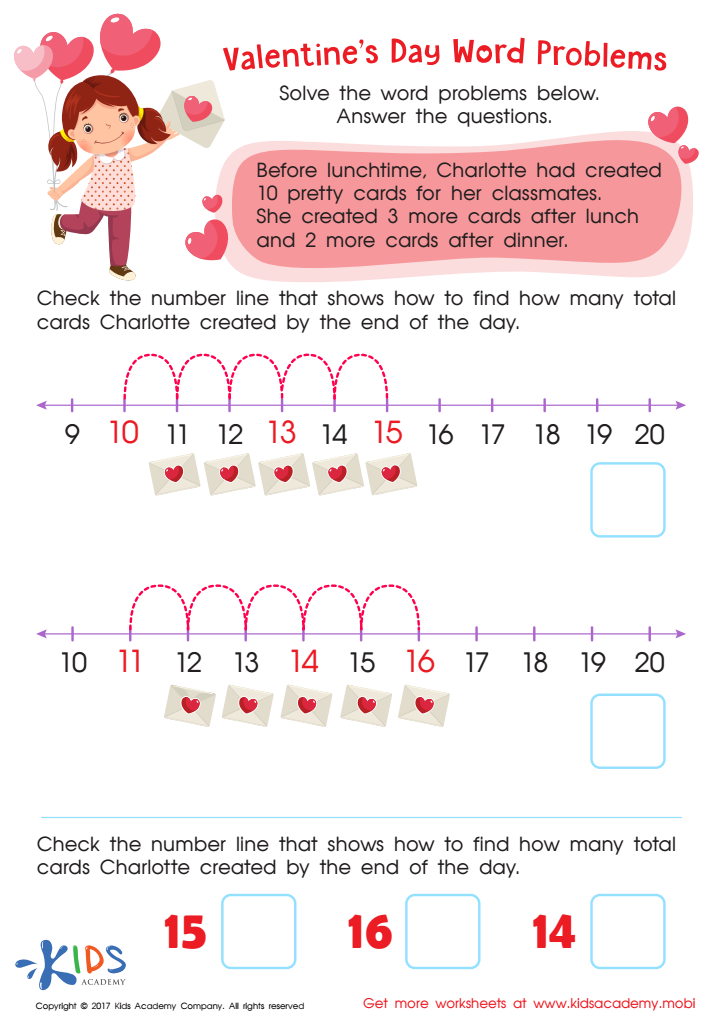
Valentines Day Word Problem Worksheet
 Assign to My Students
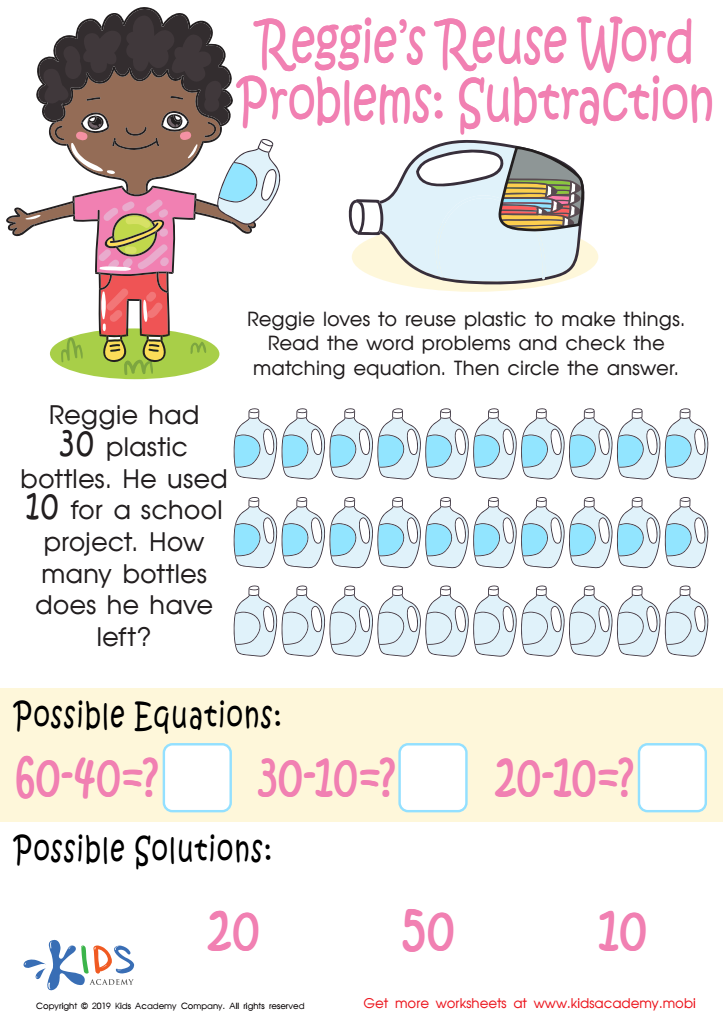
Reggie's Reuse Word Problems: Subtraction Worksheet
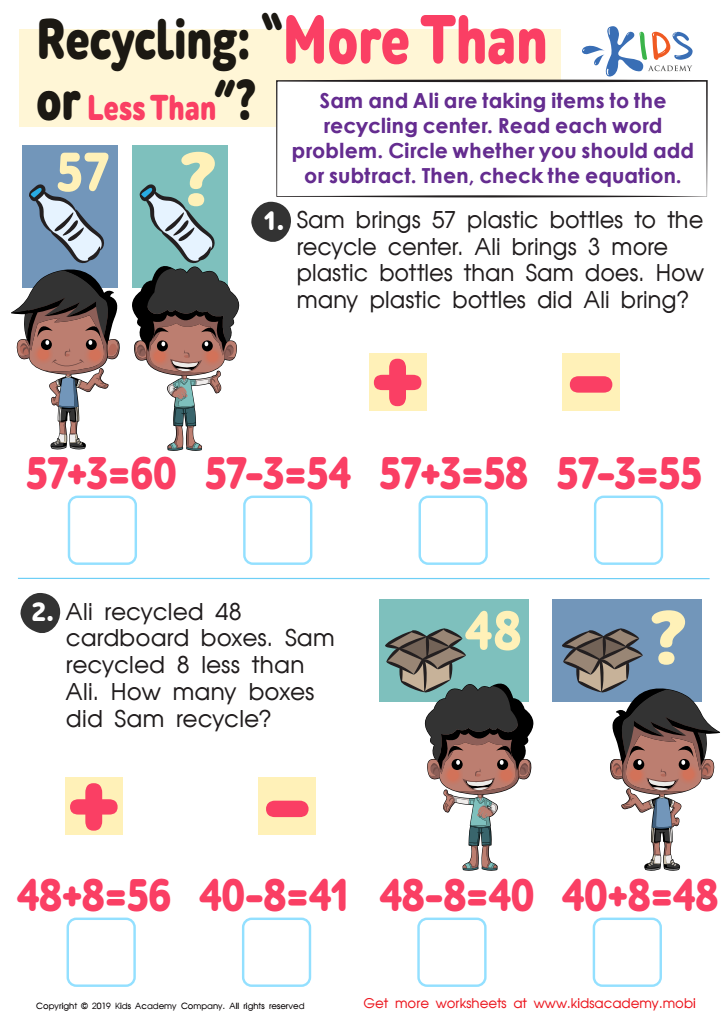
Recycling - More or Less Worksheet







Understanding basic math skills and tackling simple addition and subtraction word problems are essential for preschool children as these skills lay the foundation for future academic success. For teachers and parents, fostering these skills early can have a considerable impact on a child's cognitive development, problem-solving skills, and confidence in math-related tasks.
Basic math skills enhance critical thinking and logic, guiding children to decode everyday scenarios and make more informed decisions. For example, recognizing patterns and quantifying objects help children make sense of their immediate environment, providing a framework for more intricate math in the future.
Preschool addition and subtraction word problems serve multiple purposes beyond just numerical fluency. They are instrumental in improving language comprehension and reading skills since children must understand the context of a problem before solving it. Importantly, these word problems help children learn to apply mathematics in real-life situations, reinforcing the relevancy and necessity of math.
Parents and teachers who emphasize these basic math experiences are setting their children up for smoother transitions to advanced mathematical concepts and enjoy higher academic achievements in the long run. This early investment can also spark an enthusiasm for learning, showing children that math is not just a subject but a useful tool in everyday life.