Phonics recognition Normal Building Vocabulary Worksheets
3 filtered results
-
From - To
Phonics recognition is essential for early readers, helping them decode words efficiently and build strong vocabulary skills. Our "Phonics Recognition Normal Building Vocabulary Worksheets" are designed specifically for young learners, blending engaging activities with comprehensive skills-practice. These worksheets help children connect letters and sounds, improving their phonetic awareness and reading fluency. As kids progress through exercises like matching, rhyming, and word identification, they reinforce their understanding of how sounds form words. Perfect for both classroom use and at-home practice, these worksheets make learning to read fun and interactive. Join the journey towards literacy excellence with our expertly crafted phonics-based materials.
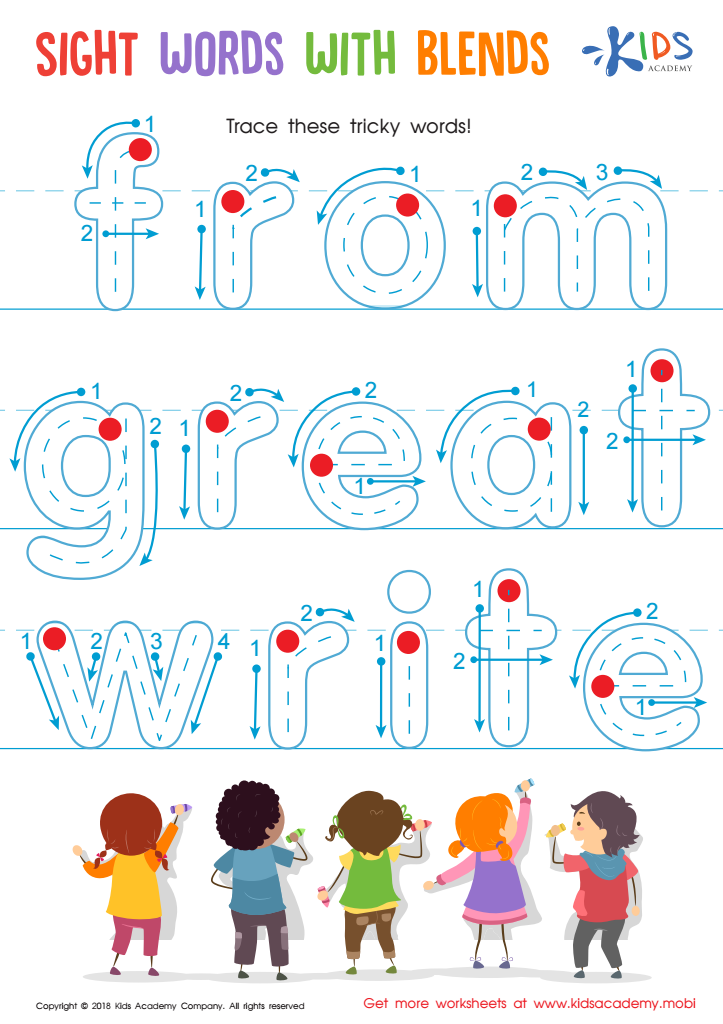
Sight Words with Blends Worksheet
 Assign to My Students











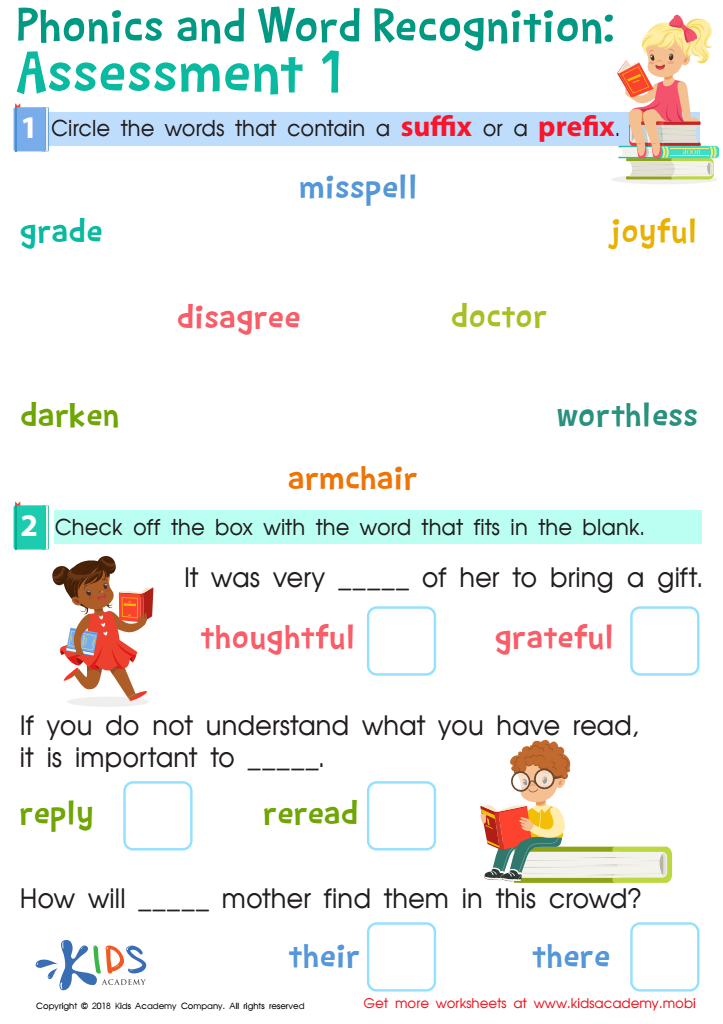
Phonics and Word Recognition: Assessment 1 Worksheet
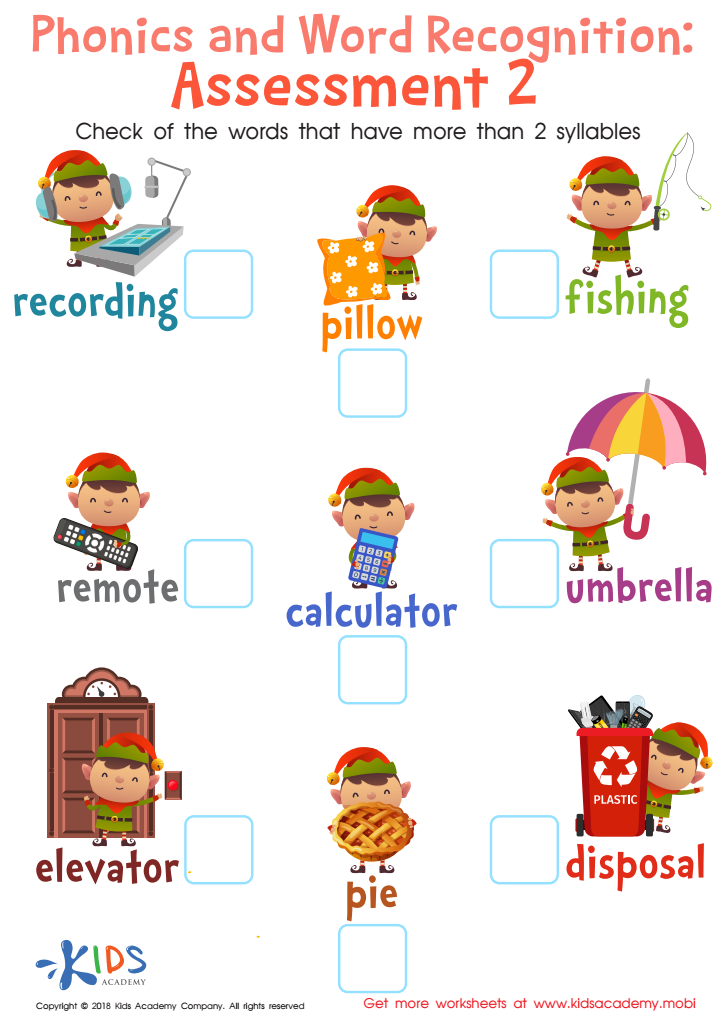
Phonics and Word Recognition: Assessment 2 Worksheet








Phonics recognition and building vocabulary are foundational elements in early childhood education that significantly impact a child’s reading and overall academic success. Phonics helps children understand the relationship between letters and sounds, enabling them to decode words while reading. Mastery of phonics is closely linked to strong reading skills, which in turn supports success in other academic areas, as reading is the cornerstone of nearly all learning activities.
For parents and teachers, investing time and resources into phonics instruction ensures that children develop strong literacy skills. When children master phonics, they become confident readers, capable of tackling more complex texts and expanding their knowledge base across subjects. This confidence fosters a love for reading, which is a crucial habit for lifelong learning and intellectual growth.
Building a robust vocabulary complements phonics by giving children the words they need to express their thoughts clearly and understand what they read. A enriched vocabulary enhances comprehension, communication, and critical thinking skills. Whether through conversation, reading, or interactive activities, parents and teachers who prioritize vocabulary development are equipping children with the tools they need to succeed academically and socially. In essence, phonics and vocabulary training form the bedrock on which higher learning and effective communication are built, making them indispensable for early-grade success.








