Understanding suffixes Normal Building Vocabulary Worksheets
3 filtered results
-
From - To
Enhance your child's vocabulary skills with our "Understanding Suffixes" Normal Building Vocabulary Worksheets! Designed for early learners, these worksheets provide engaging activities focused on suffixes to help students recognize and understand word meanings. By exploring how suffixes transform base words, children will develop crucial language skills that promote reading comprehension and effective communication. Filled with fun exercises, our worksheets cater to various learning styles, making vocabulary building enjoyable and interactive. Equip your child with the tools they need for academic success and a love for language. Dive into our resources now and watch their vocabulary flourish!
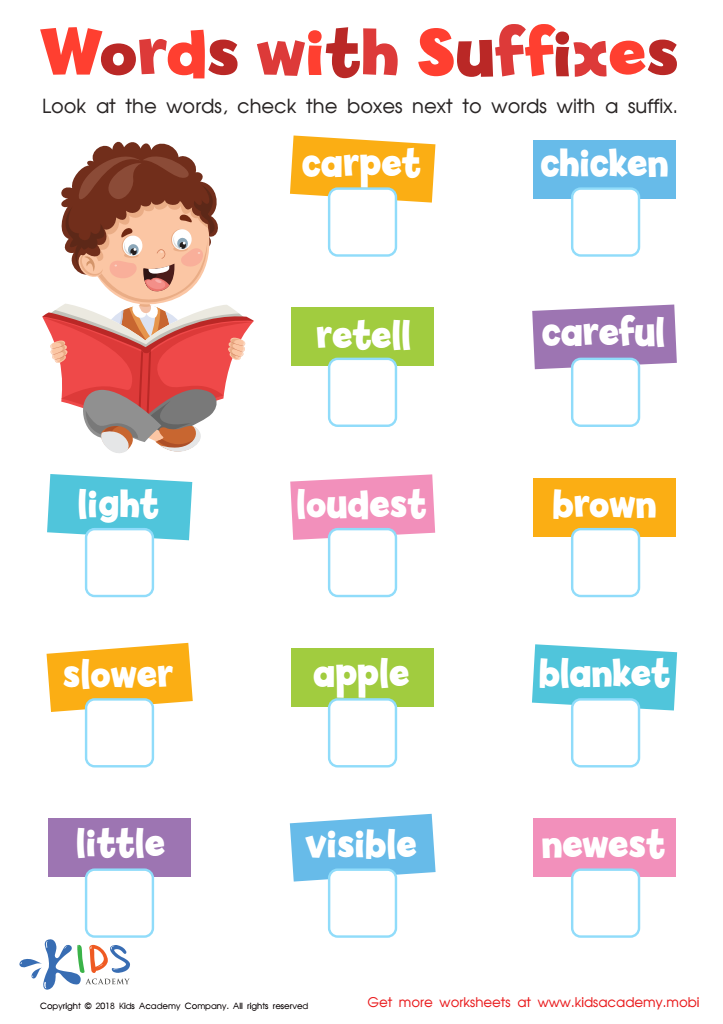
Reading: Words With Suffixes Worksheet
 Assign to My Students











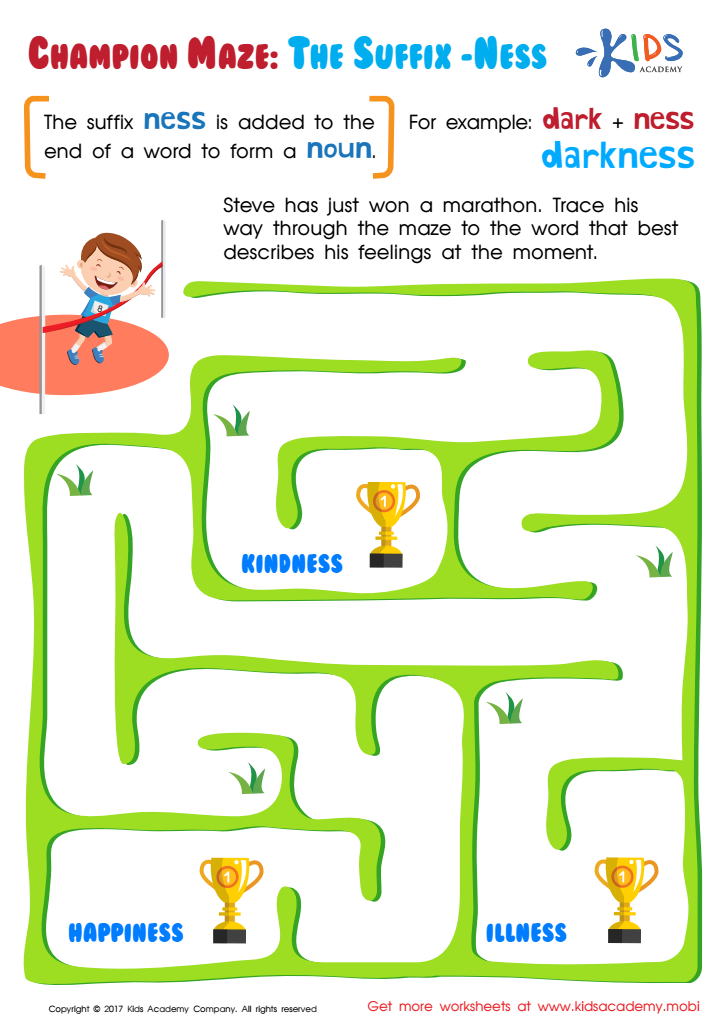
Suffix Ness Worksheet
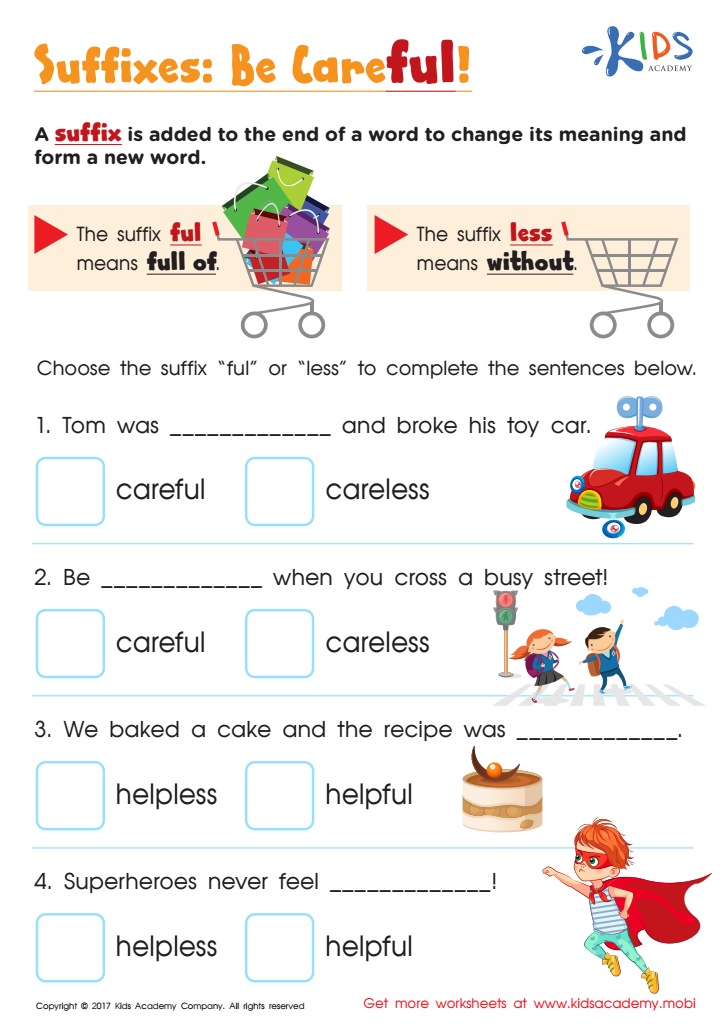
Suffixes Ful and Less Worksheet








Understanding suffixes is crucial for both parents and teachers invested in building vocabulary among young learners. Suffixes are collections of letters added to the end of words to change their meanings or grammatical functions, such as transforming a noun into an adjective or verb into a noun. This understanding not only enhances comprehension skills but also empowers students to decode new words independently.
When children grasp suffixes, they can begin to decipher unfamiliar vocabulary, boosting their reading and writing skills. For instance, recognizing that "-ful" implies "full of" enables a child to guess the meaning of "joyful" as "full of joy" even if they've never encountered the word before. This skill fosters a love for language and unearths a broader world of books and storytelling.
Furthermore, an enriched vocabulary lays a robust foundation for all academic subjects, improving communication skills and boosting confidence. Parents can support this by encouraging discussions around word meanings and exploring new vocabulary together. In turn, teachers can integrate suffix studies into lessons, creating engaging activities that solidify these concepts. Overall, let’s embrace suffixes as vital tools in nurturing keen learners engaged in lifelong literacy.








