Verb identification Normal Building Vocabulary Worksheets
3 filtered results
-
From - To
Enhance your child's vocabulary with our Verb Identification Normal Building Vocabulary Worksheets. These meticulously crafted worksheets help young learners recognize and understand verbs, laying the foundation for strong language skills. Tailored for early grade students, each worksheet features engaging activities that make learning fun and interactive. Your child will identify action words, expanding their vocabulary and improving sentence structure. Perfect for classroom use or at-home practice, these printable resources support continuous learning and development. Boost your child's language proficiency with our Verb Identification Normal Building Vocabulary Worksheets today, fostering academic growth through interactive lessons.
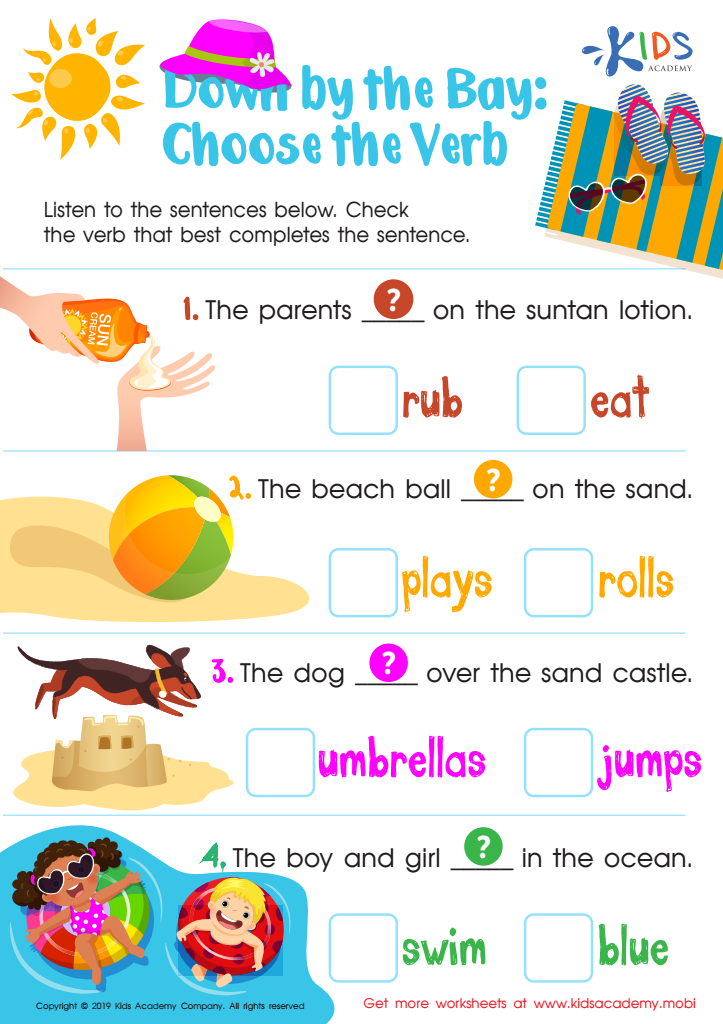
Down by the Bay: Choose the Verb Worksheet
 Assign to My Students











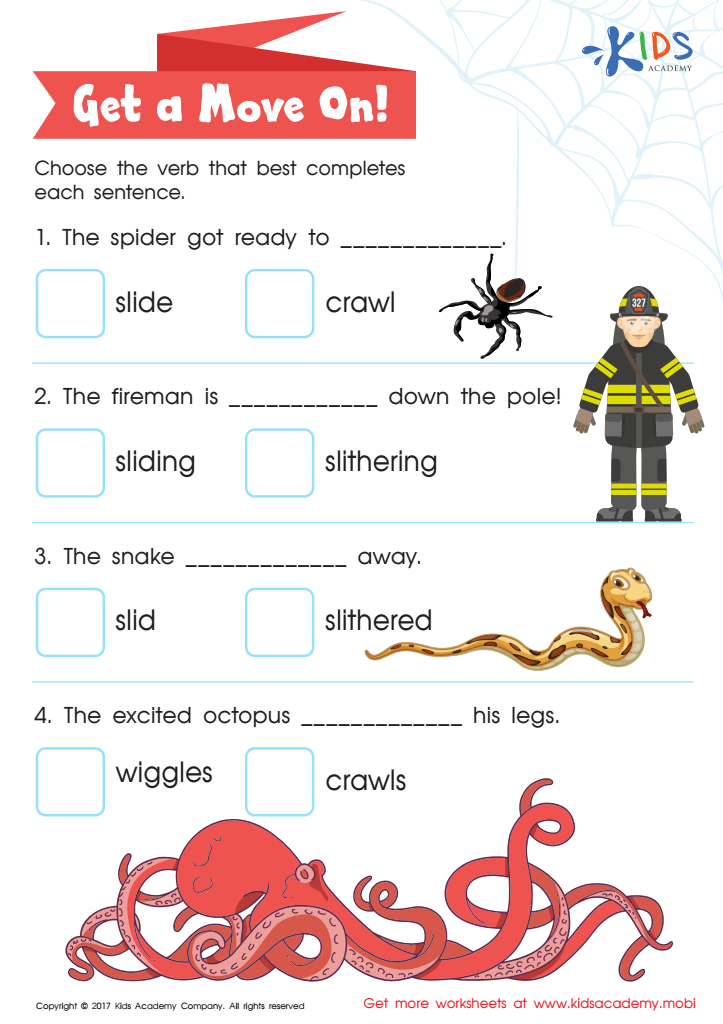
Verb Worksheet
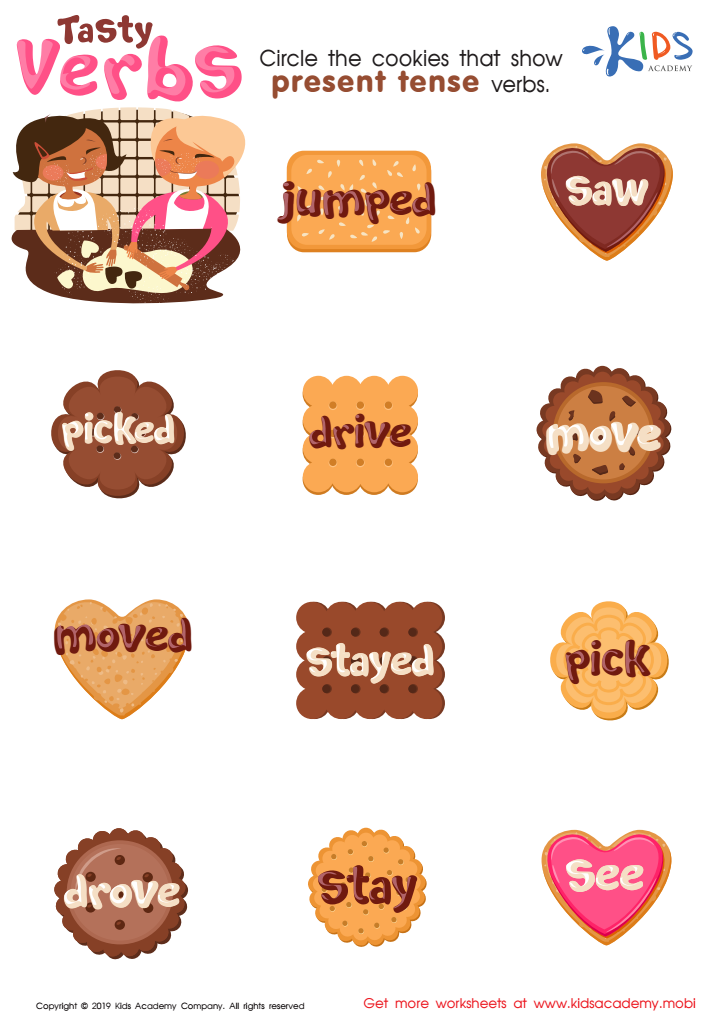
Tasty Verbs Worksheet








Parents and teachers should care about verb identification and vocabulary building because these are foundational skills for effective communication and academic success. Verbs are essential components of sentences, indicating actions, states, or occurrences. When children understand how to identify and use verbs accurately, they improve their ability to construct meaningful sentences, enhancing both their written and oral communication skills.
Building a robust vocabulary is equally important, as it empowers children to express their thoughts clearly and understand others. A rich vocabulary allows students to comprehend reading materials more deeply, engage in diverse conversations, and formulate nuanced ideas. This proficiency supports learning across all subjects, as confident use of language fosters better understanding and retention of information.
Additionally, early mastery of these skills bolsters self-esteem in academic settings, encouraging a positive attitude towards learning. As children become more articulate, they are better equipped to navigate social interactions and express their needs and emotions effectively. Therefore, focusing on verb identification and building vocabulary lays a critical groundwork for lifelong learning, effective communication, and personal development, making it a priority for both parents and educators.








