Understanding perspectives Normal Reading Worksheets
3 filtered results
-
From - To
Explore our "Understanding Perspectives Normal Reading Worksheets," designed to enhance students' comprehension and critical thinking skills. These worksheets encourage young learners to analyze different viewpoints in various texts, fostering empathy and deeper understanding. Each activity challenges students to identify character motivations, context, and emotional nuances, promoting analytical reading. Perfect for classroom or homeschool settings, our worksheets are engaging and easy to use, making learning fun! Parents and educators can seamlessly integrate these resources into lessons to strengthen reading comprehension. Empower your students to become thoughtful readers who appreciate diverse perspectives with our specially crafted worksheets. Start your journey to deeper understanding today!
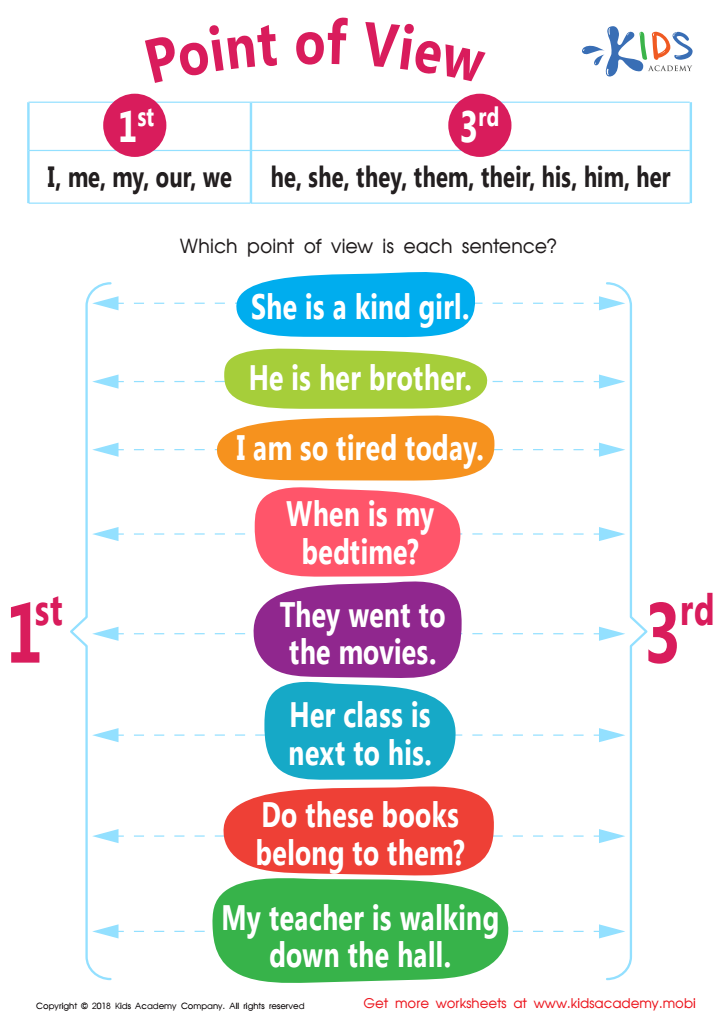
Point of View Worksheet
 Assign to My Students
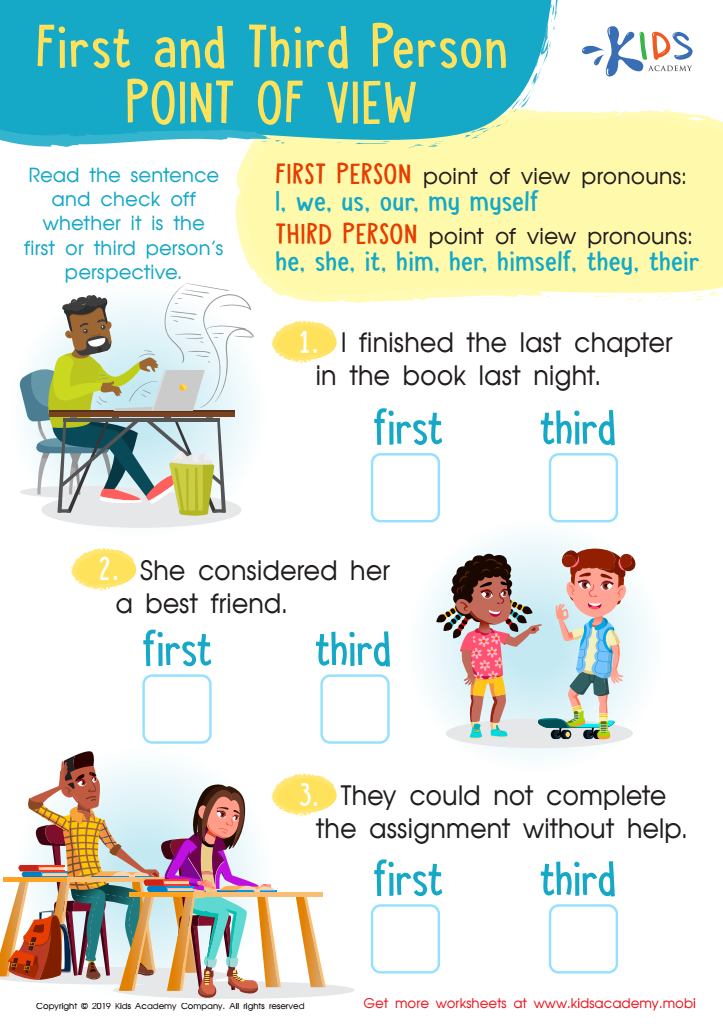
First and Third Person Point of View Worksheet
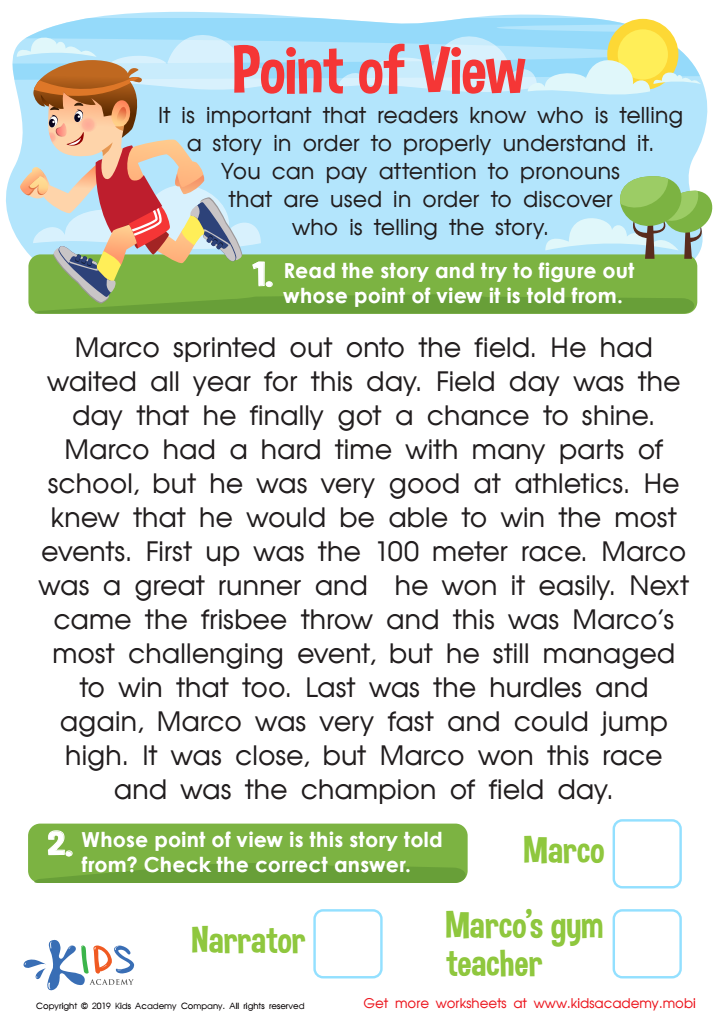
Point of View Worksheet







Understanding perspectives is essential for parents and teachers because it aids in fostering empathy and critical thinking in young learners. By encouraging children to recognize and appreciate different viewpoints, adults can help them develop a broader understanding of the world. This skill is pivotal not only academically but also socially, as it promotes respectful dialogue, cooperation, and conflict resolution among peers.
In the context of normal reading, grasping diverse perspectives enriches the reading experience. When children engage with characters from various backgrounds or circumstances in literature, they learn to empathize with others, which extends beyond the pages of a book. Lessons drawn from reading about different experiences cultivate a sense of acceptance and reduce prejudices.
Moreover, understanding perspectives can support literacy development by enhancing comprehension skills. Readers who practice interpreting different viewpoints are better equipped to analyze texts and make connections to real-life situations. As children engage in discussions and share their insights, they also build communication skills, which are vital for academic success.
Ultimately, equipping children with the ability to understand and appreciate diverse perspectives lays the foundation for becoming open-minded, compassionate, and engaged citizens in our increasingly diverse society.








