Understanding suffixes Normal Reading Worksheets
3 filtered results
-
From - To
Explore the world of suffixes with our engaging Normal Reading Worksheets! Designed for early grade learners, these worksheets focus on enhancing understanding of suffixes, essential for vocabulary development and reading comprehension. Each activity encourages students to identify and apply various suffixes to root words, fostering language skills in a fun and interactive way. Perfect for classroom or home use, our worksheets cater to diverse learning styles, ensuring every child grasp the concept effectively. Empower your students with the tools they need to become confident readers and writers. Dive into suffix exploration today and make learning enjoyable!
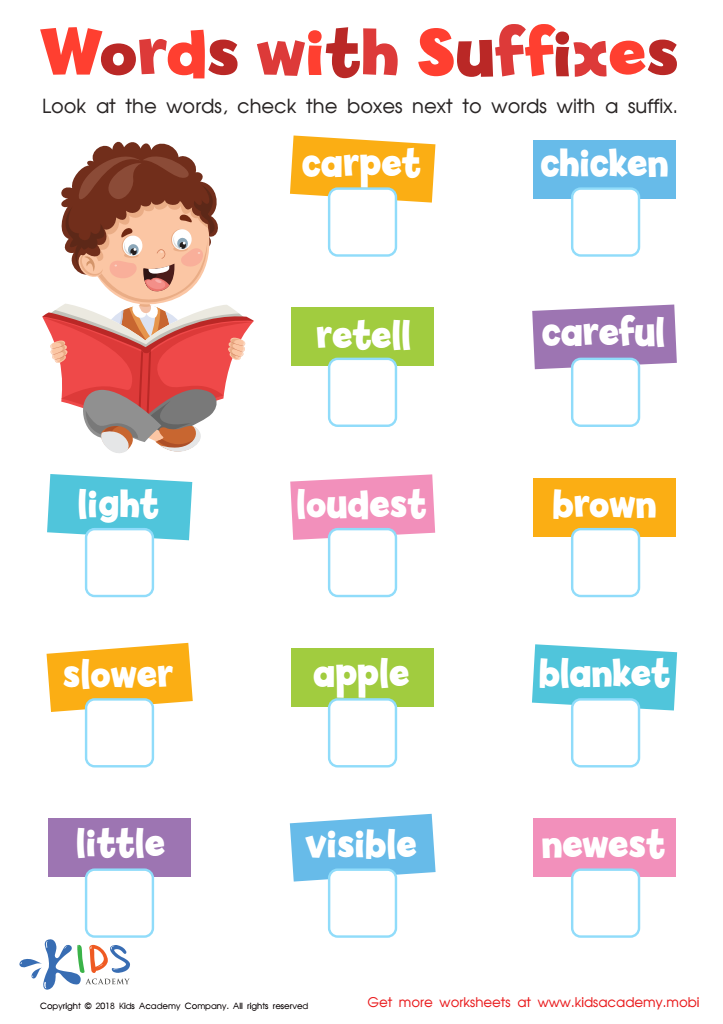
Reading: Words With Suffixes Worksheet
 Assign to My Students
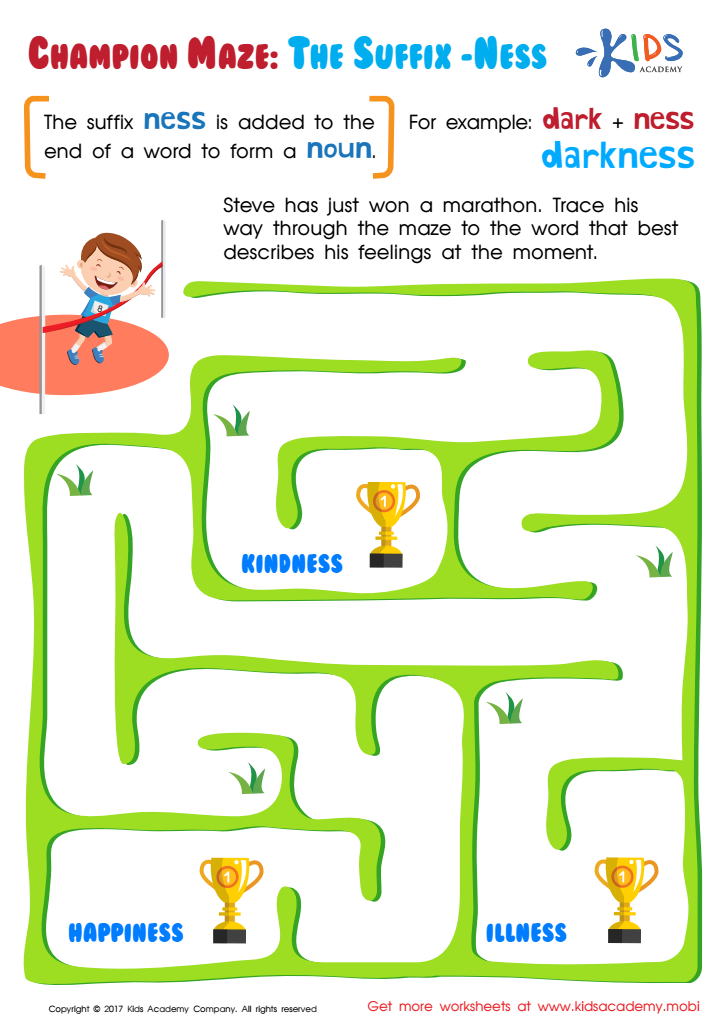
Suffix Ness Worksheet
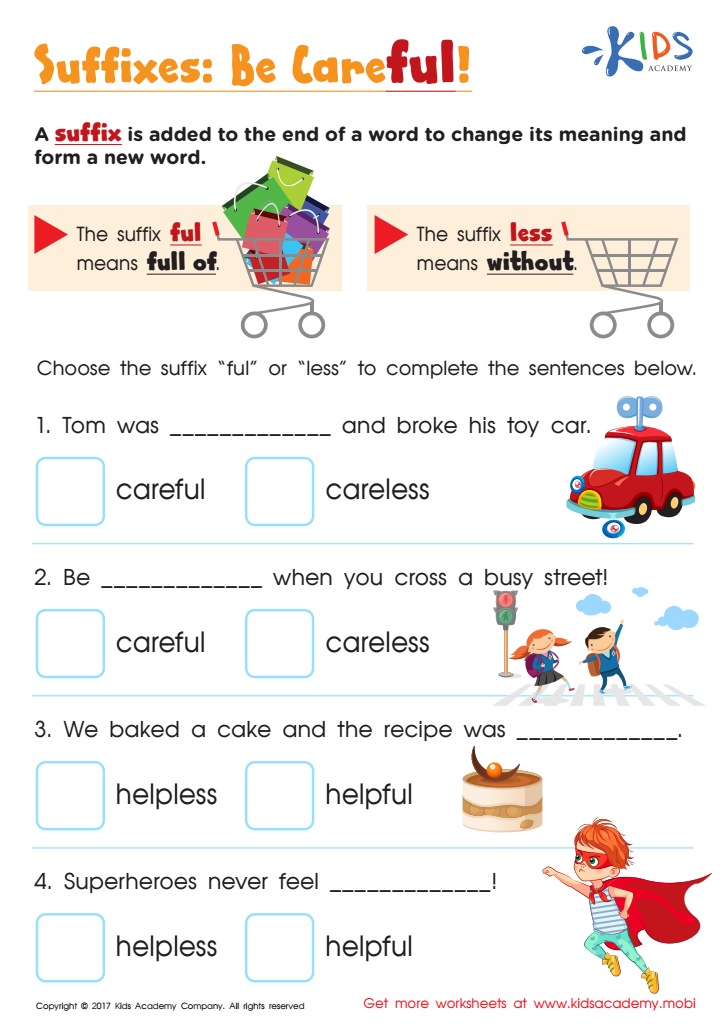
Suffixes Ful and Less Worksheet








Understanding suffixes is crucial for parents and teachers as they play a significant role in helping young learners develop strong reading skills. Suffixes are word endings that modify a word's meaning or grammatical function. For instance, adding "-ed" can transform a verb into the past tense, while "-ly" can change an adjective into an adverb. By grasping these transformations, children improve their vocabulary and reading comprehension.
When children learn to recognize and utilize suffixes, they can decode unfamiliar words more effectively. This skill fosters greater confidence while reading, encouraging a love for literature. Teachers can incorporate suffix-focused activities in their curriculum to enhance phonics instruction, while parents can support this learning at home through games and discussions centered on suffix usage.
Moreover, understanding suffixes enables students to make inferences about a word's meaning, aiding their understanding of language nuances and themes. This foundational literacy skill equips children for more advanced language arts as they progress in their education. Ultimately, comprehension of suffixes is essential not just for academic success but for lifelong communication skills, empowering children to articulate their thoughts effectively. Parents and teachers should prioritize this learning to cultivate competent and confident readers.








