Animal knowledge Normal Reading Comprehension Worksheets
3 filtered results
-
From - To
Discover our Animal Knowledge Normal Reading Comprehension Worksheets, designed to engage young minds and enhance literacy skills. These worksheets feature captivating stories and facts about various animals, tailored for early readers. By exploring diverse topics, students will develop critical comprehension abilities, improve vocabulary, and nurture their love for learning about wildlife. Perfect for classroom activities or at-home practice, these resources are aligned with educational standards and promote essential reading strategies. Empower your students to become confident readers while deepening their understanding of the animal kingdom. Dive into the world of animals and watch your child's reading skills flourish!
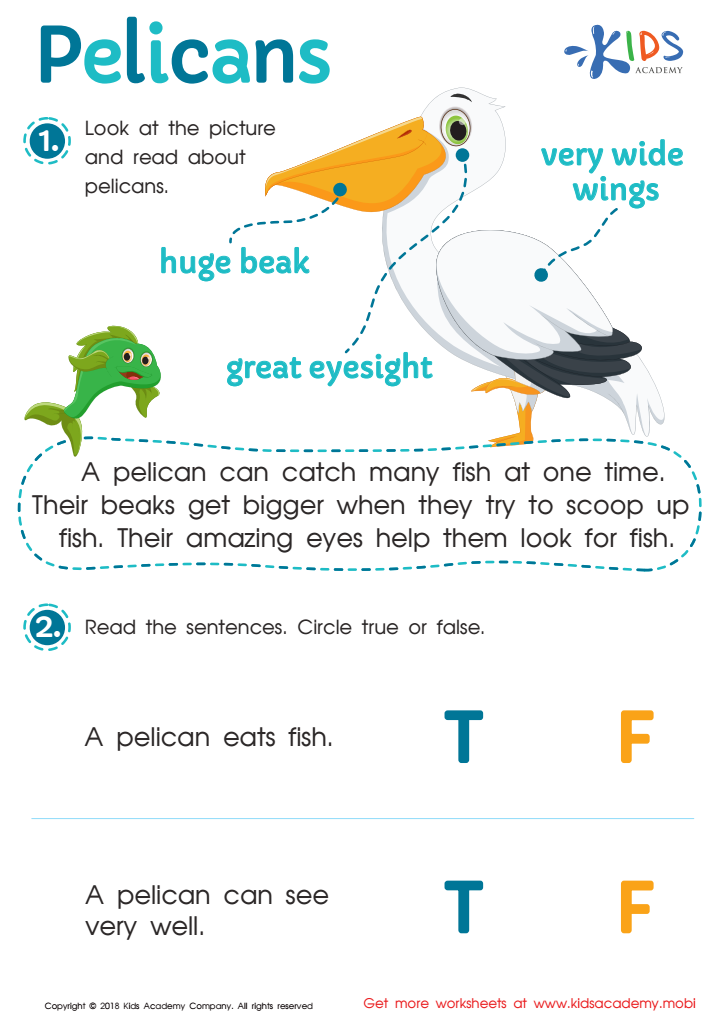
Pelicans Worksheet
 Assign to My Students
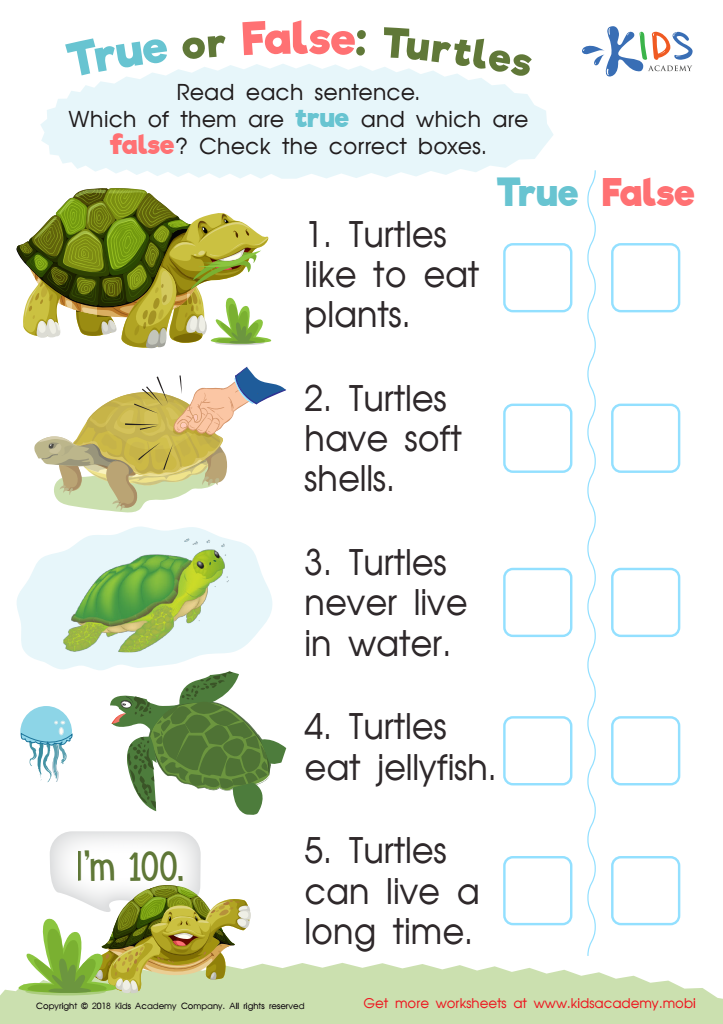
True or False: Turtles Worksheet
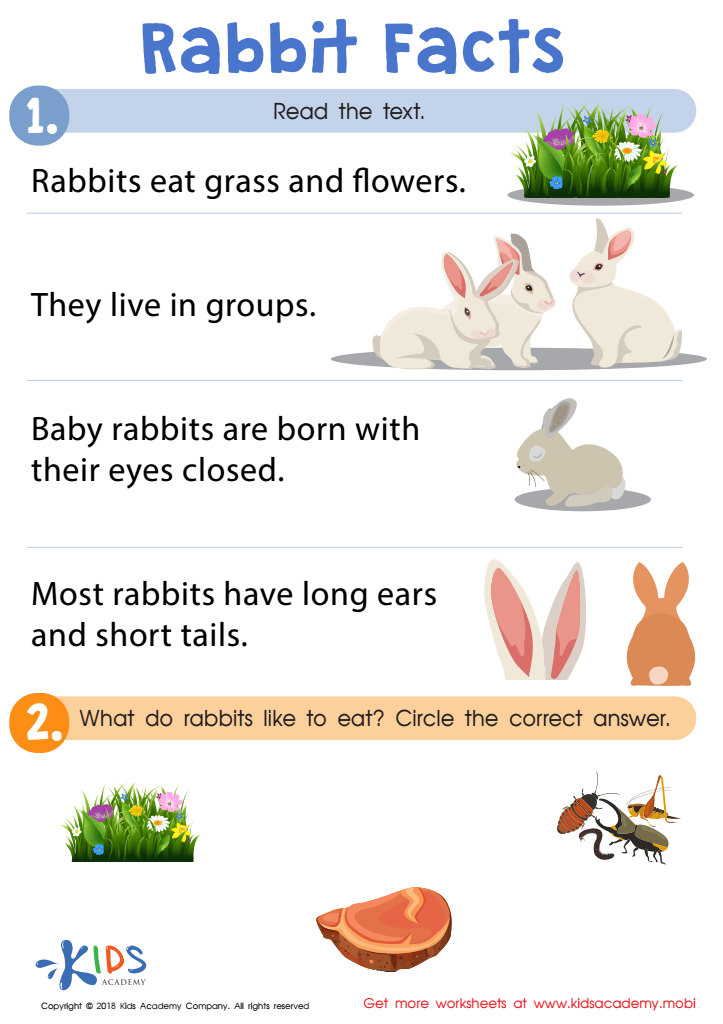
Rabbit Facts Worksheet








Understanding animal knowledge is crucial for both parents and teachers for several reasons. First, it fosters a connection with the natural world. Children who learn about animals develop a sense of empathy and compassion, understanding the importance of biodiversity and environmental stewardship. Engaging in discussions about animals can also stimulate curiosity, encouraging children to explore science and nature, thus enhancing critical thinking skills.
Moreover, animal knowledge promotes literacy and comprehension. Reading about various species exposes children to diverse vocabulary and concepts, aiding in language development. By integrating animal-related themes in reading materials, teachers can make learning more relatable and enjoyable, which is essential for young learners.
Furthermore, understanding animal behavior and characteristics lays the groundwork for developing social skills. Children learn to relate their behaviors to those of different species, fostering teamwork and collaboration through cooperative projects focused on research or storytelling.
In summary, animal knowledge enriches children's emotional, cognitive, and social development. It encourages them to become conscientious individuals who appreciate and protect the environment while promoting essential literacy skills. For parents and educators alike, prioritizing animal knowledge in learning is vital to nurturing well-rounded, informed, and empathetic future generations.








