Identifying story elements Normal Reading Comprehension Worksheets
3 filtered results
-
From - To
Enhance your child's reading skills with our "Identifying Story Elements" Normal Reading Comprehension Worksheets. Tailored for early learners, these engaging worksheets focus on key story elements such as characters, settings, events, and plots. Children will grow their comprehension skills while enjoying various interactive activities, including reading passages and answering thought-provoking questions. Our worksheets are designed to foster critical thinking and allow young readers to analyze and understand literature more effectively. Perfect for classroom use or at-home practice, they provide a valuable resource to help children develop a deeper appreciation for storytelling and boost their overall reading proficiency.
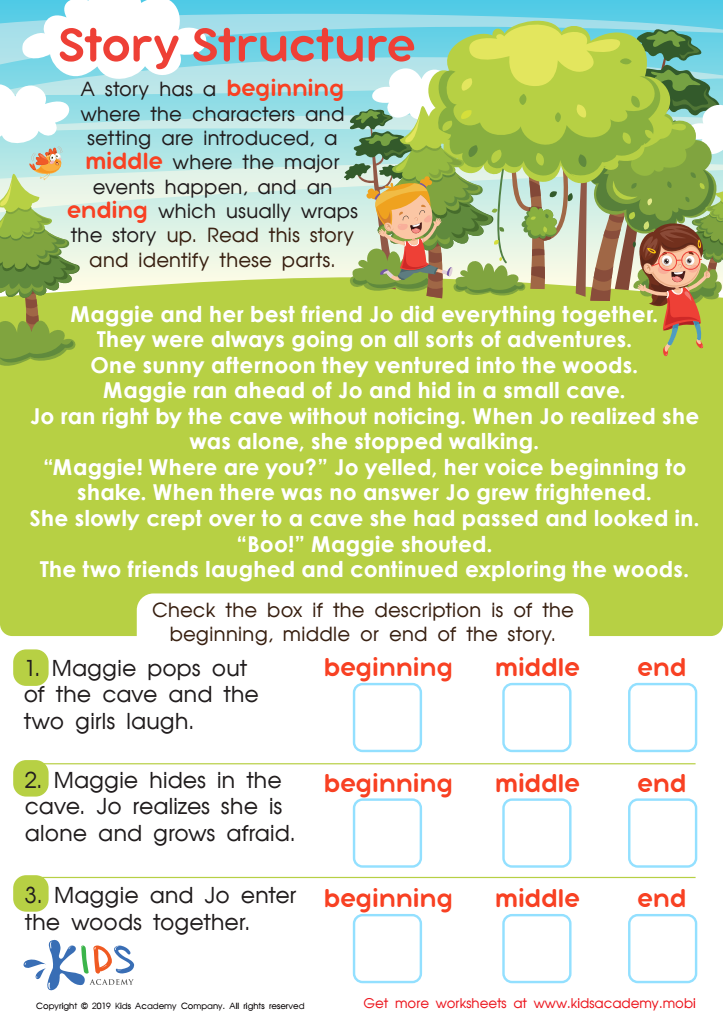
Story Structure Worksheet
 Assign to My Students
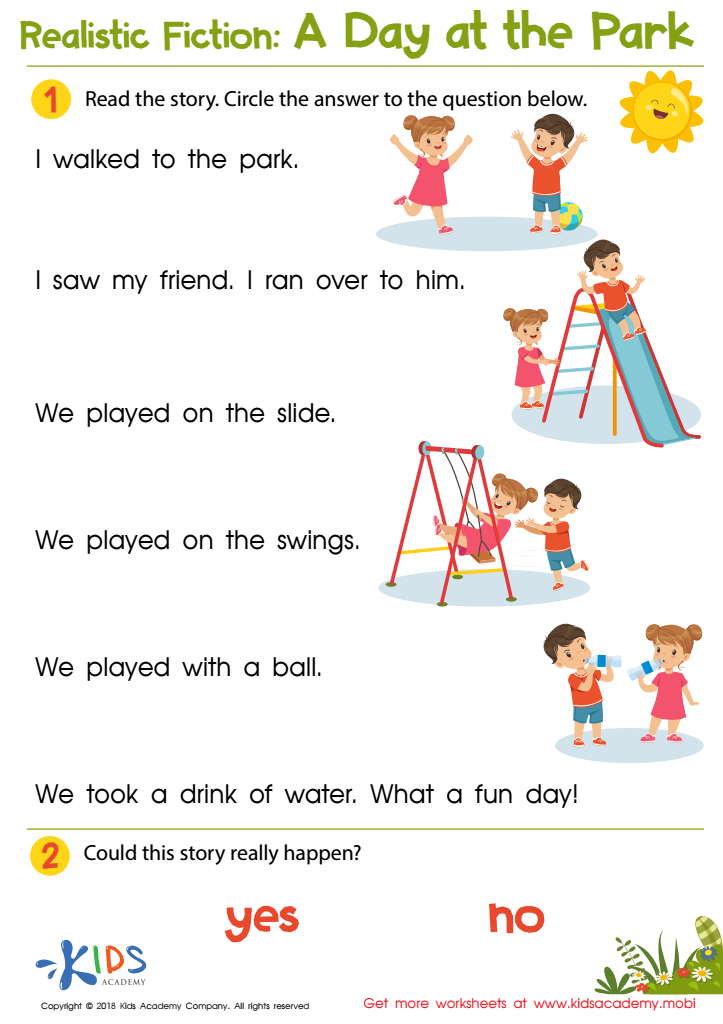
A Day at the Park Worksheet
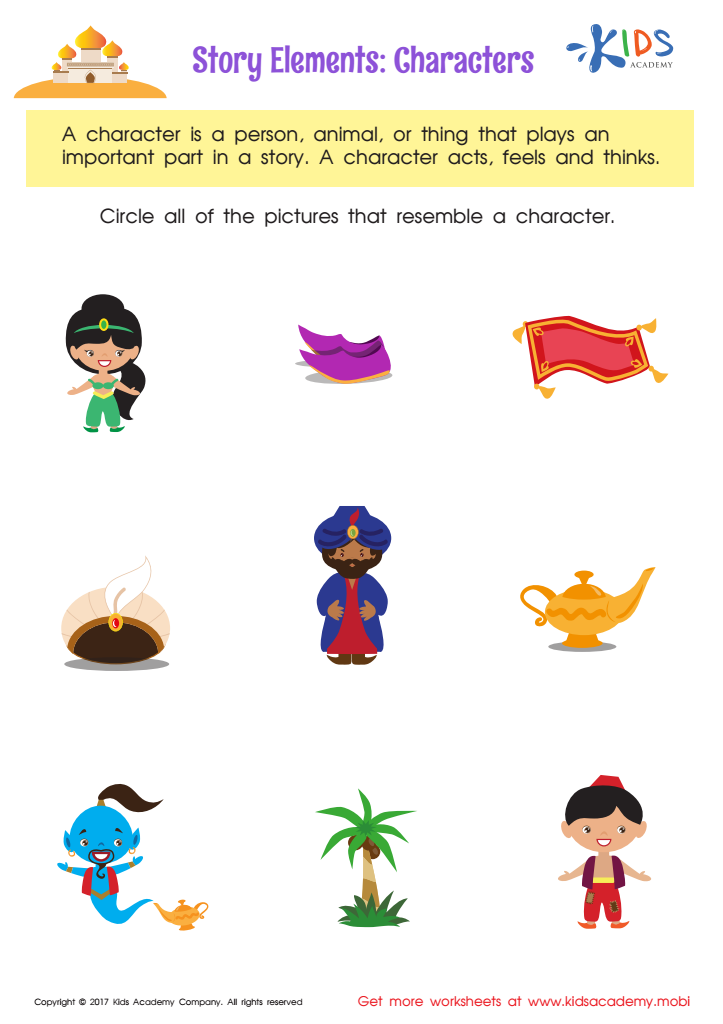
Story Elements Printable








Parents and teachers should prioritize identifying story elements in normal reading comprehension for several compelling reasons. First, understanding story elements—such as character, setting, plot, conflict, and resolution—helps children grasp the overall structure and meaning of texts. This framework supports better comprehension and enhances their ability to recall and summarize stories.
Second, recognizing these elements fosters critical thinking skills. When children analyze characters’ motivations or the consequences of conflicts, they learn to think deeply about narratives, building connections between texts and their own experiences. This analytical approach nurtures creativity as they construct their interpretations or craft their own stories.
Additionally, a solid grasp of story elements is linked to improved vocabulary and language skills. Discussing these components expands children's linguistic repertoire and hones their ability to articulate thoughts.
Finally, engaging with story elements encourages a love for reading. When children can navigate and enjoy narratives, they are more likely to develop a lifelong interest in books and learning. Thus, helping children identify and understand story elements cultivates essential cognitive abilities and a passion for literature, empowering them as readers in school and beyond.








