Moral lesson understanding Normal Reading Fiction Worksheets
5 filtered results
-
From - To
Enhance your child's reading skills with our "Moral Lesson Understanding Normal Reading Fiction Worksheets." These engaging worksheets are designed to help young readers identify and comprehend the morals embedded in fictional stories. By exploring relatable characters and situations, students will develop critical thinking skills and learn valuable life lessons from each narrative. Our user-friendly format fosters independent learning, while the creative activities will inspire a love for reading. Perfect for classrooms or home practice, these worksheets help nurture empathy and ethical understanding. Equip your child with the tools to reflect on daily choices and their impacts through targeted, enjoyable reading experiences.
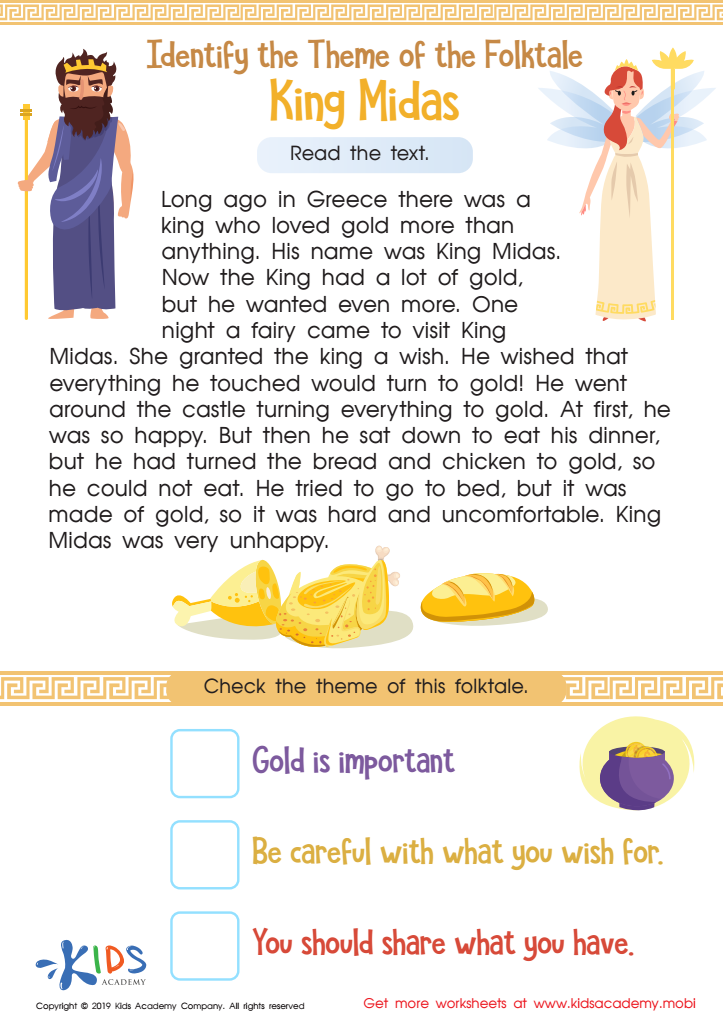
King Midas Worksheet
 Assign to My Students
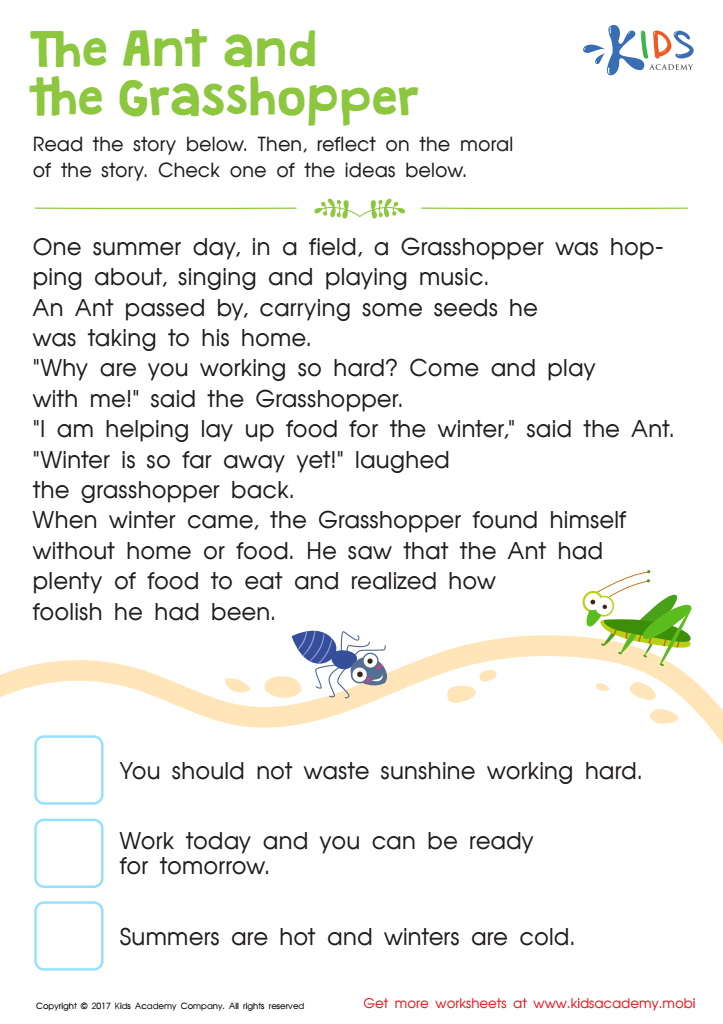
The Ant and The Grasshopper Printable
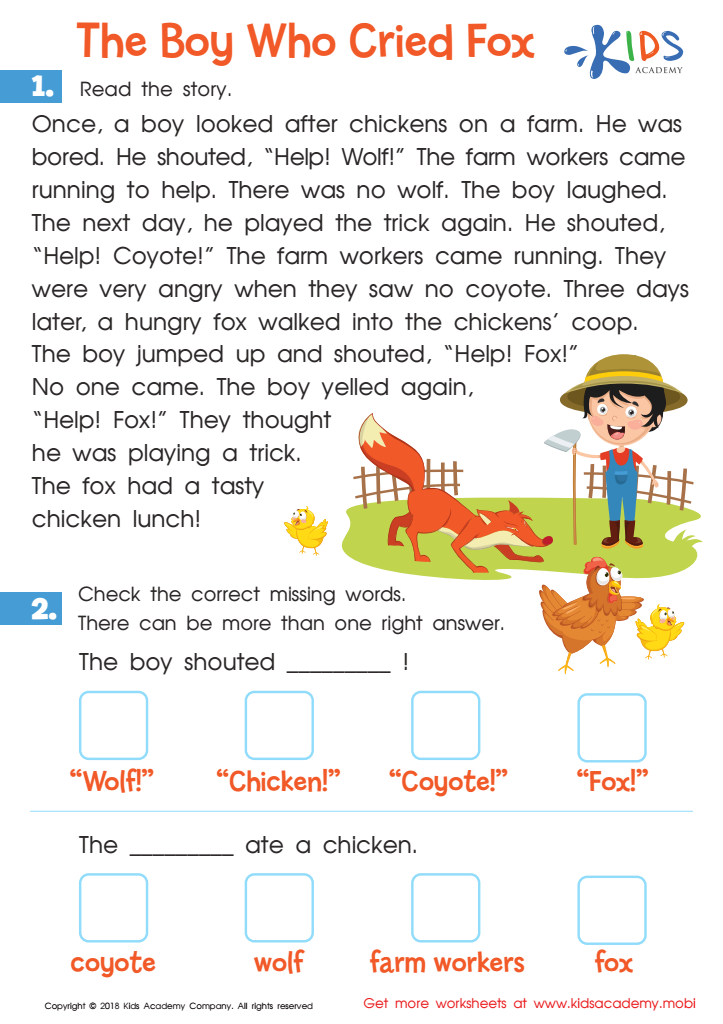
The Boy Who Cried Fox Worksheet
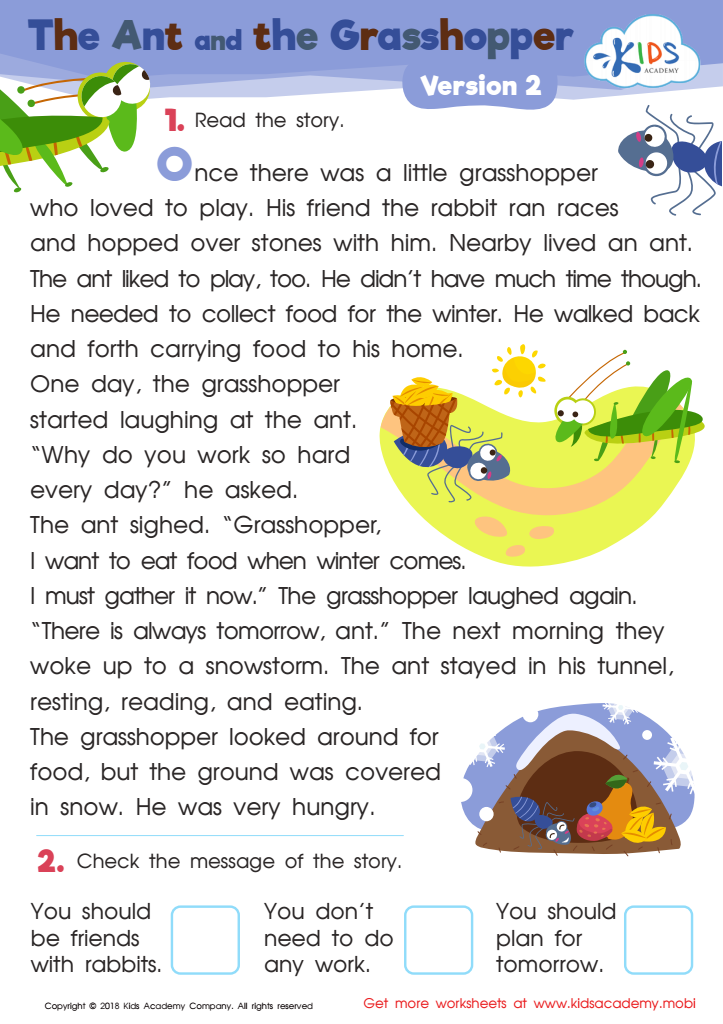
The Ant and The Grasshopper Version 2 Worksheet
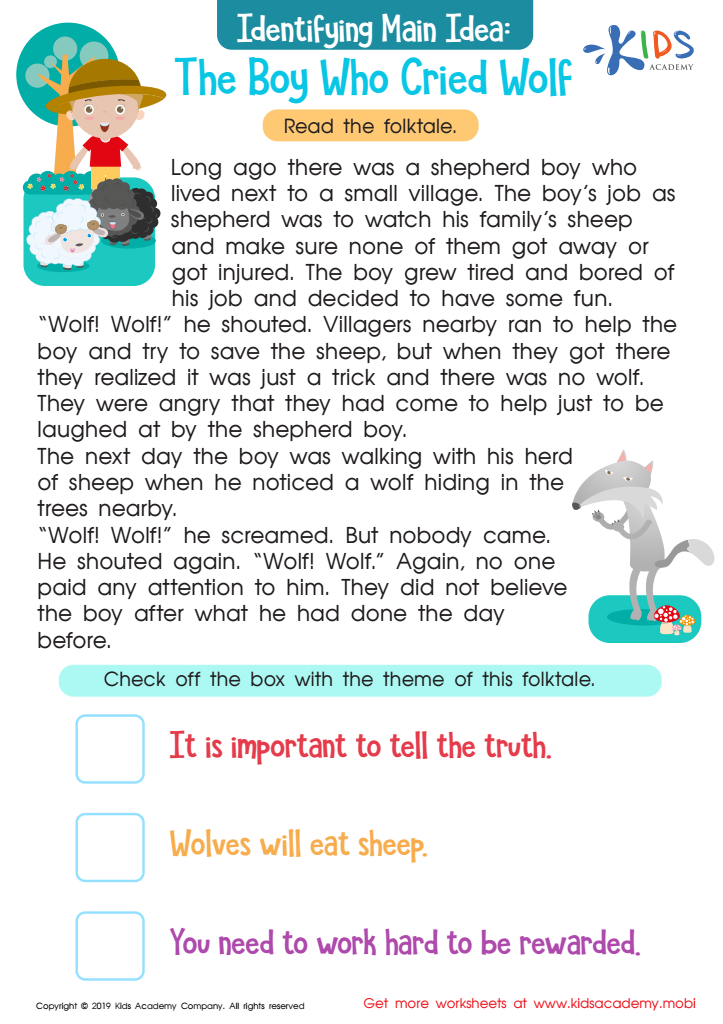
The Boy Who Cried Wolf Part 2 Worksheet








Understanding moral lessons in children's fiction is essential for both parents and teachers, as it plays a vital role in a child's emotional and social development. Stories often present characters facing dilemmas and choices, allowing children to explore concepts of right and wrong within a safe and engaging context. By discussing these moral lessons, adults can guide children in understanding empathy, justice, honesty, and respect, helping them to cultivate a strong ethical foundation.
Additionally, fiction encourages critical thinking and can spark important conversations about ethics in real-life scenarios. When parents and teachers engage with children about the decisions characters make, they promote deeper comprehension and application of these values in their lives. Moreover, shared reading experiences foster connections between adults and children, creating a space for curiosity and discussion.
Furthermore, moral lessons in literature can significantly impact a child’s ability to relate to others and resolve conflicts. By emphasizing these lessons, adults can help nurture socially responsible and emotionally intelligent individuals. Ultimately, considering moral lessons in reading fosters a well-rounded education, promoting not only academic skills but also essential life skills necessary for positive relationships and responsible citizenship. Therefore, educators and parents should prioritize these discussions to enhance students' overall development.







