
Developing observation skills Normal Science Worksheets
3 filtered results
Difficulty Level
Grade
Age
-
From - To
Subject
Activity
Standards
Enhance your child's observation skills with our engaging Normal Science Worksheets! Designed for early learners, these worksheets focus on helping children hone their ability to see and analyze their surroundings carefully. Each activity encourages critical thinking and fosters curiosity, allowing kids to explore scientific concepts through observation. With age-appropriate exercises, colorful illustrations, and interactive formats, these worksheets make learning fun and effective. Perfect for classroom use or at-home reinforcement, our resources provide a solid foundation for young scientists. Help your little ones become keen observers and cultivate a love for science with our thoughtfully crafted worksheets today!
Favorites
With answer key
Interactive
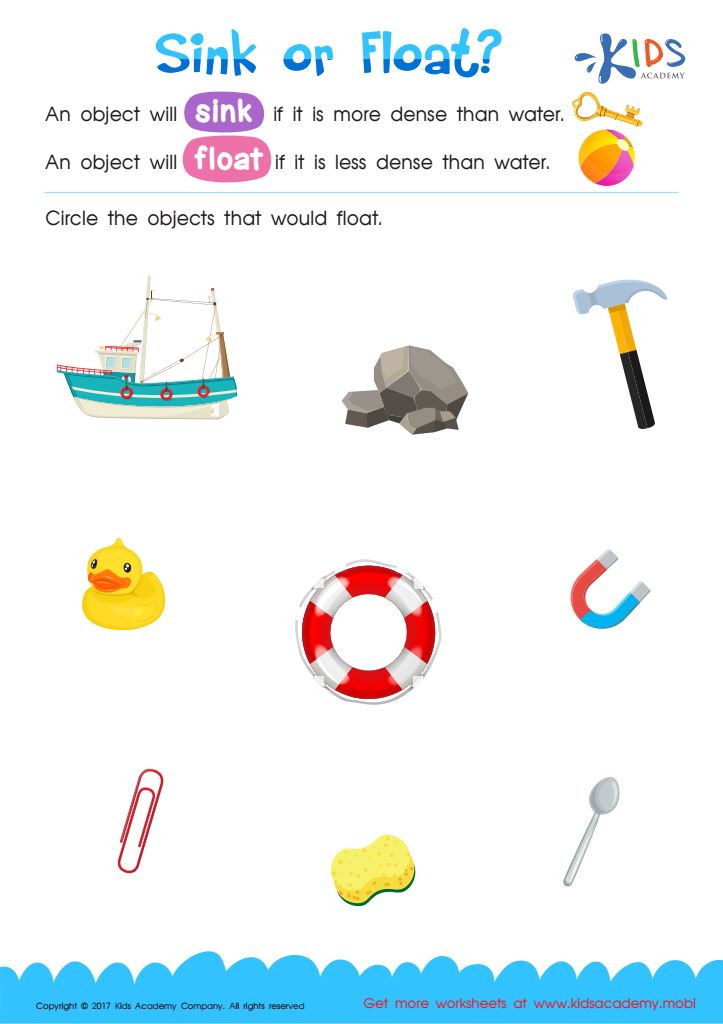
Sink or Float Printable
They'll learn why some things stay on the surface and others sink to the bottom. (80 words)
 Assign to My Students
Sink or Float Printable
Worksheet
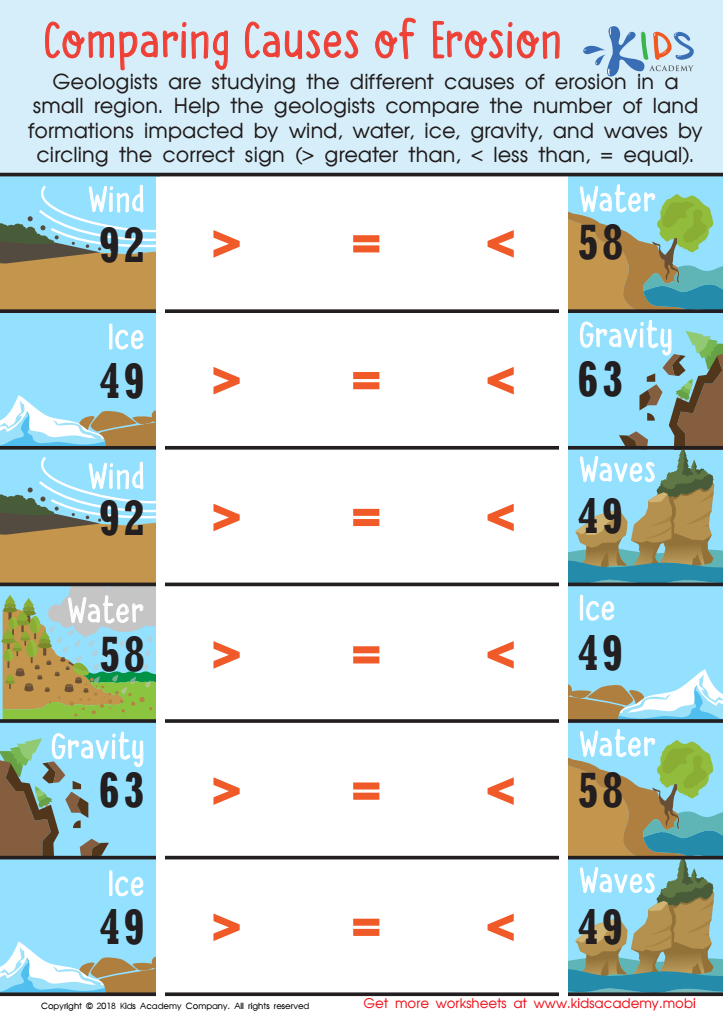
Comparing Causes of Erosion Worksheet
This free PDF worksheet combines science, number sense and comparing numbers to teach kids about the causes of erosion. They'll compare numbers related to ice, wind, water, gravity and waves and decide if each cause is greater, less than or equal to another. It's an interdisciplinary and meaningful way to learn that kids will enjoy.
Comparing Causes of Erosion Worksheet
Worksheet
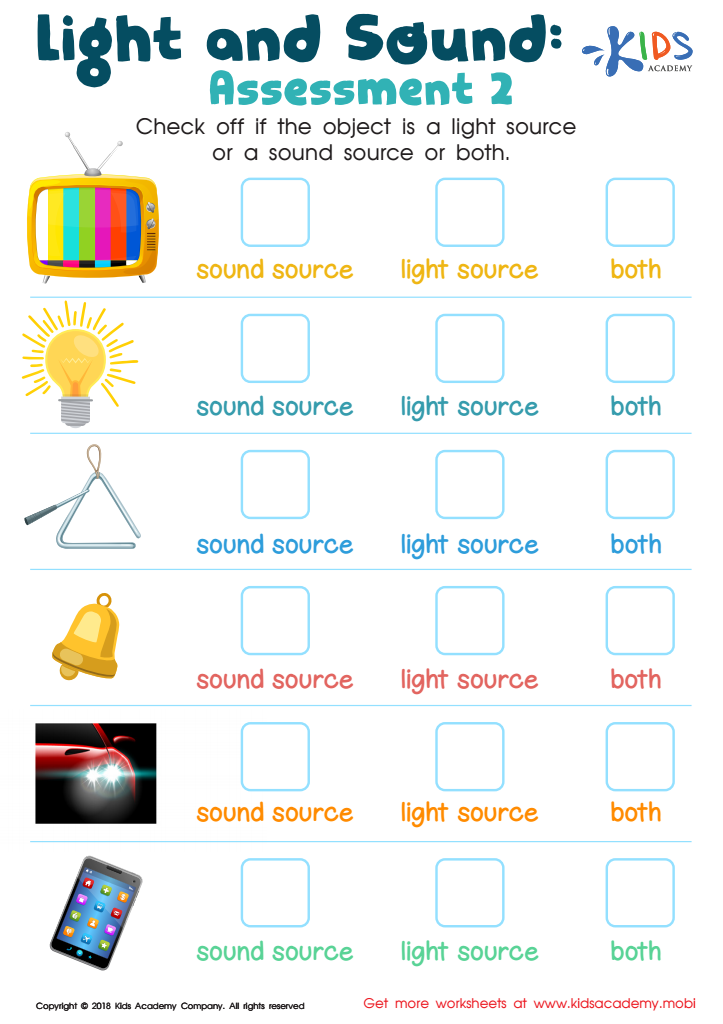
Light and Sound: Assessment 2 Worksheet
This worksheet introduces your kids to light and sound, with common sources of each. Identify the objects and help them check if it's a light source, a sound source, or both. Colourful and simple, it's a great way to teach your little ones! (80 words)
Light and Sound: Assessment 2 Worksheet
Worksheet
Join Kids Academy for Free
Who is primarily going to use this learning content?






Developing observation skills is crucial in early education as it lays the foundation for critical thinking and scientific inquiry. For parents and teachers, nurturing these skills enriches the learning experience and encourages children to engage with the world around them. Observational abilities help children gather information, identify patterns, and make connections, all of which are essential for understanding scientific concepts and processes.
When young learners develop keen observatory skills, they become more curious and motivated to explore. This exploration boosts their cognitive development by enhancing their ability to ask questions, formulate hypotheses, and draw conclusions based on their findings. Furthermore, strong observation skills foster a sense of wonder and appreciation for nature, ultimately leading to lifelong learners who value science.
Incorporating observation into daily activities and lessons helps children become aware of their surroundings and enables them to notice subtleties that others may overlook. This practice not only supports children's academic growth but also cultivates important life skills such as attention to detail and critical reasoning. Parents and teachers play a pivotal role in guiding and modeling observation techniques, making it vital for them to prioritize this aspect of learning. Ultimately, fostering observation skills in young children contributes significantly to their overall development.







