
Shape Recognition Normal Science Worksheets
3 filtered results
Difficulty Level
Grade
Age
-
From - To
Subject
Activity
Standards
Discover the world of Shape Recognition Normal Science Worksheets, designed to foster early understanding of shapes in children. These engaging, fun-filled worksheets help young learners identify and differentiate various shapes through playful exercises. Each worksheet is aligned with educational standards, ensuring that children not only practice their shape recognition skills but also develop critical thinking and problem-solving abilities. Perfect for preschool and kindergarten, these resources contribute to a solid foundation in math and science concepts. Encourage exploration and creativity as your child interacts with these worksheets, making learning an enjoyable experience. Start your child’s shape recognition journey today!
Favorites
With answer key
Interactive
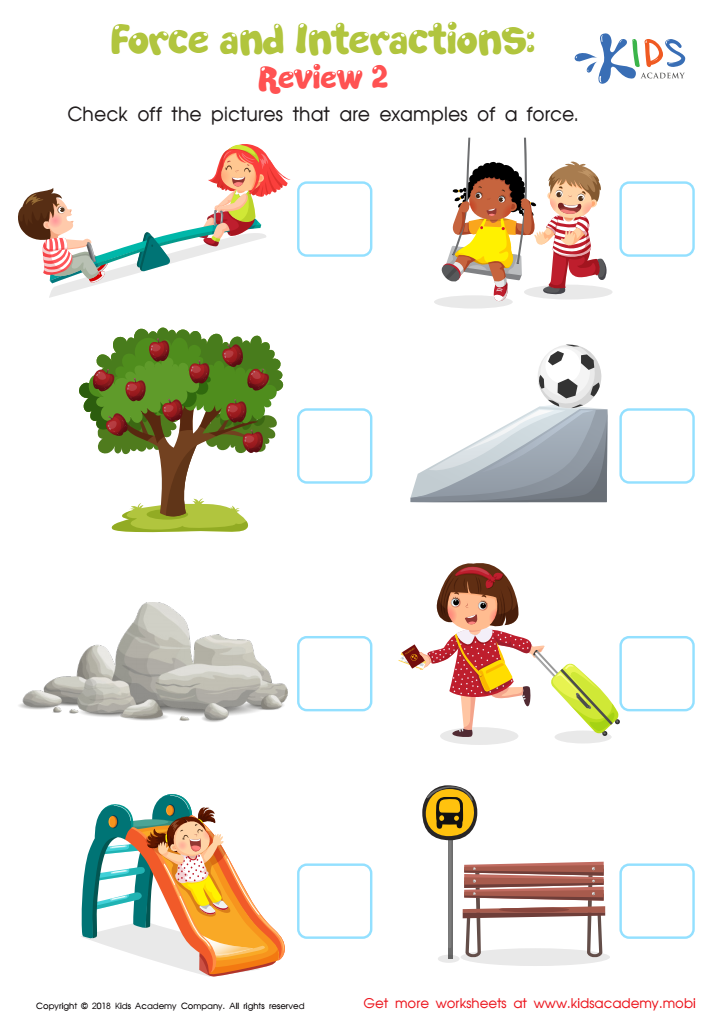
Force and Interactions: Review 2 Worksheet
Your child can identify force examples by checking the pictures. There are 8 images of kids engaging in activities and objects in motion. Get them to name the activities and objects, or if they know, explain force and interaction.
 Assign to My Students
Force and Interactions: Review 2 Worksheet
Worksheet
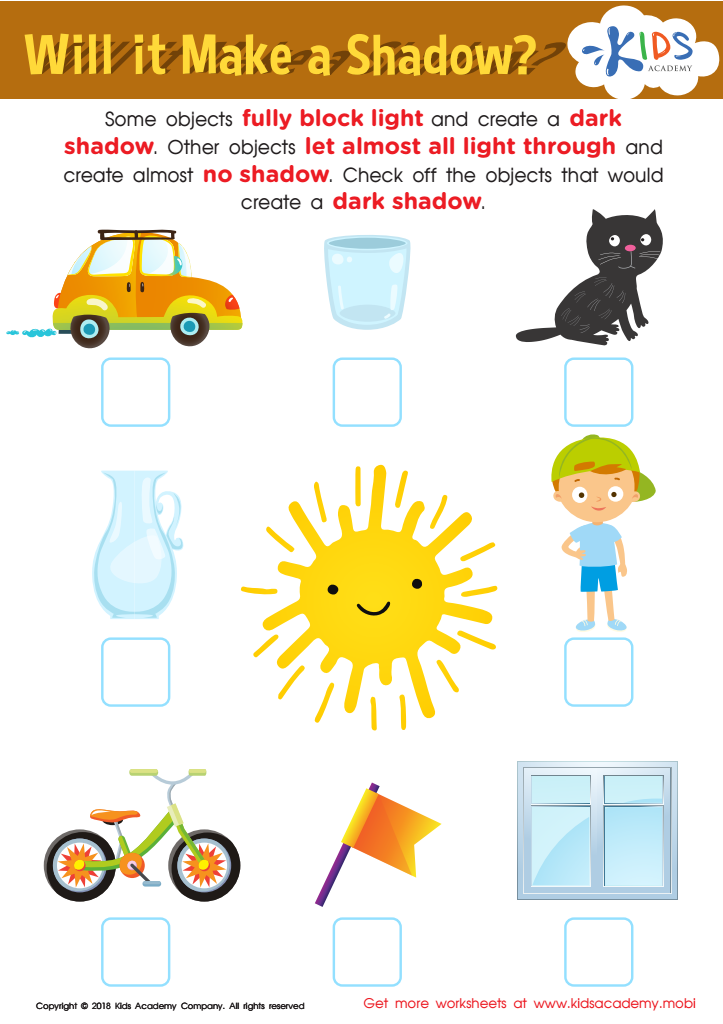
Will It Make a Shadow? Worksheet
Teach your students about shadows with this printout. Ask them to check off the boxes next to the pictures that create a shadow. Explain that some objects block light, forming a shadow, while others don't and thus don't create a shadow. Your students are likely already familiar with their own shadow.
Will It Make a Shadow? Worksheet
Worksheet
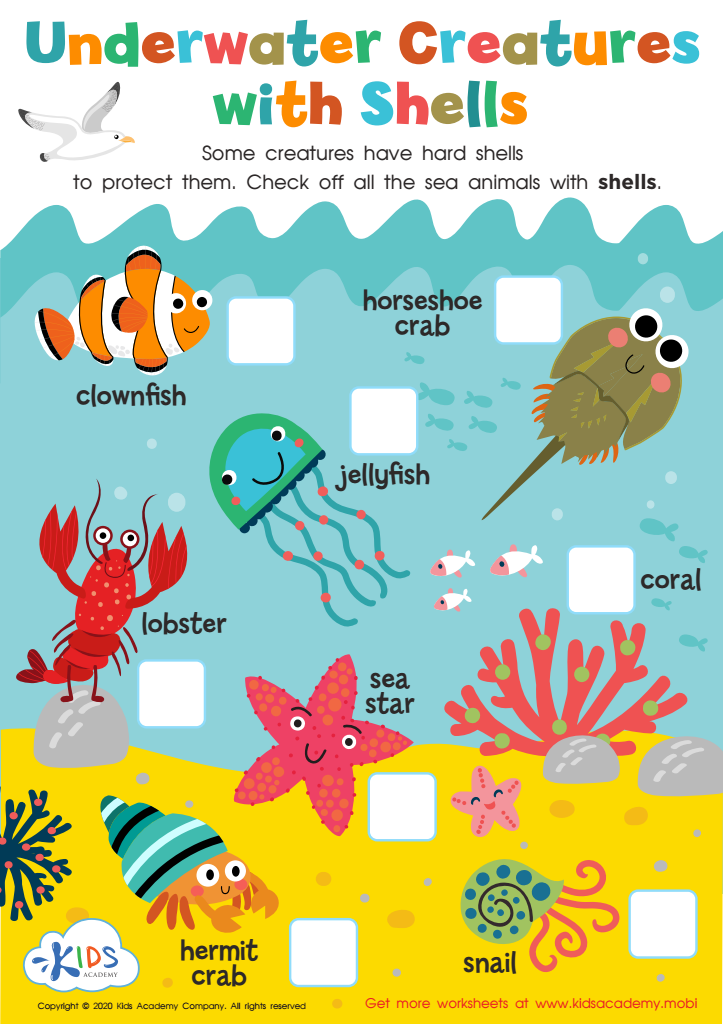
Underwater Creatures with Shells Worksheet
Teach your child about sea creatures with this vibrant PDF science worksheet! Comb through the colorful image to identify animals with shells; compare them to others and check them off. Let them know shells don't just wash up on beach, they serve as protection for sea creatures!
Underwater Creatures with Shells Worksheet
Worksheet
Join Kids Academy for Free
Who is primarily going to use this learning content?







.jpg)
Shape recognition is a fundamental aspect of early childhood education, serving as a cornerstone for cognitive development. Parents and teachers should care about this process because it significantly impacts children's spatial understanding, problem-solving abilities, and critical thinking skills. Recognizing shapes helps children make sense of the world around them, allowing them to categorize objects and understand their relationships in space.
Furthermore, shape recognition lays the groundwork for more complex mathematical concepts like geometry. Early exposure to shapes enhances counting skills and number recognition, forming a crucial link between spatial awareness and mathematical thought. Research shows that children proficient in shape recognition are better equipped for later academic success.
Additionally, shape recognition fosters fine motor skills and hand-eye coordination through engaging activities such as drawing, cutting, and constructing with blocks. These skills are essential not only for academic achievement but also for daily life tasks.
Ultimately, a strong foundation in shape recognition promotes a child's overall intellectual and social development. By prioritizing this essential skill, parents and teachers equip children with the tools they need to navigate their environment confidently, engage in collaborative play, and excel in their future educational pursuits.







