
Understanding life cycles Normal Plants and Animals Worksheets
3 filtered results
Difficulty Level
Grade
Age
-
From - To
Subject
Activity
Standards
Explore the fascinating world of life cycles with our "Understanding Life Cycles of Normal Plants and Animals Worksheets." Designed for early learners, these engaging worksheets provide a hands-on approach to studying the growth and development of various plants and animals. Through colorful illustrations and interactive activities, students will explore concepts such as photosynthesis in plants and the stages of animal life cycles, including eggs, larvae, and adults. Ideal for reinforcing science lessons, these worksheets encourage curiosity and creativity, making learning enjoyable and effective. Enhance your students’ understanding of nature and its interconnected systems today! Perfect for classroom or homeschooling use.
Favorites
With answer key
Interactive
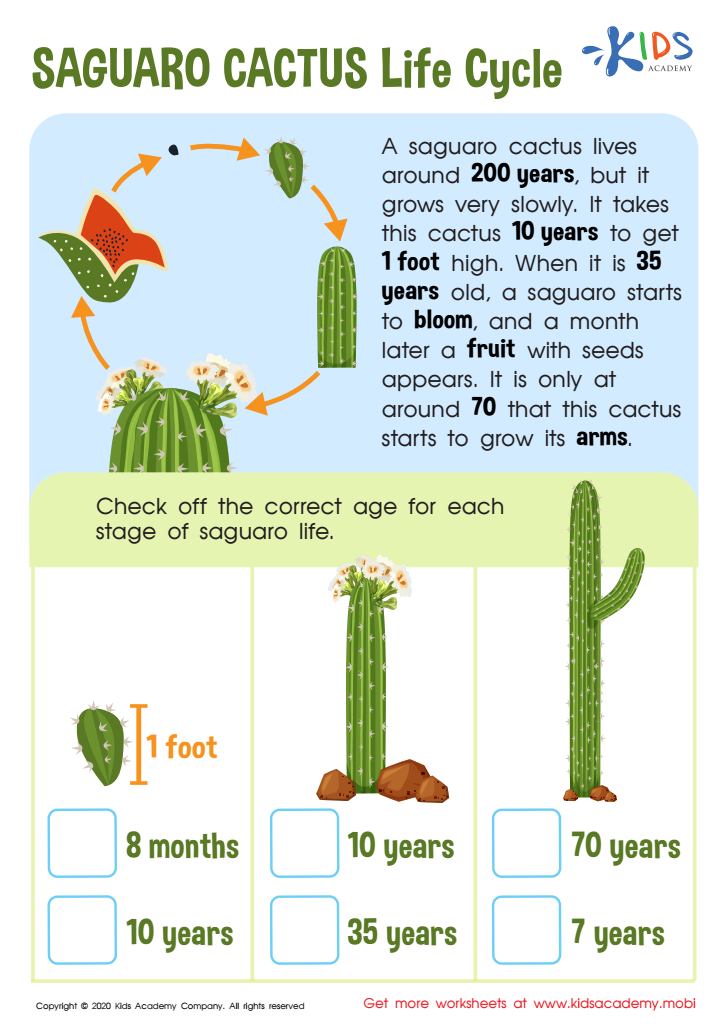
Saguaro Cactus Life Cycle Worksheet
Teach your child about the saguaro cactus, which takes 35 years to bloom and can live up to twice the lifespan of a human! Print this free PDF worksheet to engage learners with an interesting passage. Check off the correct answers to reflect their learning!
 Assign to My Students
Saguaro Cactus Life Cycle Worksheet
Worksheet

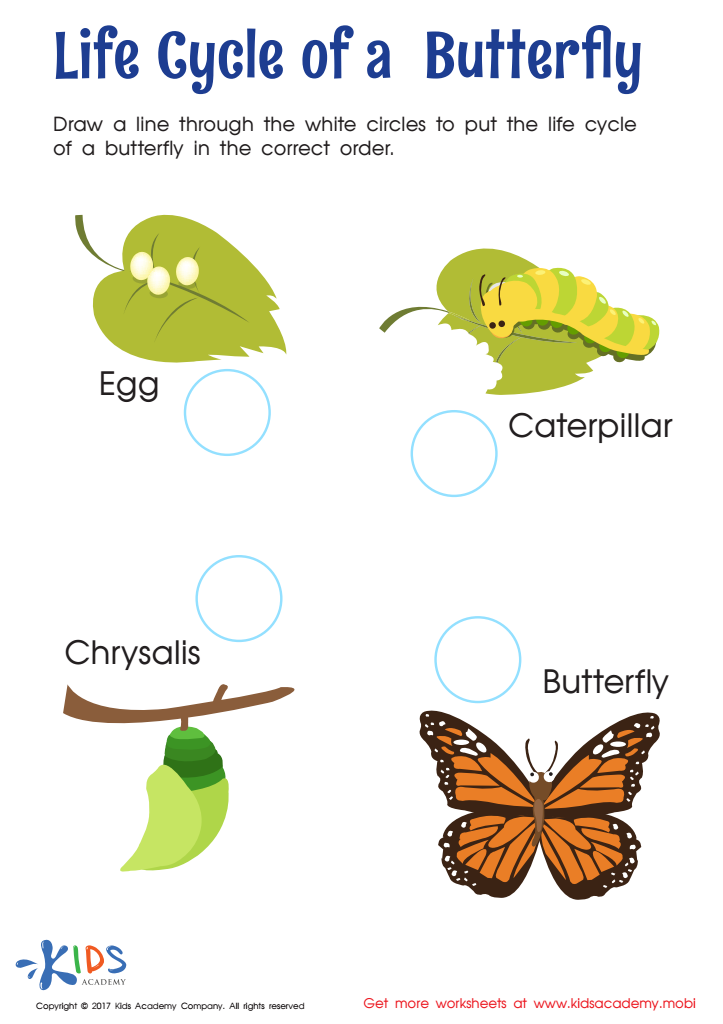
Life Cycle of Butterfly Worksheet
Kids Academy offers an exciting activity – a Life Cycle of a Butterfly Worksheet PDF. It shows four stages in the lifecycle of a butterfly with vivid pictures. Kids put the stages in the correct order to study the lifecycle.
Life Cycle of Butterfly Worksheet
Worksheet
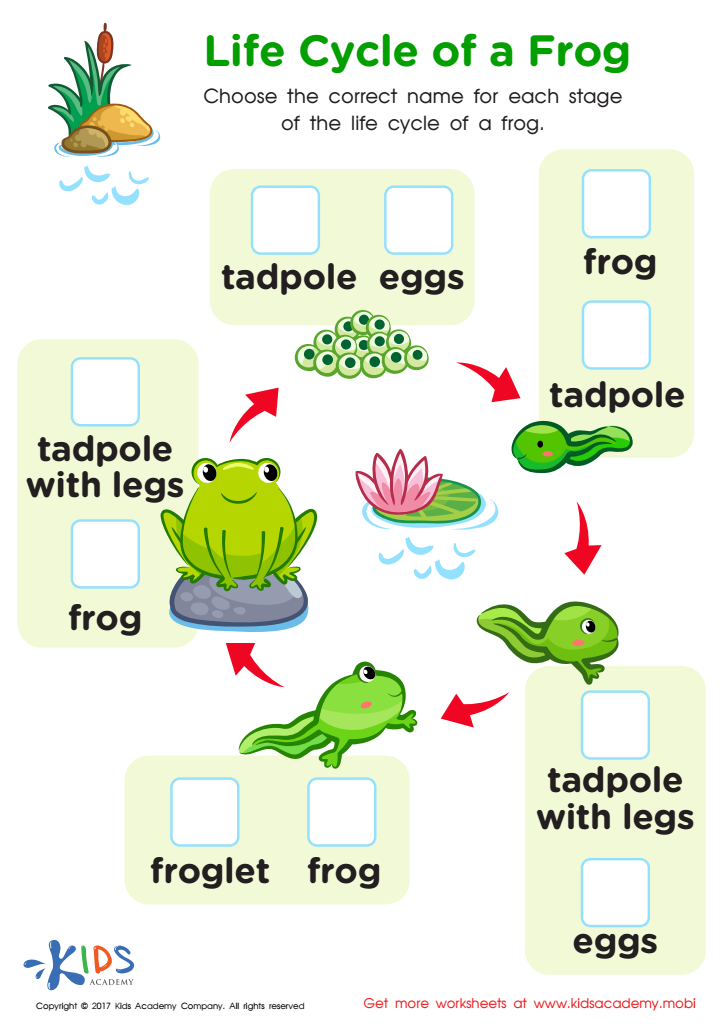
Life Cycle Frog Printable
Kids can explore the life cycle of frog with this fun worksheet! Draw lines from one stage to the next to follow the transformation from tadpole to frog and learn about the cycle of life.
Life Cycle Frog Printable
Worksheet
Join Kids Academy for Free
Who is primarily going to use this learning content?








Understanding the life cycles of normal plants and animals is crucial for both parents and teachers as it lays the foundation for children’s awareness of biological processes and interconnectedness within ecosystems. Knowing the stages of development—from birth or germination through growth and reproduction—teaches children about the natural rhythm of life, fostering an appreciation for biodiversity and the environment.
For parents, this understanding can enhance family discussions about nature walks, gardens, or pets, creating teachable moments that can strengthen bonds while instilling curiosity. Moreover, discussing life cycles can help develop critical thinking skills as children learn to observe, hypothesize, and draw conclusions based on their experiences.
For teachers, integrating life cycle concepts into the curriculum can make science engaging and relevant, encouraging experiential learning through hands-on activities such as planting seeds or observing caterpillars. This not only illustrates scientific concepts but also nurtures responsibility and care for living things. By learning about life cycles, children gain knowledge about environmental stewardship, social responsibility, and the importance of conservation. Ultimately, helping students feel connected to the natural world is vital for fostering a generation that respects, understands, and protects our planet’s ecosystems.







