Counting practice Normal Grade 2 Math Worksheets
10 filtered results
Difficulty Level
Grade
Age
-
From - To
Subject
Activity
Standards
Help your second graders enhance their counting skills with our engaging "Counting Practice Normal Grade 2 Math Worksheets." Expertly designed to align with grade 2 standards, these worksheets provide a fun and interactive way for children to master counting sequences, recognize number patterns, and build a solid math foundation. Each worksheet offers a variety of exercises that challenge and inspire, ensuring a dynamic learning experience. Perfect for classroom use or at-home practice, these worksheets are an excellent resource for reinforcing key math concepts and boosting confidence in young learners. Start exploring today for exciting counting practice!
Favorites
With answer key
Interactive
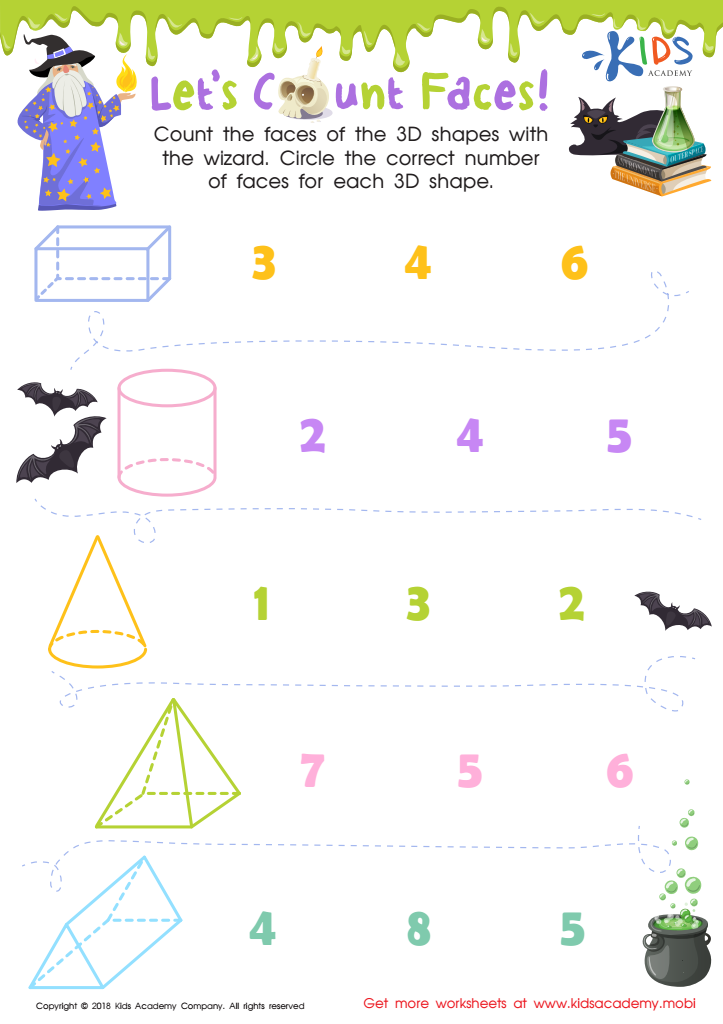
Let's Count Faces! Worksheet
Help the wizard count the faces of 3D shapes! Ask your kids to identify the shapes before beginning, then have them circle the correct number of faces. Enjoy this fun wizard-themed worksheet with your kids!
 Assign to My Students
Let's Count Faces! Worksheet
Worksheet
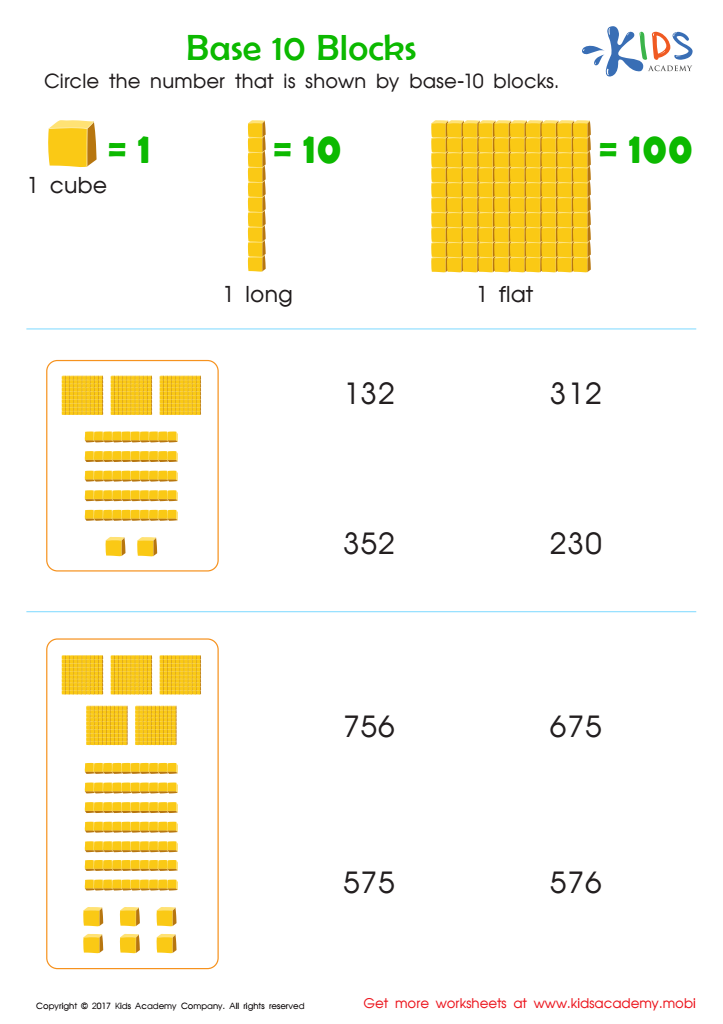
Base Ten Blocks Worksheet
When school ends, your child can still practice place value at home with this base ten blocks worksheet. They'll count and circle the right number, gaining mastery of the concept. It's a fun, easy way to hone their skills!
Base Ten Blocks Worksheet
Worksheet
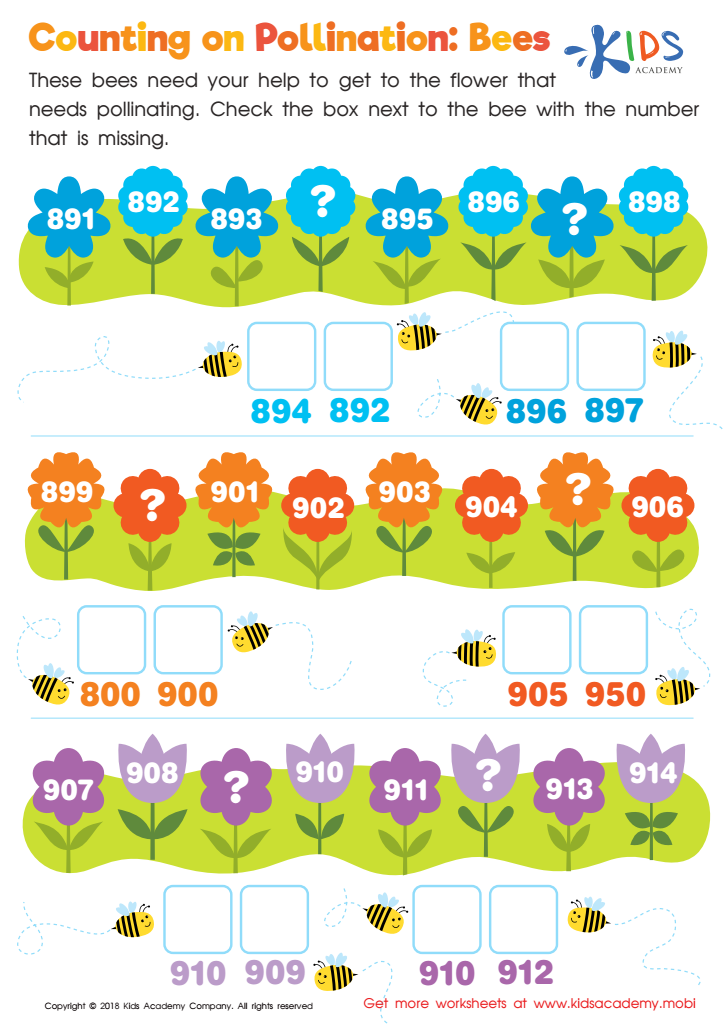
Counting on Pollination: Bees Worksheet
This downloadable worksheet helps kids improve their math skills while having fun - they'll help the bees pollinate the flowers by finding the missing number. It's an entertaining way to practice number patterns, sequences and number line skills, aiding in fast and efficient math computations.
Counting on Pollination: Bees Worksheet
Worksheet
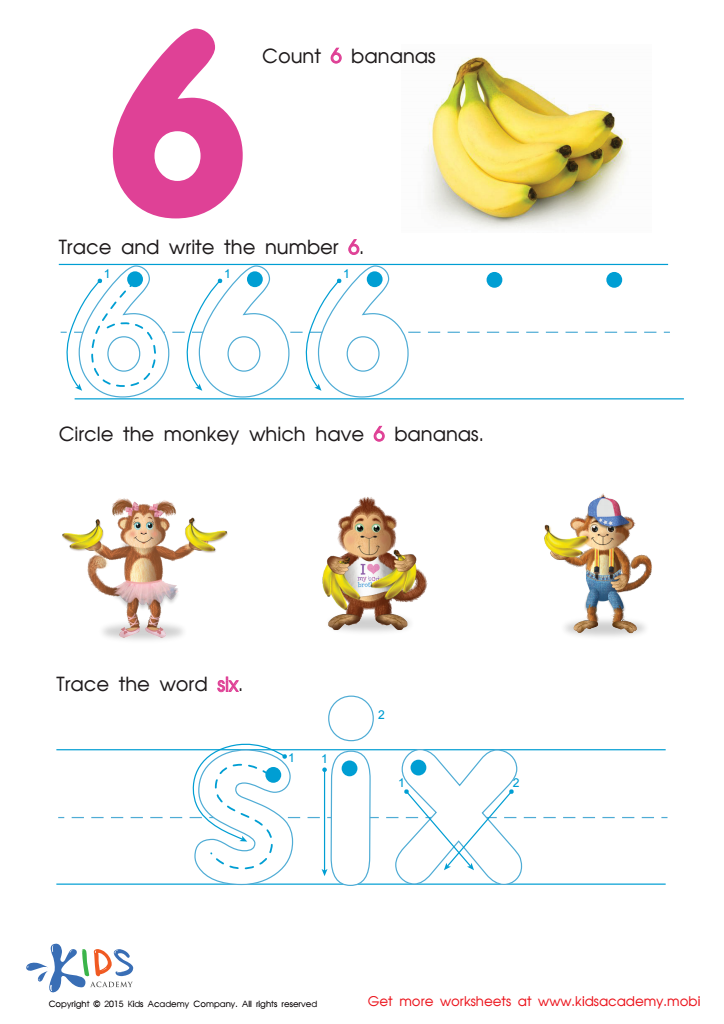
Tracing And Writing Number 6 Worksheet
Learn numbers in a fun way with our preschool number worksheets. Count six bananas, trace and write the number, find the monkey with six bananas, and trace the word "six." Explore more activities at Kids Academy.
Tracing And Writing Number 6 Worksheet
Worksheet
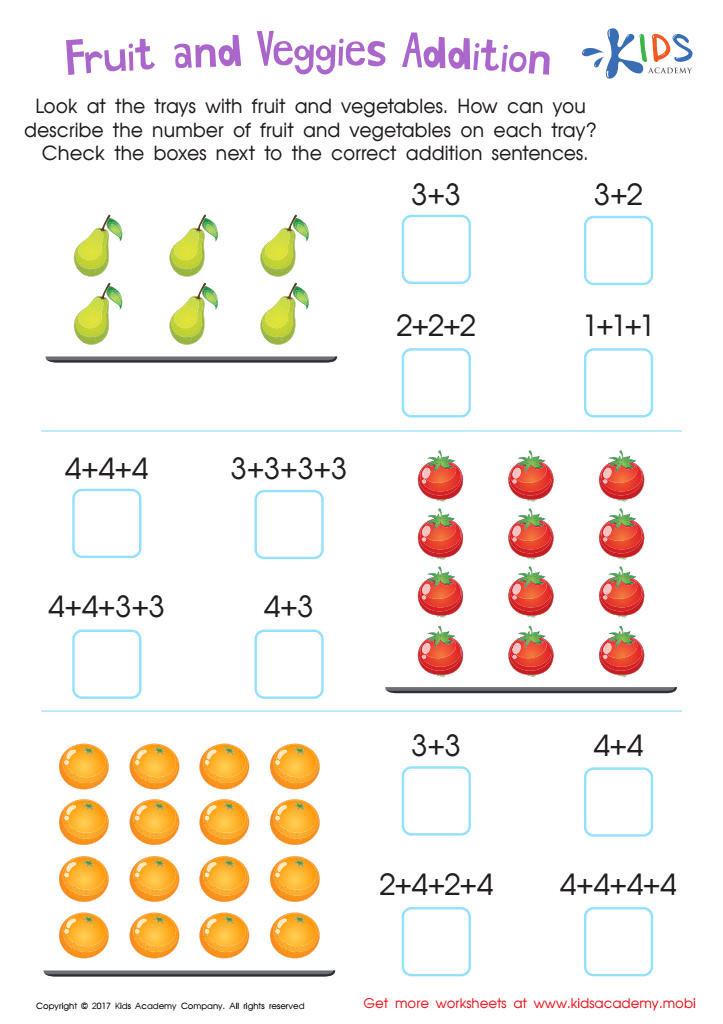
Fruit and Veggies Worksheet
It promotes problem-solving and analytical skills as kids match pictures to correct addition sentences. Help your child go beyond simple addition with this PDF worksheet!
Fruit and Veggies Worksheet
Worksheet
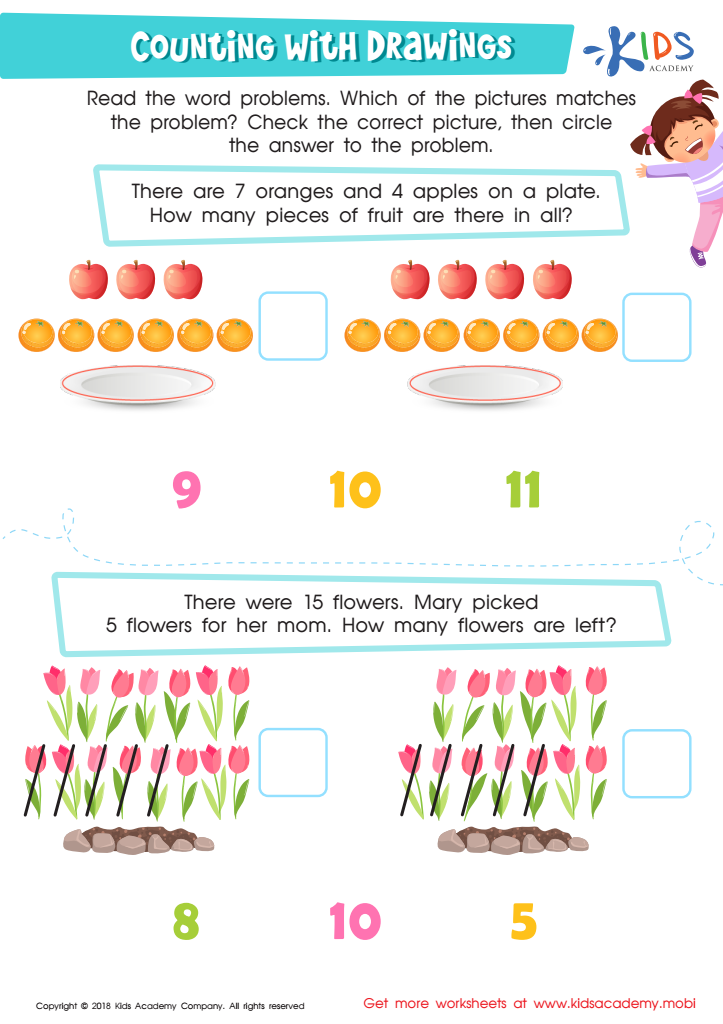
Counting with Drawings: Fruits & Chocolates Worksheet
Learning basic addition and subtraction has never been easier with this free worksheet! Young mathematicians can sort & count to get the right sum or difference for each problem. Plus, they'll practice fine motor skills by circling the correct answer. An ideal way to help kids build important visual recognition and discernment skills.
Counting with Drawings: Fruits & Chocolates Worksheet
Worksheet
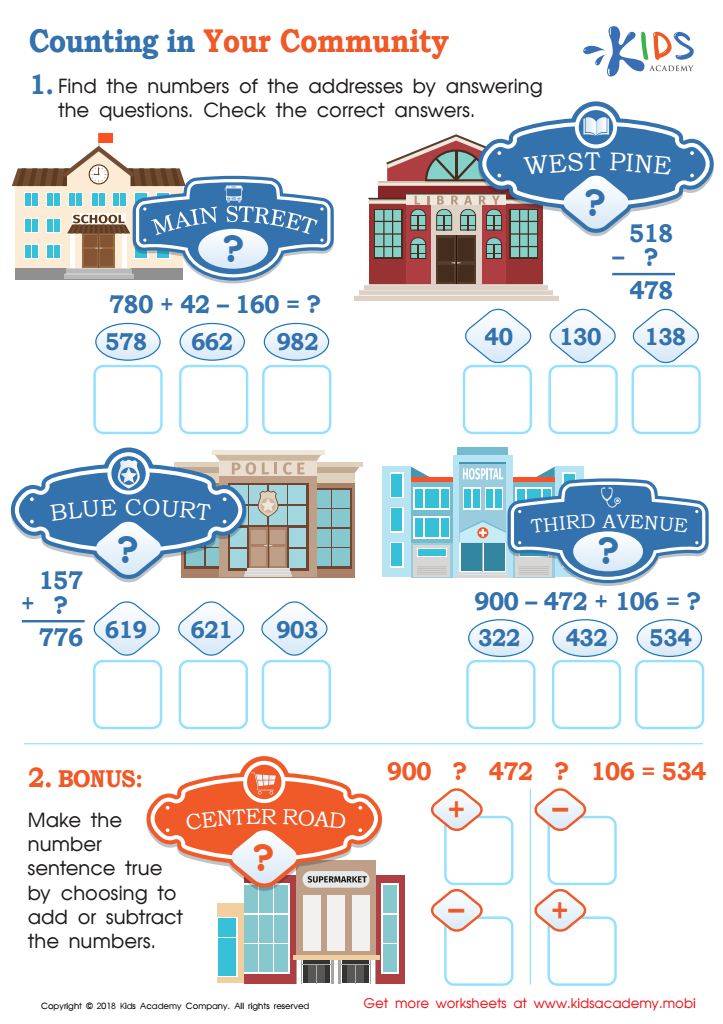
Counting in Your Community Worksheet
Introduce your kids to the idea of a community, where different people and buildings co-exist, each playing their part for the community's progress. Ask them to name the buildings they see in their community. Then work through this worksheet to find the numbers of the addresses by answering the questions. Check the answers once they've solved the equations.
Counting in Your Community Worksheet
Worksheet
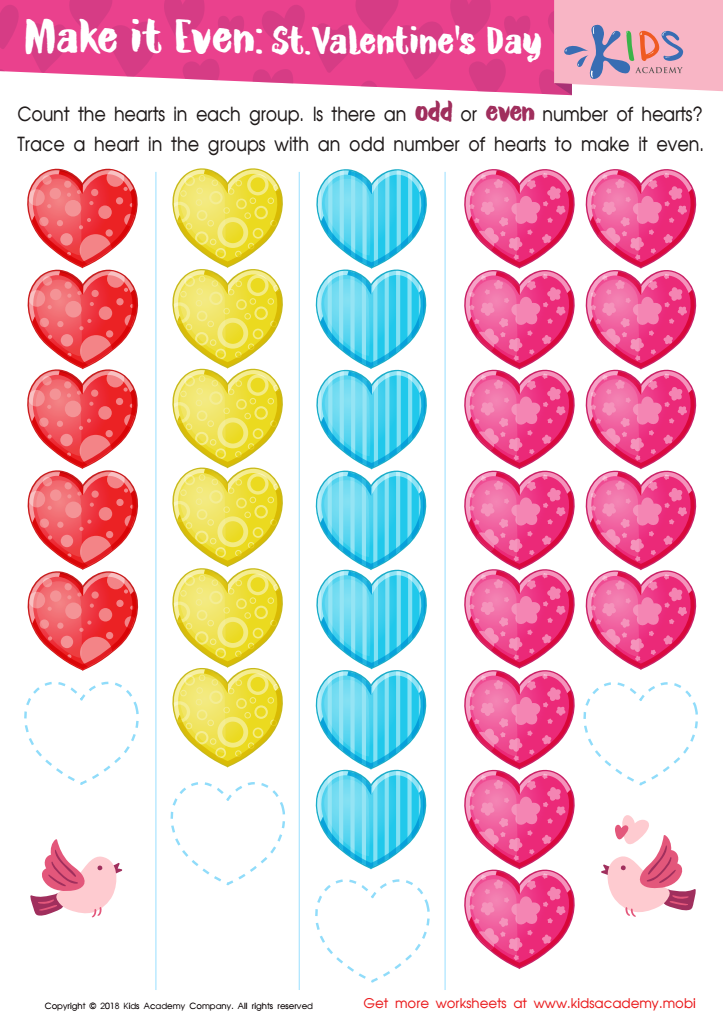
Make it Even: St. Valentine's Day Worksheet
Does your child love Valentine's Day? Make it special with this worksheet! Kids can use their counting skills to determine if each group has an even or odd number of hearts, then trace a heart in the odd groups. Help them make it even and have fun!
Make it Even: St. Valentine's Day Worksheet
Worksheet
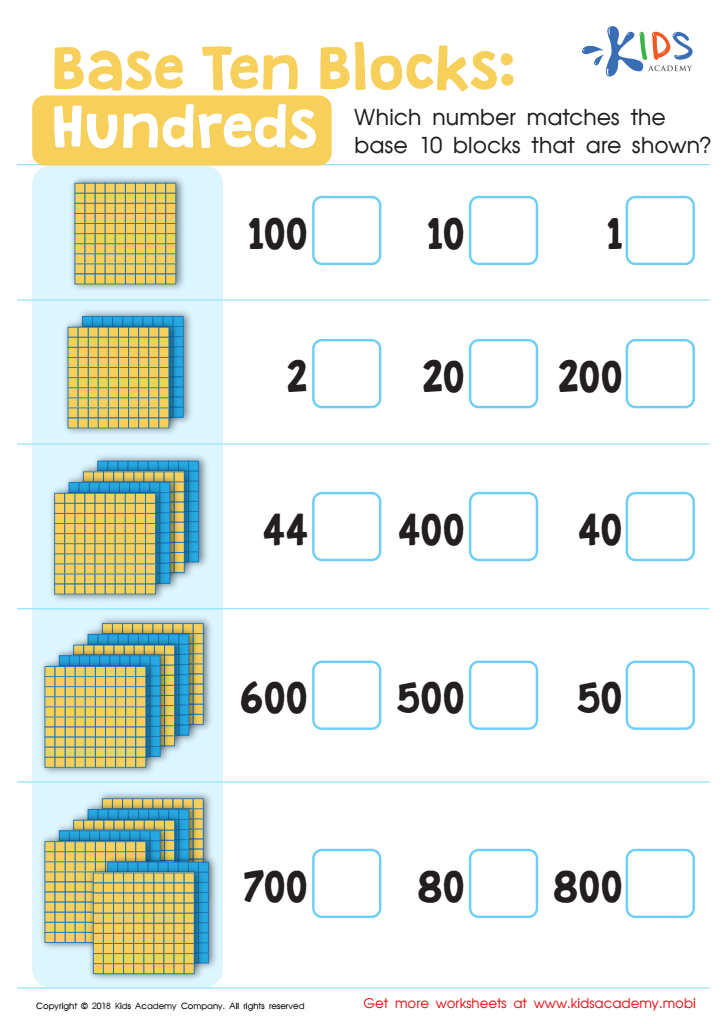
Base Ten Blocks: Hundreds Worksheet
Help your child overcome their dislike of math by guiding them with this base ten blocks worksheet. Count the blocks and answer the questions together. Ask them which number matches the base ten blocks shown. This will help them solve math problems more easily.
Base Ten Blocks: Hundreds Worksheet
Worksheet
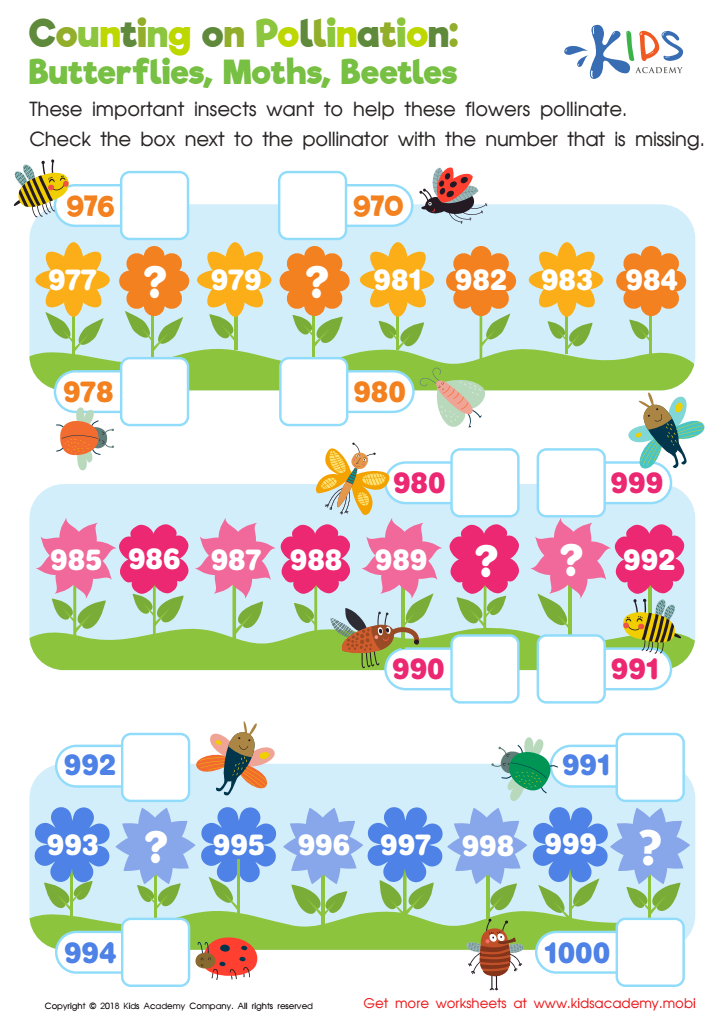
Counting on Pollination: Butterflies, Moths, Beetles Worksheet
A number line can help boost computation accuracy and efficiency. It can also be used with more advanced numbers. Help your child practice by having them identify missing numbers in sequences. This fun worksheet lets them help the pollinators in the process, as they strengthen their number sense.
Counting on Pollination: Butterflies, Moths, Beetles Worksheet
Worksheet
Join Kids Academy for Free
Who is primarily going to use this learning content?



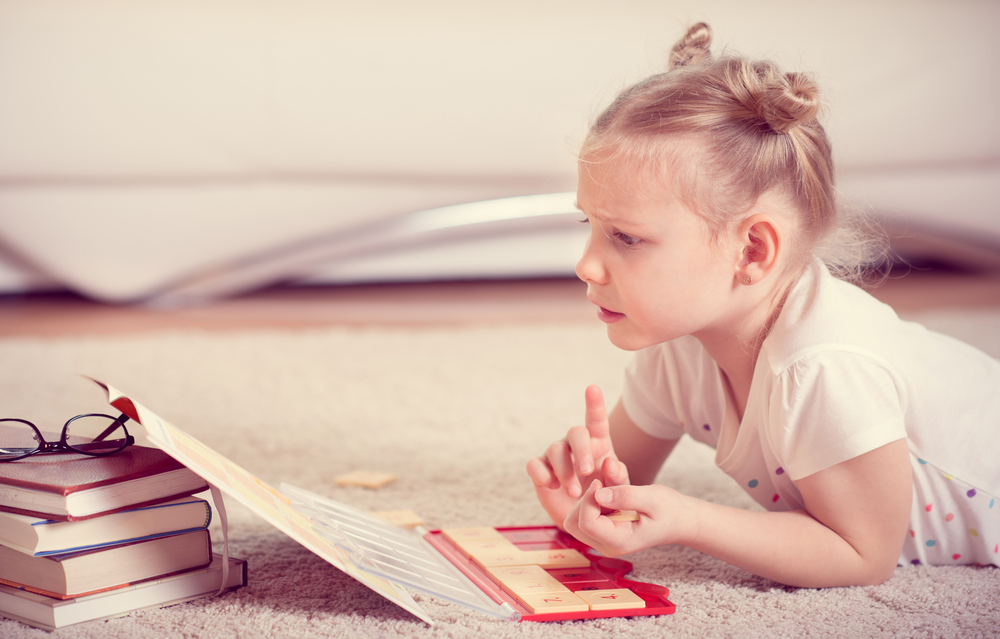




Counting practice in Grade 2 math is foundational because it sets the stage for more complex mathematical concepts that students will encounter in the future. At this stage, children learn to count forwards and backwards, understand number patterns, and grasp place value. These skills are critical for performing basic arithmetic operations like addition, subtraction, multiplication, and division. Without strong counting skills, students may struggle with more advanced topics such as fractions, decimals, and problem-solving tasks.
For parents and teachers, investing in counting practice ensures that children develop numerical fluency, making them confident and capable of tackling math challenges. It also helps in sharpening their mental math abilities, which are essential for day-to-day activities like shopping or time management. Furthermore, consistent counting practice enhances children’s ability to recognize and correct errors in their calculations, thereby improving accuracy and attention to detail.
Additionally, having a strong mathematical foundation boosts children's academic self-esteem, fostering a positive attitude towards learning. Early positive experiences with math build a capable and resilient mindset, which is beneficial for overall academic growth. In summary, strong counting skills in grade 2 enable future academic success, functional numeracy in everyday life, and the development of a positive attitude towards learning math.